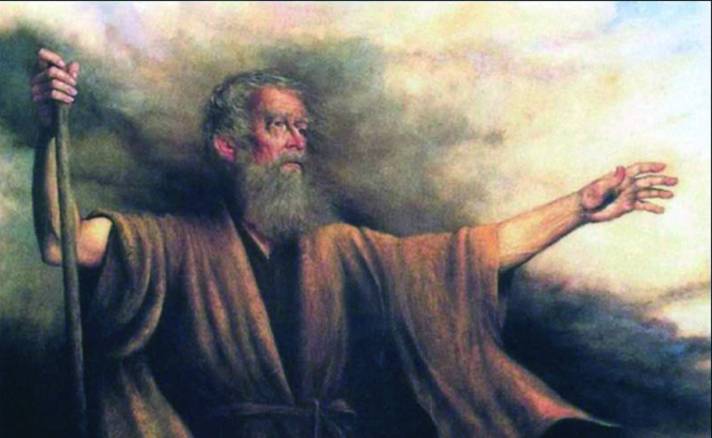
Malachi Lesson Four

Malachi Lesson Four – Judah’s Unfaithfulness

10 Don’t all of us have one Father? Didn’t one God create us? Why then do we act treacherously against one another, profaning the covenant of our fathers? 11 Judah has acted treacherously, and a detestable thing has been done in Israel and in Jerusalem. For Judah has profaned  the Lord’s sanctuary, which He loves, and has married the daughter of a foreign god. 12 To the man who does this, may the Lord cut off  any descendants from the tents of Jacob, even if they present an offering to the Lord of Hosts. 

13 And this is another thing you do: you cover the Lord’s altar with tears, with weeping and groaning, because He no longer respects your offerings or receives them gladly from your hands. 

14 Yet you ask, “For what reason?” Because the Lord has been a witness between you and the wife of your youth. You have acted treacherously against her, though she was your marriage partner and your wife by covenant. 15 Didn’t the one God make us with a remnant of His life-breath? And what does the One seek? A godly offspring. So watch yourselves carefully, and do not act treacherously against the wife of your youth. 

16 “If he hates and divorces his wife,” says the Lord God of Israel, “he covers his garment with injustice,” says the Lord of Hosts. Therefore, watch yourselves carefully, and do not act treacherously. (HCSB)

This passage begins with a rhetorical question about Judah’s lineage. In contrast to the beginning of Malachi, which addresses a physical bloodline lineage (Jacob), here the focus is on the spiritual lineage of Judah.

Verse 10

The first two questions in verse ten lead into the passage’s focus; why do we act wrongly against each other, trampling on the covenant of their ancestors?

The terms “Father” and “creator” both refer to God in a complementary manner. In addition, the terms “us” and “we” refer to all of mankind, while the “one another” is referencing those who are in a covenant relationship with Yahweh, the people of Israel. Therefore, let’s look at the idea of God’s fatherhood from both an Old and New Testament perspective.

  • Old Testament – A unique and exclusive relationship Yahweh established with Israel by His grace in choosing them through Abraham, redeeming them from Egypt, and forming the covenant with them at Mt. Sinai.
  • New Testament – Those in Christ are sons of God. However, one significant difference is that Christians are God’s child by adoption. In contrast, Israel is God’s son because He brought them into existence as a nation. 

In this passage, the context is the proper treatment of fellow Jews as spiritual siblings. The phrase “one another” literally means “a man with his brother.” Correctly understanding the original meaning adds weight to the statement as the Bible repeatedly views the ill-treatment of a brother as a serious offense. Judah pleaded for Joseph’s life in Genesis 37:27b “For he is our brother, our own flesh.” If Israel grasped the idea that God brought them as a group into a covenant relationship with Him, they should have understood that faithfulness was not only required to Yahweh but to each other, too.

The last part of verse ten refers not only to breaking a marriage covenant, referred to in verse fourteen, but also the covenant with Yahweh, the “covenant of our fathers.” Since the charge is against the entire nation of Israel and not just the priests, it points to the Mosaic covenant, which applied to Israel as a nation. 

Verse 11

The term “detestable” actually softens the meaning of the original Hebrew, which is better understood as an “abomination.” The root for abomination is “hate” or “abhor,” often referred to as actions resulting in the most serious form of defilement, which would require destruction or death as a penalty. It was applied to various immoralities such as homosexuality, prostitution, child sacrifice, witchcraft, dishonesty, violence, and perversion of justice. It was also used to describe reprehensible religious behavior such as idolatry. 

Ezekiel rebuked the priests for committing an abomination, “When you brought in foreigners, uncircumcised in both heart and flesh, to occupy My sanctuary, you defiled My temple.” (Ezekiel 44:7a). It was also recorded in 2 Chronicles 36:14, “All the leaders of the priests and people multiplied their unfaithful deeds, imitating  all the detestable practices of the nations, and they defiled the LORD’s temple that He had consecrated in Jerusalem.

Malachi’s charges were very serious. The same abominations that condemned the Canaanites to extinction recorded in Ezra 9:1-14 and resulted in death, destruction, and exile on a treasonous and apostate Israel were now being practiced by the covenant community that had been brought back from exile.

The Israelite men were marrying women who worshipped pagan gods, which resulted in the introduction of destructive forces to the covenant family of Israel. Marriage outside the covenant community, specifically the Canaanites, was forbidden by Moses because of the danger of turning the people away from God. 

  • Deuteronomy 7:3-4 Do not intermarry with them. Do not give your daughters to their sons or take their daughters for your sons, because they will turn your sons away from Me to worship other gods. Then the LORD’s anger will burn against you, and He will swiftly destroy you.
  • Exodus 34:16 Then you will take some of their daughters as brides for your sons. Their daughters will prostitute themselves with their gods and cause your sons to prostitute themselves with their gods.

Israel’s pre-exilic history in the Bible records numerous examples of the spiritual dangers associated with entering into relationships with pagans. However, it is clear to see that post-exilic Israel struggled with the same issue, as recorded in Ezra 9 and Nehemiah 13:23-30. Malachi also records the continued struggles with disobedience, even among the priests.

Verse 12

This is a difficult verse, especially when looking at the original Hebrew text. However, it is linked back to the previous verses and the term “cut off” denotes a radical removal or eradication. The same term was used in the following passages.

  • Genesis 9:11a I confirm My covenant with you that never again will every creature be wiped out (cut off) by the waters of a flood.
  • Joshua 11:21a At that time Joshua proceeded to exterminate (cut off) the Anakim from the hill country.

Being “cut off” should be viewed as a divine sentence of condemnation, with the eventual result of one’s name being cut off from the family of Israel.

Verses 13-16 deal with violations of the marriage covenant and an implied breach of Israel’s covenant with Yahweh.

Verse 13

The context of this verse is that the people failed to understand why Yahweh didn’t accept their offerings or respond to their weeping and groaning. The people were pouring out their hearts from a position of selfishness and a hardened heart, but their pleas were useless as long as their actions didn’t line up with God’s instructions. 

Verse 14

Here we find the answer as to why the weeping, groaning, and offerings referenced in the previous verse were not being accepted. The men in question had betrayed and broken the covenant relationship with their wives. However, it’s even more heinous than just breaking the marriage covenant. They had divorced their Jewish wives and married pagan wives. There are three main points to consider in this verse and the charge against the men.

  • The men had acted treacherously against their wives. 
  • The treachery is that the men had broken the marriage covenant that their wives had entered into with them.
  • The men were casting aside their marriage partners, the ones they had made a vow to love and protect within the marriage covenant.

Israel’s behavior was an insult to Yahweh before who they had sworn their covenants. Their breaking of the marriage covenant oaths and their mistreatment of their wives was another way Israel was slandering Yahweh, just like the insulting sacrifices described in 1:6-14.

Verse 15

This verse contains two main parts – the first deals with children, and the second deals with the marriage covenant.

Even though the men had divorced their wives, there still existed a remnant of the spiritual bond found in the marriage covenant. Moreover, the “oneness” of the marriage covenant has as its purpose of producing godly children with the assistance of God. Thus, it is now appropriate to review biblical marriage, which often is in at least contrast if not outright conflict with our modern view of marriage.

  • To Israelite families, the concept that having children was an option would have been offensive or ridiculous. 
    • Modern families often view their personal happiness or fulfilling life goals as the primary reason to get married. Children are an option.
    • This position is in direct conflict with the Bible, which instructed mankind to be fruitful and multiply. Genesis 1:28a God blessed them, and God said to them, “Be fruitful, multiply, fill the earth, and subdue it.
    • Not having children would be ignoring God’s command to be “fruitful.”  
  • God’s intended purpose for a man and woman to enter into a marriage covenant was fruitfulness. As a side note, this is also a condemnation against same-sex marriage. Same-sex marriage is not able to fulfill the biblical mandate by being fruitful and having children.

The last part of the verse once again deals with the marriage covenant and the unfaithfulness that the men showed. We (husbands) must always be on guard that we don’t act treacherously against our wives. In the context of the passage, the treachery was divorce. However, treachery, in our modern world, can take on many other practices. Here are a few of them.

  • Adultery
  • Pornography
  • Mistreatment
  • Abuse
  • Neglect

The list could be much longer, but the idea is that any action on the husband’s part that in some way negatively impacts the marriage covenant could be viewed as “treachery.”

Verse 16

There has been some disagreement about the “scope” of divorce in this verse. Many translations portray it as a general condemnation against divorce. However, that viewpoint would be in conflict with several passages in the Law that permitted or referred to divorce.

  • Deuteronomy 24:1-4
  • Leviticus 22:13
  • Numbers 30:9
  • Deuteronomy 22:13-19
  • Deuteronomy 22:28-29
  • Matthew 19:9
  • Even God had “divorced” the northern kingdom of Israel for her unfaithfulness and spiritual adultery – Jeremiah 3:8.

It appears from the context of the passage that the issue of divorce in this passage is the treacherous actions of the husbands, which violated the marriage covenant. The men had engaged in unjustifiable divorce for their own personal reasons or convenience. Any man who divorces his wife simply on the grounds that he no longer likes her is committing violence against her. These men had divorced their wives out of hate or greedy desires. They had forgotten the responsibilities that, as husbands, they were to pursue on behalf of their wives.

  • Blessings
  • Goodness
  • Praise
  • Peace
  • Justice

The husbands were robbing their wives of these and other things.

Applications

  • If we bring our requests before God in prayer and none are getting answered, even after significant periods of time, we need to examine the situation. It could be that our prayers are not aligned with God’s will. Or it could be, as in this passage, that we are living in disobedience or have committed some grave offense against God and/or others. If it is the latter case, we need to repent both to God and the individual(s) we have sinned against. They may or may not accept our apology, but we still need to do it. Some situations/relationships may never be restored. However, as the offender, we still need to make an attempt.
  • Entering into a covenant should not be taken lightly. In this passage, we see the seriousness of a covenant and the consequences of breaking a covenant. We sin not only against the person(s) in the covenant, but we also dishonor God by our actions.
  • There is a warning here about entering into a marriage covenant with an unbeliever. At the same time, that is not a biblical reason for divorcing a spouse. 
  • Although God hates divorce and it is never the first choice in a broken relationship, there are allowances for it in Scripture. If you were the offender, refer back to the first application. If you were the victim, know that God can heal all of our hurts, even though it may not feel that way as you are going through the situation or shortly thereafter. Just because a person has been the victim in a divorce doesn’t mean they should be made to feel dirty or shameful; they are not a lesser Christian for what happened. As fellow brothers or sisters in Christ, we should never judge or look down upon them, and neither should the church. As Jesus said in John 8:11b, “‘Neither do I condemn you,’ said Jesus. ‘Go, and from now on do not sin anymore.’”


Malachi Lesson Three

Malachi Lesson Three 2:1-9 – Yahweh Warns the Priests

“Therefore, this decree  is for you priests: If you don’t listen, and if you don’t take it to heart  to honor My name,” says Yahweh of Hosts, “I will send a curse among you, and I will curse your blessings.  In fact, I have already begun to curse them because you are not taking it to heart. 

“Look, I am going to rebuke your descendants,  and I will spread animal waste  over your faces, the waste from your festival sacrifices,  and you will be taken away with it. Then you will know that I sent you this decree so My covenant with Levi  may continue,” says the Lord of Hosts. “My covenant with him was one of life and peace,  and I gave these to him; it called for reverence, and he revered Me and stood in awe of My name.  True instruction was in his mouth, and nothing wrong was found on his lips. He walked with Me  in peace and fairness and turned many from sin.  For the lips of a priest should guard knowledge, and people should seek instruction from his mouth, because he is the messenger of the Lord of Hosts. 

“You, on the other hand, have turned from the way.  You have caused many to stumble  by your instruction. You have violated  the covenant of Levi,” says the Lord of Hosts. “So I in turn have made you despised  and humiliated before all the people because you are not keeping My ways but are showing partiality in your instruction.” (HCSB)

In this passage, we see Yahweh giving a warning to the disobedient priests, telling them what will happen if they continue and reminding them of how He rewards faithful service. Their behavior wasn’t only disobedience to God; they also led the people away from true worship by their negligent behavior.

Verse 1

The beginning of chapter two links back to chapter one with the word “therefore.” God is warning the priests that if they continue with the disobedience described in chapter one, they will face the punishment described in this passage. 

Verse 2

Verse 1 gives a conditional choice to the priests. Nevertheless, God was still willing to grant mercy and forgiveness if they repented and began to act as priests. 

However, this will require a heart change on the part of the priests. The phrase “take it to heart” has a deeper meaning in the original Hebrew. It denotes the “command center” of a person’s life. A place where knowledge is collected and considered. A place where decisions and plans are made that determine the direction of a person’s life. It is not an emotional response. The phrase occurs a dozen times in the Old Testament, and in each case, it refers to determining a course of action in response to knowledge. If the priests responded to God’s call for repentance and giving Him the honor He deserved, they would be restored. Up until this point, they had demonstrated a superficial faith. God was calling on them to display genuine faith.

The term “curse” doesn’t have a hidden meaning; it is literally a curse. Deuteronomy 28:15-68 warns of the covenant curses that would befall Israel if they disobeyed God. The curses are identified in three stages in this verse.

  • Sending a curse.
  • Turning blessings into a curse.
  • The curses had already started.

Verse 3

Not only will the priests be cursed if they don’t correct their behavior, but their descendants will also be cursed. The word “look,” some translations have “see” or “behold,” adds urgency to the coming curse. The original Hebrew phrase indicates an event that will occur in the imminent future. Thus, we see in the Bible where descendants share in the blessings.

  • Numbers 25:13 – It will be a covenant of perpetual priesthood for him and his future descendants, because he was zealous for his God and made atonement for the Israelites.

Then an illustration is given on how God will humiliate and remove the unrepentant priests from their position. The picture of animal excrement being spread on the priest’s face and then being thrown in the same trash heap like the rest of the excrement shouldn’t be taken literally. However, it does mean that the priests would be removed from their position in such a way that would bring the greatest amount of disgrace on them. This strong imagery indicates the degree to which God was repulsed by the priest’s behavior. Just as they had treated God with contempt (verse 1:6) and defiled His altar with corrupt and useless sacrifices (verse 1:7), God would treat them with contempt and defile them, making them worthless for future service. The priests felt it was a burden to faithfully serve God (verse 1:13), so now they and their descendants would be free from the burden of service.

Verse 4

Yahweh desires to honor His covenant with Levi, that his descendants will continue to serve the role as priests for Israel. An important point to remember regarding covenants made with groups. Although the group will be blessed by God, it does not ensure that each individual in the group will receive the blessing. It still requires adherence to the requirements of the covenant, and failing to do that, as the priests here were failing, leads to being removed from the covenant relationship.

  • Matthew 8:11-12 – I tell you that many will come from the east and west, and recline at the table with Abraham, Isaac, and Jacob in the kingdom of heaven. But the sons of the kingdom will be thrown into the outer darkness. In that place there will be weeping and gnashing of teeth.
  • Luke 13:28 – There will be weeping and gnashing of teeth in that place, when you see Abraham, Isaac, and Jacob, and all the prophets in the kingdom of God, but yourselves thrown out.
  • Romans 9:6-8 – But it is not as though the word of God has failed. For not all who are descended from Israel are Israel. Neither are they all children because they are Abraham’s descendants. On the contrary, your offspring will be traced through Isaac. That is, it is not the children by physical descent who are God’s children, but the children of the promise are considered to be the offspring.

In the same way, today, we are not Christians because our parents were Christians. Those who believe and place their trust in Jesus are Christians, regardless of their ethnicity, race, socio-economic status, or any other demographic delineation. 

Malachi considered the “covenant of peace” to apply not just to Phinehas (son of Eleazar) and his descendants or the descendants of Aaron but to the entire tribe of Levi. This understanding is likely based upon Deuteronomy 10:8 – At that time the LORD set apart the tribe of Levi to carry the ark of the LORD’s covenant, to stand before Yahweh to serve Him, and to pronounce blessings in His name, as it is today.

Verses 5-7 – This section describes how the priests were expected to conduct themselves.

Verse 5

Yahweh had blessed the priestly tribe of Levi with a full and happy life filled with shalom. Shalom should be understood to mean peace and wholeness. The twin concepts of life and peace are present in:

  • 1 Samuel 15:6 – Then say this: “Long life to you, and peace to you, to your family, and to all that is yours.”
  • Proverbs 3:2 – For they will bring you many days, a full life, and well-being.
  • Numbers 25:12 – Therefore declare: I grant him My covenant of peace.
  • Joshua 9:15 – So Joshua established peace with them and made a treaty to let them live, and the leaders of the community swore an oath to them.

God’s covenant of peace with the tribe of Levi would be an assurance of a lasting relationship and a promise to secure and protect their welfare by His grace, wisdom, and power. In return, Yahweh expected and received reverence (fear), demonstrating that the early priests, in contrast to those being addressed here, wisely feared only God. 

Verse 6

Fear of the Lord shouldn’t motivate only the priests’ moral obedience but also their responsibility to teach and uphold the commands contained within Scripture. Thus, not only were the priests responsible for conducting the sacrifices (correctly) on behalf of the people, they were also teachers of the Law.

  • Leviticus 10:11 – and teach the Israelites all the statutes that the LORD has given to them through Moses.
  • Deuteronomy 33:10a – They will teach Your ordinances to Jacob and your instructions to Israel.
  • 2 Chronicles 15:3 – For many years Israel had been without the true God, without a teaching priest, and without instruction.
  • Ezekiel 7:26 – Disaster after disaster will come, and there will be rumor after rumor. Then they will seek a vision from a prophet, but instruction will perish from the priests and counsel from the elders.
  • Hosea 4:6 – My people are destroyed for lack of knowledge. Because you have rejected knowledge, I will reject you from serving as My priest. Since you have forgotten the law of your God, I will also forget your sons.

Authentic instruction should be understood to mean “instruction of truth.” The priests were responsible for teaching truth to Israel, and this was done through teaching and obeying the Law. This instruction would teach Israel how they were to live in God’s covenant community and how to avoid defiling the tabernacle. In addition, obedience to the Law would determine Israel’s faithfulness to the covenant Yahweh had established with them. Because of this, the health of this covenant relationship was highly dependent on the priests faithfully performing their responsibilities. However, it is not defined just by how faithfully the priests taught the people; it also included the faithfulness of their lives. 

  • 1 Thessalonians 2:10 – You are witnesses, and so is God, of how devoutly, righteously, and blamelessly we conducted ourselves with you believers.

Verse 7

Since verse 6 focused on the responsibility of the priest’s teaching, this verse explains that the priests are messengers of Yahweh. In contrast to angels or prophets who would convey new instructions from God, the priests were messengers in the context of teaching the people what was already revealed in the Law and how it applied to their lives. A key point here, and still applicable today, is the relevance of God’s instructions to us through Scripture and the role of the priests (pastors/elders today) of faithfully and correctly teaching what is contained in Scripture and how that applies to us. That is what is meant by the term “guard knowledge” in this verse. Those today who preach/teach a false or altered understanding of Scripture are the same as the priests being condemned in Malachi. They may get away with it for a period of time, but they will be judged. 

  • James 3:1 – Not many should become teachers, my brothers, knowing that we will receive a stricter judgment.

Verse 8

Here Malachi returns to address the sinning priests, accusing them in three different areas.

  • They had turned from the way. Their failure started with themselves; they were solely responsible for their actions.
    • Judges 2:17 – But they did not listen to their judges. Instead, they prostituted themselves with other gods, bowing down to them. They quickly turned from the way of their fathers, who had walked in obedience to the LORD’s commands. They did not do as their fathers did.
    • Exodus 32:8 – They have quickly turned from the way that I commanded them; they have made for themselves an image of a calf. They have bowed down to it, sacrificed to it, and said, “Israel, this is your God, who brought you up from the land of Egypt.”
    • Deuteronomy 9:12 – The LORD said to me, “Get up and go down immediately from here. For your people whom you brought out of Egypt have acted corruptly. They have quickly turned from the way that I commanded them; they have made a cast image for themselves.”
  • Instead of turning from sin, they had caused others to fall into sin. The word “stumble” is often used in Scripture to identify sin and its consequences.
    • Isaiah 3:8 – For Jerusalem has stumbled and Judah has fallen because they have spoken and acted against the LORD, defying His glorious presence.
    • Isaiah 8:14-15 – He will be a sanctuary, but for the two houses of Israel, He will be a stone to stumble over and a rock to trip over, and a trap and a snare to the inhabitants of Jerusalem. Many will stumble over these; they will fall and be broken; they will be snared and captured.
    • Hosea 14:1 – Israel, return to Yahweh your God, for you have stumbled in your sin.
    • Proverbs 4:19 – But the way of the wicked is like the darkest gloom; they don’t know what makes them stumble.
    • Leviticus 26:37 – They will stumble over one another as if fleeing from a sword though no one is pursuing them. You will not be able to stand against your enemies.
    • Luke 17:1-2 – He said to His disciples, “Offenses will certainly come, but woe to the one they come through! It would be better for him if a millstone were hung around his neck and he were thrown into the sea than for him to cause one of these little ones to stumble.
  • The third and most prominent charge was that the priests had violated the covenant with Levi. As we consider the seriousness of this, we need to remember that a covenant was a relationship between two parties and made effective by an oath of obligation. If one side failed to live up to the agreement, the covenant was considered to have been broken (violated). The offended party could forgive the offender and restore or renew the covenant. This is the situation here. The covenant was broken but not destroyed. Yahweh is showing mercy by allowing the priests to repent and return if they will follow the Law.

Verse 9

Divine judgment had already begun, but it was not irreversible. The original Hebrew word for “despised” used here is the same one that describes the priest’s despising Yahweh in 1:6. Yahweh doesn’t tolerate pride and will overturn those who are prideful and lack humility.

  • 1 Samual 2:1-10.
  • Isaiah 2:11-17.
  • Isaiah 57:15.
  • Ezekiel 17:24

The reason for their humiliation is that they failed to be loyal and obedient servants to Yahweh. This is a timeless message and warning for today’s church and church leaders. Whenever those who teach God’s Word sacrifice the truth of the message, change it, alter it for their benefit, try to “soften” the message, so they don’t offend anyone, or try to be politically correct, they have betrayed the position that they are filling and the flock entrusted to their care. At the least, this could involve the loss of respect from the flock entrusted to their care. At the worst, it could be the type of punishment Jesus mentioned in Luke 17:1-2, where the offender is thrown into a sea attached to a millstone.

In reviewing this passage, there are four characteristics of a pastor/elder/shepherd leader.

  • The first is a proper relationship to God, which is referred to in Malachi as reverence. True knowledge begins with a reverential awe of God. Spiritual leaders need to cultivate reverence more than anything else.
  • A faithful shepherd will stand true even when confronted by false teachers and heretics. When shepherd leaders faithfully preach God’s Word, we speak absolute truth that applies to any point in history. Teaching God’s Word is a heavy responsibility.
  • They are marked with a godlike character and holiness. The key requirement here is godliness. Church leaders should pray for godliness and ask their congregation to pray for godliness in their leader and faithful teaching from Scripture
  • Knowledge of God, which is salvation through Jesus and living a life of obedience to God and His Word. When church leaders do this, the sheep are fed, and they look to the leader for instruction.

Applications – Although this passage was directed towards the Levitical priests, there are application points for all of us in the passage.

  • If we are in a church leadership position, are we faithful and obedient to what God’s Word requires of us? We need to make an honest assessment of this question, and if we aren’t following God’s Word, we need to repent and get back on the right path. God will extend mercy and grace if we are genuinely repentant about our disobedience.
  • If we teach and preach, do we hold true to what Scripture says, or do we put our own spin on it or twist Scripture to advance our personal agenda? This is a dangerous practice and will ultimately result in judgment against us. Just as in application point one above, we need to repent and be faithful as we teach God’s Word.
  • If we have been involved in false teaching and we have caused others to stumble, we need to repent of that and go to that person(s) or congregation and correct the mistake, as well as ask for forgiveness. Doing just the first part is not enough.
  • Teaching God’s Word is a great responsibility. We can’t do it on our own or through our “head knowledge.” We need guidance from the Holy Spirit. At the same time, it is a wonderful experience to preach God’s Word and see lives changed and souls added to the spiritual family of God.

Malachi Lesson Two

Malachi Lesson Two 1:6-14 – Disobedience of the Priests

“A son honors his father, and a servant his master. But if I am a father, where is My honor? And if I am a master, where is your fear of Me?  says Yahweh of Hosts to you priests, who despise My name.” Yet you ask: “How have we despised Your name?” “By presenting defiled food on My altar.” You ask: “How have we defiled You?” When you say: “The Lord’s table is contemptible.” “When you present a blind animal for sacrifice, is it not wrong? And when you present a lame or sick animal, is it not wrong?  Bring it to your governor! Would he be pleased with you or show you favor?” asks the Lord of Hosts. “And now ask for God’s favor. Will He be gracious to us?  Since this has come from your hands, will He show any of you favor?”  asks the Lord of Hosts. 10 “I wish one of you would shut the temple doors,  so you would no longer kindle a useless fire on My altar!  I am not pleased with you,” says the Lord of Hosts, “and I will accept  no offering from your hands. 

11 “For My name will be great among the nations,  from the rising of the sun to its setting. Incense  and pure offerings will be presented in My name in every place because My name will be great among the nations,”  says Yahweh of Hosts. 

12 But you are profaning it  when you say: “The Lord’s table is defiled, and its product, its food, is contemptible.” 13 You also say: “Look, what a nuisance!” “And you scorn  it,”  e says the Lord of Hosts. “You bring stolen,  g lame, or sick animals. You bring this as an offering! Am I to accept that from your hands?” asks the Lord. 

14 “The deceiver is cursed who has an acceptable male in his flock and makes a vow but sacrifices a defective animal to the Lord.  For I am a great King,” says Yahweh of Hosts, “and My name  will be feared among the nations. 

In this passage, Yahweh is addressing the priests and their disobedient and disrespectful behavior towards Him. The address will continue into the next lesson, which begins with chapter two. The reason Yahweh doesn’t specifically address the priests until the beginning of chapter two is that this paragraph applies not only to the priests but to all of Israel and the book as a whole. This passage and the first part of chapter two form a contrast between Yahweh’s love and Israel’s failure to honor Him in response. Displaying love towards God is exhibited by obedience from the heart. In this passage, the first explicit revelation of the problem the prophet was addressing; the failure of Judah, lead by the priests, honor and fear Yahweh.

  • Nehemiah 9:16-17 – But our ancestors acted arrogantly; they became stiff-necked and did not listen to Your commands. They refused to listen and did not remember Your wonders You performed among them. They became stiff-necked and appointed a leader to return to their slavery in Egypt. But You are a forgiving God, gracious and compassionate, slow to anger and rich in faithful love, and You did not abandon them.
  • Nehemiah 9:26, 29 – But they were disobedient and rebelled against You. They flung Your law behind their backs and killed Your prophets who warned them in order to turn them back to You. They committed terrible blasphemies…You warned them to turn back to Your law, but they acted arrogantly and would not obey Your commands. They sinned against Your ordinances, which a person will live by if he does them. They stubbornly resisted, stiffened their necks, and would not obey. 

A second theme appears in verses 11-14, pagan nations who have been hostile to Yahweh will someday submit and give Him the honor and fear that He deserves and desires.

As we go through this passage, there are four personal failures of the priests identified.

  • They were offering defiled sacrifices on God’s altar. 
  • They were harming the people by accepting defiled sacrifices.
  • They showed contempt for the office of the priest.
  • They were defying God.

Verse 6

The prophet’s point here is that even if Judah was blind to God’s love, they should have viewed God as their father and Lord and given the honor expected of that relationship.

  • Exodus 20:12 – Honor your father and your mother so that you may have a long life in the land that the LORD your God is giving you.
  • Deuteronomy 5:16 – Honor your father and your mother, as the LORD your God has commanded you, so that you may live long and so that you may prosper in the land the LORD your God is giving you.
  • Isaiah 66:19 – I will establish a sign among them, and I will send survivors from them to the nations – to Tarshish, Put, Lud (who are archers), Tubal, Javan, and the islands far away – who have not heard of My fame or seen My glory. And they will proclaim My glory among the nations.

Let’s also address the concept of “fear” towards God to ensure that we correctly understand what a “fearful attitude” towards God means. No single English word conveys every aspect of the word “fear” in this phrase. The meaning includes worshipful submission, reverential awe, and obedient respect to the covenant-keeping God of Israel. Proper fear of Yahweh can also be understood as “wisdom.” This would result in covenant loyalty and restraint from sin. 

  • Psalm 111:10 – The fear of the LORD is the beginning of wisdom; all who follow His instructions have good insight. His praise endures forever.
  • Proverbs 1:7 – The fear of the LORD is the beginning of knowledge; fools despise wisdom and discipline.

However, the priests were displaying an attitude that lacked honor, fear, and love. Instead, they “despised” God as insignificant or worthless, not taking God seriously.

Verse 7

By presenting a defiled sacrifice, the altar was also defiled. The priests showed how they “despised” God by offering sacrifices that defiled the sanctuary’s holiness that was their responsibility to maintain, as presented in Numbers 18:1-7. The table was also symbolic of hospitality and the relationship between those who shared the table. By having a lax and irreverent attitude towards the table, the priests exhibited their contempt towards God.

Verse 8

The priests were responsible for determining whether a sacrifice meet the requirements as stated in the Law. 

  • Leviticus 22:19-20 – Must offer an unblemished male from the cattle, sheep, or goats in order for you to be accepted. You are not to present anything that has a defect, because it will not be accepted.
  • Deuteronomy 15:21 – But if there is a defect in the animal, if it is lame or blind or has any serious defect, you must not sacrifice it to the LORD your God.

The worship that the priests were allowing was false worship filled with lies and unrighteousness, profaning God’s name. If such gifts/sacrifices wouldn’t be acceptable to earthly kings/rulers, why would we think they’ll be acceptable to an infinitely holy God?

Verse 9

Why should we expect God to be gracious to us or answer our prayers when we act in such a disrespectful and irreverent manner towards God? We are kidding ourselves if we think we will find favor with God by acting in this way.

Verse 10

Here we find the first directive in the book, “shut the temple doors.” However, this is not what God really wants. Instead, what He desires is contained in this passage; fear and honor displayed by proper sacrifices coming from pure hearts. It is amazing but not surprising that after the punishment of the exile and their restoration to Israel, they quickly fell back into practices of empty worship. 

  • Proverbs 15:8 – The sacrifice of the wicked is detestable to the LORD, but the prayer of the upright is His delight.
  • Isaiah 1:13 – Stop bringing useless offerings. Your incense is detestable to Me. New Moon and Sabbaths, and the calling of solemn assemblies – I cannot stand iniquity with a festival.

God doesn’t need our offerings or service. Instead, they serve as a way for us to testify to His greatness and magnify His name. God is pleased when He receives sincere praise and worship. In addition, worship benefits us by nourishing our relationship with God and enabling us to interact and encourage each other in our faith. However, being “religious” without genuine love and gratitude towards God is both useless and repulsive to Him as it degrades His character.

Verse 11

Here the prophet is contrasting how the priests of God’s temple were treating Him, with contempt, with how the pagan nations would one day treat Him. This points to a future time when God’s name will be great among the nations (pagans), and they will offer pleasing sacrifices to Him. Thus, the prophecy contained in this book can be understood as being fulfilled in the present age (New Covenant/New Testament church).

  • Hebrews 13:15-16 – Therefore, through Him let us continually offer up to God a sacrifice of praise, that is, the fruit of our lips that confess His name. Don’t neglect to do what is good and to share, for God is pleased with such sacrifices.
  • 1 Peter 2:4-5 – Coming to Him, a living stone – rejected by men but chosen and valuable to God – you yourselves, as living stones, are being built into a spiritual house for a holy priesthood to offer spiritual sacrifices acceptable to God through Jesus Christ.

It also includes complete fulfillment when Jesus returns.

Verse 12

To accuse someone of profaning the name of God is a very strong and serious charge. To profane something is to desanctify it, to treat it as unholy, insignificant, or worthless. A person’s name is what makes them unique, different from everyone else. To profane Yahweh’s name is the ultimate humiliation. Profane could also project the idea of bringing dishonor or disgrace to someone by associating their name with something shameful.

  • Ezekiel 36:20-23 – When they came to the nations where they went, they profaned My holy name, because it was said about them, “These are the people of Yahweh, yet they had to leave His land in exile.” Then I had concern for My holy name, which the house of Israel profaned among the nations where they went. “Therefore, say to the house of Israel: This is what the Lord GOD says: It is not for your sake that I will act, house of Israel, but for My holy name, which you profaned among the nations where you went. I will honor the holiness of My great name, which has been profaned among the nations – the name you profaned among them. The nations will know that I am Yahweh,” – the declaration of the Lord GOD – “when I demonstrate My holiness through you in their sight.”

God’s name is holy because He is holy, perfect in every way.

Verse 13

Here we have further evidence of the disrespect the priests were showing to God. The priests considered their duty to be “a nuisance.” The original Hebrew words could be translated as a “hardship” or a “burden.” Some translations use the phrase “you sniff at it in contempt.” The contempt mentioned here could apply to either the sacrifices on the altar or the name of God. Either one fits, and either one is a serious charge. The “worship” that priests were engaged in was an insincere religious activity that heaped insult upon God. 

  • Hosea 6:6 – For I desire loyalty and not sacrifice, the knowledge of God rather than burnt offerings.
  • Micah 6:6-8 – What should I bring before the LORD when I come to bow before God on high? Should I come before Him with burnt offerings, with year-old calves? Would the LORD be pleased with thousands of rams or with ten thousand streams of oil? Should I give my firstborn for my transgression, the child of my body for my own sin? Mankind, He has told you what is good and what it is the LORD requires of you: to act justly, to love faithfulness, and to walk humbly with your God.

The failure of Israel to respond to the trials of their lives with wisdom and faith led to them losing their delight in God. Each of us must be careful that we don’t head down the same path and develop a cold heart towards God. A quote from Mallone is appropriate here, “A man must respond to the One who has given him everything. Not to do so is the highest form of ingratitude and self-sufficiency.” It is not an understatement to state that losing our gratitude towards God and delight in worshipping Him are warning signs of spiritual decay that could result in a shipwrecked life.

Verse 14 – split into two parts.

Verse 14a. 

The accusation is now directed against those bringing the sacrifice and not the priests. Although the priests were the final decision point on whether the offering was acceptable or not (something they utterly failed at), the people should also have known that such an offering was unacceptable. 

Those that brought the unacceptable sacrifices were “cursed” in God’s eyes. In the context of this passage and book, it means separation from God. It also means being expelled from a community relationship and from the security that was found in such a community. Being cursed by God meant to be “delivered over to misfortune.”

Verse 14b

The priests and people of Judah showed more honor to their earthly leaders than they showed to God (verse 8). The focus of the second part of verse 14 points to future events. It points to the time of the Messiah. God will be feared (revered) in the future when all tribes and nations will be welcomed into the spiritual family of God.

As we reflect on this passage, we need to remember through our faith in Jesus, we have a “priestly identity,” and we are to bring spiritual sacrifices to Him.

  • 1 Peter 2:5 – You yourselves, as living stones, are being built into a spiritual house for a holy priesthood to offer spiritual sacrifices acceptable to God through Jesus Christ.
  • What are these “spiritual sacrifices?”
    • Our bodies. Romans 12:1 Therefore, brothers, by the mercies of God, I urge you to present your bodies as a living sacrifice, holy and pleasing to God; this is your spiritual worship.
    • Our offerings. Philippians 4:14-18 Still, you did well by sharing with me in my hardship. And you Philippians know that in the early days of the gospel, when I left Macedonia, no church shared with me in the matter of giving and receiving except you alone. For even in Thessalonica you sent gifts for my need several times. Not that I seek the gift, but I seek the profit that is increasing to your account. But I have received everything in full, and I have an abundance. I am fully supplied, having received from Epaphroditus what you provided—a fragrant offering, an acceptable sacrifice, pleasing to God.
    • Our praise. Hebrews 13:15 Therefore, through Him let us continually offer up to God a sacrifice of praise, that is, the fruit of our lips that confess His name. 
    • Our good works. Hebrews 13:16 Don’t neglect to do what is good and to share, for God is pleased with such sacrifices.
    • Our evangelism. Romans 15:16 to be a minister of Christ Jesus to the Gentiles, serving as a priest of God’s good news. My purpose is that the offering of the Gentiles may be acceptable, sanctified by the Holy Spirit.

Are we bringing God our best, or only what is convenient for us?

Applications

  • Do we honor and obey God in the way Scripture calls us to as our heavenly Father?
  • Do we bring our best in our spiritual sacrifices? Do we sacrifice in the ways presented above? Or do we think that second best, or worse, is good enough and keep the best for ourselves?
  • Are we careful to make sure that the church we attend doesn’t preach a watered-down message, compromise Scripture, or ignore those who disobey Scripture? We need to pay attention to what our church teaches and, if the message doesn’t line up with Scripture, find a church that is faithful to God’s Word.  

Malachi Lesson One

Malachi 1:1-5 – God’s Covenant Love

Malachi Lesson One 1:1-5 – God’s Covenant Love

An oracle:  The word of the Lord  to Israel through  Malachi. “I have loved you,” says the Lord. But you ask: “How have You loved us?” “Wasn’t Esau Jacob’s brother?” This is the Lord’s declaration. “Even so, I loved Jacob, but I hated Esau. I turned his mountains into a wasteland, and gave his inheritance to the desert jackals.” Though Edom says: “We have been devastated, but we will rebuild  the ruins,” the Lord of Hosts says this: “They may build, but I will demolish. They will be called a wicked country and the people the Lord has cursed  forever. Your own eyes will see this, and you yourselves will say, ‘The Lord is great, even beyond  the borders of Israel.’ (HCSB)

Author: There is widespread disagreement on who the author is. The word “malachi” in Hebrew means “my messenger.” In the Septuagint, the name is translated as angelou autou, or “his angel/messenger.” If “Malachi” is used to designate a function and not a person, then the book is anonymous, an easy position to support as there is no information given about the writer. On the other hand, some scholars believe the writer may have been a priest or Temple prophet and witnessed the corruption of the priesthood from a first-person vantage point.

There is an early Jewish tradition recorded in the Talmud that the book was written by Ezra, and there are many similarities in the content of the two books. In addition, one Aramaic Targum manuscript adds after “Malachi” the words “whose name is Ezra the Scribe.” In contrast, Jewish tradition has personalized the name and considers it a proper name just like the other prophetic works. However, we shouldn’t let that distract us from the message of the book, where forty-seven out of fifty-five verses are personal addresses of the Lord.

Date: The book contains no specific facts that allow accurate dating; the contents of the book and its position in the canon argues for a date during the Persian empire but after the rebuilding of the temple in 515 B.C. The majority of scholars prefer a date prior to the writings of Ezra and Nehemiah.

Form: The book is in the form of speeches by Yahweh to His people through the prophet. 

Message: The book is an indictment against the religious leaders of the period and chastises God’s people for their spiritual apathy and their cynicism about God’s plan for their future. It calls for the people to correct their wrong attitude concerning worship by trusting God as the living Lord. It also warns the people of their sinful behavior toward each other and calls repentance so they won’t be fearful of the coming of the Lord. The message weaves together three main ideas.

  • Situation: The failure of the priests of Judah to fear the Lord and serve the people faithfully. This ushered in, again, a period of apathy toward Yahweh by the Israelites.
  • Command: Malachi commands them to return to Yahweh by following His instructions and restoring worship that honors Him.
  • Motivation: Yahweh’s love (verse 1:2), spiritual and covenant unity with God and each other (verse 2:10), assurance of the coming of the Lord that brings final redemption and judgment, blessing those who fear God and casting out the wicked (3:1-6 and 3:16-4:3).

Verse 1

The phrase “to Israel” may seem somewhat unusual as the letter is dated around the beginning of the post-exilic period, and one could argue that “Israel” no longer existed as a nation. However, Judah’s leaders knew that God still recognized them as the remnant of His covenant people, as well as the continuation of God’s redemptive plan. Therefore, the remnant of the Israelites to whom Malachi wrote were still recipients of God’s promise to Israel and was obligated to obey the regulations of the covenant.

Verses 2-5

These verses contain the first exchange between Yahweh and Judah focused on the issue of God’s love for His people. However, Judah does not grasp the truth of the statement. In both pre and post-exilic Israel, the people had turned from God but for different reasons.

  • Pre-exilic – The abundance that Israel experienced resulted in forgetting that they depended on God for their blessings. 
    • Deuteronomy 8:12-14 – When you eat and are full, and build beautiful houses to live in, and your herds and flocks grow large, and your silver and gold multiply, and everything else you have increases, be careful that your heart doesn’t become proud and you forget the LORD your God who brought you out of the land of Egypt, out of the place of slavery.
    • Hosea 13:4-6 – I have been Yahweh your God ever since the land of Egypt; you know no God but Me, and no Savior exists besides Me. I knew you in the wilderness, in the land of drought. When they had to pasture, they became satisfied; they were satisfied, and their hearts became proud. Therefore they forgot Me.
  • Post-exilic – The people allowed their difficulties to rob them of God’s loving presence.

Verse 2

Starting in this verse and following in other places through the book, the Israelites display an “attitude” with Yahweh by repeating His statements or questions and countering with their own questions. Malachi reminds the people of God’s love for them as a rebuke against those who were questioning whether God loved Israel. It would appear that the people had a short memory regarding God’s love and faithfulness.

  • The remnant who returned from exile in Babylon must have been awestruck by God’s faithfulness to the Abrahamic covenant. 
    • Nehemiah 9:8 – You found his heart faithful in Your sight, and made a covenant with him to give the land of the Canaanites, Hittites, Amorites, Perizzites, Jebusites, and Girgashites – to give it to his descendants. You have kept Your promise, for You are righteous.
    • Nehemiah 9:17 – They refused to listen and did not remember Your wonders You performed among them. They became stiff-necked and appointed a leader to return to their slavery in Egypt. But You are a forgiving God, gracious and compassionate, slow to anger and rich in faithful love, and You did not abandon them.
  • But the sense of being awestruck didn’t last long, and they soon returned to their pattern of sinful behavior. 
    • Like self-centered children, they started to take Yahweh’s love for granted and became blind to it.
    • They responded to discipline with an attitude of, “you don’t love us anymore.”
    • Their misunderstanding of Scripture had skewed their understanding of the experience of the exile.
      • God hates evil.
      • God hates idolatry.
      • God hates hypocritical worship.
      • God will, sooner or later, reject the wicked.
      • God loves righteousness.
      • God welcomes the upright.

Yahweh now goes on to prove His love by referencing Esau, which is expanded on in the following two verses.

Verses 3-4

The contrasting concepts of love and hate attached to Jacob and Esau need some explaining to properly understand how the original hearers of the message would view these two words. The words “love” and “hate” are not referring to emotions in the context of this message. Those emotional words would have been understood by the Israelites as actually referring to a covenant relationship. In the context of the passage, it refers to the covenant relationship that Yahweh had with Jacob (love) and the lack of a covenant relationship with Esau (hate). Jacob and his family line were chosen by Yahweh, while Esau and his family line were not, becoming a side note to the story of God’s activity in the Bible.

The contrast between the two is the fruition of what Yahweh had told Rebekah.

  • Genesis 25:23 – And the LORD said to her: Two nations are in your womb; two people will come from you and be separated. One people will be stronger than the other, and the older will serve the younger.

The same idea was used in the context of marriage.

  • Genesis 29:31 – When the LORD says that Leah was unloved, He opened her womb; but Rachel was unable to conceive.
  • Genesis 29:33 – She conceived again, gave birth to a son, and said, “The LORD heard that I am unloved and has given me this son also.”
  • Deuteronomy 21:15a – If a man has two wives, one loved and the other unloved.

As we reflect on this concept, we need to remember that Yahweh was not imparting complete abandonment on all of Esau’s line (Edomites). Therefore, it was possible for individual Edomites to enter into a covenant relationship with Yahweh.

  • Deuteronomy 23:7-8 – Do not despise an Edomite, because he is your brother. Do not despise an Egyptian, because you were a foreign resident in his land. The children born to them in the third generation may enter the LORD’s assembly.
  • Amos 9:12a – So that they may possess the remnant of Edom and all the nations that are called by My name.

We also need to remember that Ruth, a Moabite, was not prevented from entering into a covenant relationship by swearing allegiance to Yahweh, as well as Rahab.

Although God is troubled by the sinful nature of people regardless of them being in or out of the covenant relationship, His response is different.

  • Those inside the covenant relationship face discipline. Judah’s devastation by Babylon was temporary.
  • Those outside the covenant relationship face wrath. As a nation, Edom faced complete and permanent destruction.

The message here is more than an example between Jacob and Eau. The judgment that Edom received is a message that evil will face justice. The passage in Isaiah 34:5-17, although it references Edom, is actually a message against all the arrogant nations who oppose Yahweh, clearly stating that they will receive divine judgment and destruction.

  • Isaiah 63:1-6 – Who is this coming from Edom in crimson-stained garments from Bozrah – this One who is splendid in His apparel, rising up proudly in His great might? It is I, proclaiming vindication, powerful to save. Why are Your clothes red, and Your garments like one who treads a winepress? I trampled the winepress alone, and no one from the nations was with Me. I trampled them in My anger and ground them underfoot in My fury; their blood spattered My garments, and all My clothes were stained. For I planned the day of vengeance, and the year of My redemption came. I looked, but there was no one to help, and I was amazed that no one assisted; so My arm accomplished victory for Me, and My wrath assisted Me. I crushed nations in My anger; I made them drunk with My wrath and poured out their blood on the ground.
  • Ezekiel 36:5 – This is what the Lord GOD says: Certainly in My burning zeal I speak against the rest of the nations and all of Edom, who took My land as their own possession with wholehearted rejoicing and utter contempt so that its pastureland became plunder.

When Esau despised his birthright and sold it for one meal, it was the equivalent to despising Yahweh’s promises.

Hebrews 12:16-17 – And make sure that there isn’t any immoral or irreverent person like Esau, who sold his birthright in exchange for one meal. For you know later, when he wanted to inherit the blessing, he was rejected because he didn’t find any opportunity for repentance, though he sought it with tears.

Covenantal, committed love serves as a model to the church today. Jesus calls on us to love one another.

  • John 13:34 – I give you a new command: Love one another. Just as I have loved you, you must also love one another.
  • 1 John 4:7 – Dear friends, let us love one another, because love is from God, and everyone who loves has been born of God and knows God.

As fellow members of the body of Christ, we don’t exist in a sentimental and fleeting type of love. On the contrary, the love that believers have for each other is based on the mutual need and benefit of all participating parties. At the same time, this type of love must be subject to discipline when necessary. This is true even if the discipline removes the offender from the relationship for a period of time, just as Israel was removed from the promised land, only to return later.

Verse 5

The point of this verse is that someday a repentant Israel will witness God’s judgment on all of His enemies, and they will praise God for His greatness and His covenant faithfulness and power. Yahweh is the God of all creation and the one to whom everyone must answer. Unlike other books of the Bible, Malachi is not one of universal acceptance of all people (which is true) but of  universal lordship over all creation.

Applications

  • Do we fear God in a way that acknowledges that He is the creator of everything?
  • Do we understand that if we are in a covenant relationship with God (faith in Jesus), we will face discipline for our sinful behavior, but we won’t face eternal destruction? In contrast, those outside a covenant relationship with God (no faith in Jesus) will face eternal destruction?
  • We are called to be in a loving covenant relationship with fellow believers in the church. Do you pursue these relationships, or are you lukewarm to fellow believers?
  • Don’t worry over the supposed lack of judgment against evil or evil people. God will judge them in His time.

2 Peter Lesson 4

2 Peter 3:1-18 – The Day of the Lord

Dear friends, this is now the second letter I have written to you; in both letters, I want to develop a genuine understanding with a reminder, so that you can remember the words previously spoken by the holy prophets and the command of our Lord and Savior given through your apostles. First, be aware of this: Scoffers will come in the last days  to scoff, living according to their own desires, saying, “Where is the promise of His coming?  Ever since the fathers fell asleep, all things continue as they have been since the beginning of creation.” They willfully ignore this: Long ago the heavens and the earth were brought about from water and through water  by the word of God. Through these waters the world of that time perished when it was flooded. But by the same word, the present heavens and earth are stored up for fire, being kept until the day of judgment and destruction of ungodly men. 

Dear friends, don’t let this one thing escape you: With the Lord one day is like a thousand years, and a thousand years like one day.  The Lord does not delay His promise, as some understand delay, but is patient with you, not wanting any to perish but all to come to repentance. 

10 But the Day of the Lord will come like a thief; on that day the heavens will pass away with a loud noise, the elements will burn and be dissolved, and the earth and the works on it will be disclosed. 11 Since all these things are to be destroyed in this way, it is clear what sort of people you should be in holy conduct and godliness 12 as you wait for and earnestly desire the coming  of the day of God. The heavens will be on fire and be dissolved because of it, and the elements will melt with the heat. 13 But based on His promise, we wait for the new heavens and a new earth, where righteousness will dwell. 

14 Therefore, dear friends, while you wait for these things, make every effort to be found at peace with Him without spot or blemish. 15 Also, regard the patience of our Lord as an opportunity for salvation, just as our dear brother Paul has written to you according to the wisdom given to him. 16 He speaks about these things in all his letters in which there are some matters that are hard to understand. The untaught and unstable twist them to their own destruction, as they also do with the rest of the Scriptures. 

17 Therefore, dear friends, since you know this in advance, be on your guard, so that you are not led away by the error of lawless people and fall from your own stability. 18 But grow in the grace and knowledge of our Lord and Savior Jesus Christ. To Him be the glory both now and to the day of eternity. Amen.

As Peter closes his letter focuses on the return of Christ and encourages the readers not to wait for it passively but to live in a manner that shines the light of Jesus as we await His return. As we go through the first ten verses, keep this idea in mind; in the midst of uncertainty and struggle, believers in Jesus must never lose sight of the certainty and hope of the future that brings meaning to the present.

Verse 1

Peter encourages the readers to “develop a genuine understanding” in contrast to the heresy of the false teachers. Believers must never let false teachers distort the truth of Scripture or allow them to cloud our thoughts.

Verse 2

There are two potential areas where our thinking can become clouded by false teachers.

  • Words previously spoken by the holy prophets. This refers to Old Testament prophets who spoke about the second coming of the Messiah. Challenging these prophecies was a prime tactic of false teachers. If there is no second coming, there is no need to live holy lives. Peter encourages the readers to cling to the truth of the prophecies on the Messiah.
  • The command of our Lord and Savior given through your apostles. The command refers to the moral demands of the Christian life, specifically to love others.
    • John 13:34 – I give you a new command: Love one another. Just as I have loved you, you must also love one another.
    • John 15:12 – This is My command: Love one another as I have loved you.
    • Romans 12:10a – Show family affection to one another with brotherly love.
    • Romans 13:8 – Do not owe anyone anything, except to love one another, for the one who loves another has fulfilled the law.
    • Hebrews 10:24 – And let us be concerned about one another in order to promote love and good works.
    • James 2:8 – Indeed, if you keep the royal law prescribed in the Scripture, Love your neighbor as yourself, you are doing well.

We are to love one another as we await Jesus’ return.

Verses 3-4

First, the phrase “last days” means the time period between Jesus’ life and His second coming. The New Testament church age is the last days. Just as there were false teachers in Peter’s day who didn’t believe in Jesus’ return, there are many today who don’t believe in His return. Today’s false teachers can also add that it’s been two thousand years since the time of Jesus; why should we believe He will ever return? However, there is an underlying reason for their disbelief. It allows them to pursue their “own desires” without having to worry about the consequences. If there is no second coming or judgment, then there is no reason to pursue sinful desires. This highlights two characteristics of these people.

  • They are cynical about life and people in general.
  • They are preoccupied with themselves and their own needs.

What believers must never forget is that these are the exact people who Jesus came to save and the ones we are to show love, in the hope that some will be won to Christ before His second coming.

Verses 5-7

Although the false teachers knew the Old Testament Scriptures, they chose to ignore them, denying God’s creation and intervention in the history of mankind. 

  • They denied His creation.
  • They denied that He brought the flood.

In the same vein, they deny that there will be a final judgment. However, the Old Testament consistently teaches us that the universe is a moral place created by God and that God will not let sin go unpunished forever. Not only is God the creator of the universe, but He is also the judge. The same power that brought the universe into existence has the power to destroy the present heaven and earth and replace them with a new heaven and a new earth.

  • Isaiah 65:17 – For I will create a new heaven and new earth; the past events will not be remembered or come to mind.
  • Isaiah 66:22 – For just as the new heavens and the new earth, which I will make, will endure before Me – this is the LORD’s declaration – so your offspring and your name will endure.
  • Revelation 21:1 – Then I saw a new heaven and a new earth, for the first heaven and the first earth has passed away, and the sea no longer existed.

Verses 8-9

Even though judgment is coming, Peter’s point here is Jesus’ command to love one another. This includes those who oppose the truth of the Gospel message. As we show them love, we may be the very instrument that God uses to bring them to Jesus. Also, God’s view on time is not the same as ours. Although it’s been two thousand years since Jesus was born, lived, and died, that doesn’t alter the promise that He will return. It also doesn’t change the fact that we won’t know the hour or the day; even Jesus didn’t know. However, there are several aspects we need to focus on as believers.

  • God desires all to come to saving faith in Jesus.
  • God is long-suffering and patient beyond our understanding.
  • At some point, Jesus will return, and all will be judged.
  • As believers, we need to spread the Gospel and teach the truth to both disciples and the lost.

Verse 10

The “Day of the Lord” is another way to express Jesus’ second coming and judgment. The Old Testament views the universal timeline in two phases; the present age and the age to come. The transition between the two will be by the hand of God, and it will result in the current heaven and earth passing away. We shouldn’t be caught up in discussions of how this happens (burning, earthquakes, etc.). Instead, what is important is that it will happen.

Verses 11-18 make up the final section of the letter. As we read this section, let’s focus on the following idea; the final destiny of the universe should motivate believers to live lives that honor and reflect the person of Jesus to a lost world around us.

Verses 11-13

As we wait patiently for Jesus’ return, we are called to live lives that display holiness and godliness. We are not to be concerned with the present earth or whatever possessions we have (or don’t have). Instead, we are to focus on what will come later. There are some theologians who believe that how we live as Christians impacts the timing of the return of Jesus. Peter’s wording seems to support this idea, “the heavens will be on fire and be dissolved because of it,” with the “it” being our holiness and godliness. This lends further weight to Peter’s instructions not to live passively but to be active Christians. Peter then gives us a reminder that the new heaven and earth will be a place where righteousness reigns and sin, sickness, and death are gone. 

Verse 14

Once again, Peter calls on believers to live out their faith in an active manner. We are to “make every effort,” which implies effort and activity on the part of the believer. Living the Christian life as it was intended is not a passive endeavor; we need to be active in our “faith training” just as an athlete is active in their “sport training.” When Peter states, “without spot of blemish,” he is not suggesting that we will live perfect lives. What Peter does mean is that our behavior and the choices we make should resemble Jesus.

Verses 15-16

Peter reminds the reader that it is not just his position to live godly lives; the Apostle Paul wrote of the same requirements for Christians. However, the false teachers have twisted Scripture for their own benefit. These teachers don’t measure their lifestyle against the truth in Scripture. Instead, they twist Scripture to support their sinful lifestyle.

Verse 17

This verse gives another reason we need to be immersed in Scripture. If we know that Scripture warns us against false teachers, we will be better prepared and aware of the “wolves among the sheep.” As attractive or persuasive as the false can be, we must always be on our guard to protect ourselves and those around us. We shouldn’t misunderstand the phrase, “fall from you own stability.” This is not referring to salvation. It does refer to our previous stable grounding on the truth of Scripture, and that is where we need to remain.

Verse 18

Peter concludes this letter in the same manner as he began it by encouraging us to keep on growing. The Christian life is one that is intended to be dynamic, growing, and active. It is not intended to be passive or stagnant. As we continue to grow, we develop an increased awareness and understanding of the person and character of Jesus.

As we reflect back on this letter, let’s focus on its one overarching idea; false teachers will always be a danger to the church and Christians, but the promised return of Jesus is the light that we should be focused on and is bigger than any false human teaching. It is to Jesus which we should continually look to and live for Him.

Applications.

  • Always check what your church leaders/teachers are telling you against what is in Scripture. If it appears not to agree, challenge them. If there is false teaching occurring and they don’t correct it, you should leave that church and tell others of the false teaching.
  • Study all of Scripture. Don’t focus exclusively on the New Testament as some do. All of Scripture is profitable for teaching, and by knowing what is contained in the Old Testament, we can be aware of false teaching/teachers.
  • Be prepared to be ridiculed for believing in Jesus’ return. The world we live in is very skeptical, and the idea that our Savior will return (or even existed in the first place) is often met with opposition.
  • Because we live in the “last days” and God has extended His grace for more to come to the knowledge of Jesus, we must always look for opportunities to share the Gospel.

2 Peter Lesson Three

2 Peter 2:1-22 Lesson Three – A Warning on False Teachers

But there were also false prophets among the people, just as there will be false teachers among you. They will secretly bring in destructive heresies, even denying the Master who bought them, and will bring swift destruction on themselves. Many will follow their unrestrained ways, and the way of truth will be blasphemed because of them.  They will exploit you in their greed with deceptive words. Their condemnation, pronounced long ago, is not idle, and their destruction does not sleep. 

For if God didn’t spare the angels who sinned but threw them down into Tartarus and delivered them to be kept in chains of darkness until judgment; and if He didn’t spare the ancient world, but protected Noah, a preacher of righteousness, and seven others, when He brought a flood on the world of the ungodly; and if He reduced the cities of Sodom and Gomorrah to ashes and condemned them to ruin, making them an example to those who were going to be ungodly; and if He rescued righteous Lot, distressed by the unrestrained behavior of the immoral (for as he lived among them, that righteous man tormented himself day by day with the lawless deeds he saw and heard )— then the Lord knows how to rescue the godly from trials and to keep the unrighteous under punishment until the day of judgment, 10 especially those who follow the polluting desires of the flesh and despise authority. 

Bold, arrogant people! They do not tremble when they blaspheme the glorious ones; 11 however, angels, who are greater in might and power, do not bring a slanderous charge against them before the Lord. 12 But these people, like irrational animals—creatures of instinct born to be caught and destroyed—speak blasphemies about things they don’t understand, and in their destruction they too will be destroyed, 13 suffering harm as the payment for unrighteousness. They consider it a pleasure to carouse in the daytime. They are spots and blemishes, delighting in their deceptions  as they feast with you. 14 They have eyes full of adultery and are always looking for sin. They seduce unstable people and have hearts trained in greed. Children under a curse! 15 They have gone astray by abandoning the straight path and have followed the path of Balaam, the son of Bosor, who loved the wages of unrighteousness 16 but received a rebuke for his transgression: A donkey that could not talk spoke with a human voice and restrained the prophet’s irrationality. 

17 These people are springs without water, mists driven by a whirlwind. The gloom of darkness has been reserved for them. 18 For by uttering boastful, empty words, they seduce, with fleshly desires and debauchery, people who have barely escaped  from those who live in error. 19 They promise them freedom, but they themselves are slaves of corruption, since people are enslaved to whatever defeats them.  20 For if, having escaped the world’s impurity through the knowledge of our Lord and Savior Jesus Christ, they are again entangled in these things and defeated, the last state is worse for them than the first.  21 For it would have been better for them not to have known the way of righteousness than, after knowing it, to turn back from the holy command  delivered to them. 22 It has happened to them according to the true proverb: A dog returns to its own vomit, and, “a sow, after washing itself, wallows in the mud.” (HCSB)

Although this is a long passage, it’s important to tackle it in its entirety. Peter now addresses one of the main themes, if not the main theme, of the letter…false teachers. These false teachers had emerged within the church teaching that there was no second coming of Christ and, therefore, there wasn’t a need to live godly lives. This message was timely for Peter’s audience, as well as for us today, with many false teachers arising and with teachings contrary to what is contained within Scripture.

Verse 1

There are three characteristics of false teachers (prophets):

  • They lack divine authority.
  • They promise peace with God talks about judgment for disobedience.
  • They will be judged harshly by God.

The phrase “even denying the Master who bought them” indicates that these are not pagans from outside the church. These were individuals within the church who claimed faith in Jesus. They may very well have been faithful Christians at one point, but they had now turned away from the truth. There are two theological issues in interpreting this verse:

  • Can genuine believers commit apostasy and lose their salvation?
  • Was Peter teaching unlimited atonement, Christ died for all but only those who believe receive the benefit of atonement?

Let’s tackle the first question through the use of Scripture.

  • 1 Peter 1:5 – You are being protected by God’s power through faith for a salvation that is ready to be revealed in the last time.
  • Romans 8:28-39 – We know that all things work together for the good of those who love God: those who are called according to His purpose. 29 For those He foreknew He also predestined to be conformed to the image of His Son, so that He would be the firstborn among many brothers. 30 And those He predestined, He also called; and those He called, He also justified; and those He justified, He also glorified. 31 What then are we to say about these things? If God is for us, who is against us? 32 He did not even spare His own Son but offered Him up for us all; how will He not also with Him grant us everything? 33 Who can bring an accusation against God’s elect? God is the One who justifies. 34 Who is the one who condemns? Christ Jesus is the One who died, but even more, has been raised; He also is at the right hand of God and intercedes for us. 35 Who can separate us from the love of Christ? Can affliction or anguish or persecution or famine or nakedness or danger or sword? 36 As it is written: Because of You we are being put to death all day long; we are counted as sheep to be slaughtered. 37 No, in all these things we are more than victorious through Him who loved us. 38 For I am persuaded that not even death or life, angels or rulers, things present or things to come, hostile powers, 39 height or depth, or any other created thing will have the power to separate us from the love of God  that is in Christ Jesus our Lord!
  • 1 Corinthians 1:8-9 – He will also strengthen you to the end, so that you will be blameless in the day of our Lord Jesus Christ. God is faithful; you were called by Him into fellowship with His Son, Jesus Christ our Lord.
  • Philippians 1:6 – I am sure of this, that He who started a good work in you will carry it on to the completion until the day of Christ Jesus.
  • 1 Thessalonians 5:23-24 – Now may the God of peace Himself sanctify you completely. And may your spirit, soul, and body be kept sound and blameless for the coming of our Lord Jesus Christ. He who calls you is faithful, who also will do it.

Scripture confirms that those who genuinely belong to Jesus are secure in their salvation. Peter is describing those within the church who professed faith but never really submitted to the lordship of Jesus. They may have appeared to be Christians, but there was never a heart change. As challenges occur, they will be revealed as wolves within the flock, those whom Jesus never knew.

  • Acts 20:29-30 – 29 I know that after my departure savage wolves will come in among you, not sparing the flock. 30 And men will rise up from your own number with deviant doctrines to lure the disciples into following them.
  • Matthew 7:21-23 – 21 “Not everyone who says to Me, ‘Lord, Lord!’ will enter the kingdom of heaven, but only the one who does the will  of My Father in heaven. 22 On that day many will say to Me, ‘Lord, Lord, didn’t we prophesy in Your name, drive out demons in Your name, and do many miracles in Your name?’ 23 Then I will announce to them, ‘I never knew you! Depart from Me, you lawbreakers!’
  • Matthew 13:20-22 – 20 And the one sown on rocky ground—this is one who hears the word and immediately receives it with joy. 21 Yet he has no root in himself, but is short-lived. When pressure or persecution comes because of the word, immediately he stumbles. 22 Now the one sown among the thorns—this is one who hears the word, but the worries of this age and the seduction of wealth choke the word, and it becomes unfruitful.

The second question will be addressed later in this study.

Verse 2

Despite the false teachers speaking heresy, many will be attracted to the message that they speak. The phrase “unrestrained ways” refers to reckless sexual behavior that was being taught by the false teachers. In Greek culture, sexual activity outside of covenant marriage was acceptable, which is in direct conflict with Scripture. However, the false teachers had brought what was acceptable in their surrounding culture into the culture of the church. We need to ask ourselves if we see the same thing happening in our churches today. The church should help to shape our surrounding culture and not culture shape the church.

Verse 3

Peter now identifies the main focus of the false teachers, personal gain at the expense of the flock they were supposed to shepherd. These false teachers were only concerned about using religion as a means to make money. They commercialized Christianity for their own gain. We need to be careful about the churches and ministries that we support with our time, skills, and finances. Are they genuine, or is it a way for the leaders to fill their own pockets? The prosperity gospel is an especially dangerous false teaching, which, unfortunately, many have fallen into their trap. The promise of good health and financial gain does not align with what Jesus taught in Scripture. It doesn’t mean that God won’t bless some of us, so that we can bless others, but that we shouldn’t expect it. Many of the prosperity gospel “preachers” are living lavish lifestyles, well beyond expectations. What would Jesus, Paul, or any of the Apostles say about how they live?

Verses 4-6

In these verses, there are three illustrations that prove God’s judgment in the past. They get progressively smaller in scale.

  • Cosmic – against the angels for their pride and rebellion.
  • Worldwide – the flood for their apathy and disobedience.
  • Local – against Sodom and Gomorrah for the uncontrolled lust of the men of the cities.

The third illustration appears in various places in Scripture, and each time they represent sin and rebellion at its highest level. The illustrations describe a pattern of events; sin that is not confessed will lead eventually to judgment and destruction. The God of the Bible is the God of justice, His character is just, and He will not allow the scales of justice to remain out of balance as that would compromise His integrity, and that is something he will not and cannot do.

Verses 7-8

Peter points out that grace is always available to us. God’s judgment on sin is inevitable, but it is not inescapable. Let’s dig a little deeper into the reference to Lot. On a surface level, we may not consider Lot as a righteous individual. When it came to which land to settle and Abraham gave him a choice, it is easy to conclude that Lot was selfish in choosing what appeared as “prime real estate.” 

But God knows our heart, including Lot’s, while we live in a sinful environment. Peter’s letter stated that Lot “tormented himself day by day” by what he observed around him. The Greek word can also be translated as “tortured.” It is not hard to imagine that Lot was worn out by the depravity that he observed on a daily basis. 

Verse 9

Yet despite all Lot went through, God rescued a godly man from the trials he was experiencing. Although God can and does rescue believers from trials, it is not the norm, nor is it a biblical promise.

  • James 1:2 Consider it a great joy, my brothers, whenever you experience various trials. 

Verse 10a

The first part of verse 10 concludes this section of the passage. It makes it clear that the unrighteous, including the false teachers, will be included in God’s judgment. They are so self-centered that they exalt in their sinful behavior, and they “despise authority.” This is a telling statement as “despise” means to look down upon someone. In the case of the false teachers, they are looking down upon the rule of Jesus and denying His power and majesty.

Verse 10b

Peter is describing the attitude of the false teachers in two very strong words. 

  • Bold – someone who tramples on the rights, opinions, and interests of others…both human and divine.
  • Arrogant – someone who can’t be reasoned with, no amount of conversation with them will change their behavior, they will go on doing or teaching what they want, they believe they are correct, and everyone else is wrong.

Verse 11

God’s angels, superior to human beings, don’t criticize the fallen angels, even though it would be deserved, as God has already passed judgment on them. However, the false teachers knew no bounds, slandering both angels and God demonstrating their utter lack of reverence.

Verse 12

Although the false teachers have a disproportionally inflated image of their intellect, their understanding of spiritual matters is no different than irrational animals. Just like animals repeat their actions, these false teachers will do the same, and at some point, they will be caught and punished.

Peter also implies two deaths (destruction/destroyed). The first is their physical death, and the second is their eternal spiritual death being separated from God.

Verses 13-14

Peter reinforces the concept that they will face judgment and eternal torment for their actions. Although the pagan world had many sinful practices, they were normally conducted after sunset. However, these false teachers were even worse than the pagans. Not only did they start their activities before sunset, but it also appears that they turned the church’s fellowship meals and communion celebrations into a drunken celebration.

The phrase “eyes full of adultery” should be interpreted as lusting after every woman they saw and being unable to look upon a woman without some sexual fantasy being visualized. It seems that they had some measure of success as Peter says, “they seduce unstable people” as well as being skilled in the ways of greed, never satisfied with what they had.

Verse 15-16

 Peter now used an illustration from the Old Testament, the story of Balaam. Balaam was supposed to be a prophet of God, yet he loved money more than he loved God. This drove him to pursue fame and fortune and not obedience to God. He also taught immoral behavior. Because of this, he was rebuked by a donkey. Although we may chuckle at the idea of a donkey rebuking Balaam, the deeper meaning here is that a simple animal rebuked someone who had been intended to be a prophet for God and instead turned away from God.

Verse 17

These false teachers are unable to provide anything of lasting substance because their teaching has no foundation and is based upon falsehood. Their fate awaits them, the “gloom of darkness” for all eternity, a thick, fierce, and comfortless isolation without end.

Verses 18-19

We now see that the false teachers were at least partially successful with their empty words as they caused some to fall back into old habits that should have been left behind. The pagan world was ripe with sexual immorality. The false teachers, understanding how attractive these behaviors were, twisted the concept of Christian freedom to be understood as the freedom to pursue whatever activity they desired without consequences. They were able to seduce the weak by teaching that religious freedom was the freedom from all authority and moral demands of the Christian faith. However, Christian freedom is the ability to do what is right, based upon God’s Word.

Verses 20-22

As we consider these verses, we need to remember that two categories of people who are in the church; true followers of Jesus and those who are false Christians. The false teachers Peter is warning about in this passage clearly fall into the second category. The knowledge referenced in verse 20 is head knowledge and not heart knowledge. They could speak the language, but they really didn’t understand its meaning or embrace it. Being able to “speak the language” allowed them to lead some astray with their false teaching. 

The last two verses in the passage indicate that they had become so consumed in their pursuit of greed and sexual immorality that they had lost the ability even to enjoy the sin that they had been pursuing. They were worse off because they had deliberately rejected the truth they had learned, rejecting the way of Jesus, the forgiveness of sins, and the path to heaven. They chose hell over heaven, confirming the judgment Peter pronounced in verse 17.

Applications

  • Have you examined the teaching at the church you attend? Does it align with Scripture, or are there things that raise questions or don’t make sense? I’ve said it before in lessons, and I’ll say it again, we should always check what we are being taught. Peter is very clear, as is Paul in his writings that there were and still are false teachers that will lead believers away from the faith. That is why it is critical that we feed continuously on Scripture. The more we know what Scripture says, the easier it is to spot false teachers.
  • If we are one of those false teachers or false Christians, we need to repent and submit to the Lordship of Jesus. Forgiveness is always available if we humble ourselves and are repentant.
  • When we see or hear false teaching, or if another believer passes along teaching that is false, do we challenge it? We should never tolerate false teaching or teachers, and we need to warn others when this occurs.
  • If you currently are part of a congregation that contains false teaching and your challenges meet with resistance, or you are ignored, it is time to find a new church and warn others in the congregation of the danger they are in.
  • One cautionary note. None of the previous application points gives us a license to act in an unChristlike manner. We also need to make sure that it is clearly false teaching. If you are a Calvinist and the church follows Arminianism, if they teach pre-tribulation rapture and you believe in pre-wrath or any similar doctrinal disagreement points, these are not false teachings. We must agree on the basics of the Christian faith and salvation but extend grace on those points where theologians have different positions. 

2 Peter Lesson Two

2 Peter 1:16-21 Lesson Two – The Trustworthy Prophetic Word

16 For we did not follow cleverly contrived myths when we made known to you the power and coming of our Lord Jesus Christ; instead, we were eyewitnesses of His majesty. 17 For when He received honor and glory from God the Father, a voice came to Him from the Majestic Glory: 

This is My beloved Son. 

I take delight in Him!

18 And we heard this voice when it came from heaven while we were with Him on the holy mountain. 19 So we have the prophetic word strongly confirmed. You will do well to pay attention to it, as to a lamp shining in a dismal place, until the day dawns and the morning star rises in your hearts. 20 First of all, you should know this: No prophecy of Scripture comes from one’s own interpretation, 21 because no prophecy ever came by the will of man; instead, men spoke from God as they were moved by the Holy Spirit. (HCSB)

In this passage, Peter addresses the false teachers who didn’t believe in Jesus’ return and believed that life would continue as it always had. This false teaching had to be met head on as Peter’s instructions to the readers of living a godly life and receiving an eternal reward are pointless if heaven doesn’t exist. Peter defends the position of Jesus’ return by reminding the readers of the transfiguration and its anticipation of a future event, the second coming of Christ.

Verse 16

Peter is talking about the apostles in general by the use of “we” and the establishment of the New Testament church. He reasons that the churches were founded on their apostolic tradition and teaching the “power and coming of our Lord Jesus Christ.” The Greek words dynamis (power) and parousia (coming) need to be understood together, indicating the “powerful coming” of Jesus. When Jesus returns, it will be with power.

  • Matthew 24:30b and they will see the Son of Man coming on the clouds of heaven with power and great glory.
  • 2 Thessalonians 1:7b This will take place at the revelation of the Lord Jesus from heaven with His powerful angels.

The word parousia is often understood in the New Testament to indicate the future return of Jesus.

  • James 5:7a Therefore, brothers, be patient until the Lord’s coming. 
  • 1 John 2:28 So now, little children, remain in Him, so that when He appears  we may have boldness and not be ashamed before Him at His coming.

The use of the word parousia in Hellenistic writing or understanding was often used to denote the arrival of a ruler or god.

The apostles preaching was the future coming of Jesus and the day of judgment where it will be decided who will enter into His eternal kingdom, with entrance reserved for those who lived godly lives (a previous lesson covered this). Again note, this is not works-based salvation but proof of salvation through a life of kingdom work. 

Peter defines two principles of apostolic teaching.

  • It was not based on cleverly invented stories or myths. The false teachers used the term “myth” in a derogatory manner; they saw no truth in their preaching and considered it a fable.
  • It was based on their eyewitness accounts of Jesus’ life, crucifixion, death, burial, and resurrection. They saw first-hand the majesty of Jesus.

Verse 17

The main thrust of this verse is God’s declaration of approval placed upon Jesus, His Son. This approval came through the voice of God the Father, bestowing honor and glory on Jesus. In both the Old and New Testaments, God’s voice came from heaven.

  • Dan 4:31a While the words were still in the king’s mouth, a voice came from heaven.
  • Revelation 11:12a Then they heard a loud voice from heaven saying to them.
  • Revelation 16:1a Then I heard a loud voice from the sanctuary saying to the seven angels.

Honor is a description of the exalted status of Jesus.

Glory is a description of the brilliance of the light that shone from Jesus at the moment, the same brilliance that described the Father (Yahweh). 

Peter is referring to the transfiguration, a theophany similar to the ones on Mount Sinai (Exodus 19-20) and Mount Horeb (1 Kings 19:8-18). Peter is placing emphasis on honor and glory because it is a future vision that will occur again at Jesus’ second coming. The words spoken at the transfiguration point us back to Jesus’ baptism, where His ministry began, and He was commissioned as God’s Son (Matthew 3:17).

The transfiguration was the most supernatural event in Jesus’ ministry.

The transfiguration is an affirmation of the truth of Scripture.

  • Moses represented the Law.
  • Elijah represented the prophets.
  • Both pointed to Jesus as the fulfillment of the Law and Prophets.
    • Luke 24:27 Then beginning with Moses and all the Prophets, He interpreted for them the things concerning Himself in all the Scriptures.
    • Hebrews 1:1-3 Long ago God spoke to the fathers by the prophets at different times and in different ways. In these last days, He has spoken to us by His Son. God has appointed Him heir of all things and made the universe through Him. The Son is the radiance  of God’s glory and the exact expression of His nature, sustaining all things by His powerful word. After making purification for sins, He sat down at the right hand of the Majesty on high.

All three of the synoptic Gospels record the transfiguration after a declaration of Jesus’ return as being a demonstration of power and glory. 

  • Matthew 16:27-17:13
  • Mark 9:1-13
  • Luke 9:27-36

The transfiguration is a manifestation of Christ’s return and the establishment of His kingdom. This understanding also supports the passages in the synoptic Gospels where Jesus said that some of them would not die before they saw the glory of the Kingdom. The transfiguration was the glory of the Kingdom. 

As a final point, Peter is an eyewitness to the transfiguration event, lending credibility to its authenticity. 

Verse 18

Peter continues with his argument that he was witness to Jesus’ glory and hearing the Father’s voice while on the holy mountain. Verse 18 ties verse 17 into what follows in verses 19 and 20. 

Verse 19

The “we” once again refers to the apostles, which is confirmed by the context of the verse in the use of “we” and “you,” where the apostles have the truth that the church needs to pay attention to their message. The prophetic word must refer to the Old Testament because of the connection to the following verse’s use of “prophecy of Scripture.” The Greek word to denote Scripture here refers to writings, not an event. 

  • Isaiah 42:1 This is My Servant; I strengthen Him, this is My Chosen One; I delight in Him. I have put my Spirit on Him; He will bring justice to the nations.
  • Psalm 2:7 I will declare the LORD’s decree: He said to Me, “You are My Son; today I have become Your Father.”

It would appear that Peter is saying that their witness of the transfiguration confirms the prophetic nature of Scripture, the assurance of Jesus as Messiah, and His future coming to judge the world and establish His kingdom.

Peter then points the reader to Scripture’s truth and how it functions as a light on the narrow road. This is in contrast to the false teachers who had deviated from the narrow path and were leading people away from God’s truth.

  • Psalm 119:105 Your word is a lamp for my feet and light on my path.
  • Proverbs 6:23 For a command is a lamp, teaching is a light, and corrective discipline is the way to life.

How long do we need to travel the narrow path? Peter’s answer is until Jesus’ return, “until the day dawns and the morning star rises.” This is the day of judgment and salvation. Those who love God will be saved, and those who opposed God will be punished.

  • Isaiah 13:6 Wail! For the day of the LORD is near. It will come like destruction from the Almighty.
  • Isaiah 13:9 Look, the day of the LORD is coming – cruel, with rage and burning anger – to make the earth a desolation and to destroy the sinners on it.
  • Ezekiel 30:3 For a day is near; a day belonging to the LORD is near. It will be a day of clouds, a time of doom for the nations.
  • Joel 1:15 Woe because of that day! For the Day of the LORD is near and will come as devastation from the Almighty.
  • Amos 5:18 Woe to you who long for the Day of the LORD! What will the Day of the LORD be for you? It will be darkness and not light.
  • Obadiah 15 For the Day of the LORD is near, against all the nations. As you have done, so it will done to you; what you deserve will return on your own head.
  • Zephaniah 1:7 Be silent in the presence of the Lord GOD, for the Day of the LORD is near. Indeed, the LORD has prepared a sacrifice; He has consecrated His guests.
  • 2 Corinthians 1:14 As you have partially understood us – that we are your reason for pride, as you are ours, in the day of our Lord Jesus.
  • Philippians 1:6 I am sure of this, that He who started a good work in you will carry it on to completion until the day of Christ Jesus.
  • Philippians 2:16 Hold firmly to the message of life. Then I can boast in the Day of Christ that I didn’t run or labor for nothing.

When Christ returns, we will no longer need the prophetic Word because the Morning Star will illuminate our hearts, and the prophecies that pointed to His return will have all been fulfilled.

Verse 20

There are two possible interpretations of this verse, and different translations will word it differently.

  • The first is found in the NIV, NET, and NLT, among others. They read, “No prophecy of Scripture came about by the prophet’s own interpretation.” 
    • The vision and the explanation both come from God, not from the prophet. 
    • A genuine prophetic word must contain both the vision and an accurate interpretation. 
  • The second is found in the HCSB, NKJV, and ESV, among others. They read, “No prophecy of Scripture comes from someone’s own interpretation.
    • Interpretation can’t be made to support the position you’d like or your own views. 
    • Peter was likely pointing to the false teachers he condemns in chapter 2, interpreting Scripture in such a way as to support their position that Jesus will not return. 
    • This practice is a danger in today’s church. 

From the context of both the passage and the entire letter, it appears that the second choice is the correct interpretation. The false teachers of Peter’s day, just like false teachers today, interpreted passages to satisfy their own views and desires. This is a dangerous practice and has led many astray and even resulted in the establishment of cults.

Verse 21

This verse provides the foundation for the previous verse. The apostle’s interpretation of prophecy does not come from their own minds; it comes through revelation from God. Peter makes two points in this verse.

  • The origin of all prophecies is from God. All of Scripture came from God.
  • The correct interpretation of all prophecies is from God. The Holy Spirit unveils the truth in Scripture, not our desires of what we want Scripture to say.

As believers, we need to grab hold of this and never let go. It is the basis for following characteristics of Scripture.

  • Authority – God’s Word conveys authority in how we should live our lives.
  • Infallible – It is incapable of being wrong.
  • Inerrant – It is without error.

Applications

  • Ask yourself if you believe in the authority, infallibility, and inerrancy of Scripture. If you have any doubts, pray for God to remove them. You aren’t alone in this struggle. Even the great evangelist Billy Graham struggled with the notion of the infallibility and inerrancy of Scripture. However, after struggling in prayer over this issue, his doubts were removed.
  • Always double-check what you hear or read from preachers, pastors, bible teachers, websites (this one included!) to make sure they aren’t false teachers or twisting Scripture to support their agenda.
  • Hold fast to reading and applying Scripture in your life. It is the lamp to keep us on the narrow path.
  • Pray for the Holy Spirit to bring alive Scripture and guide you through its truth.

2 Peter Lesson One

2 Peter 1:1-15 – Growth in Faith

Simeon Peter, a slave and an apostle of Jesus Christ: 

To those who have obtained a faith of equal privilege with ours through the righteousness of our God and Savior Jesus Christ. 

May grace and peace be multiplied to you through the knowledge of God and of Jesus our Lord. 

His divine power has given us everything required for life and godliness through the knowledge of Him who called us by His own glory and goodness. By these He has given us very great and precious promises, so that through them you may share in the divine nature,  escaping the corruption that is in the world because of evil desires. For this very reason, make every effort to supplement your faith with goodness, goodness with knowledge, knowledge with self-control, self-control with endurance, endurance with godliness, godliness with brotherly affection, and brotherly affection with love. For if these qualities are yours and are increasing, they will keep you from being useless or unfruitful in the knowledge of our Lord Jesus Christ. The person who lacks these things is blind and shortsighted and has forgotten the cleansing from his past sins. 10 Therefore, brothers, make every effort to confirm your calling and election, because if you do these things you will never stumble. 11 For in this way, entry into the eternal kingdom of our Lord and Savior Jesus Christ will be richly supplied to you. 

12 Therefore I will always remind you about these things, even though you know them and are established in the truth you have. 13 I consider it right, as long as I am in this bodily tent, to wake you up with a reminder, 14 knowing that I will soon lay aside my tent, as our Lord Jesus Christ has also shown me.  15 And I will also make every effort that you may be able to recall these things at any time after my departure. (HCSB)

Verse 1

The use of the term “Simeon” instead of “Simon” is the first curious feature of the letter. The spelling of his name is Semitic and would be directed at a Palestinian setting. The only other place where Peter is called Simeon is in Acts 15:14, likely because of its Palestinian setting. 

In calling himself a slave of Jesus, he means that he’s placed himself under the authority of Jesus and submits to His lordship. It also implies a sense of honor to be Jesus’ servant. There is some Old Testament connection with the use of the term “servant.” 

  • Abraham, Isaac, and Jacob – Exodus 32:13a Remember Your servants Abraham, Isaac, and Israel.
  • Moses – Deuteronomy 34:5a So Moses the servant of the Lord died there in the land of Moab.
  • Samuel – 1 Samuel 3:9-10 He told Samuel, “Go and lie down. If He calls you, say, ‘Speak, Lord, for Your servant is listening.’ ” So Samuel went and lay down in his place. 10 The Lord came, stood there, and called as before, “Samuel, Samuel!” Samuel responded, “Speak, for Your servant is listening.” 
  • David – 1 Samuel 17:32 David said to Saul, “Don’t let anyone be discouraged by him;  your servant will go and fight this Philistine!” 

It was also used in the New Testament  for Paul, James, and Jude. It denotes not only humility but also honor in serving Jesus. Additionally, not only was Peter writing as a servant, but he was also an apostle of Jesus. Such a title would denote authority within the infant Christian church.

Verse 2

Peter’s greeting here is similar but not an exact copy of his greeting in 1 Peter. 

As we grow in our relationship with Jesus and God, our knowledge of them increases. We understand God’s unconditional acceptance through grace as we place our trust in Jesus. When this happens, a transformation begins in our hearts, which is evident in our behavior. As the transformation grows, we experience abundant grace and peace not only with God but also with others.

Verse 3

The first question to ask when reading this verse is, “who is Peter referring to with the term ‘divine power?’”

  • Jesus
    • Jesus is called “God” in verse 1.
    • Jesus appears last in verse 2, making a reference to Jesus natural.
    • Power refers to Jesus in verse 16 of this chapter.
  • Father
    • Due to holding the primary place in the Trinity.
    • Peter would likely view the Father as the one who possesses divine power.

Therefore, it is likely that Peter is referring to Jesus, although the ambiguous nature of the passage infers that Peter is not distinguishing between God the Father and Jesus.

The main point is that Jesus has provided everything that believers need for “life and godliness.” Also, the term “us” refers to all Christians and not just apostles or Jewish Christians. Additionally, salvation is accomplished by understanding Jesus’ glory and goodness, and they trust God with their salvation.

Verse 4

The phrase “by these” ties in neatly with “glory and goodness” from the previous verse. As believers, we inherit the promises of God as we grow in the knowledge of Jesus and become more like Him. 

The phrase “divine nature” creates a tension of already-not yet. When we become a Christian, we inherit a divine nature and are indwelt by the Holy Spirit. However, we still have a sinful nature and won’t be fully perfected until we dwell in heaven. 

The word “corruption” refers to sin in the world and the way it corrupts everything, especially us. We escape corruption as followers of Jesus.

Verses 5-7

The phrase “for this very reason” links verses 5-7 to verses 3-4. However, holiness doesn’t happen by chance or inaction. Instead, it requires effort on our part to pursue holiness. The virtues presented, starting here and ending in verse 7, should not be viewed as a template to follow in order. However, we should take note of the first and last virtues in the list.

  • Faith – the root of all virtues.
  • Love – the goal and climax of the Christian life. 

Trusting God is the foundation on which all other virtues build. 

  • Knowledge – Rooted in God’s grace. True knowledge discerns the difference between truth and lies, right versus wrong.
  • Self-control – One of the fruits of the spirit listed in Galatians 5:23 and a requirement for knowledge. It is the inner strength to control our sinful desires and cravings.
  • Endurance – The characteristic of endurance for a believer is found in numerous Scripture passages and is particularly important to the recipients of Peter’s letter. Courage to deal with difficult periods in our lives.
  • Godliness – Living a life of obedience to God’s commands. It is understood as reverence and obedience.
  • Brotherly affection – The love bond between fellow believers and the family-like care and devotion that should set apart the Christian community. 
  • Love – A spirit of love is the ultimate expression and proof that a person is a Christian. To share in each other’s burdens. Those who have love possess all the other virtues.

Verse 8

The phrase “these qualities” points back to the list contained in verses 5-7. There are three main points Peter is making.

  • The list of virtues needs to be apparent in the lives of believers.
  • There must be spiritual growth (increasing) through the process of sanctification. 
  • Unbelievers and false Christians will lack virtues listed in the preceding verses. 

Verse 9

Some translations use the term “nearsighted,” but a better translation is the one in the HCSB, shortsighted. Peter is saying that those who do not possess the virtues listed above have become blind to the saving grace and forgiveness of sins that they once embraced. They are not living as forgiven sinners but as unconverted people. Believers who live immoral lives signify that forgiveness of sins is not valued, while those who treasure being forgiven live in a way that pleases God. They are in a state of spiritual illness.

Verse 10

“Therefore” connects this verse to the previous one. Peter is exhorting the reader to hold fast to their faith through concentrated effort and not by being lax. We must be careful to understand that Peter is not endorsing work’s based salvation but evidence of salvation because of behavior and virtues that the believer displays. When a believer has an active faith that pursues God, they will not stumble. The correct understanding of “stumble” is not that we won’t sin but that we will not forsake God or commit apostasy. Believers who possess the virtues described in verses 5-7 are daily growing their relationship with God. Additionally, God has no doubt about our eternal state. Instead, the believer may have doubts about their eternal destiny, causing them to stumble.

Verse 11

Peter now turns to the eschatological kingdom, the one that believers will enter on the Day of the Lord and the one that the lost will never see. Peter is once again inferring that entrance into heaven is based upon salvation with works, much like James talks about. Salvation without works is either a bare existence salvation or a false salvation. For those who do enter heaven, the reward we will receive goes beyond anything that we deserve.

Verse 12

This is a simple verse but a stark reminder of how weak our faith and commitment can be. For those who have experienced the saving grace of Jesus, that should be something we never forget. However, how many of us do fall away or go through periods of intentional disobedience? How many times have we read of some ministry leader who has wandered from the path and fallen into sin? Think about the Exodus generation. They witnessed miracles first-hand yet were openly disobedient. We fool ourselves if we think that could never happen to us. Therefore, we need pastors, elders, deacons, family, and spiritual friends to constantly remind us and encourage us to stay on the narrow path. We need to do the same to those around us. It is easy to get complacent in our faith. Peter is calling for us to be focused and intentional to prevent this complacency. 

Verse 13

Peter is using an illustration, bodily tent, to denote his physical body. As long as he was still alive, he felt called to be a constant encouragement to those around him. He would rouse those who had fallen into a spiritual stupor to wake up and press into God.

Verse 14

Peter understands that this life is short, even if we live to 80 years. At some point, our “bodily tent” will give way, and we will pass into eternity through one of two doors. None of us know when that will happen to us; some may die young, and some may live a long time. Our next breath is never guaranteed. Additionally, in the context of this letter, Peter may have begun to observe the persecution that would soon fall upon the church from the Roman government, and he knew that danger was swiftly approaching.

Verse 15

Here Peter is basically restating what is contained in verse 12, that he will never cease to look after fellow Christians and steer them back onto the narrow path. There is also an inference that his writing will be a guide even after he has been killed.

Applications

  • We must ask the question, “Are we truly a Christian?” If the answer is yes, we all have the Holy Spirit living within us to empower and equip us to live a victorious life. If the answer is no, I pray that the truth of the Gospel will be revealed to you, and you will surrender your life to Christ.
  • Our spiritual state will only grow if we are intentional to cultivate it through: Bible study, prayer, worship, fellowship, and service. Just as the athletes we watch or the musicians we listen to, their ability was cultivated through countless hours, weeks, or years of dedicated practice. The Christian life requires the same, or even more, dedication.
  • We must take responsibility to pursue godliness. However, it isn’t done in our power but in the power of the Holy Spirit.
  • Take an inventory of how well you display the virtues in verses 5-7. Then ask your spouse, children, close Christian friends, or co-workers how they would rate you. Then take that feedback and address the areas where you are lacking.

1 Peter Lesson Eleven

1 Peter 5:1-14 – Elders

Therefore, as a fellow elder and witness to the sufferings of the Messiah and also a participant in the glory about to be revealed, I exhort the elders among you: Shepherd God’s flock among you, not overseeing out of compulsion but freely, according to God’s will; not for the money but eagerly; not lording it over those entrusted to you, but being examples to the flock. And when the chief Shepherd appears, you will receive the unfading crown of glory. In the same way, you younger men, be subject to the elders. And all of you clothe yourselves with humility toward one another, because 

God resists the proud 

but gives grace to the humble.

Humble yourselves, therefore, under the mighty hand of God, so that He may exalt you at the proper time, casting all your care on Him, because He cares about you. 

Be serious! Be alert! Your adversary the Devil is prowling around like a roaring lion, looking for anyone he can devour. Resist him and be firm in the faith, knowing that the same sufferings are being experienced by your fellow believers throughout the world. 

10 Now the God of all grace, who called you to His eternal glory in Christ Jesus, will personally restore, establish, strengthen, and support you after you have suffered a little.  11 The dominion belongs to Him forever. Amen. 

12 I have written you this brief letter through Silvanus (I know him to be a faithful brother) to encourage you and to testify that this is the true grace of God. Take your stand in it! 13 The church in Babylon, also chosen, sends you greetings, as does Mark, my son. 14 Greet one another with a kiss of love. Peace to all of you who are in Christ. (HCSB)

As we conclude our study of 1 Peter, the focus is on leadership within the church. There are three possible reasons for Peter to address the elders specifically at the close of the letter.

  • Leaders may face the majority of the persecution, at least at the beginning.
  • It may be a reference to Ezekiel 9:6, where the judgment in God’s temple begins with the elders.
  • It may be because elders are the leaders of God’s people.

All are reasonable possibilities, and it may be that all three are a correct understanding of the passage.

Now, let’s define what a biblical elder is, as the understanding has changed in the minds of many since the church was first established. The term “pastor,” which is often used for the leadership of a church, is not a biblical term. What we today understand as a pastor is the same as the “elder” that Peter is talking about here. The Greek term is presbyteroi and was used to denote leadership positions in churches found in the New Testament.

  • Acts 11:30 They did this, sending it to the elders by means of Barnabas and Saul.
  • Acts 15:2 But after Paul and Barnabas had engaged them in serious argument and debate, the church arranged for Paul and Barnabas and some others of them to go up to the apostles and elders in Jerusalem concerning this controversy.
  • Acts 15:4 When they arrived at Jerusalem, they were welcomed by the church, the apostles, and the elders, and they reported all that God had done with them.
  • Acts 15:6 Then the apostles and the elders assembled to consider this matter.
  • Acts 21:18 The following day Paul went in with us to James, and all the elders were present.
  • Acts 14:23When they had appointed elders  in every church and prayed with fasting, they committed them to the Lord in whom they had believed.
  • 1 Timothy 5:17 The elders who are good leaders should be considered worthy of an ample honorarium,  especially those who work hard  at preaching and teaching.

Another thing to note about New Testament churches is that the term elder is always used in the plural. There was never one person in charge of a local congregation. I’m not suggesting you should leave your church if there is one pastor who is the sole authority figure. There are many other factors to consider in that decision. However, I am saying that a church modeled after the example in the Bible is led by a plurality of men who function like the term “elder” that Peter is using in this letter. 

Verse 2

Now that we’ve defined what an elder is let’s look at the responsibilities of an elder.

  • Elders are to shepherd God’s flock. This is a reminder that the congregation is not theirs, they belong to God, and God has placed the shepherd in a leading role. 
    • A primary task of shepherding is faithfully preaching the Word. 
    • Another task is raising new leaders within the congregation to carry on the work or plant a new church.
    • To ensure the flock is discipled in accordance with Matthew 28:19-20.
  • The term “overseeing” in Greek is the word episkopountes, signifying another role. 
    • From the context in this passage, the position of elder and overseer were the same in the New Testament church.
    • This is not necessarily true for the modern church. An overseer could be in an official position or as a lay helper in an area of the church.
  • They should never serve out of compulsion. If their heart is not in serving, they shouldn’t do it. Serving should be in response to the leading of the Holy Spirit and in line with God’s will. 
  • Serving should be a selfless act and not to try and become wealthy. There is always the danger that they could be tempted by the prospects of becoming wealthy through their ministry or even steal funds from the church. There are examples of the first in some megachurches and/or prosperity gospel churches. The New Testament has examples of false teachers driven by a love of money.
    • 2 Corinthians 2:17 For we are not like the many  who market God’s message  for profit. On the contrary, we speak with sincerity in Christ, as from God and before God.
    • 2 Cor 11:7-15 Or did I commit a sin by humbling myself so that you might be exalted,  because I preached the gospel of God to you free of charge? I robbed other churches by taking pay from them to minister to you. When I was present with you and in need, I did not burden anyone, for the brothers who came from Macedonia  supplied my needs. I have kept myself, and will keep myself, from burdening you in any way. 10 As the truth of Christ is in me, this boasting of mine will not be stopped in the regions of Achaia. 11 Why? Because I don’t love you? God knows I do! 12 But I will continue to do what I am doing, in order to deny the opportunity of those who want an opportunity to be regarded just as our equals in what they boast about. 13 For such people are false apostles, deceitful workers, disguising themselves as apostles of Christ. 14 And no wonder! For Satan disguises himself as an angel of light. 15 So it is no great thing if his servants also disguise themselves as servants of righteousness. Their destiny will be according to their works.
    • 1 Timothy 6:5-10 and constant disagreement among people whose minds are depraved and deprived of the truth, who imagine that godliness  is a way to material gain. But godliness with contentment is a great gain.For we brought nothing into the world, and we can take nothing out. But if we have food and clothing, we will be content with these. But those who want to be rich fall into temptation, a trap, and many foolish and harmful desires, which plunge people into ruin and destruction. 10 For the love of money is a root of all kinds of evil, and by craving it, some have wandered away from the faith and pierced themselves with many pains. 

Throughout the Bible, the relationship of leaders to those under them is often described as a shepherd-like relationship.

  • Psalm 23 – Yahweh’s relationship to David.
  • Isaiah 40:11 – Yahweh to Israel.
  • Jeremiah 23:1-4 – Israel’s corrupt shepherds will be replaced by faithful shepherds.
  • Ezekiel 34:1-10 – Yahweh will rescue His people from selfish shepherds.
  • Zechariah 11:4-17 – A caring shepherd is replaced by a worthless and uncaring shepherd.
  • Matthew 9:35-38 – Jesus appoints new shepherds for His people.
  • John 10:1-18 – Jesus is the good shepherd.
  • John 21:15-17 – Peter is to be a shepherd.

Verse 3

Elders are to act as examples and not as heavy-handed rulers. 

  • Matthew 20:25 But Jesus called them over and said, “You know that the rulers of the Gentiles dominate them, and the men of high position exercise power over them.
  • Mark 10:42 Jesus called them over and said to them, “You know that those who are regarded as rulers of the Gentiles dominate  them, and their men of high positions exercise power over them. 

Followers of Jesus are to be servants and not heavy-handed rulers.

  • Matthew 20:28just as the Son of Man did not come to be served, but to serve,  and to give His life—a ransom for many.
  • Mark 10:45 For even the Son of Man  did not come to be served, but to serve,  and to give His life —a ransom  for many.

Verse 4

This verse ties back into verse one with the idea of suffering followed by glory. The implication is that those who serve faithfully will receive a great reward later. Peter calls Jesus “the chief Shepherd,” a term not used anywhere else in the New Testament or the Septuagint. By using this title, Peter reminds all ministry leaders that they are servants under Jesus. The “crown” could be an extra reward for being a faithful servant, or it could be eternal life. The other New Testament references of “crown” or in Greek stephanos talk about entrance into heaven, so we should interpret the term as signifying eternal life.

Verse 5

Although there are various interpretations of what Peter means by the term “younger,” in this case, the literal interpretation is the correct one. Younger people, in general, are more prone to act in a disobedient manner. At the same time, Peter is not condoning lemming-like obedience if the elders are not acting in a manner prescribed for them. However, Peter is saying that those who are under leadership should follow and submit to leaders without complaining or resisting the guidance of the leaders. This is critical to create a spirit of unity and harmony within each local church body. A vital component of this is by acting with humility. When each of us remembers that we are created beings and sinners, it is more difficult to complain about others. Pride, the opposite of humility, often gets in the way when we try and accomplish things in a group.

Verse 6

Peter uses terminology here, “mighty hand,” that is connected with God delivering Israel out of Egypt.

  • Exodus 3:19 However, I know that the king of Egypt will not allow you to go, unless he is forced by a strong hand.
  • Exodus 32:11 But Moses interceded with the Lord his God: “Lord, why does Your anger burn against Your people You brought out of the land of Egypt with great power and a strong hand?
  • Deuteronomy 4:34 Or has a god attempted to go and take a nation as his own out of another nation, by trials, signs, wonders, and war, by a strong hand and an outstretched arm, by great terrors, as the Lord your God did for you in Egypt before your eyes?

Just as Yahweh delivered His people from bondage in Egypt, He will also deliver the recipients of Peter’s letter. The image of God’s mighty hand emphasizes the power of God.

Verse 7

Depending on the translation you use, it may read “cast” or “casting” all your care(s) on Him. The second option is a better understanding of the original Greek as it explains how we humble ourselves under God’s strong hand. There is a double implication in the text. Believers humble themselves by casting their worries on God, while those who are prideful will continue to worry. Worry is a form of pride in that when believers are filled with anxiety; they believe they must solve their problems in their own strength. They only trust a little “g” god, themselves. When we cast our anxiety on God, we demonstrate trust in Yahweh.

Verse 8

As Peter draws to a close in the letter, he continues to encourage his readers. In addition, Peter tells them to always be on guard.

  • Be serious.
  • Be alert.

Peter also uses a lion as symbology for Satan.

  • Roaring lion – used to strike fear into the hearts of God’s people. The roar is a metaphor for persecution to intimidate believers and cause them to abandon their faith. 
  • Devour – if Satan can cause believers to abandon their faith, then he has devoured them.

Consider the contrast between God and Satan.

  • God cares for His children. Asks them to bring their worries to Him. Promises to protect them.
  • Satan aims to bring terror to believers and tries to pile worry and fear on them.

Peter warns us that even though Satan is defeated, he is still a crazed enemy. However, if we don’t fear his bark (roar), we will never be devoured by his bite.

Verse 9

Peter continues his warning against Satan. In the previous verse, Peter warns us to be on our guard. In this verse, he encourages us to be proactive in resisting Satan. The Greek word for resist, antistete, is also used in an active tense in:

  • Acts 13:8  But Elymas the sorcerer (this is the meaning of his name) opposed  them and tried to turn the proconsul away from the faith.
  • Galatians 2:11  But when Cephas  came to Antioch, I opposed him to his face because he stood condemned.
  • 2 Timothy 3:8 Just as Jannes and Jambres  resisted Moses,  so these also resist the truth, men who are corrupt in mind,  worthless  in regard to the faith.
  • 2 Timothy 4:14-15 Alexander  the coppersmith did great harm to me. The Lord will repay him according to his works. 15 Watch out  for him yourself because he strongly opposed our words.

This verse also adds weight to the argument that the persecution that the readers were facing was not governed officially by the Roman government or the emperor. Instead, this was widespread discrimination and abuse suffered in the Greco-Roman world by Christians because of their allegiance to Jesus and refusal to participate in many of the normal societal activities. 

Verse 10-11

These two verses conclude the body of the letter and summarize the main points of the letter.

Verse 10

Peter focuses on God’s strength as the means by which believers can persevere and obtain salvation. God’s grace impacts believers in the following ways:

  • Restoration
  • Establishing
  • Strengthening
  • Supporting

All this occurs regardless of the believer’s circumstances, but they are especially beneficial during times of suffering.

Peter is also saying that before we attain glory, each of us will go through periods of trials and suffering. The phrase “suffered a little” should not be interpreted as a short period of our earthly existence, although it may. Instead, it should be compared to our eternal glory and residence in heaven. When viewed in that light, our earthly suffering, no matter how intense or long, is short in comparison.

2 Corinthians 4:16-18 Therefore we do not give up. Even though our outer person is being destroyed, our inner person is being renewed day by day. 17 For our momentary light affliction is producing for us an absolutely incomparable eternal weight of glory. 18 So we do not focus on what is seen, but on what is unseen. For what is seen is temporary, but what is unseen is eternal.

Verse 11

God is the sovereign ruler over all of creation for all of time.

Verse 12

Silvanus is Silas who is mentioned often in the book of Acts as Paul’s partner in ministry and missionary journeys. Silvanus would deliver the letter and act as an interpreter if the recipients had questions as to the meaning of what was written. The phrase “to be a faithful brother” indicates that Peter had absolute trust in Silvanus’ ability to interpret and answer questions on his behalf.

Peter then gives one last encouragement for them to take their stand in the grace of God. Peter is also implying that failing to stand would indicate apostasy and judgment on the last day.

Verse 13

There are various interpretations of the church in Babylon. The one that makes the most sense from a contextual standpoint in Peter’s letter is that Babylon represents the church at large. All of us are foreigners/exiles while we are living in our physical body here on earth. Our true home is heaven, and once we die, or Jesus returns, our exile will end, and we will live in our true home.

The “Mark” referenced here is John Mark, who went with Paul on his first missionary journey. Peter is not Mark’s literal father. Peter is likely older, maybe much older, and feels affection towards Mark as a father would towards a son.

Verse 14

Although it would seem strange to many cultures today, in the Greco-Roman and Mediterranean world, greeting others with a kiss was common practice. This practice indicated respect and brotherly love for others and was devoid of any sexual overtones.

Finally, closing with a wish of peace was significant to the recipients of the letter. They were being tossed by persecution and discrimination. They were in need of the peace that only Jesus could provide.

Applications

  • If you are in any type of leadership position within the church, make sure you are doing it for the right reason – according to God’s will? 
  • If you are in any type of leadership position, make sure you are doing it with the correct attitude? 
    • Not for any type of financial benefit.
    • With a spirit of humility and not heavy-handedness.
    • Setting a Christ-like example by serving as a leader.
  • Regardless of whether you are in a leadership position or not, do you support those over you? We may not always agree with them, but as long as they are not in disagreement with Scripture, we have no biblical grounds to complain about their leadership. It is easy to get discouraged when the congregation is always complaining and nitpicking about leaders, and it is little wonder that the average life-span of an elder (pastor) in the Western church is just over three years due to burn-out.
  • Do you approach spiritual warfare with a serious attitude? Western culture can picture Satan as a little red guy with a pitchfork or some similar picture. However, a proper understanding of him should drive us to consider his evil intent and desire to see us fail as a Christian. We should immerse ourselves in reading Scripture, prayer, an accountability partner, and Christian fellowship.
  • Do we rest in God’s grace and the assurance that no matter what we go through, an amazing and indescribable eternity awaits us?

1 Peter Lesson Ten

1 Peter 4:7-19 Lesson Ten – End Times and Suffering

Now the end of all things is near; therefore, be serious and disciplined for prayer. Above all, maintain an intense love for each other, since love covers a multitude of sins. Be hospitable to one another without complaining. 10 Based on the gift each one has received, use it to serve others, as good managers of the varied grace of God. 11 If anyone speaks, it should be as one who speaks God’s words; if anyone serves, it should be from the strength God provides, so that God may be glorified through Jesus Christ in everything. To Him belong the glory and the power forever and ever. Amen. 

12 Dear friends, don’t be surprised when the fiery ordeal comes among you to test you as if something unusual were happening to you. 13 Instead, rejoice as you share in the sufferings of the Messiah, so that you may also rejoice with great joy at the revelation  of His glory. 14 If you are ridiculed for the name of Christ, you are blessed, because the Spirit  of glory and of God rests on you. 15 None of you, however, should suffer as a murderer, a thief, an evildoer, or a meddler. 16 But if anyone suffers as a “Christian,” he should not be ashamed but should glorify God in having that name. 17 For the time has come for judgment to begin with God’s household, and if it begins with us, what will the outcome be for those who disobey the gospel of God? 

18 And if a righteous person is saved with difficulty, 

what will become of the ungodly and the sinner?

19 So those who suffer according to God’s will should, while doing what is good, entrust themselves to a faithful Creator. (HCSB)

As we look at this passage, it is split into two parts. The first part contains verses 7-11 and deals with the end times. The second part contains verses 12-19 and deals with suffering.

Part One – verses 7-11

Verse 7

First, we need to define the concept “end of all things is near.” The birth, ministry, death, and resurrection of Jesus have ushered in the “last days.” Although we don’t have any idea when Jesus will return, and even He said only the Father knows, we do know His resurrection begins the last period before His second coming.

  • 1 Corinthians 10:11 Now these things happened to them as examples, and they were written as a warning to us, on whom the ends of the ages have come. 
  • 1 John 2:18 Children, it is the last hour. And as you have heard, “Antichrist  is coming,” even now many antichrists have come. We know from this that it is the last hour.
  • Romans 13:11-12 Besides this, knowing the time, it is already the hour for you  to wake up from sleep, for now our salvation is nearer than when we first believed. 12 The night is nearly over, and the daylight is near, so let us discard the deeds of darkness and put on the armor of light.
  • James 5:7-8 Therefore, brothers, be patient until the Lord’s coming. See how the farmer waits for the precious fruit of the earth and is patient with it until it receives the early and the late rains. You also must be patient. Strengthen your hearts, because the Lord’s coming is near.

Peter’s exhortations in this paragraph all revolve around the idea of the return of Jesus. Because He is coming back, and we don’t know when believers should live in a spirit of obedient expectancy.

Another point to remember about New Testament eschatology is that there are no passages that encourage the setting of dates or any charts that predict the future. Instead, eschatology is used to encourage believers to live in a godly way. Nor does Scripture encourage believers to withdraw because the end is near and look to the sky for Jesus’ second coming.

  • 1 Corinthians 15:58 Therefore, my dear brothers, be steadfast, immovable, always excelling in the Lord’s work, knowing that your labor in the Lord is not in vain.
  • 1 Thessalonians 5:1-11 About the times and the seasons: Brothers, you do not need anything to be written to you. For you yourselves know very well that the Day of the Lord will come just like a thief in the night. When they say, “Peace and security,” then sudden destruction comes on them, like labor pains come on a pregnant woman, and they will not escape. But you, brothers, are not in the dark, for this day to overtake you like a thief. For you are all sons of light and sons of the day. We do not belong to the night or the darkness. So then, we must not sleep, like the rest, but we must stay awake and be serious. For those who sleep, sleep at night, and those who get drunk are drunk at night. But since we belong to the day, we must be serious and put the armor of faith and love on our chests, and put on a helmet of the hope of salvation. For God did not appoint us to wrath, but to obtain salvation through our Lord  Jesus Christ, 10 who died for us, so that whether we are awake or asleep, we will live together with Him. 11 Therefore encourage one another and build each other up as you are already doing. 

The truth that the end could happen at any moment has led some believers to act foolishly. Instead, we should focus on God and think about how short our physical life is compared to eternity. We should spend our time in prayer, realizing that at any moment, Jesus could return. Prayer also demonstrates our dependence on God and that any good that happens in the world is due to God’s grace.

Verse 8

Peter encourages the reader to maintain a spirit of love with each other, especially as the “end of all things is near.” Jesus also warned the disciples about this. Matthew 24:12 Because lawlessness will multiply, the love of many will grow cold.

Verse 9

The theme of love continues here in the form of hospitality without grumbling. Hospitality was, and still should be, a central characteristic of Christians.

  • Romans 12:13 Share with the saints in their needs; pursue hospitality.
  • Titus 1:8 but hospitable, loving what is good, sensible, righteous, holy, self-controlled,
  • Hebrews 13:2 Don’t neglect to show hospitality, for by doing this some have welcomed angels as guests without knowing it.

Hospitality was also a requirement for the early church as it often met in homes.

  • Romans 16:3-5 Give my greetings to Prisca and Aquila, my coworkers in  Christ Jesus, who risked their own necks for my life. Not only do I thank them, but so do all the Gentile churches. Greet also the church that meets in their home.
  • 1 Corinthians 16:19 The churches of Asia  greet you. Aquila and Priscilla greet you warmly in the Lord, along with the church that meets in their home.

Those who open their homes may become tired after a period of time. Therefore, Peter encourages hospitality “without complaining” to encourage continued hospitality.

Verse 10

Here Peter switches to a discussion on spiritual gifts. These gifts are bestowed by Holy Spirit through the grace of God to enable believers to contribute to the work of ministry. The verse also implies that every believer receives at least one spiritual gift after placing their faith in Jesus. These gifts should not be viewed as a privilege. Instead, we should view it as a responsibility on our part to utilize the gift(s) that we are given to build up the church and edify others. They are not to used to build up our self-esteem or make ourselves look good. Neither should we look at gifts in a hierarchal mentality, with certain gifts being viewed as better than others. Each of us should be thankful for the gift(s) that we are given and use them for God’s glory.

Verse 11

Peter continues his discussion on spiritual gifts. Here he breaks them down into two categories.

  • Speaking (Romans 12:6-7, 1 Corinthians 12:10, 28-30, Ephesians 4:11)
    • Apostleship.
    • Prophecy.
    • Teaching.
    • Tongues.
    • Exhortation.
  • Serving (Romans 12:8, 1 Corinthians 12:9-10, 28-30)
    • Giving.
    • Leading.
    • Mercy.
    • Helps.
    • Healing.
    • Miracles.

All of us must utilize our gifts through the power of God and not in our own strength.

Peter then adds a doxology, which has led some to believe the letter actually ended here. However, there are other New Testament letters that have a doxology before the ending of the letter:

  • Romans 11:36
  • Galatians 1:5
  • Ephesians 3:21
  • Philippians 4:20

It makes more sense to view the doxology as the end of a major section of this letter, 2:11-4:11.

Part Two – verses 12-19

The theme of suffering is central to this section. Peter uses “suffering” or “suffer” four times in this section. The term “fiery ordeal” is vague and could be interpreted in a couple of ways.

Verse 12

  • God uses trials to shape and mold believers for further service. This idea would follow Old Testament theology.
    • Proverbs 27:21 A crucible for silver, and a smelter for gold, and a man for the words of his praise.
    • Psalm 66:10 For You, God, tested us; You refined us as silver is refined.
    • Zechariah 13:9 I will put this third through the fire; I will refine them as silver is refined and test them as gold is tested. They will call on My name, and I will answer them. I will say: They are My people, and they will say: Yahweh is our God.”
    • Malachi 3:1-4 “See, I am going to send My messenger, and he will clear the way before Me. Then the Lord you seek will suddenly come to His temple, the Messenger of the covenant you desire—see, He is coming,” says the Lord of Hosts. But who can endure the day of His coming? And who will be able to stand when He appears? For He will be like a refiner’s fire and like cleansing lye. He will be like a refiner and purifier of silver; He will purify the sons of Levi and refine them like gold and silver. Then they will present offerings to the Lord in righteousness. And the offerings of Judah and Jerusalem will please the Lord as in days of old and years gone by. 
  • It could also be referencing the persecution that began under Nero. In Rome, Christians were being pulled from their houses, dipped in tar, and then lit on fire to provide light in Nero’s gardens. 

I believe the correct interpretation is to view the “fiery ordeal” as any trials that God allows us to experience in order to refine us for further/future service. Especially when we view the passage from Malachi 3:1-4 where God comes to purify His house (temple/church). When viewed in this light, the suffering should not be viewed as an absence of God but His purifying presence.

Verse 13

Peter is encouraging the readers to rejoice in present suffering so that later they will be able to rejoice when Christ returns. Acts 5:41 Then they went out from the presence of the Sanhedrin, rejoicing that they were counted worthy to be dishonored on behalf of the Name. 

Peter is also implying that those who groan and complain now don’t truly belong to Jesus.

Verse 14

This verse builds on the previous. We are called to rejoice in suffering, but we are actually blessed by God when we are insulted by people for being a follower of Jesus. Peter is echoing Jesus’ words in Matthew 5:11-12 You are blessed when they insult and persecute you and falsely say every kind of evil against you because of Me. 12 Be glad and rejoice, because your reward is great in heaven. For that is how they persecuted the prophets who were before you.

We are blessed because we have God’s favor through the indwelling of the Holy Spirit.

Verse 15

Not all suffering qualifies for a blessing. The first three sins listed here are easy to understand. Murder, theft, and doing evil are clearly sins. The fourth one listed, “meddler,” presents an interpretive challenge. The original Greek word used doesn’t appear anywhere else in the New Testament, the Septuagint, or any Greek literature written before 1 Peter. The most likely interpretation of “meddler” would be words like “agitator,” “disrupter,” or “troublemaker.” Those who act in this manner disrupt peace and harmony in the church and the community. Suffering for being a “meddler” in the business of others is not righteous suffering.

Verse 16

Peter has an implied charge in this verse. Those who would act in a shameful manner are actually denying Christ before unbelievers. Peter viewed this action as apostasy.

  • Mark 8:38 For whoever is ashamed of Me and of My words in this adulterous and sinful  generation, the Son of Man will also be ashamed of him when He comes in the glory of His Father with the holy angels.
  • 2 Timothy 1:8 So don’t be ashamed of the testimony about our Lord, or of me His prisoner.  Instead, share in suffering for the gospel, relying on the power of God.

Verse 17

The reference to “God’s household” is an Old Testament reference to the temple. However, under the New Covenant, there is no temple; each believer is the temple. God’s judgment will begin with His people to purify those who truly belong to God. There is also an unstated implication in this point. If believers, who fall under the grace of God, face suffering and trials before we receive our glorified bodies in the new age, how much worse will unbelievers suffer for all eternity as they face judgment and eternal separation from God? Unbelief leads to disobedience. Hence, those who disobey the Gospel display unbelief in the truth of the Gospel.

Verse 18

The “difficulty” Peter refers to here is not that the believer was saved at the last moment or that they barely escaped judgment. What he means is that believers must undergo trials and suffering to be purified. The salvation referred to here is an eschatological salvation. Just as in the previous verse, if the life of a believer is difficult due to suffering, how much worse will the eternal torment of those who disobeyed the Gospel be?

Verse 19

Peter states that the suffering we undergo in the refining and shaping process is all part of God’s will for our eternal benefit. Because God is the creator of everything, He is sovereign over it. We can take solace that God will not allow us to suffer beyond our limit and that He will provide the strength we need to get through it. We show our trust in God by continuing to do “what is good.”

This passage provides nine principles for us to follow.

  • We should not be surprised when we suffer shame because of our faith.
  • Suffering shame for Jesus should be viewed as a test in preparation for God’s final judgment.
  • We should welcome the opportunity to share in the sufferings of Jesus.
  • We should focus on the eternal rather than the temporal. Whatever we suffer through here is short in comparison to eternity.
  • Regardless of our trials, we should be thankful for the Holy Spirit, who guides us through this life.
  • When we suffer, we need to continue in our good behavior and not deny Jesus.
  • We should focus on God’s glory and not our shame as we face persecution.
  • Because we will be judged, we must strengthen our resolve to be obedient regardless of the suffering.
  • When suffering in the name of Jesus, we must continue to do good works as an expression of trust.

Applications

  • Do you live as if Jesus could return at any moment? Our lives should be covered in prayer, obedience to what is contained in Scripture (which means we read and now it), and loving others. 
  • Do you know what your spiritual gift(s) is/are? If not, you need to determine what they are. 
  • Do you use your spiritual gift(s) in serving others and glorifying God? If not, you need to start.
  • Do you stand firm in the face of persecution? This includes both physical and verbal. We will never truly know how we will react when it comes, but if you prepare yourself, you will be much better equipped to face the trials. Spend time each day reading Scripture, praying, and serving each other.
  • Do you trust God regardless of your circumstances? Although it can be challenging, we are called to trust God no matter how severe the trials we go through.