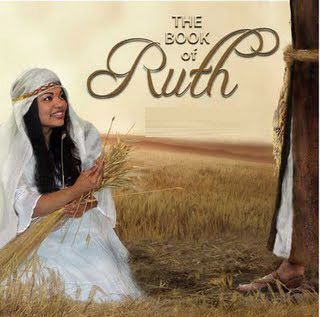
Ruth Lesson Seven

The Redemption – Ruth 4:1-12

4 Boaz went to the gate of the town and sat down there. Soon the family redeemer Boaz had spoken about came by. Boaz called him by name and said, “Come over here and sit down.” So he went over and sat down. Then Boaz took 10 men of the town’s elders  and said, “Sit here.” And they sat down. He said to the redeemer, “Naomi, who has returned from the land of Moab, is selling a piece of land that belonged to our brother Elimelech.  I thought I should inform you: Buy it back in the presence of those seated here and in the presence of the elders of my people. If you want to redeem it, do so. But if you do not want to redeem it, tell me so that I will know, because there isn’t anyone other than you to redeem it, and I am next after you.”

“I want to redeem it,” he answered.

Then Boaz said, “On the day you buy the land from Naomi, you will also acquire Ruth the Moabitess, the wife of the deceased man, to perpetuate the man’s name on his property.”

The redeemer replied, “I can’t redeem it myself, or I will ruin my own inheritance. Take my right of redemption, because I can’t redeem it.”

At an earlier period in Israel, a man removed his sandal and gave it to the other party in order to make any matter legally binding concerning the right of redemption or the exchange of property. This was the method of legally binding a transaction in Israel.

So the redeemer removed his sandal and said to Boaz, “Buy back the property yourself.”

Boaz said to the elders and all the people, “You are witnesses today that I am buying from Naomi everything that belonged to Elimelech, Chilion, and Mahlon. 10 I will also acquire Ruth the Moabitess, Mahlon’s widow, as my wife, to perpetuate the deceased man’s name on his property, so that his name will not disappear among his relatives or from the gate of his home. You are witnesses today.”

11 The elders and all the people who were at the gate said, “We are witnesses. May the Lord make the woman who is entering your house like Rachel and Leah, who together built the house of Israel. May you be powerful in Ephrathah and famous in Bethlehem. 12 May your house become like the house of Perez, the son Tamar bore to Judah, because of the offspring the Lord will give you by this young woman.” (HCSB)

Once the sun comes up, Boaz wastes no time in bringing his promise to a conclusion, regardless of whether he or the unnamed male relative is the one to redeem the land and Ruth.

This section is split into four parts.

  • Boaz preparing for “court” action, verses 1-2.
  • The court proceedings, verses 3-8.
  • Boaz’s response to the outcome of the court proceedings, verses 9-10.
  • Public reaction to the court proceedings, verses 11-12.

Verses 1-2 – Boaz preparing for court.

Boaz went to the gate of the town and sat down there. Soon the family redeemer Boaz had spoken about came by. Boaz called him by name and said, “Come  over here and sit down.” So he went over and sat down. Then Boaz took 10 men of the town’s elders and said, “Sit here.” And they sat down.

From a cultural standpoint, many important meetings or decisions took place around the gates of cities, especially small or mid-size ones. The gates were also the location of official administrative and judicial business for the local community. Boaz now begins the legal process to acquire the land that belonged to Elimelech, as well as Ruth for the purpose of marriage. The citizens of Bethlehem would recognize and understand that Boaz was there on legal business.

We also see the hand of God at work here as the first verse says, “Soon the family redeemer Boaz had spoken about came by.” This wasn’t a mere coincidence; this was the divine work of God to bring this specific man through the gate soon after Boaz had arrived and sat waiting for him.

Now that the two principal players in the legal proceeding are present, Boaz needs to gather the men as the required legal assembly for the action of redeeming the land and Ruth. A few observations on this.

  • They were citizens of Bethlehem.
  • As elders, they would be responsible for the administrative actions in the city.
  • The fact that they quickly responded to Boaz’s request signifies his stature in the community.

Now the scene is set for the legal proceedings to commence.

Verses 3-8 – The court proceedings.

He said to the redeemer, “Naomi, who has returned from the land of Moab, is selling a piece of land that belonged to our brother Elimelech.  I thought I should inform you: Buy it back in the presence of those seated here and in the presence of the elders of my people. If you want to redeem it, do so. But if you do not want to redeem it, tell me so that I will know, because there isn’t anyone other than you to redeem it, and I am next after you.”

“I want to redeem it,” he answered.

Then Boaz said, “On the day you buy the land from Naomi, you will also acquire Ruth the Moabitess, the wife of the deceased man, to perpetuate the man’s name on his property.”

The redeemer replied, “I can’t redeem it myself, or I will ruin my own inheritance. Take my right of redemption, because I can’t redeem it.”

At an earlier period in Israel, a man removed his sandal and gave it to the other party in order to make any matter legally binding concerning the right of redemption or the exchange of property. This was the method of legally binding a transaction in Israel.

So the redeemer removed his sandal and said to Boaz, “Buy back the property yourself.”

According to Mosaic law, the land under question was never intended to leave the family, and the concept of a kinsman-redeemer was an Israelite custom, designed to keep it in the family.

Leviticus 25:25  If your brother becomes destitute and sells part of his property, his nearest relative may come and redeem what his brother has sold.

Although the beginning of Ruth doesn’t specify, it is more than reasonable to assume that Elimelech was in financial trouble and sold the land in question before moving the family to Moab. Now, it is time for the land to return to its rightful family.

Another discussion point is contained in Deuteronomy 25:5-10 “When brothers live on the same property and one of them dies without a son, the wife of the dead man may not marry a stranger outside the family. Her brother-in-law is to take her as his wife, have sexual relations with her, and perform the duty of a brother-in-law for her. The first son she bears will carry on the name of the dead brother, so his name will not be blotted out from Israel. But if the man doesn’t want to marry his sister-in-law, she must go to the elders at the city gate and say, ‘My brother-in-law refuses to preserve his brother’s name in Israel. He isn’t willing to perform the duty of a brother-in-law for me.’ The elders of his city will summon him and speak with him. If he persists and says, ‘I don’t want to marry her,’ then his sister-in-law will go up to him in the sight of the elders, remove his sandal from his foot, and spit in his face. Then she will declare, ‘This is what is done to a man who will not build up his brother’s house.’ 10 And his family name in Israel will be called ‘The house of the man whose sandal was removed.’

From this passage, it would seem that the legal levirate obligation to marry the widow only applied to the immediate brothers of a deceased man. However, it is possible, if not highly likely, that Israelite custom would follow the pecking order in the inheritance law in cases where no immediate brother existed. Numbers 27:9-11  If he has no daughter, give his inheritance to his brothers. 10 If he has no brothers, give his inheritance to his father’s brothers. 11 If his father has no brothers, give his inheritance to the nearest relative of his clan, and he will take possession of it. This is to be a statutory ordinance for the Israelites as the Lord commanded Moses.”

From Ruth 2:1, we know that Boaz was from the clan of Elimelech but below the unnamed redeemer now meeting with Boaz.

Boaz now gets right to the point.

  • Naomi is selling the family land.
  • The unnamed man has the first right to redeem it.
  • Boaz asks for the man to make a decision regarding the redemption before the witnesses gathered.
  • Boaz asks the man to make his right then because Boaz will redeem it if the man declines.
  • Boaz is carrying through with his pledge to resolve the issue as soon as it is possible.

Thinking that it is an easy decision, the man agrees to redeem it. Now Boaz presents the complicating portion of the redemption. If the man redeems the land, he will also assume responsibility for the welfare of Ruth, which contains several issues.

  • He will assume responsibility to care for and protect Ruth.
  • Not only is Ruth a widow, but she is also a Moabite, an enemy of Israel.
  • Since Mahlon and Ruth didn’t have a child together to carry on the family name, the unnamed man will need to have a child with Ruth to carry on Mahlon’s family name.

Although the primary reason for Naomi to develop this plan was for Boaz to redeem the land and Ruth was for the protection and well-being of Ruth, we see in the last portion of verse five the most critical piece of the transaction. The continuation of the family line. The next lesson will illuminate the importance of the child.

The unnamed man is now faced with a decision, of which there are four possible courses of action.

  • He could accept the moral responsibility for Elimelech’s estate, redeem the field, marry Ruth, have children with her, and take care of Naomi.
  • He could redeem the field and pledge to marry Ruth but break the pledge after completing the deal. However, doing this would tarnish his reputation and standing in the community.
  • He could reject the offer and cede the rights to Boaz. This would not have been irresponsible as Boaz has already indicated he will redeem the land and Ruth if given the opportunity.
  • He could accept the responsibility to redeem the land but reject the responsibility to marry Ruth and have children, ceding that to Boaz. This would be dangerous on two counts. First, it would have cost him respect and honor in the community in the short-term. Second, any child between Boaz and Ruth could later claim the land costing him financially in the long-term.

Considering the economic and moral ramifications of the possible decisions, he chose the third course of action. From his response, it appears he only considered the first and third choices as viable. His decision was likely based on three main factors.

  • The economic factor.
    • Cost of redeeming the property.
    • Cost of supporting Naomi.
    • Cost of marrying Ruth.
    • He probably considered these cumulative costs as exceeding the positives of acquiring the land.
  • Implications of raising a child to carry on the name of the deceased.
    • It is possible she would have only one child.
    • The child would legally be considered a descendent of Elimelech.
    • The child would legally acquire the land in question in the current discussion.
    • The child would be eligible for at least a portion of the unnamed man’s estate.
  • Ruth was a Moabite.
    • How would the ethnic implications appear to others?
    • His estate could fall to a child that was half Moabite.

Upon reaching his decision, he removed his sandal and presented it to Boaz to signify that he had forfeited his right to redemption. The first portion of verse seven indicates that this may no longer have been an understood custom and the time Ruth was written. He also tells Boaz to buy the property himself. This concluded the court negotiation, and the decision is final and binding.

Verse 9-10

Boaz said to the elders and all the people, “You are witnesses today that I am buying from Naomi everything that belonged to Elimelech, Chilion, and Mahlon. 10 I will also acquire Ruth the Moabitess, Mahlon’s widow, as my wife, to perpetuate the deceased man’s name on his property, so that his name will not disappear among his relatives or from the gate of his home. You are witnesses today.”

The land now belongs to Boaz, and he has acquired the right to marry Ruth, as well as take care of Naomi.

If anyone in the future questions Boaz’s right to the land and for marrying Ruth, he can produce both the sandal that was given to signify the legality of the transaction as well as the witnesses who were present during the proceedings. Boaz had three goals, as presented in these two verses.

  • To establish the name of the deceased on his own patrimonial ancestral land.
  • To prevent the name of the deceased from being cut off from his relatives.
  • To prevent his name from being cut off from the gate of his home.

Verses 11-12

11 The elders and all the people who were at the gate said, “We are witnesses. May the Lord make the woman who is entering your house like Rachel and Leah, who together built the house of Israel. May you be powerful in Ephrathah and famous in Bethlehem. 12 May your house become like the house of Perez, the son Tamar bore to Judah, because of the offspring the Lord will give you by this young woman.”

Considering the background of Ruth, the response by the elders at the gate is extreme in the positive sense of the word. Their response can be broken down into three parts.

  • The elders pray that Yahweh would elevate Ruth to the level of two of the matriarchs of Israel, Rachel, and Leah.
    • The term “built a house” refers to having children and establishing a family line.
    • Calling upon Yahweh to bless falls in line with Psalm 127:1a  Unless the LORD builds a house, its builders labor over it in vain.
  • They pray that Boaz would be “powerful in Ephrathah and famous in Bethlehem.” The meaning is that Boaz would be blessed in his marriage and for the marriage to prosper.
  • The reference to Tamar needs some explanation because of the background of her becoming pregnant.
    • The story of Tamar is probably the most well-known concerning levirate obligation and betrayal. This caused her to disguise herself as a prostitute and bear twins from her father-in-law, Perez and Zerah.
    • They were the ancestors of the tribe of Judah, with Perez’s descendants playing the more significant role in Israel’s history.
    • Perez is the ancestor of Boaz’s clan that is living in Bethlehem.
    • The reference to Tamar is not an endorsement of her behavior, but rather to the idea that the family line continued even though the behavior was sinful. How much greater would the blessing be for Boaz and Ruth, who had acted in the highest moral standards.
    • Their prayer is answered by the birth of David and the establishment of the eternal royal line.

Reflecting on this chapter, we see four characteristics that distinguish Boaz from the unnamed kinsman who refused to redeem the land and Ruth.

  • Willingness – Boaz didn’t hesitate in taking on his responsibility, and he settled it on the first day possible.
  • Purposeful – All of Boaz’s actions were deliberate and well-thought. He didn’t leave anything to chance and made sure everything was done correctly.
  • Faithfulness – He fulfilled all the promises he made to Ruth the night before.
  • Unselfish – His actions were to maintain the name of the deceased husband with the property in question.

Once again, we see Boaz as a typology of Christ through his redemptive actions on behave of Naomi and Ruth.  Boaz was able to be the kinsman-redeemer because of three factors.

  • He was a near relative.
  • He was able to pay the redemption price.
  • He was willing to redeem the land and Ruth.

Christ is the ultimate kinsman-redeemer.

  • Jesus became flesh and blood, becoming our “near kinsman” for all eternity.
  • Jesus paid the eternal redemption price, His blood, and life on the cross.
  • Jesus willingly went to the cross on our behalf to restore us to “land” we had before the fall, fellowship with God in His presence.

Applications.

Although not many, if any, of us will ever have an opportunity to act as a redeemer in the same manner as Boaz, we can exhibit the same characteristics.

  • Do we willingly take on our responsibilities? These could be across a broad spectrum of actions, family, job, financial, kingdom work.
  • Are we purposeful in how we plan and execute our daily tasks? This doesn’t mean we don’t rely on the Holy Spirit, but it does mean we don’t just “wing it” every day.
  • Do we display faithfulness? Do we keep our word to do the things we have promised to others?
  • Are we unselfish in our actions? Do we do things to receive something in return, or do we do things because we want to shine the light of Christ, bless others, and love our neighbors as ourselves?
  • One final application in conjunction with the Great Commission. Are we willing and purposeful in seeking opportunities to share the Gospel? Are we faithful in accurately portraying the Gospel message, not adding or taking away from it as some heretical teaching does? Do we give God glory, or do we try and take credit for the souls that are saved? 
Ruth Lesson Six

Naomi’s Plan – Ruth 3:1-18

Ruth’s mother-in-law Naomi said to her, “My daughter, shouldn’t I find security for you, so that you will be taken care of? Now isn’t Boaz our relative? Haven’t you been working with his female servants? This evening he will be winnowing barley on the threshing floor. Wash, put on perfumed oil, and wear your best clothes. Go down to the threshing floor, but don’t let the man know you are there until he has finished eating and drinking. When he lies down, notice the place where he’s lying, go in and uncover his feet, and lie down. Then he will explain to you what you should do.”

So Ruth said to her, “I will do everything you say.” She went down to the threshing floor and did everything her mother-in-law had instructed her. After Boaz ate, drank, and was in good spirits, he went to lie down at the end of the pile of barley. Then she went in secretly, uncovered his feet, and lay down.

At midnight, Boaz was startled, turned over, and there lying at his feet was a woman! So he asked, “Who are you?”

“I am Ruth, your slave,” she replied. “Spread your cloak over me, for you are a family redeemer.”

10 Then he said, “May the Lord bless you, my daughter. You have shown more kindness now than before, because you have not pursued younger men, whether rich or poor. 11 Now don’t be afraid, my daughter. I will do for you whatever you say,  since all the people in my town know that you are a woman of noble character.  12 Yes, it is true that I am a family redeemer, but there is a redeemer closer than I am. 13 Stay here tonight, and in the morning, if he wants to redeem you, that’s good. Let him redeem you. But if he doesn’t want to redeem you, as the Lord lives, I will. Now lie down until morning.”

14 So she lay down at his feet until morning but got up while it was still dark. Then Boaz said, “Don’t let it be known that a woman came to the threshing floor.” 15 And he told Ruth, “Bring the shawl you’re wearing and hold it out.” When she held it out, he shoveled six measures of barley into her shawl, and she went into the town.

16 She went to her mother-in-law, Naomi, who asked her, “How did it go, my daughter?”

Then Ruth told her everything the man had done for her. 17 She said, “He gave me these six measures of barley, because he said, ‘Don’t go back to your mother-in-law empty-handed.’ ”

18 Naomi said, “My daughter, wait until you find out how things go, for he won’t rest unless he resolves this today.” (HCSB)

There are three sections to this passage.

  • Verses 1-5: Naomi’s plan.
  • Verses 6-15: The execution of the plan.
  • Verses 16-18: The results of the plan.

Naomi’s Plan

Ruth’s mother-in-law Naomi said to her, “My daughter, shouldn’t I find security for you, so that you will be taken care of? Now isn’t Boaz our relative? Haven’t you been working with his female servants? This evening he will be winnowing barley on the threshing floor. Wash, put on perfumed oil, and wear your best clothes. Go down to the threshing floor, but don’t let the man know you are there until he has finished eating and drinking. When he lies down, notice the place where he’s lying, go in and uncover his feet, and lie down. Then he will explain to you what you should do.”

So Ruth said to her, “I will do everything you say.”

Although not explicit in the conclusion of chapter two, it is safe to infer that Naomi expected Boaz to pursue Ruth in a manner that was more than a landowner being kind to a foreigner. Naomi was expecting Boaz to pursue Ruth in a way that would lead to marriage and a secure future for both her and Ruth. For whatever reason, Boaz does not follow that path, and Naomi decides to take matters into her own hand.

Verse 1

Naomi’s question to Ruth contains two parts.

  • Shouldn’t Naomi do something to find security for Ruth?
  • Shouldn’t Naomi do something so that Ruth will be taken care of and not have to worry about her future?

From a historical contextual standpoint, this was a critically important point. Women in Israel longed for the security and tranquility in the home of a loving husband. Naomi’s single reason for doing this is the welfare of her daughter-in-law. Also, it was the duty of the mother-in-law to see to the security and welfare of the widowed daughter-in-law. In this case, there is added weight as Ruth has pledged her life to Naomi until death separates them. These two women display a covenant relationship with each other where they place the other’s welfare above their own.

Verse 2

Typically, barley was threshed after the wheat was harvested, usually late May to June. The best threshing floors were rock outcroppings on hilltops. This would take advantage of the open area and wind to separate the grain from the chaff. It is also likely that the threshing floor in question here was at least on the outskirts of town, if not farther away. The rationale for doing it at night would be gentler breezes.

Verse 3-5

Although on the surface, it appears simple enough, a lot going on in the first sentence of verse three.

  • Wash – This was a typical first step in preparing for a sexual encounter or marriage.
  • Put on perfumed oil – The Hebrew verb means to anoint and likely refers to perfumed olive oil. Due to the hot climate and lack of modern deodorants, this was necessary to combat body odors.
  • Wear your best clothes – This is likely not a correct translation of the Hebrew word. Likely, Ruth was still wearing some type of clothing to indicate mourning, and changing clothes would imply a shift from mourning to everyday life.

Another reason for Boaz, or anyone, to be there at night was to act as security to ensure the grain wasn’t stolen.

Ruth wasn’t to let Boaz know she was there until he had finished eating and drinking. There is no indication that Boaz was drunk, either implicitly or explicitly. In addition, the idea of Boaz being drunk would conflict with the characteristics describing Boaz earlier in the book.

The situation gets even more complicated when Naomi tells Ruth to uncover his feet/legs and lie down with him. Understanding the cultural norms at that time make it even murkier.

  • At winnowing time, the threshing floors often became a place of illicit sex.
  • Since men often spent the night in the fields next to the collected grain, prostitutes would often visit them to offer their services.

Although Ruth’s actions could be interpreted as seductive, her actions so far and through this encounter suggest that was not the intent. Ruth is anything but a typical Moabite. Instead, Ruth possesses the characteristics of Israelite hesed, steadfast love, kindness, faithfulness, and loyalty within a relationship.

This is confirmed by Boaz’s words to her in verses 10 and 11.

  • May the Lord bless you.
  • You are a woman of noble character.

Boaz could interpret Ruth’s actions in one of three ways.

  • Boaz could wake up and interpret her actions as those of a prostitute and partake of the services offered.
  • Boaz could wake up and interpret her actions as those of a prostitute, but as a noble and virtuous Israelite chase her away.
  • Boaz could wake up and immediately recognize the true intentions of Ruth’s actions and respond favorably.

This is a reminder that sex is a wonderful gift from God to be enjoyed by a man and woman in a marriage relationship after the couple is married.

Verses 6-15

She went down to the threshing floor and did everything her mother-in-law had instructed her. After Boaz ate, drank, and was in good spirits, he went to lie down at the end of the pile of barley. Then she went in secretly, uncovered his feet, and lay down.

At midnight, Boaz was startled, turned over, and there lying at his feet was a woman! So he asked, “Who are you?”

“I am Ruth, your slave,” she replied. “Spread your cloak over me, for you are a family redeemer.”

10 Then he said, “May the Lord bless you, my daughter. You have shown more kindness now than before, because you have not pursued younger men, whether rich or poor. 11 Now don’t be afraid, my daughter. I will do for you whatever you say,  since all the people in my town know that you are a woman of noble character.  12 Yes, it is true that I am a family redeemer, but there is a redeemer closer than I am. 13 Stay here tonight, and in the morning, if he wants to redeem you, that’s good. Let him redeem you. But if he doesn’t want to redeem you, as the Lord lives, I will. Now lie down until morning.”

14 So she lay down at his feet until morning but got up while it was still dark. Then Boaz said, “Don’t let it be known that a woman came to the threshing floor.” 15 And he told Ruth, “Bring the shawl you’re wearing and hold it out.” When she held it out, he shoveled six measures of barley into her shawl, and she went into the town.

The section is divided into two parts.

  • Verses 6-13 occurs at the threshing floor, likely between evening and midnight.
  • Verses 14-15 occur between midnight and morning and ends with Ruth returning to town with the grain.

The first subsection, verses 6-13, contains four points.

  • Ruth takes charge of the situation after Boaz wakes up and asks her who she is. This is remarkable for several reasons.
    • Ruth just described herself as a slave, and Boaz is her master.
    • Ruth is uninvited and on his turf.
    • Ruth is a woman, and Boaz is a man.
    • Ruth is a foreigner, and he is a native.
  • Because of the flipping of the roles, it begs the question, “Who is Boaz?”
  • With no warning, Ruth asks Boaz to marry her.
    • The Hebrew phrase that is translated as “Spread your cloak over me” actually means “to spread one’s wings over” and is a metaphor for the protection and provision that Yahweh provides.
      • Ruth is demanding that Boaz takes her under his wings and assume responsibility for her.
      • In Hebrew, the term “to spread one’s wings over someone” was a way to propose marriage.
      • It signified the husband’s declaration to provide for his future wife.
    • Boaz correctly interprets Ruth’s actions not as a request for sex but as a marriage proposal.
  • The basis for the proposal is that Boaz is the kinsman-redeemer for Naomi and Ruth.
    • Ruth fully understands this Israelite custom, likely from discussions with Naomi.
    • Ruth, although a Moabite, is aware and accepts the custom.

Boaz’s response is also remarkable. His response breaks down into four parts.

  • A blessing and eulogy for Ruth.
    • Asking Yahweh to bless her.
    • Acknowledgment of kindness towards Boaz.
    • Acknowledging that although Ruth could have pursued younger men, she didn’t.
  • A promise.
    • Remove any fear.
    • Boaz will pursue the marriage Ruth proposed.
    • The townspeople already recognize her noble character and would welcome the marriage.
  • A disclosure of a complication.
    • Boaz is a kinsman-redeemer.
    • However, there is a kinsman-redeemer with a closer blood tie than Boaz. That man, unnamed, will have to be given the first chance before Boaz can fulfill the promise.
  • Words of reassurance.
    • Boaz tells Ruth to rest as they can do nothing more about the situation until the morning when the issue of redemption can be brought up before the town and the man first in line to redeem Elimelech’s inheritance.
    • Boaz’s determination is expressed in the phrase “as the LORD lives,” which is an oath to make it happen.

Before moving on to the next section of the passage, let’s consider the nature of the marriage that Naomi and Ruth likely discussed and which Boaz agreed to enter.

  • So far, there has been no discussion of children.
    • The family preservation idea present in Deuteronomy 25:5-10 has not been a part of the discussion.
    • The primary reason for the marriage was not preserving Mahlon’s family name. It was to provide a secure and stable home for Ruth.
  • There are no specific instructions in the Law to cover these circumstances. Naomi’s idea is based solely on confidence that Boaz will do the right thing out of a sense of moral obligation to the family.

Boaz now senses the delicate nature of their circumstances as the sun begins to rise. Not only does Boaz need to protect Ruth’s reputation, but Boaz also has a reputation to protect as well.

  • If the workers discovered Ruth with Boaz, it would undermine his reputation and maybe his ability to effectively interact with them in the future.
  • Before allowing Ruth to leave, Boaz gives her additional grain to take back home.

Verses 16-18

16 She went to her mother-in-law, Naomi, who asked her, “How did it go, my daughter?”

Then Ruth told her everything the man had done for her. 17 She said, “He gave me these six measures of barley, because he said, ‘Don’t go back to your mother-in-law empty-handed.’ ”

18 Naomi said, “My daughter, wait until you find out how things go, for he won’t rest unless he resolves this today.”

One can imagine that, just as Ruth and Boaz likely had a restless night, that Naomi was in the same state as she waited for Ruth to come home. Once Ruth makes it home, Naomi wants to know what happened and if her plan to join the two in marriage was a success.

The conversation then quickly shifts to the grain that Ruth brought home. In the previous section, the reader can only speculate about the reason for the gift of grain. In this section, more information is given as to the reason, and we can draw some conclusions as to why Boaz gave the grain.

  • It is possible that Boaz’s interpretation of the kinsman-redeemer principle means that he views Naomi as the true beneficiary, and his obligation is to Naomi rather than Ruth.
  • The grain could be viewed as a gift for the plan that Naomi devised.
    • Naomi encouraged Ruth to end her mourning and put on normal clothes.
    • Naomi devised the plan on how Ruth was to meet Boaz.
    • Naomi advised Ruth to present the issue of Boaz being their kinsman-redeemer.
    • Naomi was the brain behind the entire plan, and the grain is a gift in recognition of her plan.
  • It could’ve been a gift to Naomi as an indication of Boaz’s promise to redeem Ruth. Either directly or through the man who had the first chance to redeem her. In addition, since Naomi was Ruth’s legal guardian, Boaz may have intended the grain as a down payment on the bride dowry given at the time of engagement.

Naomi’s response in verse 18 indicates it is the third possibility that is the correct interpretation.

Chapter 3 continues the illustration that Boaz is a typology of Christ.

  • Redemption through a kinsman-redeemer.
    • Ruth asked Boaz to redeem her.
    • Each of us can come humbly before Jesus and ask Him for redemption from the consequences of sin, eternal condemnation, and separation from God in hell.
  • Protection.
    • Ruth sought the protection of a husband and a loving home.
    • We should daily ask for protection. This is a humble act acknowledging our reliance on God.
      • We need protection from the desires of our sinful nature.
      • From the pressures of the world.
      • From the devil, who prowls like a roaring lion looking for someone to devour.
  • Responsibility.
    • Boaz accepted the responsibility to act as the kinsman-redeemer.
    • Jesus accepted the responsibility of going to the cross, demonstrating obedience to God’s plan, and accepting the responsibility of all of our sins to set us free from the condemnation we deserved.

Applications

  • Do we accept responsibility for what’s right when opportunities present themselves to us?
  • Do we act with a noble character when temptation presents itself? While Ruth was not tempting Boaz in a sexual manner, if Boaz had interpreted it that way, the situation would have had a radically different ending.
  • As we interact with our spiritual brothers and sisters, do we accept the biblical responsibility to encourage and care for each other, serve one another, sympathize with their hurts or struggles, speak the truth in love, teach and correct one another?
  • As we interact with non-Christians, do we accept the biblical responsibility to live before them in a way that shines the light of Jesus, makes the Gospel attractive to them, and share the Gospel with them?

Ruth Lesson Five

Blessings Return – Ruth 2:17-23

17 So Ruth gathered grain in the field until evening. She beat out what she had gathered, and it was about 26 quarts of barley. 18 She picked up the grain and went into the town, where her mother-in-law saw what she had gleaned. Then she brought out what she had left over from her meal and gave it to her.

19 Then her mother-in-law said to her, “Where did you gather barley today, and where did you work? May the Lord bless the man who noticed you.”

Ruth told her mother-in-law about the men she had worked with and said, “The name of the man I worked with today is Boaz.”

20 Then Naomi said to her daughter-in-law, “May he be blessed by the Lord, who has not forsaken his kindness to the living or the dead.” Naomi continued, “The man is a close relative. He is one of our family redeemers.”

21 Ruth the Moabitess said, “He also told me, ‘Stay with my young men until they have finished all of my harvest.’ ”

22 So Naomi said to her daughter-in-law Ruth, “My daughter, it is good for you to work  with his female servants, so that nothing will happen to you in another field.” 23 Ruth stayed close to Boaz’s female servants and gathered grain until the barley and the wheat harvests were finished. And she lived with her mother-in-law. (HCSB)

In this lesson, we see Ruth continuing to pick the grain and take it home to Naomi. Ruth then tells the events of the day, how she met Boaz, and the instructions that Boaz gave to her and his servants. Although most of the passage occurs on the same day, the last verse indicates that anywhere from six to ten weeks have elapsed between verses 22 and 23.

Verses 17-18

These two verses seem relatively straightforward, but a closer look reveals some startling details.

  • Ruth was obviously very industrious. She has worked the entire day, except for the mid-day meal in the last section.
  • Separating the grain from the stalks is no easy task. It requires some type of stick to beat the heads of the barley to remove the grain.
  • The amount of grain gathered was 26 quarts or about one ephah. That is an incredible amount of grain for one person to harvest in just one day. Estimates range between 30 and 50 pounds of barley.
  • Not only did Ruth harvest that much grain, but she also transported it back to Naomi’s house. We don’t know for sure, but it is probably safe to say, due to Ruth’s circumstances (Moabite and widow), that she had to carry it herself. Even if it was a short distance, not likely, that is quite an accomplishment for one woman.
  • Ruth shares the leftovers from her noon-day meal with Naomi.

Comparing the circumstances that the two women found themselves in while in Moab to the results of just one day of gathering grain, the reader sees a remarkable change of fortune. They left Moab with nothing but what they wore and maybe a few possessions, and now they have an overflowing abundance of grain. The once bitter Naomi is now overflowing with joy and optimism. This demonstrates a couple of characteristics of Yahweh.

  • If we repent and turn back, His anger lasts for only a moment.
  • His love and favor are never-ending.
  • Genesis 24:27  and said, “Praise the LORD, the God of my master Abraham, who has not withheld His kindness and faithfulness from my master. As for me, the LORD has led me on the journey to the house of my master’s relatives.”

Verses 19-22

19 Then her mother-in-law said to her, “Where did you gather barley today, and where did you work? May the Lord bless the man who noticed you.”

Ruth told her mother-in-law about the men she had worked with and said, “The name of the man I worked with today is Boaz.”

20 Then Naomi said to her daughter-in-law, “May he be blessed by the Lord, who has not forsaken his kindness to the living or the dead.” Naomi continued, “The man is a close relative. He is one of our family redeemers.”

21 Ruth the Moabitess said, “He also told me, ‘Stay with my young men until they have finished all of my harvest.’ ”

22 So Naomi said to her daughter-in-law Ruth, “My daughter, it is good for you to work  with his female servants, so that nothing will happen to you in another field.”

Although we can’t read the “tone” of Naomi’s statement when Ruth comes home, we can certainly infer that she was at least mildly surprised by the amount of grain she harvested. Before even knowing who it was, Naomi is asking Yahweh to bless the man who showed such kindness and allowed Ruth to not only work but to bring a bountiful harvest home. When Naomi hears the name of Boaz, she proclaims a second blessing and tells Ruth that Boaz is a blood relative, and more importantly, a kinsman-redeemer. The relationship of Boaz to Naomi is a critical point as events unfold. Let’s review a couple of passages that talk about the kinsman-redeemer.

  • Leviticus 25:25  If your brother becomes destitute and sells part of his property, his nearest relative may come and redeem what his brother has sold.
  • Leviticus 25:47-49  47 “If a foreigner or temporary resident living among you prospers, but your brother living near him becomes destitute and sells himself to the foreigner living among you, or to a member of the foreigner’s clan, 48 he has the right of redemption after he has been sold. One of his brothers may redeem him. 49 His uncle or cousin may redeem him, or any of his close relatives from his clan may redeem him. If he prospers, he may redeem himself.
  • A kinsman-redeemer had four roles according to Scripture.
    • To avenge the murder or rape of a relative. Numbers 35:9-11 The Lord said to Moses, 10 “Speak to the Israelites and tell them: When you cross the Jordan into the land of Canaan, 11 designate cities to serve as cities of refuge for you, so that a person who kills someone unintentionally may flee there.
    • To recover property forfeited by a kinsman. Leviticus 25:25  If your brother becomes destitute and sells part of his property, his nearest relative may come and redeem what his brother has sold.
    • To raise a male heir to his brother who died childless, known as Levirate marriage. Deuteronomy 25:5-10 “When brothers live on the same property  and one of them dies without a son, the wife of the dead man may not marry a stranger outside the family. Her brother-in-law is to take her as his wife, have sexual relations with her, and perform the duty of a brother-in-law for her. The first son she bears will carry on the name of the dead brother, so his name will not be blotted out from Israel.  But if the man doesn’t want to marry his sister-in-law, she must go to the elders at the city gate and say, ‘My brother-in-law refuses to preserve his brother’s name in Israel. He isn’t willing to perform the duty of a brother-in-law for me.’ The elders of his city will summon him and speak with him. If he persists and says, ‘I don’t want to marry her,’ then his sister-in-law will go up to him in the sight of the elders, remove his sandal from his foot, and spit in his face. Then she will declare, ‘This is what is done to a man who will not build up his brother’s house.’ 10 And his family name in Israel will be called ‘The house of the man whose sandal was removed.’
    • To support a fellow kinsman and/or their dependents or redeem them from debt. Leviticus 25:35-55 35 “If your brother becomes destitute and cannot sustain himself among you, you are to support him as a foreigner or temporary resident, so that he can continue to live among you. 36 Do not profit or take interest from him, but fear your God and let your brother live among you. 37 You are not to lend him your silver with interest or sell him your food for profit. 38 I am Yahweh your God, who brought you out of the land of Egypt to give you the land of Canaan and to be your God. 39 “If your brother among you becomes destitute and sells himself to you, you must not force him to do slave labor. 40 Let him stay with you as a hired hand or temporary resident; he may work for you until the Year of Jubilee. 41 Then he and his children are to be released from you, and he may return to his clan and his ancestral property. 42 They are not to be sold as slaves, because they are My slaves that I brought out of the land of Egypt. 43 You are not to rule over them harshly but fear your God. 44 Your male and female slaves are to be from the nations around you; you may purchase male and female slaves. 45 You may also purchase them from the foreigners staying with you, or from their families living among you—those born in your land. These may become your property. 46 You may leave them to your sons after you to inherit as property; you can make them slaves for life. But concerning your brothers, the Israelites, you must not rule over one another harshly. 47 “If a foreigner or temporary resident living among you prospers, but your brother living near him becomes destitute and sells himself to the foreigner living among you, or to a member of the foreigner’s clan, 48 he has the right of redemption after he has been sold. One of his brothers may redeem him. 49 His uncle or cousin may redeem him, or any of his close relatives from his clan may redeem him. If he prospers, he may redeem himself. 50 The one who purchased him is to calculate the time from the year he sold himself to him until the Year of Jubilee. The price of his sale will be determined by the number of years. It will be set for him like the daily wages of a hired hand. 51 If many years are still left, he must pay his redemption price in proportion to them based on his purchase price. 52 If only a few years remain until the Year of Jubilee, he will calculate and pay the price of his redemption in proportion to his remaining years. 53 He will stay with him like a man hired year by year. A foreign owner is not to rule over him harshly in your sight. 54 If he is not redeemed in any of these ways, he and his children are to be released at the Year of Jubilee. 55 For the Israelites are My slaves. They are My slaves that I brought out of the land of Egypt; I am Yahweh your God.

Ruth tells Naomi how Boaz told her to stay with his workers until they have finished all of the harvests. Boaz isn’t inviting Ruth to glean for a day or two; he tells her to continue to come until the harvest is complete.

Naomi not only approves of the offer but further explains why this is beneficial to Ruth. Boaz has female workers who participate in the harvesting. Not only did Boaz tell the male workers to leave Ruth alone, but there are also other females in the work crew, creating a safer overall environment.

Verse 23

Ruth stayed close to Boaz’s female servants and gathered grain until the barley and the wheat harvests were finished. And she lived with her mother-in-law.

There are two explicit things happening here, and one that is not readily apparent.

  • Ruth is still committed to Naomi, as seen in the last sentence.
    • Ruth made an oath to Naomi, and she is sticking to it.
    • The two women are sharing in the favor of the Lord after returning to Bethlehem, the house of bread.
  • The passage specifies two harvests.
    • Barley harvest.
      • Barley was the second most important grain.
      • It was the primary grain for the lower socio-economic class.
      • The barley harvest typically began in March or April.
      • Barley was used to assess the value of the land. Leviticus 27:16 If a man consecrates to the Lord any part of a field that he possesses, your assessment of value will be proportional to the seed needed to sow it, at the rate of 50 silver shekels for every five bushels of barley seed.
      • It coincided with Passover.
    • Wheat harvest.
      • Wheat was the most important grain.
      • The wheat harvest was typically complete around the beginning of June.
      • It culminated with the feast at Pentecost, also called the Festival of Weeks, which would begin seven weeks or 50 days after Passover.
      • Deuteronomy 16:9  “You are to count seven weeks, counting the weeks from the time the sickle is first put to the standing grain.
      • Exodus 34:22 “Observe the Festival of Weeks with the firstfruits of the wheat harvest, and the Festival of Ingathering at the turn of the agricultural year.
  • Ruth gathered grain for an extended period of time.
    • An understanding of the agricultural cycle of the region and time indicates that Ruth was able to gather grain, both barley and wheat, for approximately two months.
    • During this time, even if Ruth doesn’t continue at the same gleaning pace as on the first day, it is safe to infer that over the course of the harvest, she was able to bring an overflowing abundance to Naomi’s house to provide for their needs.

Let’s make some summary observations from this passage.

  • The Lord’s favor does not mean we will have a trouble-free life.
  • Ruth was not only a hard worker; she didn’t waste anything God had provided to her.
  • The change in Naomi occurred because of the hope she had in Boaz as a kinsman-redeemer.

Applications

  • Hard work pays off. This isn’t an endorsement of works-based salvation. However, it is an endorsement of doing our best at whatever we do. Colossians 3:23  Whatever you do, do it enthusiastically, as something done for the Lord and not for men.
  • Do you practice stewardship with your resources? Ruth didn’t waste any of her mid-day meal that Boaz provided. She brought what was leftover and shared it with Naomi. How often do we see others, or maybe even ourselves, take more food than we eat and then throw the extra away? This concept doesn’t apply to just food. Do we “need” a big house just because, or could we make do with a smaller place.
  • Just as Naomi and Ruth had a kinsmen-redeemer, Boaz, to rescue them, we also have a Redeemer. No matter what our circumstances or difficulties are, we can rejoice and take comfort in the fact that Jesus is our Redeemer. When we have surrendered to His lordship, we have no more worries or fears, regardless of the difficulties that we are going through.

Ruth Lesson Four

The Redeemer Appears – Ruth 2:1-16

2 Now Naomi had a relative on her husband’s side named Boaz. He was a prominent man of noble character from Elimelech’s family.

Ruth the Moabitess asked Naomi, “Will you let me go into the fields and gather fallen grain behind someone who allows me to?”

Naomi answered her, “Go ahead, my daughter.” So Ruth left and entered the field to gather grain behind the harvesters. She happened to be in the portion of land belonging to Boaz, who was from Elimelech’s family.

Later, when Boaz arrived from Bethlehem, he said to the harvesters, “The Lord be with you.”

“The Lord bless you,” they replied.

Boaz asked his servant who was in charge of the harvesters, “Whose young woman is this?”

The servant answered, “She is the young Moabite woman who returned with Naomi from the land of Moab. She asked, ‘Will you let me gather fallen grain among the bundles behind the harvesters?’ She came and has remained from early morning until now, except that she rested a little in the shelter.”

Then Boaz said to Ruth, “Listen, my daughter. Don’t go and gather grain in another field, and don’t leave this one, but stay here close to my female servants. See which field they are harvesting, and follow them. Haven’t I ordered the young men not to touch you? When you are thirsty, go and drink from the jars the young men have filled.”

10 She bowed with her face to the ground and said to him, “Why are you so kind to notice me, although I am a foreigner?”

11 Boaz answered her, “Everything you have done for your mother-in-law since your husband’s death has been fully reported to me: how you left your father and mother and the land of your birth, and how you came to a people you didn’t previously know. 12 May the Lord reward you for what you have done, and may you receive a full reward from the Lord God of Israel, under whose wings you have come for refuge.”

13 “My lord,” she said, “you have been so kind to me, for you have comforted and encouraged your slave, although I am not like one of your female servants.”

14 At mealtime Boaz told her, “Come over here and have some bread and dip it in the vinegar sauce.” So she sat beside the harvesters, and he offered her roasted grain. She ate and was satisfied and had some left over.

15 When she got up to gather grain, Boaz ordered his young men, “Let her even gather grain among the bundles, and don’t humiliate her. 16 Pull out some stalks from the bundles for her and leave them for her to gather. Don’t rebuke her.” (HCSB)

Chapter 2 of Ruth begins the journey out of the emotional and spiritual valley that Naomi and Ruth were in after the multiple tragedies in Moab. This section of chapter two is broken down into two main sections, verses 1-3 and 4-16. Verses 4-16 are further broken down into three subsections. Let’s examine the passage.

Verses 1-3

2 Now Naomi had a relative on her husband’s side named Boaz. He was a prominent man of noble character from Elimelech’s family.

Ruth the Moabitess asked Naomi, “Will you let me go into the fields and gather fallen grain behind someone who allows me to?”

Naomi answered her, “Go ahead, my daughter.” So Ruth left and entered the field to gather grain behind the harvesters. She happened to be in the portion of land belonging to Boaz, who was from Elimelech’s family.

Whereas Naomi was the primary character in chapter one, Ruth takes on that role as the story unfolds. There are several key points to remember.

  • Once again, Ruth is referred to as “the Moabitess.”
    • She is an alien in a foreign land.
    • She is not going to wait for something good to happen to her; she will play an active role in making a better life for herself and Naomi.
    • However, she was at the lowest rung on the local social ladder.
  • Mosaic Law comes into effect here.
    • Leviticus 19:9-10  “When you reap the harvest of your land, you are not to reap to the very edge of your field or gather the gleanings of your harvest. 10 You must not strip your vineyard bare or gather its fallen grapes. Leave them for the poor and the foreign resident; I am Yahweh your God.
    • Leviticus 23:22 When you reap the harvest of your land, you are not to reap all the way to the edge of your field or gather the gleanings of your harvest. Leave them for the poor and the foreign resident; I am Yahweh your God.”
    • Deuteronomy 24:19 “When you reap the harvest in your field, and you forget a sheaf in the field, do not go back to get it. It is to be left for the foreigner, the fatherless, and the widow, so that the Lord your God may bless you in all the work of your hands.
  • Because Ruth was a Moabite and a widow, she qualified on two counts. But for the same reasons, their cooperation was not guaranteed, which is why she was hoping to glean behind someone who would allow her.
  • Ruth going to Boaz’s field by “accident,” God’s hand had been at work from the beginning.
    • Elimelech taking the family to Moab during the famine.
    • Removing the famine to bring them back.
    • Their arrival at precisely the beginning of the barley harvest.
    • Guiding Ruth to Boaz’s field and having them meet.
  • Ruth’s “chance” arrival at Boaz’s field is divine for two reasons.
    • Boaz was gracious, and Ruth would find favor in his eyes.
    • Boaz was from the same clan as Elimelech, allowing him to be her kinsman-redeemer.
  • The long-term Davidic royal line would have never happened except for this encounter.
    • It required someone from the same clan to be Ruth’s kinsman-redeemer.
    • It required a gracious man who would not chase away aliens or widows.
    • It required a man with the financial resources to redeem Ruth.
    • Boaz proves to be a humble God-fearing man who can redeem Ruth.

Verses 4-16

As I mentioned previously, this passage is broken down into three parts.

  • Boaz and the harvesters 4-7
  • Boaz and Ruth 8-14
  • Boaz and the harvesters 15-16

Verses 4-7

Later, when Boaz arrived from Bethlehem, he said to the harvesters, “The Lord be with you.”

“The Lord bless you,” they replied.

Boaz asked his servant who was in charge of the harvesters, “Whose young woman is this?”

The servant answered, “She is the young Moabite woman who returned with Naomi from the land of Moab. She asked, ‘Will you let me gather fallen grain among the bundles behind the harvesters?’ She came and has remained from early morning until now, except that she rested a little in the shelter.”

The narrative now switches from Ruth to Boaz. God’s hand is at work again.

  • Boaz arrives at the field on the first day that Ruth goes there.
  • Ruth arrived before Boaz made his visit. If she were late, they wouldn’t have met at this point.

But there’re several important points to note here regarding the interaction between Boaz and the workers.

  • The noble character mentioned in verse one is in full display.
    • He greets his workers in the name of Yahweh.
    • The workers reply by asking Yahweh to bless him. A sign that he is a respected boss.
  • He recognizes Ruth as being new and asks who she is.
  • The workers give two critical pieces of information.
    • She is Naomi’s daughter-in-law and a Moabite, mentioned twice.
    • She has been hard at work since early morning.

Verses 8-9

Then Boaz said to Ruth, “Listen, my daughter. Don’t go and gather grain in another field, and don’t leave this one, but stay here close to my female servants. See which field they are harvesting, and follow them. Haven’t I ordered the young men not to touch you? When you are thirsty, go and drink from the jars the young men have filled.”

As Boaz speaks to Ruth, there are several things to note.

  • Boaz addresses her as “my daughter,” much like Naomi in the first chapter.
    • Boaz breaks down any of the barriers that would naturally separate a Moabite woman and a Jewish man.
    • It likely reflects the age difference between the two.
    • Boaz feels a genuine sense of responsibility to protect and provide for Ruth.
  • Ruth is not to go to another field, so there is no need for her to leave.
  • Ruth is to stay close to his female servants.
  • Ruth doesn’t need to worry about the male servants harassing her as Boaz has told them not to bother her.
  • Ruth can drink freely from the water already collected for the workers.
    • Normally foreigners would draw water for Israelites.
    • Women would draw water for men.
    • The allowance to drink from the water already collected may seem simple, but from a historical and cultural context, it is remarkable.

Verse 10

She bowed with her face to the ground and said to him, “Why are you so kind to notice me, although I am a foreigner?”

Bowing with her face to the ground is the biblical understanding of worship, seen many times in the Old Testament. Ruth is astonished at the grace shown her by Boaz.

  • Ruth understands her social status as a Moabite woman and a widow.
  • Boaz has treated her as if she was the same social status as an Israelite field worker.
  • In Boaz’s eyes, she is a person to be treated with respect and dignity.

Verses 11-12

11 Boaz answered her, “Everything you have done for your mother-in-law since your husband’s death has been fully reported to me: how you left your father and mother and the land of your birth, and how you came to a people you didn’t previously know. 12 May the Lord reward you for what you have done, and may you receive a full reward from the Lord God of Israel, under whose wings you have come for refuge.”

Boaz continues the conversation with Ruth, essentially explaining part of the reason she has found such favor with Boaz.

  • Although the leader of the servants had not mentioned Ruth’s name, describing her as a Moabite woman had caused Boaz to realize her identity.
  • She resembles Abraham in her actions.
    • She left her family.
    • She left her homeland.
    • She committed to the unknown.
    • The one difference is that Yahweh didn’t command her to go; she did it out of loyalty to Naomi.

God’s providence is also revealed in Boaz’s speech. Ruth didn’t explicitly pray for Ruth in verse two, but she did in an implicit manner. Boaz is kind because Yahweh has prepared his heart.

Boaz now sends a prayer to Yahweh on behalf of Ruth. The prayer falls into three parts.

  • He prays that Yahweh would reward Ruth for her actions.
  • He prays that Ruth would receive a full reward, understood as full wages or payment.
  • He prays that Ruth would be sheltered under the full protection of Yahweh.

Verse 13

“My lord,” she said, “you have been so kind to me, for you have comforted and encouraged your slave, although I am not like one of your female servants.”

Ruth expresses heartfelt gratitude for Boaz’s actions.

  • Boaz has calmed her emotions by giving comfort.
  • Boaz has spoken compassionately and sympathetically to Ruth. He understands what the young woman has endured.

Verses 14-16

14 At mealtime Boaz told her, “Come over here and have some bread and dip it in the vinegar sauce.” So she sat beside the harvesters, and he offered her roasted grain. She ate and was satisfied and had some left over.

15 When she got up to gather grain, Boaz ordered his young men, “Let her even gather grain among the bundles, and don’t humiliate her. 16 Pull out some stalks from the bundles for her and leave them for her to gather. Don’t rebuke her.”

The extraordinary kindness that Boaz has been extending to Ruth continues. From the context of the passage, the meal in question must have been the mid-day meal as she continues to gather after the meal is finished. Looking at verse 14 of the passage, there are five points to consider.

  • Boaz invites Ruth, not part of the regular crew and a Moabite, to join them for a meal.
  • Not only is Ruth invited to join them, but she will also be enjoying the food prepared for the workers.
  • Ruth is invited to dip her bread in the condiment used to moisten and spice up dry bread.
  • Boaz serves Ruth roasted grain personally.
  • Ruth is given enough food to be satisfied with some leftovers.

Verse 14 is not about feeding a hungry person or one that had fallen on hard times. Instead, it’s about how Boaz took an ordinary event, lunch, and made it into a beautiful demonstration of compassion, generosity, and acceptance.

Verses 15-16 end the passage with Ruth once again participating in gathering grain. Outside of Ruth gathering grain, there are four parts to these two verses.

  • Ruth is to be allowed to gather even among the harvested bundles.
  • The workers are not to humiliate Ruth; she’s a widow, a Moabite, and in difficult circumstances.
  • The workers are to set aside some of the harvest for Ruth.
  • The workers are not to insult Ruth in any way.

As we work our way through the book of Ruth, and especially in the passage covered in this lesson, we see in Boaz a picture of Christ.

  • Verse 1
    • Boaz was a relative of Ruth and a man of considerable resources.
    • Jesus left heaven and became our relative, taking on human flesh. As the God-man, Jesus is a man of standing with access to all the resources at God’s disposal.
  • Verse 4
    • Boaz was a godly man. He knew that Yahweh was at the center of his thinking and actions.
    • Jesus, in human flesh, was the godliest man that ever lived. He was fully God and fully man.
  • Verses 6-7
    • Boaz was obedient to what was in Scripture, i.e., Deuteronomy 24:19.
    • Jesus was completely obedient to the Father, even to the point of death on a cross.
  • Verses 8 and 14
    • Boaz didn’t treat Ruth as a foreigner but as a family member.
    • Jesus welcomes all. Our background has no bearing on being accepted by Jesus.
  • Verses 8-9
    • Boaz was considerate to Ruth, telling her to stay with the servant girls.
    • Jesus was considerate in dealing with each fallen person He came in contact with; the widow, the prostitute, the troubled parent, the tax collector, and even His mother as He hung dying on the cross.
  • Verses 9-10
    • Boaz provided for Ruth both physical nourishment and protection by instructing his workers to treat her with respect.
    • Jesus provides for all who follow Him. Although that may not be fully realized in a fallen world, it is realized in our eternal fellowship with Him.
  • Verses 14-16
    • Boaz was generous to Ruth, to the point of overflowing generosity.
    • Jesus’ death on the cross provides overflowing generosity in protecting us from the judgment of sin and providing eternal life for all who place their faith in Him.

There is one overarching concept on display in this passage. Those who have abundant resources and are in a place of power or influence have the ability to choose two paths. They can choose to be selfish with what they have. Or they can choose to be generous and bless those around them, even those who would appear to be outsiders.

Applications.

  • Do we allow our prejudices, we all have them whether we are willing to admit it or not, affect how we interact with others? Or do we know them and refuse to allow them to act in a manner that would stain the image of Jesus?
  • Do we treat all people with dignity and respect, regardless of their background or circumstances?
  • Are we generous to those less fortunate and provide opportunities for those who have fallen on hard times to get back on their feet again?
  • If we are in a position of responsibility, do we treat our subordinates in a respectful and dignified manner and expect the same of them towards their subordinates?
  • There is also a picture here of the spiritual family of God. It doesn’t matter what our ethnicity, nationality, gender (male or female), skin color, or socioeconomic status; we are all equals in Christ. Do we treat our Christian brothers and sisters the same, even if they are different than us?

Ruth Lesson Three

Bitterness and Faith – Ruth 1:14-22

14 Again they wept loudly, and Orpah kissed her mother-in-law, but Ruth clung to her. 15 Naomi said, “Look, your sister-in-law has gone back to her people and to her god. Follow your sister-in-law.” 16 But Ruth replied: Do not persuade me to leave you or go back and not follow you. For wherever you go, I will go, and wherever you live, I will live; your people will be my people, and your God will be my God. 17 Where you die, I will die, and there I will be buried. May Yahweh punish me, and do so severely, if anything but death separates you and me. 18 When Naomi saw that Ruth was determined to go with her, she stopped trying to persuade her. 19 The two of them traveled until they came to Bethlehem. When they entered Bethlehem, the whole town was excited about their arrival and the local women exclaimed, “Can this be Naomi?” 20 “Don’t call me Naomi. Call me Mara,”  she answered, “for the Almighty has made me very bitter.  21 I went away full, but the Lord has brought me back empty. Why do you call me Naomi, since the Lord has pronounced judgment on me, and the Almighty has afflicted me?” 22 So Naomi came back from the land of Moab with her daughter-in-law Ruth the Moabitess. They arrived in Bethlehem at the beginning of the barley harvest. (HCSB)

The passages covered in this third lesson on Ruth contains two main parts. The first is the continuing exchange between Naomi and Ruth, and the second is their return to Bethlehem. Let’s take a closer look at the two sections.

Verses 14-18

14 Again they wept loudly, and Orpah kissed her mother-in-law, but Ruth clung to her. 15 Naomi said, “Look, your sister-in-law has gone back to her people and to her god. Follow your sister-in-law.” 16 But Ruth replied: Do not persuade me to leave you or go back and not follow you. For wherever you go, I will go, and wherever you live, I will live; your people will be my people, and your God will be my God. 17 Where you die, I will die, and there I will be buried. May Yahweh punish me, and do so severely, if anything but death separates you and me. 18 When Naomi saw that Ruth was determined to go with her, she stopped trying to persuade her.

As verse 14

As it begins, it leads the reader to believe that Naomi has been successful in persuading both of her daughters-in-law to return to Moab. Instead, it is a division point. Orpah listens to Naomi’s advice believing it is in her best interests to return to Moab. However, Ruth refuses to leave Naomi’s side.

The two women, Ruth and Orpah, who began the narrative as equals, are now distinguished as distinctively different. Orpah makes the logical choice for her future and exits the story. We never know if Naomi’s prayers for her were answered. It is interesting that Orpah is not criticized for her actions or as a figure of unbelief. The focus now shifts to Naomi and Ruth. In contrast, Ruth now shines as a beacon of fortitude and faith that comes out in this final decision point discussion between Naomi and Ruth.

Verse 15

Naomi makes one final plea, using Orpah as an example of the best decision for Ruth to make. However, Naomi has no support for her position outside of Orpah’s decision to return to Moab.

It should also be noted that Naomi tells Ruth to go back to her gods. It is easy to overlook this simple statement as Moab didn’t worship Yahweh; they worshipped several “gods,” with Chemosh being the predominant one. The statement identifies two problems/facts. First, in general, the deteriorated state of Israel’s understanding and commitment to Yahweh. Second, that Naomi would actually address idols as gods.  

One final point to consider is that since all the men had died, Ruth was technically under the guardianship of Naomi and culturally should have been obedient to her wishes. In Ruth’s decision to follow Naomi, we see God’s sovereign grace to save Ruth and bring her into the family of Yahweh.

Verses 16-17

These two verses are amazing, considering the cultural differences between the two women and the seriousness of the commitment that Ruth was making to Naomi. Ruth’s narrative in these two verses breaks down into five two-line couplets. There is an introductory command to Ruth, followed by three couplets ending with a challenge to the witness to the statement.

  • Do not persuade me to leave you or go back and not follow you.
  • For wherever you go, I will go and wherever you live, I will live.
  • Your people will be my people , and your God will be my God.
  • Where you die, I will die, and there I will be buried.
  • May Yahweh punish me, and do so severely, if anything but death separates us.

The second and fourth couplets represent a pair of opposites, life and death, bracketed by Ruth’s declaration that she will commit herself to not only Naomi but to Yahweh. The third couplet is the most amazing. Ruth is turning her back on everything that had been familiar to her and is now willing to place her entire trust and faith not only in Ruth and the Jewish people but on a grander scale she is ready to place her trust in Yahweh.

The oath that Ruth swears is in the name of Yahweh, Israel’s God, who Ruth now accepts as her own. The form that it takes is in the typical pattern of a Jewish oath where a curse is declared against the maker of the oath if they fail to fulfill the pledge.

Verse 18

When Naomi saw that Ruth was determined to go with her, she stopped trying to persuade her.

The forcefulness and oath at the conclusion of Ruth’s speech leave Naomi no other choice than to let Ruth stay with her.

Verses 19-21

19 The two of them traveled until they came to Bethlehem. When they entered Bethlehem, the whole town was excited about their arrival and the local women exclaimed, “Can this be Naomi?” 20 “Don’t call me Naomi. Call me Mara,” she answered, “for the Almighty has made me very bitter.  21 I went away full, but the Lord has brought me back empty. Why do you call me Naomi, since the Lord has pronounced judgment on me, and the Almighty has afflicted me?”

The first point to note is that two women traveling alone over a relatively long distance made it to Bethlehem without anything happening to them along the way is an indication of Yahweh’s protection.

The second point is the contrast between the excitement at their arrival and the questions they ask themselves.  

  • The excitement at Naomi’s return.
    • She had been gone for more than ten years.
    • Her family had heard of the grief she experienced.
  • The likely shock that a Moabite woman accompanied Naomi.
  • They question, “Can this be Naomi?”
    • There can be little doubt the years and grief had taken their toll on Naomi.
    • Her appearance was likely nowhere near what it was when she left.
    • Naomi, “the pleasant one,” was now a haggard and destitute woman.
  • Their reaction is not lost on Naomi.
    • Her bitterness reappears, and she asks for a new name.
    • Mara would be understood in Hebrew to mean “to be bitter.”
    • The depth of her bitterness comes out in verses 20b-21.
  • Naomi lays four accusations against God following an A B B A pattern, Shadday (Almighty), Yahweh (LORD), Yahweh, Shadday.
  • There is also a play on words and the accusations Naomi places against God.
    • She left as Naomi, the pleasant one, in a state of fullness.
    • She returns as Mara, to be bitter, in a state of emptiness.

The third point is also a contrast – the actions and behavior of Naomi and those of Ruth.

  • Naomi, one of God’s chosen people of the nation of Israel, does nothing but complain bitterly and blames God for her misfortune.
  • Ruth, the Moabite and a bitter enemy of Israel displays restraint and decorum in her actions.
  • The one who grew up in a nation of idol worshippers, Moab, displays more faith and a humble spirit than the one who allegedly knew the living God.

Verse 22

So Naomi came back from the land of Moab with her daughter-in-law Ruth the Moabitess. They arrived in Bethlehem at the beginning of the barley harvest.

The last verse of chapter one neatly summarizes what has occurred and sets the stage for what is to transpire next. As the book continues, the prominence of Naomi will decline, while the prominence of Ruth will rise. Considering the cultural barriers at work, this is amazing for three reasons.

  • Ruth is from Moab and could expect little acceptance from the residents of Bethlehem.
  • She is Naomi’s daughter-in-law, having no status of her own.
  • They just returned. They are the “new kids on the block,” even though Naomi had lived there previously.

However, the part of verse 22 is “at the beginning of the barley harvest.” This is a signal that their fortune was about to change.

  • The meaning of Bethlehem is “the house of bread.”
  • The barley harvest was the first harvest of the agricultural season, typically occurring in March-April.
  • This was followed by the wheat harvest in May.
  • The two women were returning to a period of plentiful food.
  • The timing of their return signals that Yahweh is about to prove His covenant faithfulness to these women.
    • Through food to eat.
    • Through a covenant redeemer, Boaz.

Applications

  • Chapter 1 of Ruth describes a journey, heartbreaking in places. We need to recognize and remember that even when the bitter times in our lives leave us feeling empty, God uses them to shape us, mold us, and if we’ve wandered from Him, to call us back.
  • Even though there are times we can’t control circumstances, we can control how we react to them. Meditate on 1 Thessalonians 5:18  Give thanks in everything, for this is God’s will for you in Christ Jesus.
  • The Scottish preacher George H. Morrison said, “Nine-tenths of our unhappiness is selfishness, and is an insult cast in the face of God.” If we are selfish in our grief, bitter, we direct our anger at God instead of trusting God and resting in His peace.
  • Just as Naomi had hit rock bottom, she returned to Bethlehem at a time of plenty to start over again. God is always waiting for us to return to Him if we’ve wandered away, to enjoy a life of plenty and refreshment in His presence.
  • The faith that Ruth displayed in her decision to return with Naomi is one of the greatest in the entire Bible. Is our faith like that of Ruth’s or like that of Orpah?

Ruth Lesson Two

Return From Moab – Ruth 1:6-13

She and her daughters-in-law prepared to leave the land of Moab, because she had heard in Moab that the Lord had paid attention to His people’s need by providing them food. She left the place where she had been living, accompanied by her two daughters-in-law, and traveled along the road leading back to the land of Judah.

She said to them, “Each of you go back to your mother’s home. May the Lord show faithful love to you as you have shown to the dead and to me. May the Lord enable each of you to find security in the house of your new husband.” She kissed them, and they wept loudly. 10 “No,” they said to her. “We will go with you to your people.”

11 But Naomi replied, “Return home, my daughters. Why do you want to go with me? Am I able to have any more sons who could become your husbands? 12 Return home, my daughters. Go on, for I am too old to have another husband. Even if I thought there was still hope for me to have a husband tonight and to bear sons, 13 would you be willing to wait for them to grow up? Would you restrain yourselves from remarrying? No, my daughters, my life is much too bitter for you to share, because the Lord’s hand has turned against me.” (HCSB)

Looking back at last week’s lesson, Naomi was left with her two daughters-in-law after the passing of her husband and both sons. She was in the very bottom of the valley of despair and grief, left with no viable source of income and no immediate family.

Verses 6-7

But now the grey clouds start to break, and a ray of sunshine touches Naomi’s heart, “because she had heard in Moab that the LORD had paid attention to His people’s need by providing them food.”

There are four features in this sentence that illustrate God’s divine grace.

  • It was a gift from God that, in the depths of Naomi’s despair and grief, she was able to hear good news.
  • Naomi heard that Yahweh intervened for the benefit of His people.
  • The object of the divine intervention is the nation of Israel, God’s people.
  • Yahweh provided bread to His people. This is actually a play on words as the name “Bethlehem”  means “the house of bread.”

Upon hearing the good news, Naomi’s actions were immediate and decisive.

  • She left.
  • She traveled.
  • She headed back to Judah.
  • Moab was never intended to be their home.
    • The Promised Land was their true home.
    • It was a mistake for Elimelech to take the family to Moab.
  • Naomi could expect to receive the treatment that Scripture afforded widows.
    • Deuteronomy 14:29  Then the Levite, who has no portion or inheritance among you, the foreigner, the fatherless, and the widow within your gates may come, eat, and be satisfied. And the Lord your God will bless you in all the work of your hands that you do.
    • Deuteronomy 16:11  Rejoice before Yahweh your God in the place where He chooses to have His name dwell—you, your son and daughter, your male and female slave, the Levite within your gates, as well as the foreigner, the fatherless, and the widow among you.

There is a message here for Christians who have wandered from the faith. The same God who showed kindness to Naomi in bringing home the “wanderer” is the same God who shows mercy and grace to us today.

Verses 8-9

She said to them, “Each of you go back to your mother’s home. May the Lord show faithful love to you as you have shown to the dead and to me. May the Lord enable each of you to find security in the house of your new husband.” She kissed them, and they wept loudly.

Naomi prays for two blessings on Orpah and Ruth.

  • The phrase mother’s home, in Hebrew bêt ʾēm, is found in the Old Testament in only three other places. Twice in Song of Solomon, 3:4 and 8:2, and Genesis 24:28. The context for each occurrence involves love and marriage. What Naomi is doing is releasing Orpah and Ruth to go back to their homeland and find new husbands. They no longer have any obligation to Naomi.
  • It is striking the devotion that the two Moabite women show towards Naomi, an Israelite, in beginning the journey back to Bethlehem together.
  • The firmness of the command to return home is matched by the compassion and gentleness she displays to the two women when she prays for a double blessing over them. The term “faithful” in verse 8 is chesed in Hebrew, a word that is not possible to translate into a one-word definition in English. It is a word that expresses a covenant relationship best understood as a combination of love, covenant faithfulness, mercy, grace, kindness, and loyalty.
  • At the same time, Orpah and Ruth have shown chesed to Naomi, her deceased husband, and two sons. The praise she bestows on the two Moabite women depicts them as models of grace and that acts of human kindness, as displayed by Orpah and Ruth, warrants grace and kindness from Yahweh.
  • Naomi also petitions Yahweh for security in the household of a new husband.
    • Naomi doesn’t want them to experience a life of wandering and restlessness as widows.
    • She desires that they find a new home with a new family.
    • Naomi understands the world in which they live is heavily dependent on a male providing physical and economic security.

Naomi then kisses them farewell, and they vent their emotions with loud weeping. However, the discussion is not over.

Verse 10

“No,” they said to her. “We will go with you to your people.”

Although a short verse, it is packed with meaning.

  • Considering all that they have been through, it would seem logical for Orpah and Ruth to want to start over in their own land.
    • The grief of watching their father-in-law die.
    • Each woman losing their husband.
    • Likely observing Naomi in despair and deep sadness over losing her husband and both sons.
  • Yet Orpah and Ruth have more attachment to Naomi than they do to their own people.

Verses 11-13

11 But Naomi replied, “Return home, my daughters. Why do you want to go with me? Am I able to have any more sons who could become your husbands? 12 Return home, my daughters. Go on, for I am too old to have another husband. Even if I thought there was still hope for me to have a husband tonight and to bear sons, 13 would you be willing to wait for them to grow up? Would you restrain yourselves from remarrying? No, my daughters, my life is much too bitter for you to share, because the Lord’s hand has turned against me.”

The first thing to note in Naomi’s exchange with Orpah and Ruth is that she acted in an unselfish manner towards them. It would have been easy for her to try and take them along, maybe even to hope that they could take care of her in the future. However, her first thought is towards their future welfare.

Verse 11

The rhetorical question “why do you want to go with me” appears, at first glance, to be a request for Orpah and Ruth to weigh the advantages of continuing the journey to Bethlehem. However, Naomi is actually scolding them. In essence, she is saying it is foolish to come with me; you’d be much better off returning to your home country and finding a husband there.

Verse 12-13a

Here, Naomi answers her own rhetorical question. She is telling Orpah and Ruth to be realistic. She is too old to remarry and have children, and even if she could, it is unrealistic to think they’d wait for the new sons, assuming she had sons if she was even able to get pregnant again, until they were grown enough to marry.

Verse 13b

Again, Naomi answers her question. And in her answer, we see the bitterness that she feels, as well as believing Yahweh is the source. This is an interesting twist on the narrative. Earlier, Naomi had pleaded with Yahweh to be gracious to Orpah and Ruth by providing them new husbands and a secure place to live. Now, Naomi is accusing Yahweh as the source of her bitterness. This feeling is based on an understanding of God’s previous judgments against the nation of Israel.

  • Exodus 9:3  then the Lord’s hand will bring a severe plague against your livestock in the field—the horses, donkeys, camels, herds, and flocks.
  • Deuteronomy 2:15  Indeed, the Lord’s hand was against them, to eliminate them from the camp until they had all perished.
  • Judges 2:15  Whenever the Israelites went out, the Lord was against them and brought disaster on them, just as He had promised and sworn to them. So they suffered greatly.

If we read this narrative casually and without a historical/cultural understanding, it is easy to miss the concepts in the first part of the book of Ruth.

  • The famine in Bethlehem.
  • The family’s self-imposed exile to Moab, not a logical choice for an Israelite.
  • The death of her husband and sons as a form of judgment.
  • The inability of Orpah and Ruth to have children is evidence of God’s disapproval of their marriage.

Applications.

  • The first one I mentioned earlier in this lesson. There is a message here for Christians who have wandered from the faith. The same God who showed kindness to Naomi in bringing home the “wanderer” is the same God who shows mercy and grace to us today.
  • Disobedience has consequences. The first part of Ruth has a litany of mistakes; moving to Moab, allowing the sons to marry local women, and Naomi not speaking out against the poor choices.
    • Do our choices in life reflect obedience to God’s Word and shine the light of Christ?
    • If we see others around us, family or friends, make choices contrary to a Christian lifestyle, do we say anything, or do we keep quiet?
    • If we have wandered down the wrong path, do we repent and return?
  • We should never blame God for our circumstances.
    • If we are disobedient, there are consequences. Repent.
    • If we are faithful followers of Jesus, there will be times of testing and persecution. We should view those experiences as God shaping us for future service. They may not be fun, but God knows what we need better than we do.

Ruth Lesson One

Disobedience Carries Consequences – Ruth 1:1-5

Today’s lesson begins a study on the book of Ruth, a fascinating and unique book in the Old Testament. Before digging into the first passage to discuss, let’s set the stage with some background information.

Title: Although the book is titled “Ruth,” she is not the main character and, when considering her background, it is amazing that the book is named after her. She was a Moabite and not an Israelite. This is the only book in the Old Testament named after a non-Israelite. Of the three main characters, Naomi, Boaz, and Ruth, Ruth speaks the least, and her narratives are the shortest.

Placement: Appearing right after Judges, which is a welcome relief after the continuous downward spiral in Israel’s disobedient behavior. In contrast to such individuals as Gideon, Jephthah, and Samson, all of the main characters in Ruth display authentic faith and covenant faithfulness. Ruth is also one of the five scrolls that are regularly read at Jewish festivals.

Author: The author is unknown, as well as the date of writing – scholarly views on the date range from the reign of David to the post-exilic period.

Theme: The book develops the theme of “from emptiness to fullness.” It is also possible that the author had a goal in this book, the exaltation of David by telling the incredible story of his roots.

Theology: The author presents five theological lessons in this book.

  • God will not let His promises to Israel, Judah, and David die.
  • God works in a mysterious way, His wonders to perform, and His goals to achieve.
  • In all things, God works for the good of those who love Him and are called according to His purpose.
  • Genuine piety is expressed primarily in devotion, sensitivity, grace, and kindness toward others, and openness to the working of God.
  • God’s grace knows no boundaries. Even a despised Moabitess is incorporated into the nation of Israel. In fact, the royal and Messianic line has Moabite blood in its veins.

Now, let’s look at today’s lesson.

1 During the time of the judges, there was a famine in the land. A man left Bethlehem in Judah with his wife and two sons to live in the land of Moab for a while. The man’s name was Elimelech, and his wife’s name was Naomi. The names of his two sons were Mahlon and Chilion. They were Ephrathites from Bethlehem in Judah. They entered the land of Moab and settled there. Naomi’s husband Elimelech died, and she was left with her two sons. Her sons took Moabite women as their wives: one was named Orpah and the second was named Ruth. After they lived in Moab about ten years, both Mahlon and Chilion also died, and Naomi was left without her two children and without her husband. (HCSB)

First, we’ll concentrate on verses 1-2 as that sets the foundation and contrast for the entire book.

1 During the time of the judges, there was a famine in the land. A man left Bethlehem in Judah with his wife and two sons to live in the land of Moab for a while. The man’s name was Elimelech, and his wife’s name was Naomi. The names of his two sons were Mahlon and Chilion. They were Ephrathites from Bethlehem in Judah. They entered the land of Moab and settled there.

The phrase “during the time of the judges” is understood as the period when the Lord’s people forsook the Lord, rebelled against His rule, suffered the consequences, and needed someone to rescue them.

  • Judges 2:10-13 10 That whole generation was also gathered to their ancestors. After them another generation rose up who did not know the Lord or the works He had done for Israel. 11 The Israelites did what was evil in the Lord’s sight. They worshiped the Baals 12 and abandoned the Lord, the God of their fathers, who had brought them out of Egypt. They went after other gods from the surrounding peoples and bowed down to them. They infuriated the Lord, 13 for they abandoned Him and worshiped Baal and the Ashtoreths.
    • This shows that the faithfulness of one generation can’t secure the faithfulness of the next.
    • This is true for a family, church, or nation. They may “play” the role for a while, but their true nature is revealed sooner or later.
  • Judges 2:14-15  14 The Lord’s anger burned against Israel, and He handed them over to marauders who raided them. He sold them to the enemies around them, and they could no longer resist their enemies. 15 Whenever the Israelites went out, the Lord was against them and brought disaster on them, just as He had promised and sworn to them. So they suffered greatly.
    • The consequences of disobedience are set.
    • God hands them over to their enemies.
    • The role of the judges is set in Judges 2:16.

The opening verses of Ruth illustrate and help to understand three significant truths about living in a world where the Lord and His rule are ignored.

  • The Lord’s warning of punishment is no idle threat. Reflect on verse 1, “there was a famine in the land.”
    • This was the land Yahweh promised to give to Abraham in Genesis 12:7 and 13:14-17.
    • It was the land Yahweh promised to give to His people when He rescued them from slavery in Egypt in Exodus 3:8.
    • It was the land “flowing with milk and honey.”
    • It was the promised land where food was abundant, and Yahweh’s people could enjoy the good life Yahweh had prepared for them.
  • Ignoring the Lord’s rule is something to be taken seriously.
    • Elimelech’s name means “God is my King.”
    • Naomi’s name means “pleasant.”
    • They had two sons.
    • They lived in a prosperous area, Bethlehem.
    • They belonged to the tribe of Judah.
    • Moab was the opposite of Bethlehem.
      • No God-fearing Israelite would choose to take their family there.
      • Moabites were the descendants of Lot.
      • The relationship between Moab and Israel was not good.
      • Balak, king of Moab, hired Balaam to curse Israel in Numbers 22-24.
      • Moabite women seduced Israelite men to sexual immorality and to worship their gods.
      • Before entering the promised land, they were commanded not to make a treaty with the Moabites in Deuteronomy 23:3-6.
    • The names of their children may also be significant.
      • Mahlon means “to be sick.”
      • Kilion means “failing or pining.”
      • Both may have been frail children.
    • Both children would never have married Moabite women unless Elimelech had taken the family there.
      • Decisions by parents can have repercussions for their children.
      • Scripture commanded the Israelites not to marry outside their own people.
  • Tasting the Lord’s bitter pill prepares the way for experiences of His kindness. But how do we understand that concept?
    • Naomi correctly understands that Yahweh was in control.
    • Often tasting the Lord’s bitter pill is the necessary step for an undeserving people to experience His kindness.
      • In the time of Joseph, Yahweh used the famine to bring salvation to the sons of Jacob.
      • In the time of Elijah, Yahweh uses a famine to turn His people back to Himself.
      • In the parable of the prodigal son, a severe famine was the vehicle that drove the son to humble himself and return to his father.
    • The Lord can and does use bitter experiences to drive us back to Him, where we can experience His undeserved kindness.

Verses 3-5

Naomi’s husband Elimelech died, and she was left with her two sons. Her sons took Moabite women as their wives: one was named Orpah and the second was named Ruth. After they lived in Moab about ten years, both Mahlon and Chilion also died, and Naomi was left without her two children and without her husband.

We don’t know how long they had lived in Moab before Elimelech dies. However, verse two sheds some light on it by using the phrase “for a while.” This left Naomi without her provider, a dangerous situation for a woman at that time. During this time, the two sons marry Moabite women. Let’s look at several factors surrounding these marriages.

  • The Hebrew term used means “to lift/carry a woman” instead of the typical phrase “to take a woman.” This difference creates a negative connotation surrounding the marriages.
    • The term is used only nine times in the Old Testament.
    • In Judges 21:23, it talks about marriage by abduction.
    • Most marriages by abduction were outside the clan and were considered illegitimate.
  • These marriages should be interpreted in light of Mosaic prohibitions against marriage with pagans.
    • Deuteronomy 7:3-4  Do not intermarry with them. Do not give your daughters to their sons or take their daughters for your sons, because they will turn your sons away from Me to worship other gods. Then the Lord’s anger will burn against you, and He will swiftly destroy you.
    • As the head of the household after Elimelech’s passing, Naomi should have prevented these marriages.
  • According to covenant curses, marriages to foreigners in the land of exile was considered the judgment of God.  Deuteronomy 28:32  Your sons and daughters will be given to another people, while your eyes grow weary looking for them every day. But you will be powerless to do anything.
  • Naomi’s sons lived in a married state for approximately ten years without either having any children.
    • The barrenness of both Ruth and Orpah must be interpreted as evidence of Yahweh’s hand against them.
    • Deuteronomy 28:18 Your descendants  will be cursed, and your land’s produce, the young of your herds, and the newborn of your flocks.
    • Later, in Ruth 4:13, it would take Yahweh’s intervention to allow Ruth to have a child.
  • Both sons die, leaving Naomi with no male family members.

Applications

  • Am I submitting to the rule of Christ, or do I act as I see fit?
  • When trials come, and I experience the consequences of living in a society which has forsaken God, what do I do? Do I try and come up with my own escape plan, or do I submit the will of God?
  • The decisions Elimelech made affected his entire family. When I make decisions that can affect those close to me, what principles do I follow? Do I act in fear, or do I act in faith?
  • Ignoring the Lord’s rule is something to be taken seriously. It can have bitter consequences for those who ignore His rule and those around us who are impacted by our godless choices.

Sermon on the Mount Lesson Nineteen

Two Foundations – Matthew 7:24-29

24 “Therefore, everyone who hears these words of Mine and acts on them will be like a sensible man who built his house on the rock. 25 The rain fell, the rivers rose, and the winds blew and pounded that house. Yet it didn’t collapse, because its foundation was on the rock. 26 But everyone who hears these words of Mine and doesn’t act on them will be like a foolish man who built his house on the sand. 27 The rain fell, the rivers rose, the winds blew and pounded that house, and it collapsed. And its collapse was great!” 28 When Jesus had finished this sermon, the crowds were astonished at His teaching, 29 because He was teaching them like one who had authority, and not like their scribes. (HCSB)

First, this lesson will conclude our journey through the Sermon on the Mount. I pray that you have been blessed by it, but more importantly, that you have been challenged to change by it.

Verses 24-27

24 “Therefore, everyone who hears these words of Mine and acts on them will be like a sensible man who built his house on the rock. 25 The rain fell, the rivers rose, and the winds blew and pounded that house. Yet it didn’t collapse, because its foundation was on the rock. 26 But everyone who hears these words of Mine and doesn’t act on them will be like a foolish man who built his house on the sand. 27 The rain fell, the rivers rose, the winds blew and pounded that house, and it collapsed. And its collapse was great!”

There are several ideas to note in verse 24.

  • In verse 24, the word “therefore” points back to the entire Sermon on the Mount. Jesus is concluding His teaching here, and it is meant to be understood in its entirety, not just portions of the message.
  • The teachings are the words of Jesus. In verses 24 and 26, Jesus says, “these words of Mine.” Jesus is claiming equal authority with God the Father in authoring what’s contained in Scripture. He also did this by clarifying the original intent of the Law in Matthew 5:17-48.
  • Jesus uses the word “everyone.” We know from the context of the Sermon on the Mount that the message was directed at Jesus’ disciples. However, here Jesus is also extending an invitation to those who are not currently His disciples. This includes the members of the religious establishment, who were leading people away from God’s righteousness to their self-righteous hypocrisy.

Let’s now look at verses 24-27 as a coherent whole.

  • Jesus is giving a parable about two different builders meant to symbolize the two reactions to Jesus’ teaching.
    • One is wise by building on a firm foundation, rock.
    • The other is foolish by building on a foundation that is unstable and prone to change.
  • There are two separate but equally illustrative understandings to this parable that would’ve been readily understood by those hearing the Sermon on the Mount.
    • Those living in the desert areas building on any surface during the dry seasons would have been the easy choice requiring less effort. But those who understood what could happen when heavy rains occurred resulting in flash floods would know that only those dwellings built on rock could withstand the flood. Those built on sand would be swept away.
    • The ground, consisting of sandy soil, in the area around the Sea of Galilee and the Jordan River where this message took place, would be quite hard on the surface during the hot summer period. When the winter rains occurred, the Jordan River would overflow its banks. Houses built on the previously “hard” soil would be swept away as the ground became saturated and shifted. Those dwellings built on bedrock would withstand these events.
    • Those hearing this message would understand the foolishness of building on anything but rock.
  • There is a third but less apparent message in these verses directed against the teaching of the Jewish religious leaders.
    • The sand was a reference to the leadership and teaching of the scribes and Pharisees.
      • They advocated a surface righteousness that masked the unstable foundation of religious hypocrisy.
      • The unstable nature of their teaching would be revealed as it wouldn’t be able to provide the answers to the deepest needs of the people.
    • The rock was a reference to the teaching of Jesus.
      • Obedience to Jesus’ teaching leads to true life in the Kingdom of Heaven.
      • It was unpopular, often even leading to trouble as the easy life and comfort were left behind.
  • A wise person will build their house, understood as their life, on the rock that is Jesus and His teachings.
    • Isaiah 28:16  Therefore the Lord God said: “Look, I have laid a stone in Zion, a tested stone, a precious cornerstone, a sure foundation; the one who believes will be unshakable.
    • Acts 4:11  This Jesus is the stone rejected by you builders, which has become the cornerstone.
    • 1 Peter 2:6-8  For it is contained in Scripture: Look! I lay a stone in Zion, a chosen and honored cornerstone, and the one who believes in Him will never be put to shame! So honor will come to you who believe, but for the unbelieving, The stone that the builders rejected— this One has become the cornerstone, and A stone to stumble over, and a rock to trip over.
    •  
    • Ephesians 2:20  built on the foundation of the apostles and prophets,  with Christ Jesus Himself as the cornerstone.
    • 1 Corinthians 3:10-11  10 According to God’s grace that was given to me, I have laid a foundation as a skilled master builder, and another builds on it. But each one must be careful how he builds on it. 11 For no one can lay any other foundation than what has been laid down. That foundation is Jesus Christ.
    • They understand that shifting sands lead to insecurity and, ultimately, disaster.

There are three points to consider regarding these verses.

  • Jesus is the foundation. It is possible to read or hear these words preached and ignore them or try and fulfill them in your own strength. That is a futile course to follow. We can only follow them if we are grounded on Jesus. When we build our character on Jesus, we build an unshakable character.
  • A life built on Jesus is a life that will withstand all the storms that the world can throw at us. It will stand against every tribulation that the enemy can bring against us. Ultimately, it will stand when we are before the Throne of Judgment with our eternal destiny being determined.
  • For the Christian, the question is, “What are you building?” Are you rooted in God’s will and producing lasting fruit, or are you foolish in your building?
    • 1 Corinthians 3:12-15  12 If anyone builds on that foundation with gold, silver, costly stones, wood, hay, or straw, 13 each one’s work will become obvious, for the day will disclose it, because it will be revealed by fire; the fire will test the quality of each one’s work. 14 If anyone’s work that he has built survives, he will receive a reward. 15 If anyone’s work is burned up, it will be lost, but he will be saved; yet it will be like an escape through fire.

Verses 28-29

28 When Jesus had finished this sermon, the crowds were astonished at His teaching, 29 because He was teaching them like one who had authority, and not like their scribes.

At this point, the Sermon on the Mount is finished. Now, it is time to take stock and evaluate the response of those hearing the message.

  • At the beginning of the message, Jesus was addressing His disciples. By the time He had finished, a crowd had gathered.
  • Depending on your translation, you might have “astonished” or “amazed” in verse 28. The Greek tense of the verb indicates an ongoing effect on the listeners.
  • The astonishment or amazement, unfortunately, had no connection with their response or commitment to the message. The Greek word, ekplesso, is not an indicator of faith but, rather, an emotional response.
  • Jesus’ message contained authority as indicated by His continual use of the phrase, “but I tell you.” Jesus’ teaching exhibits the authority of God. This is in contrast to Old Testament prophets who spoke on the authority of Yahweh.
    • Moses in Exodus 11:4.
    • Elijah in 1 Kings 21:23.
    • Isaiah in Isaiah 3:16.
    • Zechariah in Zechariah 8:3.

As I close our journey through the Sermon on the Mount, let’s consider this message as a whole.

  • This message is intensely life-challenging.
  • It is a profoundly disturbing indictment against the religious establishment; those who have hijacked God’s original message with a false message of their own. In Jesus’ day, it was the Pharisees. In our day, there are many suitable candidates who could be indicted with this charge.
  • It is an amazing challenge to the crowds, those who are attracted by Jesus’ message but not yet placing faith in Him.
  • It is the highest inspiration.
  • It is the most realistic guideline of life for those who are Jesus’ disciples as they live the wonderful reality of Kingdom life.
  • Jesus challenges His disciples to examine themselves to determine the authenticity of their commitment. They will make an eternal account for their lives.
  • Jesus challenges the crowds to take up the invitation to enter into the Kingdom of Heaven. Their choice will have eternal consequences, either heaven or hell.
  • Jesus challenges the religious leaders to examine if they are teaching false doctrine or if they have pious hypocrisy, either which could lead them or their followers to eternal destruction.
  • Jesus makes it clear that He will dispense the judgment each of us face.

Our application will look at the Sermon on the Mount in its entirety.

  • 7:13–14: Will you enter the gate to life in the Kingdom of Heaven and lead a life of following Jesus? Or will you reject Jesus for the popular road that leads to destruction?
  • 7:15–20: Will you find in Jesus the inner source of transformation that will produce the good fruit of life? Or will you follow the prophetic voices of this world that hype a promise of life but will only take you into the fires of hell?
  • 7:21–23: Will you obey the Father’s will and come to Jesus as your only Lord? Or will you chase after false manifestations of spirituality that result in eternal banishment?
  • 7:24–27: Will you build your life on Jesus as your solid rock? Or will the pleasant ease of your life cause you to be unprepared for the storms that will come in this life and that will ultimately wash you away into the desolation of the afterlife?

Sermon on the Mount Lesson Eighteen

Entering the Kingdom – Matthew 7:13-23

13 “Enter through the narrow gate. For the gate is wide and the road is broad that leads to destruction, and there are many who go through it. 14 How narrow is the gate and difficult the road that leads to life, and few find it.

15 “Beware of false prophets who come to you in sheep’s clothing but inwardly are ravaging wolves. 16 You’ll recognize them by their fruit. Are grapes gathered from thornbushes or figs from thistles? 17 In the same way, every good tree produces good fruit, but a bad tree produces bad fruit. 18 A good tree can’t produce bad fruit; neither can a bad tree produce good fruit. 19 Every tree that doesn’t produce good fruit is cut down and thrown into the fire. 20 So you’ll recognize them by their fruit.

21 “Not everyone who says to Me, ‘Lord, Lord!’ will enter the kingdom of heaven,  but only the one who does the will of My Father in heaven. 22 On that day many will say to Me, ‘Lord, Lord, didn’t we prophesy in Your name, drive out demons in Your name, and do many miracles in Your name?’ 23 Then I will announce to them, ‘I never knew you! Depart from Me, you lawbreakers!’ (HCSB)

Now that the Sermon on the Mount is drawing to a conclusion, Jesus is encouraging His followers to make a decision. Remember, this message is addressed to believers and not unbelievers. However, how we live and the teaching we give and receive has a major impact on the path we follow. This passage contains one of the scariest passages in the entire Bible that every self-proclaimed follower of Christ should always remember. I’ll elaborate once we get to it.

Verses 13-14

13 “Enter through the narrow gate. For the gate is wide and the road is broad that leads to destruction, and there are many who go through it. 14 How narrow is the gate and difficult the road that leads to life, and few find it.

These first two verses require us to make a decision on what the terms gate and road are talking about.

  • Is the gate the beginning of the journey? Is it talking about the point of salvation and the road taken after that?
  • Or is the gate the end of the journey, the destination? Our physical death and eternal residence?

There is a great debate among theologians and scholars on this point. By the end of this, admittedly, abbreviated discussion on these two viewpoints, I hope you will conclude, as I have, that the first view is the correct one.

Let’s take a look at the original Greek words behind the two main concepts in verses 13-14

  • Narrow gate/road – Two different Greek words are used for narrow, one each in verses 13 and 14. The first simply means “narrow,” while the second means “tribulation” or “persecution.” Jesus is saying that the way of true discipleship is restricting, in the sense of a worldly view, and leads to opposition and persecution. We know from other passages in Scripture that Jesus faced persecution, and He told us that those who follow Him would also face persecution.
    • Matthew 5:10-11 Those who are persecuted for righteousness are blessed, for the kingdom of heaven is theirs. “You are blessed when they insult and persecute you and falsely say every kind of evil against you because of Me.”
    • 2 Timothy 3:12  In fact, all those who want to live a godly life in Christ Jesus will be persecuted.
    • 1 Peter 4:13-14  Instead, rejoice as you share in the sufferings of the Messiah, so that you may also rejoice with great joy at the revelation of His glory. If you are ridiculed for the name of Christ, you are blessed, because the Spirit of glory and of God rests on you.
    • Acts 14:22  strengthening the disciples by encouraging them to continue in the faith and by telling them, “It is necessary to pass through many troubles on our way into the kingdom of God.”
  • Wide gate/broad road – In Greek, this means spacious, easy, or prosperous. However, prosperous is not viewed in a positive light in this passage. It relates more to greed and selfishness. Ultimately, it leads to eternal death.
    • Philippians 3:19  Their end is destruction; their god is their stomach; their glory is in their shame. They are focused on earthly things.
    • 1 Timothy 6:9  But those who want to be rich fall into temptation, a trap, and many foolish and harmful desires, which plunge people into ruin and destruction.
    • 2 Peter 2:1, 3   But there were also false prophets among the people, just as there will be false teachers among you. They will secretly bring in destructive heresies, even denying the Master who bought them, and will bring swift destruction on themselves…They will exploit you in their greed with deceptive words. Their condemnation, pronounced long ago, is not idle, and their destruction does not sleep.
    • 1 Peter 3:16  He speaks about these things in all his letters in which there are some matters that are hard to understand. The untaught and unstable twist them to their own destruction, as they also do with the rest of the Scriptures.

Jesus is exhorting His followers that true discipleship is a rigorous path, and not many will undertake and complete the journey. The narrow gate and narrow path is faith in Jesus. Earlier in the Sermon on the Mount, Jesus condemned the Pharisees for missing this point and choosing the wide gate and broad road that is characterized by self-dependence and self-righteousness.  A true servant of God’s Kingdom will always be in the minority camp when compared against the lost and false Christians.

Verses 15-20

15 “Beware of false prophets who come to you in sheep’s clothing but inwardly are ravaging wolves. 16 You’ll recognize them by their fruit. Are grapes gathered from thornbushes or figs from thistles? 17 In the same way, every good tree produces good fruit, but a bad tree produces bad fruit. 18 A good tree can’t produce bad fruit; neither can a bad tree produce good fruit. 19 Every tree that doesn’t produce good fruit is cut down and thrown into the fire. 20 So you’ll recognize them by their fruit.

Although these verses talk about false teachers or fake Christians, they tie in neatly with the preceding two verses. Some observations about this passage.

Jesus uses three metaphorical comparisons to illustrate false teachers or fake Christians.

  • The wolf in sheep’s clothing.
    • A wolf may deceive for a period of time, but sooner or later, their true nature will come out.
    • The illustration of the wolf indicates an active and malicious motive behind their actions.
    • A wolf is an enemy of sheep, and if not confronted and removed from the flock, they will destroy the sheep.
    • Acts 20:27-31 27 for I did not shrink back from declaring to you the whole plan of God. 28 Be on guard for yourselves and for all the flock that the Holy Spirit has appointed you to as overseers, to shepherd the church of God, which He purchased with His own blood. 29 I know that after my departure savage wolves will come in among you, not sparing the flock. 30 And men will rise up from your own number with deviant doctrines to lure the disciples into following them. 31 Therefore be on the alert, remembering that night and day for three years I did not stop warning each one of you with tears.
    • Matthew 24:11 Many false prophets will rise up and deceive many.
    • Matthew 24:24  False messiahs and false prophets will arise and perform great signs and wonders to lead astray, if possible, even the elect.
  • Grapes and figs.
    • The first thing to note here is that these false teachers or fake Christians are not as disruptive as the wolves. However, that does not change the fact that they do not produce lasting Kingdom work.
    • A grapevine or fig tree will eventually produce fruit, even if you have to wait for the proper season.
    • A thornbush or thistle will never produce grapes or figs, no matter how long you wait.
    • Matthew 3:8  Therefore produce fruit consistent with repentance.
    • James 3:9-12  We praise our Lord and Father with it, and we curse men who are made in God’s likeness with it. 10 Praising and cursing come out of the same mouth. My brothers, these things should not be this way. 11 Does a spring pour out sweet and bitter water from the same opening? 12 Can a fig tree produce olives, my brothers, or a grapevine produce figs? Neither can a saltwater spring yield fresh water.
    • Philippians 1:11 filled with the fruit of righteousness that comes through Jesus Christ to the glory and praise of God.
    • Colossians 1:10  so that you may walk worthy of the Lord, fully pleasing to Him, bearing fruit in every good work and growing in the knowledge of God.
  • Thrown into the fire.
    • This implies God’s judgment.
    • John 15:6  If anyone does not remain in Me, he is thrown aside like a branch and he withers. They gather them, throw them into the fire, and they are burned.
    • This applies to those who were never genuine believers in the first place.
    • It is also a warning against believers who have false or hypocritical obedience in our lives. True believers are destined for eternal life but can still experience the unhealthy fruit of disobedience along the way
      • 1 Cor 3:1-4   Brothers, I was not able to speak to you as spiritual people but as people of the flesh, as babies in Christ. I gave you milk to drink, not solid food, because you were not yet ready for it. In fact, you are still not ready, because you are still fleshly. For since there is envy and strife among you, are you not fleshly and living like unbelievers? For whenever someone says, “I’m with Paul,” and another, “I’m with Apollos,” are you not unspiritual people?
      • 1 Cor 11:30-32  30 This is why many are sick and ill among you, and many have fallen asleep. 31 If we were properly evaluating ourselves, we would not be judged, 32 but when we are judged, we are disciplined by the Lord, so that we may not be condemned with the world.

Verses 21-23

21 “Not everyone who says to Me, ‘Lord, Lord!’ will enter the kingdom of heaven,  but only the one who does the will of My Father in heaven. 22 On that day many will say to Me, ‘Lord, Lord, didn’t we prophesy in Your name, drive out demons in Your name, and do many miracles in Your name?’ 23 Then I will announce to them, ‘I never knew you! Depart from Me, you lawbreakers!’

This is one of the scariest passages in the entire Bible and should cause every self-proclaimed believer to stop and make an honest and in-depth assessment of where they stand regarding obedience to Jesus, what He teaches, and the entirety of the truth contained in Scripture.

We can draw several conclusions from this passage.

  • More people say they are Christians than those who actually follow Jesus.
  • True followers of Jesus can’t lose their salvation, “I never knew you” is a clear indication that they were never genuine disciples.
  • Acknowledging Jesus as Lord with our lips, but not demonstrating obedience to His teaching, doing God’s will, is an indication of a false Christian. However, don’t confuse this with the false doctrine of works-based salvation.
    • 2 Timothy 2:19  Nevertheless, God’s solid foundation stands firm, having this inscription: The Lord knows those who are His, and Everyone who names the name of the Lord must turn away from unrighteousness.
  • Jesus is talking about the final, eschatological judgment each of us will face.
    • Luke 13:25-28  once the homeowner gets up and shuts the door. Then you will stand outside and knock on the door, saying, ‘Lord, open up for us!’ He will answer you, ‘I don’t know you or where you’re from.’ 26 Then you will say, ‘We ate and drank in Your presence, and You taught in our streets!’ 27 But He will say, ‘I tell you, I don’t know you or where you’re from. Get away from Me, all you workers of unrighteousness!’ 28 There will be weeping and gnashing of teeth in that place, when you see Abraham, Isaac, Jacob, and all the prophets in the kingdom of God, but yourselves thrown out.
  • Jesus is identifying three ways in which false Christians will try and deceive others.
    • Lip service, claiming loyalty to Jesus as Lord and God.
    • Spectacular signs.
    • Performing signs in Jesus’ name, thus claiming them to be the work of God when they aren’t.
      • Acts 19:13-16 13 Then some of the itinerant Jewish exorcists attempted to pronounce the name of the Lord Jesus over those who had evil spirits, saying, “I command you by the Jesus that Paul preaches!” 14 Seven sons of Sceva, a Jewish chief priest, were doing this. 15 The evil spirit answered them, “I know Jesus, and I recognize Paul—but who are you?” 16 Then the man who had the evil spirit leaped on them, overpowered them all, and prevailed against them, so that they ran out of that house naked and wounded.
      • Revelation 13:13-14  13 He also performs great signs, even causing fire to come down from heaven to earth in front of people. 14 He deceives those who live on the earth because of the signs that he is permitted to perform on behalf of the beast, telling those who live on the earth to make an image of the beast who had the sword wound and yet lived.

Summarizing what Jesus is conveying in verses 21-23 highlights the following points.

  • A genuine Christian will have evidence of good works in their lives.
    • However, salvation is not by works.
    • Anyone who trusts in their works for salvation is not saved.
    • Salvation is trusting in the finished work of Jesus alone.
      • Ephesians 2:8-9  For you are saved by grace through faith, and this is not from yourselves; it is God’s gift— not from works, so that no one can boast.
  • An absence of good works is an indicator of a false Christian.
    • A true Christian has the Spirit of God living in them, which will manifest itself by doing good works.
    • A false Christian doesn’t have the Spirit of God living in them, resulting in no fruit or fruit which doesn’t last.
  • These three verses are a warning to false (knowingly or unknowingly) Christians.
    • There are many paths to hell; many of them seemingly “religious.”
    • There is only one path to heaven,…repenting, and trusting in Jesus.

Applications

  • The first application is to ask yourself is if you really believe that Scripture is inerrant and infallible. Unless you answer “yes” to this question, it is impossible to follow Jesus’ commands and then be in God’s will. If you struggle in trusting the absolute truth of Scripture, pray that God would remove that doubt. Doubting the infallibility of Scripture is a lie from the devil designed to undermine our obedience and reduce or eliminate fruit from our lives.
  • Make an honest assessment of the path you are currently traveling. Are you on the narrow path or the broad path? Many are living, either deliberately or unknowingly, a false Christianity.
  • The “Sinner’s Prayer,” found nowhere in the Bible, has led many to believe that they are on the road to salvation when they may actually be on the road to hell. Jesus calls us to repentance, turning from our sinful habits, and trusting and turning to Him in a life of obedience.
  • Evaluate the church you attend and the sermons they preach. They should be Jesus centered and not “me” centered. Always search Scripture and don’t blindly follow what your pastor says. Pastors who are offended by this may be giving false teaching. If your church is not teaching Scripture, Jesus, repentance, and hell as a real place, you need to find a new church that does. If they teach the prosperity gospel or an easy Christianity, you need to find a new church. Jesus never taught that message.
  • Does your life demonstrate producing lasting fruit in Kingdom service? If not, go back to application point #2 and reevaluate.

Sermon on the Mount Lesson Seventeen

Keep Asking, Searching, Knocking – Matthew 7:7-12

“Keep asking, and it will be given to you. Keep searching, and you will find. Keep knocking, and the door will be opened to you. For everyone who asks receives, and the one who searches finds, and to the one who knocks, the door will be opened. What man among you, if his son asks him for bread, will give him a stone? 10 Or if he asks for a fish, will give him a snake? 11 If you then, who are evil, know how to give good gifts to your children, how much more will your Father in heaven give good things to those who ask Him! 12 Therefore, whatever you want others to do for you, do also the same for them—this is the Law and the Prophets. (HCSB)

This passage is easy to misunderstand and is often abused by the heretical teaching of those pushing the prosperity or the “name it and claim it” gospel. I pray that by the end of this lesson, you will understand that Jesus is not teaching that.

Another critical point is that in the context of this passage, as well as the entire Sermon on the Mount, Jesus is talking to the disciples. This is the first requirement in this passage on answered prayer.

Verses 7-8

“Keep asking, and it will be given to you. Keep searching, and you will find. Keep knocking, and the door will be opened to you. For everyone who asks receives, and the one who searches finds, and to the one who knocks, the door will be opened.

Let’s make some observations about these first two verses.

  • When we come to God in prayer, we should have an expectant attitude. Our heavenly Father is perfect and wants to bless His children.
  • The terms ask, seek, and knock are all metaphors for prayer.
  • There is symmetry in the structure of these two verses and the verbs used.
    • There is a triplet of commands: ask, seek, knock.
    • There is a triplet of affirmations: receives, finds, opened.
    • Ask, seek, and knock are all present tense verbs.
    • Will be given, will find, and will be opened are all future tense verbs.
    • Receives and finds are present tense while will be opened are future tense.
  • Although there is some disagreement on whether the terms ask, seek, and knock mean exactly the same thing, it appears a better conclusion is that there is an increasing level of intensity when praying to God.
    • Ask – suggests an attitude of humility and need.
    • Seek – suggests responsible activity in following God’s will.
    • Knock – suggests perseverance in asking and seeking.
  • Jesus is telling the disciples that they need to be persistent in their prayers.
    • Ask the Father continually in a spirit of need, understanding that everything comes from God.
    • Seeking God’s will on a continual basis to guide our lives.
    • Knocking with a relentless determination to receive an answer.
  • Since this passage is part of the Sermon on the Mount, the contextual understanding and application must be made by applying everything that Jesus had said previously. This brings us back to the “Disciple’s Prayer” in Matthew 6:9-13.
    • Verse 10b Your will be done.
    • Our prayers are answered when they align with God’s will.
      • Asking for a Mercedes likely won’t get answered…unless God really wants you to have a Mercedes. Even then, I would ask that you consider if you really need it or you just want it. Consider how you could bless Kingdom work by settling for a less expensive vehicle.
      • This same principle can be applied to anything that could be considered a battle between wants and needs.
      • 1 John 5:14 Now this is the confidence we have before Him: Whenever we ask anything according to His will, He hears us.
      • 1 John 3:22 And can receive whatever we ask from Him because we keep His commands and do what is pleasing in His sight.
      • John 15:7 If you remain in Me and My words remain in you, ask whatever you want and it will be done for you.
    • God may answer our prayer in a way we didn’t expect.
      • We pray for healing for a family member or friend, and instead, they pass away. If that person is a believer, God has healed them in the most perfect way. They no longer experience pain or suffering.
      • We pray for a promotion or a particular type of job. We do get a job offer, but it was not what we were desiring.
    • God will answer our prayers, or maybe not answer them, in alignment with His will. When we pray in alignment with God’s will, we can be assured that it will be answered in His time.

Verses 9-11

What man among you, if his son asks him for bread, will give him a stone? 10 Or if he asks for a fish, will give him a snake? 11 If you then, who are evil, know how to give good gifts to your children, how much more will your Father in heaven give good things to those who ask Him!

A quick summary of these three verses before digging into them more. If sinful parents know how to provide and take care of their children, how much more will a perfect and infinitely holy God provide for and take care of His children? This is especially true in today’s world, where there is so much abuse, neglect, and mistreatment from parents.

In these verses, Jesus uses imagery that would have resonated with the hearers of this message given along the shores of the Sea of Galilee.

  • The stones along the shore of the sea were round limestone and in appearance were quite similar to the round loaves of bread common in Jesus’ day.
  • Although the term “snake” is used here, it is more likely that Jesus was referring to an eel, a snake-like fish. However, according to Jewish dietary laws, eels could not be eaten. Leviticus 11:12 Everything in the water that does not have fins and scales will be detestable to you.
  • In each comparative case, a parent would be mocking their child if they gave them a rock or eel to satisfy their hunger. In the first example, the stone is inedible, and in the second, they were forbidden by Jewish law to eat it.

God desires to give His children good gifts, but our behavior and actions prevent or delay the bestowing of these gifts. But just as being in the right relationship and desiring His will affects our prayer life, this also carries over into how He gives His children gifts.

Verse 12

Therefore, whatever you want others to do for you, do also the same for them—this is the Law and the Prophets.

This verse is known as the “Golden Rule” and advocates relationships built upon mutual respect and conduct.

As Jesus approaches the conclusion of the Sermon on the Mount, He describes Kingdom expectations in one principle. It also brings full circle the statement that Jesus made in Matthew 5:17 Don’t assume that I came to destroy the Law or the Prophets. I did not come to destroy but to fulfill.

Jesus’ teaching throughout the Sermon on the Mount fulfills the Law and the Prophets, while the Golden Rule sums up the Law and the Prophets.

  • Leviticus 19:18 Do not take revenge or bear a grudge against members of your community, but love your neighbor as yourself; I am Yahweh.
  • Deuteronomy 6:5 Love the LORD your God with all your heart, with all your soul, and with all your strength.
  • Matthew 22:37-40 He said to him, “Love the Lord your God with all your heart, with all your soul, and with all your mind. This is the greatest and most important command. The second is like it: Love your neighbor as yourself. All the Law and the Prophets depend on these two commands.

Paul also restates this principle.

  • Romans 13:8-10 Do not owe anyone anything, except to love one another, for the one who loves another has fulfilled the law. The commandments: Do not commit adultery; do not murder; do not steal; do not covet; and whatever other commandment – are all summed up by this: Love your neighbor as yourself. Love does no wrong to a neighbor. Love, therefore, is the fulfillment of the law.
  • Galatians 5:14 For the entire law is fulfilled in one statement: Love your neighbor as yourself.

Jesus’ teaching in the Golden Rule highlights two significant points about stability in the lives of Christians.

  • Stability increases as disciples understand and practice depending on their heavenly Father, the only unshakeable in this troubled world. Whatever needs a person may have, they must cultivate a healthy dependence on God. Loving God means we trust Him to take care of us.
  • Stability also increases as we develop a healthy commitment to sacrifice and help those around us. To truly love others means we help them. When mutual love exists, they can completely trust each other to satisfy their needs. When that love and trust are linked with trust in God, disciples should never have to think about their needs being met; they will be met in a loving community of fellow believers who radiate the Father’s commitment to take care of us.

In effect, this statement concludes the Sermon on the Mount as in the concluding verses, Matthew 7:13-27, Jesus calls upon all who hear the message to make a decision. Either they will follow Him, or they are against Him.

Let’s look at how we can apply this passage to our lives.

  • How is your prayer life?
    • Do you seek to pray in accordance with God’s will, or are your prayers of a selfish nature?
    • Are you persistent in your prayers, or do you give up easily?
    • Always remember that God may answer your prayer in a way you didn’t anticipate or even don’t like. Those moments are a test of our faith. Will we trust God that He knows what’s best for us or others, or will we complain or even become bitter because we didn’t get our way?
    • If sinful parents provide for their children, a perfect and loving God will certainly provide for our needs.
  • Do you live out the Golden Rule?
    • Do you treat others will love and respect?
    • Do you help those around you when they have needs?
    • Do you sacrifice for others?
    • If you could watch a video of yourself interacting with others, would you feel good about what you see, or would you hang your head in shame that didn’t shine the light of Christ?