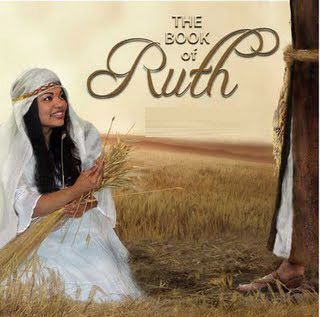
Ruth Lesson Eight

The Royal Line – Ruth 4:13-22

13 Boaz took Ruth and she became his wife. When he was intimate with her, the Lord enabled her to conceive, and she gave birth to a son. 14 Then the women said to Naomi, “Praise the Lord, who has not left you without a family redeemer today. May his name become well known in Israel. 15 He will renew your life and sustain you in your old age. Indeed, your daughter-in-law, who loves you and is better to you than seven sons, has given birth to him.” 16 Naomi took the child, placed him on her lap, and took care of him. 17 The neighbor women said, “A son has been born to Naomi,” and they named him Obed. He was the father of Jesse, the father of David.

David’s Genealogy from Judah’s Son

18 Now this is the genealogy of Perez:

Perez fathered Hezron.

19 Hezron fathered Ram,

who fathered Amminadab.

20 Amminadab fathered Nahshon,

who fathered Salmon.

21 Salmon fathered Boaz,

who fathered Obed.

22 And Obed fathered Jesse,

who fathered David. (HCSB)

The concluding section of chapter four is broken down into two parts: the narrative around the child born to Boaz and Ruth and a ten-generation genealogy.

Verse 13

Boaz took Ruth and she became his wife. When he was intimate with her, the Lord enabled her to conceive, and she gave birth to a son.

Facts to note concerning this verse.

  • Boaz fulfilled his promise to marry Ruth.
  • Ruth’s social progression has reached its conclusion.
    • A Moabite foreigner (2:10).
    • Lowest on the servant scale (2:13)
    • Maidservant (3:9).
    • Boaz’s wife.
  • Boaz fulfilled his promise to continue the family line of Mahlon.
  • Ruth becomes pregnant through Yahweh.
    • Ruth was married to Mahlon for ten years but was not able to get pregnant.
    • Ruth quickly became pregnant after marrying Boaz, maybe on the wedding night.
    • Yahweh closed Ruth’s womb during a marriage that was not based on obedience.
    • Yahweh opened Ruth’s womb and honored the prayers presented in verses 11-12.
  • At least nine months elapse between the beginning of the verse and the end.
  • Ruth gives birth to a son, establishing Mahlon’s lineage.
  • The royal line is preserved through the actions of these two humble and obedient people.

Verses 14-15

14 Then the women said to Naomi, “Praise the Lord, who has not left you without a family redeemer today. May his name become well known in Israel. 15 He will renew your life and sustain you in your old age. Indeed, your daughter-in-law, who loves you and is better to you than seven sons, has given birth to him.”

The women are likely neighbors or at least townspeople who know the situation surrounding Naomi, Ruth, and Boaz. In the Old Testament, praise or blessings denoted positive relationships between the two parties. The women also acknowledge that a family redeemer has now arrived on the scene for Mahlon’s lineage.

The one question in verse 14 is who is “his name” referring to, Yahweh or Obed?

  • The focus on the verse seems to be on Obed and not Yahweh, although Yahweh is to be praised.
  • The last part of verse 14 indicates that the “name” is currently not well known in Israel.
  • Obed’s name will become well known throughout Israel in the future, if for no other reason than he’s King David’s grandfather.
  • The “name” is clearly referring to Obed.

In verse 15, the women discuss the implications of the birth of a son.

  • When Naomi first returned from Moab, she was bitter and destitute.
  • With the birth of Obed, her fortunes have completely reversed.
  • Naomi no longer needs to be concerned about her future welfare.
  • The idea that Ruth is better than seven sons is a remarkable statement.
    • In Israel, the ideal family consisted of seven sons – the women are saying Ruth is better than an ideal Israelite family.
    • This also could be a prophetic reference to David, as he had seven brothers and became Israel’s greatest king.

Verses 16-17

16 Naomi took the child, placed him on her lap, and took care of him. 17 The neighbor women said, “A son has been born to Naomi,” and they named him Obed. He was the father of Jesse, the father of David.

Some clarification is needed on verse 16, depending on the translation you are using. Some translations use the terms “bosom” and “nurse” in this verse. Those terms can be misleading as Naomi doesn’t become a wetnurse to her grandson. The original Hebrew word that is misleadingly translated to “bosom” is actually referring to the front of a person’s body and is implying embracing a loved one. The original word that refers to “nurse” is better translated as a nanny, someone to care for the child. In essence, verse 16 is saying that Naomi will take care of Obed as any joyous and loving grandmother would care for their grandchild. In Naomi’s case, her fortunes have come full circle. Once stripped of all male support and protection, she now has an immediate redeemer/protector in Boaz and a future redeemer/protector in Obed.

Verse 17 concludes the story of Boaz, Ruth, and Naomi in the birth and naming of the baby boy. There are several things to note about this.

  • This is the only reference in the Old Testament where women, other than the mother, were present at the naming of a baby.
    • However, this doesn’t mean the women had a role in naming the baby.
    • But it does mean they were there to witness the celebration and share in its significance.
  • The child is a son.
    • The form is in the normal form of an ancient Near East birth announcement, as found in Isaiah 9:6 and Jeremiah 20:15.
    • Because the family needed a male child to act as the future kinsman-redeemer, the birth of a son was a significant event for the family.
  • The name Obed is not explained in the text.
    • It is a form of the Hebrew word meaning “to serve.”
    • It is an abbreviated form of Obadiah, which means “servant of Yahweh.”
    • Is the boy to be viewed as a servant of Yahweh or a servant of Naomi?
      • If it is the first, then the child will take away the bitterness that Naomi mentions in 1:20-21 and to redeem the estate of her late husband.
      • If it is the second, the child serves by restoring her prosperity and providing security in her old age.
      • It could be a combination of both.
  • The historical significance does not lie in Obed directly. His significance lives on and is achieved through his grandson David.

Verses 18-22

As the book of Ruth closes, the author presents the importance of the book in a concluding genealogy.

  • The biggest need in the period of the judges was a king, since “everyone did whatever he wanted” (Judges 21:25).
  • The faithful actions of Naomi, Boaz, and Ruth led not only to a restoration of the family but also the provision of a king.
  • As the grand narrative of the Bible progresses, we see how Yahweh keeps His covenant faithfulness through His people.
  • The genealogy, which points to David, has a greater significance for us. This exact same list is included in Jesus’ genealogy in the first chapter of Matthew.
    • We see that the story of Ruth points not just to David, but ultimately to Jesus.
    • Jesus is the Savior and Redeemer of all humanity if they place their trust in Him.

Summary and Conclusion on Ruth

  • The book begins with a funeral and ends with a wedding.
  • It opens with famine and closes with fullness.
  • Ruth’s love and obedience brought joy and blessing.
  • Prophetical.
    • God shows His disfavor on Israel because of their disobedience (chapter 1).
    • God uses a gentile (Ruth), just as later gentiles would be reached with the Gospel (Acts 15:14).
    • Naomi’s blessing came after Ruth’s wedding. In the same way, Israel will be restored and blessed after Christ and His church are united.
  • Typical.
    • Boaz is a picture of Christ.
    • Jesus is the ultimate kinsman-redeemer.
      • He is the Lord of the harvest.
      • He supplies our needs.
      • He redeems us.
      • He gives us rest.
  • Practical.
    • Backsliding has its consequences.
      • Naomi lost her husband.
      • She lost her sons.
    • No matter how tough the circumstances we are experiencing, the best place to be is in the will of God.
    • God is willing to forgive and restore backsliders.
    • The time we spend in disobedience can never be regained.
    • But we can regain our joy and testimony.

Applications

  • Do we rejoice in the blessings and celebrations of others? If we don’t, is it because of jealousy? Just as we share in the sorrows of those around us, we should also join in their celebrations, giving glory to God for each one of them.
  • Do we keep all parts of our promise? Boaz fulfilled everything he vowed to do. Do we resemble him in our actions, or do we stop short of total fulfillment if it gets tough or we just feel like it?
  • Have we been redeemed by Jesus? If you haven’t placed your eternity in His hands, why?
  • If you’ve been redeemed but have backslidden, don’t wait to return to Him. He stands with open arms to welcome back each truly repentant heart who realizes the mistake they’ve made. Don’t let pride or guilt stand in the way of blessings.

Ruth Lesson Seven

The Redemption – Ruth 4:1-12

4 Boaz went to the gate of the town and sat down there. Soon the family redeemer Boaz had spoken about came by. Boaz called him by name and said, “Come over here and sit down.” So he went over and sat down. Then Boaz took 10 men of the town’s elders  and said, “Sit here.” And they sat down. He said to the redeemer, “Naomi, who has returned from the land of Moab, is selling a piece of land that belonged to our brother Elimelech.  I thought I should inform you: Buy it back in the presence of those seated here and in the presence of the elders of my people. If you want to redeem it, do so. But if you do not want to redeem it, tell me so that I will know, because there isn’t anyone other than you to redeem it, and I am next after you.”

“I want to redeem it,” he answered.

Then Boaz said, “On the day you buy the land from Naomi, you will also acquire Ruth the Moabitess, the wife of the deceased man, to perpetuate the man’s name on his property.”

The redeemer replied, “I can’t redeem it myself, or I will ruin my own inheritance. Take my right of redemption, because I can’t redeem it.”

At an earlier period in Israel, a man removed his sandal and gave it to the other party in order to make any matter legally binding concerning the right of redemption or the exchange of property. This was the method of legally binding a transaction in Israel.

So the redeemer removed his sandal and said to Boaz, “Buy back the property yourself.”

Boaz said to the elders and all the people, “You are witnesses today that I am buying from Naomi everything that belonged to Elimelech, Chilion, and Mahlon. 10 I will also acquire Ruth the Moabitess, Mahlon’s widow, as my wife, to perpetuate the deceased man’s name on his property, so that his name will not disappear among his relatives or from the gate of his home. You are witnesses today.”

11 The elders and all the people who were at the gate said, “We are witnesses. May the Lord make the woman who is entering your house like Rachel and Leah, who together built the house of Israel. May you be powerful in Ephrathah and famous in Bethlehem. 12 May your house become like the house of Perez, the son Tamar bore to Judah, because of the offspring the Lord will give you by this young woman.” (HCSB)

Once the sun comes up, Boaz wastes no time in bringing his promise to a conclusion, regardless of whether he or the unnamed male relative is the one to redeem the land and Ruth.

This section is split into four parts.

  • Boaz preparing for “court” action, verses 1-2.
  • The court proceedings, verses 3-8.
  • Boaz’s response to the outcome of the court proceedings, verses 9-10.
  • Public reaction to the court proceedings, verses 11-12.

Verses 1-2 – Boaz preparing for court.

Boaz went to the gate of the town and sat down there. Soon the family redeemer Boaz had spoken about came by. Boaz called him by name and said, “Come  over here and sit down.” So he went over and sat down. Then Boaz took 10 men of the town’s elders and said, “Sit here.” And they sat down.

From a cultural standpoint, many important meetings or decisions took place around the gates of cities, especially small or mid-size ones. The gates were also the location of official administrative and judicial business for the local community. Boaz now begins the legal process to acquire the land that belonged to Elimelech, as well as Ruth for the purpose of marriage. The citizens of Bethlehem would recognize and understand that Boaz was there on legal business.

We also see the hand of God at work here as the first verse says, “Soon the family redeemer Boaz had spoken about came by.” This wasn’t a mere coincidence; this was the divine work of God to bring this specific man through the gate soon after Boaz had arrived and sat waiting for him.

Now that the two principal players in the legal proceeding are present, Boaz needs to gather the men as the required legal assembly for the action of redeeming the land and Ruth. A few observations on this.

  • They were citizens of Bethlehem.
  • As elders, they would be responsible for the administrative actions in the city.
  • The fact that they quickly responded to Boaz’s request signifies his stature in the community.

Now the scene is set for the legal proceedings to commence.

Verses 3-8 – The court proceedings.

He said to the redeemer, “Naomi, who has returned from the land of Moab, is selling a piece of land that belonged to our brother Elimelech.  I thought I should inform you: Buy it back in the presence of those seated here and in the presence of the elders of my people. If you want to redeem it, do so. But if you do not want to redeem it, tell me so that I will know, because there isn’t anyone other than you to redeem it, and I am next after you.”

“I want to redeem it,” he answered.

Then Boaz said, “On the day you buy the land from Naomi, you will also acquire Ruth the Moabitess, the wife of the deceased man, to perpetuate the man’s name on his property.”

The redeemer replied, “I can’t redeem it myself, or I will ruin my own inheritance. Take my right of redemption, because I can’t redeem it.”

At an earlier period in Israel, a man removed his sandal and gave it to the other party in order to make any matter legally binding concerning the right of redemption or the exchange of property. This was the method of legally binding a transaction in Israel.

So the redeemer removed his sandal and said to Boaz, “Buy back the property yourself.”

According to Mosaic law, the land under question was never intended to leave the family, and the concept of a kinsman-redeemer was an Israelite custom, designed to keep it in the family.

Leviticus 25:25  If your brother becomes destitute and sells part of his property, his nearest relative may come and redeem what his brother has sold.

Although the beginning of Ruth doesn’t specify, it is more than reasonable to assume that Elimelech was in financial trouble and sold the land in question before moving the family to Moab. Now, it is time for the land to return to its rightful family.

Another discussion point is contained in Deuteronomy 25:5-10 “When brothers live on the same property and one of them dies without a son, the wife of the dead man may not marry a stranger outside the family. Her brother-in-law is to take her as his wife, have sexual relations with her, and perform the duty of a brother-in-law for her. The first son she bears will carry on the name of the dead brother, so his name will not be blotted out from Israel. But if the man doesn’t want to marry his sister-in-law, she must go to the elders at the city gate and say, ‘My brother-in-law refuses to preserve his brother’s name in Israel. He isn’t willing to perform the duty of a brother-in-law for me.’ The elders of his city will summon him and speak with him. If he persists and says, ‘I don’t want to marry her,’ then his sister-in-law will go up to him in the sight of the elders, remove his sandal from his foot, and spit in his face. Then she will declare, ‘This is what is done to a man who will not build up his brother’s house.’ 10 And his family name in Israel will be called ‘The house of the man whose sandal was removed.’

From this passage, it would seem that the legal levirate obligation to marry the widow only applied to the immediate brothers of a deceased man. However, it is possible, if not highly likely, that Israelite custom would follow the pecking order in the inheritance law in cases where no immediate brother existed. Numbers 27:9-11  If he has no daughter, give his inheritance to his brothers. 10 If he has no brothers, give his inheritance to his father’s brothers. 11 If his father has no brothers, give his inheritance to the nearest relative of his clan, and he will take possession of it. This is to be a statutory ordinance for the Israelites as the Lord commanded Moses.”

From Ruth 2:1, we know that Boaz was from the clan of Elimelech but below the unnamed redeemer now meeting with Boaz.

Boaz now gets right to the point.

  • Naomi is selling the family land.
  • The unnamed man has the first right to redeem it.
  • Boaz asks for the man to make a decision regarding the redemption before the witnesses gathered.
  • Boaz asks the man to make his right then because Boaz will redeem it if the man declines.
  • Boaz is carrying through with his pledge to resolve the issue as soon as it is possible.

Thinking that it is an easy decision, the man agrees to redeem it. Now Boaz presents the complicating portion of the redemption. If the man redeems the land, he will also assume responsibility for the welfare of Ruth, which contains several issues.

  • He will assume responsibility to care for and protect Ruth.
  • Not only is Ruth a widow, but she is also a Moabite, an enemy of Israel.
  • Since Mahlon and Ruth didn’t have a child together to carry on the family name, the unnamed man will need to have a child with Ruth to carry on Mahlon’s family name.

Although the primary reason for Naomi to develop this plan was for Boaz to redeem the land and Ruth was for the protection and well-being of Ruth, we see in the last portion of verse five the most critical piece of the transaction. The continuation of the family line. The next lesson will illuminate the importance of the child.

The unnamed man is now faced with a decision, of which there are four possible courses of action.

  • He could accept the moral responsibility for Elimelech’s estate, redeem the field, marry Ruth, have children with her, and take care of Naomi.
  • He could redeem the field and pledge to marry Ruth but break the pledge after completing the deal. However, doing this would tarnish his reputation and standing in the community.
  • He could reject the offer and cede the rights to Boaz. This would not have been irresponsible as Boaz has already indicated he will redeem the land and Ruth if given the opportunity.
  • He could accept the responsibility to redeem the land but reject the responsibility to marry Ruth and have children, ceding that to Boaz. This would be dangerous on two counts. First, it would have cost him respect and honor in the community in the short-term. Second, any child between Boaz and Ruth could later claim the land costing him financially in the long-term.

Considering the economic and moral ramifications of the possible decisions, he chose the third course of action. From his response, it appears he only considered the first and third choices as viable. His decision was likely based on three main factors.

  • The economic factor.
    • Cost of redeeming the property.
    • Cost of supporting Naomi.
    • Cost of marrying Ruth.
    • He probably considered these cumulative costs as exceeding the positives of acquiring the land.
  • Implications of raising a child to carry on the name of the deceased.
    • It is possible she would have only one child.
    • The child would legally be considered a descendent of Elimelech.
    • The child would legally acquire the land in question in the current discussion.
    • The child would be eligible for at least a portion of the unnamed man’s estate.
  • Ruth was a Moabite.
    • How would the ethnic implications appear to others?
    • His estate could fall to a child that was half Moabite.

Upon reaching his decision, he removed his sandal and presented it to Boaz to signify that he had forfeited his right to redemption. The first portion of verse seven indicates that this may no longer have been an understood custom and the time Ruth was written. He also tells Boaz to buy the property himself. This concluded the court negotiation, and the decision is final and binding.

Verse 9-10

Boaz said to the elders and all the people, “You are witnesses today that I am buying from Naomi everything that belonged to Elimelech, Chilion, and Mahlon. 10 I will also acquire Ruth the Moabitess, Mahlon’s widow, as my wife, to perpetuate the deceased man’s name on his property, so that his name will not disappear among his relatives or from the gate of his home. You are witnesses today.”

The land now belongs to Boaz, and he has acquired the right to marry Ruth, as well as take care of Naomi.

If anyone in the future questions Boaz’s right to the land and for marrying Ruth, he can produce both the sandal that was given to signify the legality of the transaction as well as the witnesses who were present during the proceedings. Boaz had three goals, as presented in these two verses.

  • To establish the name of the deceased on his own patrimonial ancestral land.
  • To prevent the name of the deceased from being cut off from his relatives.
  • To prevent his name from being cut off from the gate of his home.

Verses 11-12

11 The elders and all the people who were at the gate said, “We are witnesses. May the Lord make the woman who is entering your house like Rachel and Leah, who together built the house of Israel. May you be powerful in Ephrathah and famous in Bethlehem. 12 May your house become like the house of Perez, the son Tamar bore to Judah, because of the offspring the Lord will give you by this young woman.”

Considering the background of Ruth, the response by the elders at the gate is extreme in the positive sense of the word. Their response can be broken down into three parts.

  • The elders pray that Yahweh would elevate Ruth to the level of two of the matriarchs of Israel, Rachel, and Leah.
    • The term “built a house” refers to having children and establishing a family line.
    • Calling upon Yahweh to bless falls in line with Psalm 127:1a  Unless the LORD builds a house, its builders labor over it in vain.
  • They pray that Boaz would be “powerful in Ephrathah and famous in Bethlehem.” The meaning is that Boaz would be blessed in his marriage and for the marriage to prosper.
  • The reference to Tamar needs some explanation because of the background of her becoming pregnant.
    • The story of Tamar is probably the most well-known concerning levirate obligation and betrayal. This caused her to disguise herself as a prostitute and bear twins from her father-in-law, Perez and Zerah.
    • They were the ancestors of the tribe of Judah, with Perez’s descendants playing the more significant role in Israel’s history.
    • Perez is the ancestor of Boaz’s clan that is living in Bethlehem.
    • The reference to Tamar is not an endorsement of her behavior, but rather to the idea that the family line continued even though the behavior was sinful. How much greater would the blessing be for Boaz and Ruth, who had acted in the highest moral standards.
    • Their prayer is answered by the birth of David and the establishment of the eternal royal line.

Reflecting on this chapter, we see four characteristics that distinguish Boaz from the unnamed kinsman who refused to redeem the land and Ruth.

  • Willingness – Boaz didn’t hesitate in taking on his responsibility, and he settled it on the first day possible.
  • Purposeful – All of Boaz’s actions were deliberate and well-thought. He didn’t leave anything to chance and made sure everything was done correctly.
  • Faithfulness – He fulfilled all the promises he made to Ruth the night before.
  • Unselfish – His actions were to maintain the name of the deceased husband with the property in question.

Once again, we see Boaz as a typology of Christ through his redemptive actions on behave of Naomi and Ruth.  Boaz was able to be the kinsman-redeemer because of three factors.

  • He was a near relative.
  • He was able to pay the redemption price.
  • He was willing to redeem the land and Ruth.

Christ is the ultimate kinsman-redeemer.

  • Jesus became flesh and blood, becoming our “near kinsman” for all eternity.
  • Jesus paid the eternal redemption price, His blood, and life on the cross.
  • Jesus willingly went to the cross on our behalf to restore us to “land” we had before the fall, fellowship with God in His presence.

Applications.

Although not many, if any, of us will ever have an opportunity to act as a redeemer in the same manner as Boaz, we can exhibit the same characteristics.

  • Do we willingly take on our responsibilities? These could be across a broad spectrum of actions, family, job, financial, kingdom work.
  • Are we purposeful in how we plan and execute our daily tasks? This doesn’t mean we don’t rely on the Holy Spirit, but it does mean we don’t just “wing it” every day.
  • Do we display faithfulness? Do we keep our word to do the things we have promised to others?
  • Are we unselfish in our actions? Do we do things to receive something in return, or do we do things because we want to shine the light of Christ, bless others, and love our neighbors as ourselves?
  • One final application in conjunction with the Great Commission. Are we willing and purposeful in seeking opportunities to share the Gospel? Are we faithful in accurately portraying the Gospel message, not adding or taking away from it as some heretical teaching does? Do we give God glory, or do we try and take credit for the souls that are saved? 

Ruth Lesson Six

Naomi’s Plan – Ruth 3:1-18

Ruth’s mother-in-law Naomi said to her, “My daughter, shouldn’t I find security for you, so that you will be taken care of? Now isn’t Boaz our relative? Haven’t you been working with his female servants? This evening he will be winnowing barley on the threshing floor. Wash, put on perfumed oil, and wear your best clothes. Go down to the threshing floor, but don’t let the man know you are there until he has finished eating and drinking. When he lies down, notice the place where he’s lying, go in and uncover his feet, and lie down. Then he will explain to you what you should do.”

So Ruth said to her, “I will do everything you say.” She went down to the threshing floor and did everything her mother-in-law had instructed her. After Boaz ate, drank, and was in good spirits, he went to lie down at the end of the pile of barley. Then she went in secretly, uncovered his feet, and lay down.

At midnight, Boaz was startled, turned over, and there lying at his feet was a woman! So he asked, “Who are you?”

“I am Ruth, your slave,” she replied. “Spread your cloak over me, for you are a family redeemer.”

10 Then he said, “May the Lord bless you, my daughter. You have shown more kindness now than before, because you have not pursued younger men, whether rich or poor. 11 Now don’t be afraid, my daughter. I will do for you whatever you say,  since all the people in my town know that you are a woman of noble character.  12 Yes, it is true that I am a family redeemer, but there is a redeemer closer than I am. 13 Stay here tonight, and in the morning, if he wants to redeem you, that’s good. Let him redeem you. But if he doesn’t want to redeem you, as the Lord lives, I will. Now lie down until morning.”

14 So she lay down at his feet until morning but got up while it was still dark. Then Boaz said, “Don’t let it be known that a woman came to the threshing floor.” 15 And he told Ruth, “Bring the shawl you’re wearing and hold it out.” When she held it out, he shoveled six measures of barley into her shawl, and she went into the town.

16 She went to her mother-in-law, Naomi, who asked her, “How did it go, my daughter?”

Then Ruth told her everything the man had done for her. 17 She said, “He gave me these six measures of barley, because he said, ‘Don’t go back to your mother-in-law empty-handed.’ ”

18 Naomi said, “My daughter, wait until you find out how things go, for he won’t rest unless he resolves this today.” (HCSB)

There are three sections to this passage.

  • Verses 1-5: Naomi’s plan.
  • Verses 6-15: The execution of the plan.
  • Verses 16-18: The results of the plan.

Naomi’s Plan

Ruth’s mother-in-law Naomi said to her, “My daughter, shouldn’t I find security for you, so that you will be taken care of? Now isn’t Boaz our relative? Haven’t you been working with his female servants? This evening he will be winnowing barley on the threshing floor. Wash, put on perfumed oil, and wear your best clothes. Go down to the threshing floor, but don’t let the man know you are there until he has finished eating and drinking. When he lies down, notice the place where he’s lying, go in and uncover his feet, and lie down. Then he will explain to you what you should do.”

So Ruth said to her, “I will do everything you say.”

Although not explicit in the conclusion of chapter two, it is safe to infer that Naomi expected Boaz to pursue Ruth in a manner that was more than a landowner being kind to a foreigner. Naomi was expecting Boaz to pursue Ruth in a way that would lead to marriage and a secure future for both her and Ruth. For whatever reason, Boaz does not follow that path, and Naomi decides to take matters into her own hand.

Verse 1

Naomi’s question to Ruth contains two parts.

  • Shouldn’t Naomi do something to find security for Ruth?
  • Shouldn’t Naomi do something so that Ruth will be taken care of and not have to worry about her future?

From a historical contextual standpoint, this was a critically important point. Women in Israel longed for the security and tranquility in the home of a loving husband. Naomi’s single reason for doing this is the welfare of her daughter-in-law. Also, it was the duty of the mother-in-law to see to the security and welfare of the widowed daughter-in-law. In this case, there is added weight as Ruth has pledged her life to Naomi until death separates them. These two women display a covenant relationship with each other where they place the other’s welfare above their own.

Verse 2

Typically, barley was threshed after the wheat was harvested, usually late May to June. The best threshing floors were rock outcroppings on hilltops. This would take advantage of the open area and wind to separate the grain from the chaff. It is also likely that the threshing floor in question here was at least on the outskirts of town, if not farther away. The rationale for doing it at night would be gentler breezes.

Verse 3-5

Although on the surface, it appears simple enough, a lot going on in the first sentence of verse three.

  • Wash – This was a typical first step in preparing for a sexual encounter or marriage.
  • Put on perfumed oil – The Hebrew verb means to anoint and likely refers to perfumed olive oil. Due to the hot climate and lack of modern deodorants, this was necessary to combat body odors.
  • Wear your best clothes – This is likely not a correct translation of the Hebrew word. Likely, Ruth was still wearing some type of clothing to indicate mourning, and changing clothes would imply a shift from mourning to everyday life.

Another reason for Boaz, or anyone, to be there at night was to act as security to ensure the grain wasn’t stolen.

Ruth wasn’t to let Boaz know she was there until he had finished eating and drinking. There is no indication that Boaz was drunk, either implicitly or explicitly. In addition, the idea of Boaz being drunk would conflict with the characteristics describing Boaz earlier in the book.

The situation gets even more complicated when Naomi tells Ruth to uncover his feet/legs and lie down with him. Understanding the cultural norms at that time make it even murkier.

  • At winnowing time, the threshing floors often became a place of illicit sex.
  • Since men often spent the night in the fields next to the collected grain, prostitutes would often visit them to offer their services.

Although Ruth’s actions could be interpreted as seductive, her actions so far and through this encounter suggest that was not the intent. Ruth is anything but a typical Moabite. Instead, Ruth possesses the characteristics of Israelite hesed, steadfast love, kindness, faithfulness, and loyalty within a relationship.

This is confirmed by Boaz’s words to her in verses 10 and 11.

  • May the Lord bless you.
  • You are a woman of noble character.

Boaz could interpret Ruth’s actions in one of three ways.

  • Boaz could wake up and interpret her actions as those of a prostitute and partake of the services offered.
  • Boaz could wake up and interpret her actions as those of a prostitute, but as a noble and virtuous Israelite chase her away.
  • Boaz could wake up and immediately recognize the true intentions of Ruth’s actions and respond favorably.

This is a reminder that sex is a wonderful gift from God to be enjoyed by a man and woman in a marriage relationship after the couple is married.

Verses 6-15

She went down to the threshing floor and did everything her mother-in-law had instructed her. After Boaz ate, drank, and was in good spirits, he went to lie down at the end of the pile of barley. Then she went in secretly, uncovered his feet, and lay down.

At midnight, Boaz was startled, turned over, and there lying at his feet was a woman! So he asked, “Who are you?”

“I am Ruth, your slave,” she replied. “Spread your cloak over me, for you are a family redeemer.”

10 Then he said, “May the Lord bless you, my daughter. You have shown more kindness now than before, because you have not pursued younger men, whether rich or poor. 11 Now don’t be afraid, my daughter. I will do for you whatever you say,  since all the people in my town know that you are a woman of noble character.  12 Yes, it is true that I am a family redeemer, but there is a redeemer closer than I am. 13 Stay here tonight, and in the morning, if he wants to redeem you, that’s good. Let him redeem you. But if he doesn’t want to redeem you, as the Lord lives, I will. Now lie down until morning.”

14 So she lay down at his feet until morning but got up while it was still dark. Then Boaz said, “Don’t let it be known that a woman came to the threshing floor.” 15 And he told Ruth, “Bring the shawl you’re wearing and hold it out.” When she held it out, he shoveled six measures of barley into her shawl, and she went into the town.

The section is divided into two parts.

  • Verses 6-13 occurs at the threshing floor, likely between evening and midnight.
  • Verses 14-15 occur between midnight and morning and ends with Ruth returning to town with the grain.

The first subsection, verses 6-13, contains four points.

  • Ruth takes charge of the situation after Boaz wakes up and asks her who she is. This is remarkable for several reasons.
    • Ruth just described herself as a slave, and Boaz is her master.
    • Ruth is uninvited and on his turf.
    • Ruth is a woman, and Boaz is a man.
    • Ruth is a foreigner, and he is a native.
  • Because of the flipping of the roles, it begs the question, “Who is Boaz?”
  • With no warning, Ruth asks Boaz to marry her.
    • The Hebrew phrase that is translated as “Spread your cloak over me” actually means “to spread one’s wings over” and is a metaphor for the protection and provision that Yahweh provides.
      • Ruth is demanding that Boaz takes her under his wings and assume responsibility for her.
      • In Hebrew, the term “to spread one’s wings over someone” was a way to propose marriage.
      • It signified the husband’s declaration to provide for his future wife.
    • Boaz correctly interprets Ruth’s actions not as a request for sex but as a marriage proposal.
  • The basis for the proposal is that Boaz is the kinsman-redeemer for Naomi and Ruth.
    • Ruth fully understands this Israelite custom, likely from discussions with Naomi.
    • Ruth, although a Moabite, is aware and accepts the custom.

Boaz’s response is also remarkable. His response breaks down into four parts.

  • A blessing and eulogy for Ruth.
    • Asking Yahweh to bless her.
    • Acknowledgment of kindness towards Boaz.
    • Acknowledging that although Ruth could have pursued younger men, she didn’t.
  • A promise.
    • Remove any fear.
    • Boaz will pursue the marriage Ruth proposed.
    • The townspeople already recognize her noble character and would welcome the marriage.
  • A disclosure of a complication.
    • Boaz is a kinsman-redeemer.
    • However, there is a kinsman-redeemer with a closer blood tie than Boaz. That man, unnamed, will have to be given the first chance before Boaz can fulfill the promise.
  • Words of reassurance.
    • Boaz tells Ruth to rest as they can do nothing more about the situation until the morning when the issue of redemption can be brought up before the town and the man first in line to redeem Elimelech’s inheritance.
    • Boaz’s determination is expressed in the phrase “as the LORD lives,” which is an oath to make it happen.

Before moving on to the next section of the passage, let’s consider the nature of the marriage that Naomi and Ruth likely discussed and which Boaz agreed to enter.

  • So far, there has been no discussion of children.
    • The family preservation idea present in Deuteronomy 25:5-10 has not been a part of the discussion.
    • The primary reason for the marriage was not preserving Mahlon’s family name. It was to provide a secure and stable home for Ruth.
  • There are no specific instructions in the Law to cover these circumstances. Naomi’s idea is based solely on confidence that Boaz will do the right thing out of a sense of moral obligation to the family.

Boaz now senses the delicate nature of their circumstances as the sun begins to rise. Not only does Boaz need to protect Ruth’s reputation, but Boaz also has a reputation to protect as well.

  • If the workers discovered Ruth with Boaz, it would undermine his reputation and maybe his ability to effectively interact with them in the future.
  • Before allowing Ruth to leave, Boaz gives her additional grain to take back home.

Verses 16-18

16 She went to her mother-in-law, Naomi, who asked her, “How did it go, my daughter?”

Then Ruth told her everything the man had done for her. 17 She said, “He gave me these six measures of barley, because he said, ‘Don’t go back to your mother-in-law empty-handed.’ ”

18 Naomi said, “My daughter, wait until you find out how things go, for he won’t rest unless he resolves this today.”

One can imagine that, just as Ruth and Boaz likely had a restless night, that Naomi was in the same state as she waited for Ruth to come home. Once Ruth makes it home, Naomi wants to know what happened and if her plan to join the two in marriage was a success.

The conversation then quickly shifts to the grain that Ruth brought home. In the previous section, the reader can only speculate about the reason for the gift of grain. In this section, more information is given as to the reason, and we can draw some conclusions as to why Boaz gave the grain.

  • It is possible that Boaz’s interpretation of the kinsman-redeemer principle means that he views Naomi as the true beneficiary, and his obligation is to Naomi rather than Ruth.
  • The grain could be viewed as a gift for the plan that Naomi devised.
    • Naomi encouraged Ruth to end her mourning and put on normal clothes.
    • Naomi devised the plan on how Ruth was to meet Boaz.
    • Naomi advised Ruth to present the issue of Boaz being their kinsman-redeemer.
    • Naomi was the brain behind the entire plan, and the grain is a gift in recognition of her plan.
  • It could’ve been a gift to Naomi as an indication of Boaz’s promise to redeem Ruth. Either directly or through the man who had the first chance to redeem her. In addition, since Naomi was Ruth’s legal guardian, Boaz may have intended the grain as a down payment on the bride dowry given at the time of engagement.

Naomi’s response in verse 18 indicates it is the third possibility that is the correct interpretation.

Chapter 3 continues the illustration that Boaz is a typology of Christ.

  • Redemption through a kinsman-redeemer.
    • Ruth asked Boaz to redeem her.
    • Each of us can come humbly before Jesus and ask Him for redemption from the consequences of sin, eternal condemnation, and separation from God in hell.
  • Protection.
    • Ruth sought the protection of a husband and a loving home.
    • We should daily ask for protection. This is a humble act acknowledging our reliance on God.
      • We need protection from the desires of our sinful nature.
      • From the pressures of the world.
      • From the devil, who prowls like a roaring lion looking for someone to devour.
  • Responsibility.
    • Boaz accepted the responsibility to act as the kinsman-redeemer.
    • Jesus accepted the responsibility of going to the cross, demonstrating obedience to God’s plan, and accepting the responsibility of all of our sins to set us free from the condemnation we deserved.

Applications

  • Do we accept responsibility for what’s right when opportunities present themselves to us?
  • Do we act with a noble character when temptation presents itself? While Ruth was not tempting Boaz in a sexual manner, if Boaz had interpreted it that way, the situation would have had a radically different ending.
  • As we interact with our spiritual brothers and sisters, do we accept the biblical responsibility to encourage and care for each other, serve one another, sympathize with their hurts or struggles, speak the truth in love, teach and correct one another?
  • As we interact with non-Christians, do we accept the biblical responsibility to live before them in a way that shines the light of Jesus, makes the Gospel attractive to them, and share the Gospel with them?