1 John Lesson Three: The Urgency of Loving One Another – 1 John 2:7-17
7 Dear friends, I am not writing you a new command but an old command that you have had from the beginning. The old command is the message you have heard. 8 Yet I am writing you a new command, which is true in Him and in you, because the darkness is passing away and the true light is already shining.
9 The one who says he is in the light but hates his brother is in the darkness until now. 10 The one who loves his brother remains in the light, and there is no cause for stumbling in him. 11 But the one who hates his brother is in the darkness, walks in the darkness, and doesn’t know where he’s going, because the darkness has blinded his eyes.
12 I am writing to you, little children,
because your sins have been forgiven
because of Jesus’ name.
13 I am writing to you, fathers,
because you have come to know
the One who is from the beginning.
I am writing to you, young men,
because you have had victory over the evil one.
14 I have written to you, children,
because you have come to know the Father.
I have written to you, fathers,
because you have come to know
the One who is from the beginning.
I have written to you, young men,
because you are strong,
God’s word remains in you,
and you have had victory over the evil one.
15 Do not love the world or the things that belong to the world. If anyone loves the world, love for the Father is not in him. 16 For everything that belongs to the world—the lust of the flesh, the lust of the eyes, and the pride in one’s lifestyle—is not from the Father, but is from the world. 17 And the world with its lust is passing away, but the one who does God’s will remains forever. (HCSB)
As we continue our study of 1 John, I’ll split this lesson into three parts.
Light and dark – verses 7-11.
Fathers, young men, and little children – verses 12-14.
Misplaced love – verses 15-17.
Light and Dark
At first glance, verses seven and eight may appear confusing and contradictory. John first says he isn’t writing a new command but then says he is writing a new command. What does he mean?
In its most fundamental understanding, it is both an old and a new command.
Understanding it as an old command.
It’s found in the Old Testament in Leviticus 19:18 – Do not take revenge or bear a grudge against members of your community, but love your neighbor as yourself; I am Yahweh.
The command to love others applied before the incarnation of Jesus.
Understanding it as a new command.
It’s found in the New Testament.
John 13:34 – I give you a new command: Love one another. Just as I have loved you, you must also love one another.
John 15:12 – This is My command: Love one another as I have loved you.
The reason it’s also a new command is that there is new evidence and new power to fulfill this command.
The evidence is that Jesus died, was buried, and rose from the grave. This gives us a better understanding of what love looks like.
The power is the Holy Spirit indwelling believers.
The Holy Spirit enables believers to live out the commands of Scripture.
The Holy Spirit also enables believers to support each other through love and good deeds in the spiritual community called “the church.”
Through our lives, we demonstrate the “light of Christ” to a dark world.
John then goes on to contrast the difference between light and darkness.
If we hate our brother, we walk in darkness. If we love our brother, we walk in the light.
We also need to understand what John is not saying.
John is not saying we need to like every fellow believer or have an emotional bond with them.
John is using the word agape for love.
To have “agape” love for someone is based upon sincere appreciation and high regard.
We steadily extend goodwill to others.
We are not commanded to “feel” a specific way to others.
But we are commanded to “act” a certain way to others.
When we understand agape love this way, we see the command is to act properly to fellow believers out of a desire to be obedient to God. In this way, we demonstrate agape love.
Some scholars have criticized John for not teaching here the idea of loving our enemies. However, we need to remember the context of this letter. John was addressing a specific challenge the readers were facing, those who professed to be a believer but refused to love fellow Christians.
Fathers, Young Men, and Little Children
These three verses need to be connected in context to what came before and what will follow.
In the preceding section, John gave a warning about false teaching and false believers.
In this section, John gives reassurance to genuine believers.
John contrasts the spiritual status of believers with the self-praising false teachers.
The false teachers claimed ordinary believers didn’t know God because they hadn’t received special knowledge of Him through mystical means.
John addressed three sets of readers; little children, fathers, and young men.
Among scholars, there are three interpretations of these divisions.
The first is a chronological division by age.
The second is a division by spiritual maturity.
The third is that divisions apply equally to all readers as “fathers” appears out of sequence with the other two. There is support for this position as in other sections of the letter; John addresses all the readers as “children.”
1 John 2:1, 28; 3:7, 18; 5:21.
Additionally, often in the Bible, the author connects ages as a figure of speech to denote everyone across the spectrum.
Joel, quoted by Luke in Acts 2:28, mentions old men having dreams and young men seeing visions. This is another way of saying that dreams and visions are experienced by young, old, and everyone in between.
If we apply this principle to the current passage, then whatever is said for each age category applies to all age categories.
As children, each of them experienced the forgiveness of sins.
As young men, each had engaged in spiritual warfare and overcame the evil one and had grown strong in the Word.
As fathers, each had known Yahweh from the beginning.
Misplaced Love
In John’s summary of this section, he makes it clear the readers were Christians.
They were his “little children.” – 2:1
They were his “dear friends.” – 4:1.
After having reassured them of their salvation in the previous three verses, John now warns them again about the dangers of false teachers and the seduction of worldly desires.
They are not to love the world. The Greek word used here for the world is kosmos. In the context of this passage, it refers to attitudes and values that disregard God or are blatantly against God.
It does not refer to God’s natural creation or humanity.
It does mean we are to love the people in the world but not their sinful attitudes and the values they support.
There is some debate over the understanding of the phrase, “love for the Father is not in him.” Scholars interpret this in two ways.
If we love the world, God doesn’t love us.
If we love the world, we don’t love God.
From the context of the passage, the second interpretation makes better sense. If we love the things of the world, we are not loving God. We can’t love the world and God at the same time. James 4:4 would support this view, “Adulteresses! Don’t you know that friendship with the world is hostility toward God? So whoever wants to be the world’s friend becomes God’s enemy.”
John goes on to explain that the world’s values are in opposition to God.
The lust of the flesh is the interests and desires that draw us away from God.
The lust of the eyes is a sinful desire that corrupts us.
The eye is often used in Scripture as a figure of speech referring to sinful passions.
Matthew 5:28 – But I tell you, everyone who looks at a woman to lust for her has already committed adultery with her in his heart.
When Eve looked at the forbidden fruit, it was “delightful to look at.”
David’s sin with Bathsheba started when he saw her taking a bath – 2 Samuel 11:2.
Pride in one’s lifestyle refers to arrogance and pride that can consume us when we try to get ahead of others in material possessions or when we rely on ourselves than on God.
Following the values of the world is foolish for two reasons.
First, they don’t come from the Father. This means they interfere with our fellowship with God.
Second, all of us are going to die, and what we’ve been living for will be worthless.
This passage could be paraphrased in this way: Don’t embrace the ways or goods of the world. When you do, it suffocates your love for God. When you live for yourself, acquire everything you desire, and look good compared to those around you, you aren’t living for God but for the world. This is foolish because it destroys your relationship with God, and in the end, it will all pass away.
Applications
Do you extend love to your spiritual brothers and sisters? Let’s be honest; there are probably some that you don’t like. However, Scripture is clear that we are to extend them love. We may not like them for various reasons, but they are still part of our spiritual family. We are called to honor these relationships and, if they are damaged, to mend them.
Never forget your relationship with God and the price it cost for Jesus to pay for your sins. We might be at different stages in our walk with God, child/young person/elder, but we are called to stay rooted and to grow spiritually.
Where are your priorities? Are they focused on the things of the world which will pass away? Or are you focused on God and the things which are eternal? It’s clear that Scripture calls us to focus on God and our relationship with Him. The ways of the world can be attractive and tempting, but they will never satisfy us or draw us closer to God.
Acts Lesson Fifty-six: Acts 28:11-31 – Paul in Rome
11 After three months we set sail in an Alexandrian ship that had wintered at the island, with the Twin Brothers as its figurehead. 12 Putting in at Syracuse, we stayed three days. 13 From there, after making a circuit along the coast, we reached Rhegium. After one day a south wind sprang up, and the second day we came to Puteoli. 14 There we found believers and were invited to stay with them for seven days.
And so we came to Rome. 15 Now the believers from there had heard the news about us and had come to meet us as far as the Forum of Appius and the Three Taverns. When Paul saw them, he thanked God and took courage. 16 When we entered Rome, Paul was permitted to stay by himself with the soldier who guarded him.
17 After three days he called together the leaders of the Jews. When they had gathered he said to them: “Brothers, although I have done nothing against our people or the customs of our ancestors, I was delivered as a prisoner from Jerusalem into the hands of the Romans. 18 After they examined me, they wanted to release me, since I had not committed a capital offense. 19 Because the Jews objected, I was compelled to appeal to Caesar; it was not as though I had any accusation against my nation. 20 For this reason I’ve asked to see you and speak to you. In fact, it is for the hope of Israel that I’m wearing this chain.”
21 Then they said to him, “We haven’t received any letters about you from Judea. None of the brothers has come and reported or spoken anything evil about you. 22 But we would like to hear from you what you think. For concerning this sect, we are aware that it is spoken against everywhere.”
23 After arranging a day with him, many came to him at his lodging. From dawn to dusk he expounded and witnessed about the kingdom of God. He tried to persuade them concerning Jesus from both the Law of Moses and the Prophets. 24 Some were persuaded by what he said, but others did not believe.
25 Disagreeing among themselves, they began to leave after Paul made one statement: “The Holy Spirit correctly spoke through the prophet Isaiah to your ancestors 26 when He said,
Go to these people and say:
You will listen and listen,
yet never understand;
and you will look and look,
yet never perceive.
27 For the hearts of these people
have grown callous,
their ears are hard of hearing,
and they have shut their eyes;
otherwise they might see with their eyes
and hear with their ears,
understand with their heart,
and be converted,
and I would heal them.
28 Therefore, let it be known to you that this saving work of God has been sent to the Gentiles; they will listen!” [29 After he said these things, the Jews departed, while engaging in a prolonged debate among themselves.]
30 Then he stayed two whole years in his own rented house. And he welcomed all who visited him, 31 proclaiming the kingdom of God and teaching the things concerning the Lord Jesus Christ with full boldness and without hindrance. (HCSB)
I’m going to split this lesson into three parts.
Sailing to Rome – verses 11-16.
Paul’s first meeting with the Roman Jews – verses 17-22.
The Jew’s reaction to the Gospel – verses 23-31.
Sailing to Rome
The group spent three months in Malta before continuing their journey to Rome. Based on standard sailing times in the Mediterranean, they likely left around the beginning of February. Let’s look at some details from this section.
The twin brothers were tied to Greek mythology. Their names were Castor and Pollux, the sons of Zeus.
They were considered protectors of sailors.
They were a common feature of Roman ships as a plea for safety on the seas.
When their constellation was visible in the sky, it was considered a favorable omen for a smooth voyage.
Luke doesn’t specify if all 276 people continued on this ship or not. In the end, it doesn’t matter since the narrative is about Paul going to Rome.
The first stop on the voyage was at Syracuse, about 80 miles away.
Syracuse is located in the eastern section of southern Sicily.
There were two harbors there.
During the Roman period, it was the capital of the island.
Luke doesn’t give details for the three-day delay. It is possible the ship was doing business, or the winds were not favorable during that time.
The second stop was at Rhenium, 70 miles from Syracuse.
Rhenium is located at the southern tip of the boot of Italy, opposite Sicily and at the entrance to the straits of Messina.
It’s possible this leg didn’t go as planned as Luke says they “sailed around,” which may indicate the ship needed to tack against the wind.
The next stop was at Puteoli, about 210 miles from Rhenium through the straits of Messina.
They encountered a favorable wind as the ship made very good time between the stops.
In Paul’s day, Puteoli was likely the main port in Italy for the grain fleet.
It is now known as Pozzuoli.
It was located about eight miles northwest of Naples and 130 miles by foot to Rome.
In their final stop before Rome, the party met a group of Christians who invited them to stay for seven days.
We shouldn’t be surprised that a Christian community was already established in Puteoli when Paul arrived.
The edict of Claudius, which Luke referred to in Acts 18:2, dealt with a dispute in the Jewish community in Rome.
The dispute appears to have involved Christ and is evidence the Gospel had reached Italy by a.d. 49.
Paul’s letter to the Romans is possibly the best evidence for a Christian church being established well before Paul’s arrival.
We might also marvel at the amount of freedom Paul enjoyed while being in custody. The freedom he enjoyed speaks to the level of trust Paul had established with his Roman guards.
The group now completed the journey to Rome on foot. The journey was about 130 miles and would have taken five days by foot.
On the Appian Way, about forty-three miles south of Rome, was the stopping place known as the Forum of Appius. It was here that Paul first encountered Christians living in Rome.
The group continued on, and about ten miles later, they were met by more believers at a way station known as Three Taverns.
It’s possible the two groups of Christians were from different house churches within the capital. Only here are Roman Christians mentioned in Acts. They would serve as a constant source of encouragement to Paul during his time in Rome.
Verse sixteen acts as a bridge between the travel narrative and Paul’s witness in Rome. Although Paul was given quite a bit of freedom, he was still under the supervision of a guard. Paul was a witness in chains.
Paul’s First Meeting With the Roman Jews
It’s interesting to note that as Luke begins to wind down the events in Acts, Paul’s witness is focused primarily on the Jews living in Rome. The reason for Paul’s journey to Rome was his appeal to Caesar. However, Luke doesn’t include anything regarding that meeting. Maybe the reader shouldn’t be surprised after all. A familiar pattern is repeated here; Paul’s initial preaching to the Jews, which is initially received in a favorable manner, followed by resistance, and finally, Paul turning to the Gentiles. Luke has emphasized this theme, Jewish rejection and Gentile acceptance of the Gospel, throughout Acts. Now, let’s take a closer look at Paul’s meeting with the Roman Jews.
Paul initiated the first conversation with the Jews.
Looking back at verse seventeen, it was a meeting with the Jewish leaders in Rome.
Rome had a large Jewish community, but it wasn’t a homogenous and seamless community. From the context of the passage, it appears there were several synagogues since “many” leaders came to him.
Paul then gives an abridged version of the circumstances that brought him to Rome.
He hadn’t done anything against his fellow Jews or their customs.
He had been arrested in Jerusalem and handed over to the Romans.
The Romans found no substance to the charges against Paul and wanted to release him.
However, at every step the Jewish leaders in Jerusalem objected to Paul’s release.
Paul had no accusation against Israel.
He was a loyal Jew.
He was not guilty of any crime against the Jews.
He was innocent of any ill intent toward them.
He only wanted their commitment to Christ.
As stated in previous lessons, the real point of contention between Paul and the Jews was Paul’s belief in the resurrection of Jesus, that Jesus is both Messiah and Lord.
The Jewish leaders in Rome told Paul they hadn’t heard anything about him, either in official correspondence or by word-of-mouth. Although this may surprise us, we must also remember that Paul had left for Rome as late fall was setting in and, as evidenced by the storm they encountered, winter wasn’t far behind.
The most likely reason for the Roman Jews not to have about Paul is because of winter and the delay in correspondence.
The other possible, albeit less likely reason, is that the Roman Jews were making a conscious effort to dissociate themselves from Paul and escape any fallout from the result of Paul’s trial.
Their second response, to hear about the Christian “sect,” indicates a lack of knowledge about the movement. This may seem puzzling since there was a well-established Christian community in Rome. It’s possible this lack of knowledge was due to the edict of Claudius.
The edict was issued about ten years prior to Paul’s arrival in Rome.
It involved a dispute within the Jewish synagogue over Christ.
If the Jewish leaders really didn’t know much about the Christians, it would seem the edict caused the synagogues to isolate themselves from the Christians completely.
It’s also possible the Roman Jews were being diplomatic and were keeping as much space as possible from the situation involving Paul.
From the Roman Jew’s actions, we deduce they found nothing wrong with Paul and had no accusation against him.
The first encounter with the Roman Jews focused on Paul’s innocence.
Paul didn’t have a martyr’s complex.
He didn’t come to Rome to die.
From the context of the last few chapters in Acts, it’s clear Paul expected to be released.
After his release, he likely felt he would evangelize Rome and then move west towards Spain.
The Jew’s Reaction to the Gospel
In contrast to verse seventeen, it appears that a significantly larger contingent of Jews visited Paul in this section. Let’s take a deeper look at the final section of Acts.
Luke mentions that “many” came to see Paul. In Paul’s first meeting with the Roman Jews, he only met with the leaders. Now, it would appear that others joined in the meeting with Paul.
Since Paul was under guard, the Jews were required to visit him in his quarters.
Paul spent the entire day presenting the Gospel to them.
Paul’s presentation focused on two terms.
The kingdom of God.
The Jews always looked to the coming of the Messiah.
When the Messiah came, God’s kingdom would be restored in a renewed Israel.
Jesus.
Jesus is at the center of God’s sovereign rule.
God’s people are gathered around Jesus.
The message throughout Acts had been this had already occurred with the birth, life, death, and resurrection of Jesus.
Paul presented the same message to the Roman Jews.
The Law of Moses.
The words of the Prophets.
Luke doesn’t specify which texts were used, but it’s safe to conclude they would have spoken about the Messiah’s suffering and resurrection.
Jesus also used the Law of Moses and the Prophets to speak about himself in Luke 24:27, 44-47.
Peter did the same in Acts 2:17-36 and 3:12-26.
Paul had previously spoken the same message in Pisidian Antioch in Acts 13:32-39.
The result was a sharp division between the Roman Jews.
Some were persuaded by Paul’s message.
Others refused to believe Paul.
However, the synagogue as a whole didn’t believe Paul’s message.
As the Jews were arguing or discussing Paul’s message, Paul put in one final shot by quoting Old Testament Scripture. Paul’s use of this passage prompted the Jews to leave en masse.
Paul uses a passage talking about future unbelief among the Jews and not a passage about the Messiah.
The term “correctly” in the original Greek means “the truth.”
The Holy Spirit spoke the truth through the prophet Isaiah about the unbelief in Israel.
Paul also begins to create “space” between himself and the unbelieving Jews.
In verse seventeen, he addressed them as brothers.
Now he addresses them with the term “your ancestors.”
Paul hadn’t stopped being a Jew, but his faith in Jesus separated him from the Roman Jews who refused to believe.
Paul wasn’t one of the hardhearted Jewish ancestors who rejected the Gospel.
The section from Isaiah that Paul quotes is from the Septuagint.
The Greek version of the prophecy focuses on the people’s stubbornness in refusing to accept the message.
Three types of perception are highlighted in the text.
Their eyes are closed to seeing the truth.
Their ears are closed to hearing the truth.
Their hearts are closed to accepting the truth.
An understanding of the message would have resulted in repentance and receiving God’s forgiveness and healing.
The Roman Jews matched the prophecy in Isaiah.
They heard Paul preach the Gospel, yet the hardness of their heart caused them to reject it.
In Paul’s message to the Jews, the Greek verb “to hear” occurs five times at key points.
The quote from Isaiah refers to hearing three times.
The point is hearing isn’t really hearing if there is no response to the message.
The final time Paul uses the Greek verb “to hear” is when he is talking about the Gentiles.
The Gentiles would hear with receptive hearts and repent.
As the Roman Jews left Paul, he declared the Gentiles would be the recipients of the Gospel.
However, we shouldn’t interpret this as meaning Paul had finally given up on the Jews.
Paul was always able to reach at least some Jews in his missionary journeys, including here in Rome.
As Acts concludes, Luke writes that Paul welcomed all who visited him. This likely included some Jews.
The statement about the Gentiles responding to the message is not a declaration about Jewish exclusion from God’s Kingdom; it’s about the inclusion of Gentiles into God’s Kingdom.
Paul spent two years in Rome preaching the Gospel to all who visited him.
Although Paul was, in essence, under house arrest, he was still given the freedom to entertain visitors.
Paul preached with boldness.
Paul preached without hindrance. This likely means the Romans allowed him to speak freely, seeing nothing dangerous or subversive in his message.
During this time, Paul was also busy writing epistles.
Ephesians.
Philippians.
Colossians.
Philemon.
Most believe Paul was released after this two-ear period, around a.d. 63.
Paul likely continued his evangelism in the eastern portion of the empire.
It’s also possible Paul fulfilled his desire to reach Spain with the Gospel.
In 2 Timothy 4:16-18, we read of a second trial containing a tone of resignation over Paul’s future.
Paul was beheaded in Rome by order of Emperor Nero around a.d. 67.
At the end of Acts, we see a Gospel that is without chains, victorious over every barrier of superstition and human prejudice.
Although Luke ends Acts rather abruptly, it wasn’t meant as a biography of Peter or Paul. Acts is a narrative about the early church’s expansion and influence on the world.
However, Acts is not a finished book. Chapter 29 is still being written. It is the longest chapter containing the largest amount of people involved in evangelism. Chapter 29 is being written by us, by every believer from the time of Paul until Christ’s return. The question posed to every follower of Christ is, “what will your contribution be?”
Applications
We need to have patience as we encounter storms and see things through to the end. Paul’s life was an endless series of storms, some more severe than others. Yet, Paul never lost sight of the commission he was given, taking the message of the Gospel wherever Christ sent him. Do our lives exhibit the same traits? Or do we put into the nearest port and call off our journey as soon as things get rough?
Don’t be afraid to preach the Gospel. Fear was never an issue with Paul; it shouldn’t be with us, either. However, some people feel they aren’t qualified or are just uneasy talking about the Gospel. If your church has any classes on evangelism, join the class. If you aren’t in a small group, join one and bring up the topic of evangelism. You could even ask who is actively involved in evangelism and your desire to participate with them and learn. There are numerous good books about sharing your faith. A couple that I have read are Share Jesus Without Fear and Evangelism Is…How to Share Jesus with Passion and Confidence.
Don’t limit yourself to evangelizing only a specific group of people. Paul always had a heart for his fellow Jews, yet he only had marginal success with that group. Instead, the Holy Spirit led him to evangelize the Gentiles, and the results were amazing. There’s a lesson for us here. Don’t be dogmatic in your evangelism. You may have a preference but go where the Spirit leads you and watch an amazing harvest unfold.
Acts Lesson Forty-seven: Acts 21:37-22:21 – Paul’s Defense and Testimony
37 As he was about to be brought into the barracks, Paul said to the commander, “Am I allowed to say something to you?”
He replied, “Do you know Greek? 38 Aren’t you the Egyptian who raised a rebellion some time ago and led 4,000 Assassins into the wilderness?”
39 Paul said, “I am a Jewish man from Tarsus of Cilicia, a citizen of an important city. Now I ask you, let me speak to the people.”
40 After he had given permission, Paul stood on the steps and motioned with his hand to the people. When there was a great hush, he addressed them in the Hebrew language:
22 1 “Brothers and fathers, listen now to my defense before you.” 2 When they heard that he was addressing them in the Hebrew language, they became even quieter. 3 He continued, “I am a Jewish man, born in Tarsus of Cilicia but brought up in this city at the feet of Gamaliel and educated according to the strict view of our patriarchal law. Being zealous for God, just as all of you are today, 4 I persecuted this Way to the death, binding and putting both men and women in jail, 5 as both the high priest and the whole council of elders can testify about me. After I received letters from them to the brothers, I traveled to Damascus to bring those who were prisoners there to be punished in Jerusalem.
6 “As I was traveling and near Damascus, about noon an intense light from heaven suddenly flashed around me. 7 I fell to the ground and heard a voice saying to me, ‘Saul, Saul, why are you persecuting Me?’
8 “I answered, ‘Who are You, Lord?’
“He said to me, ‘I am Jesus the Nazarene, the One you are persecuting!’ 9 Now those who were with me saw the light, but they did not hear the voice of the One who was speaking to me.
10 “Then I said, ‘What should I do, Lord?’
“And the Lord told me, ‘Get up and go into Damascus, and there you will be told about everything that is assigned for you to do.’
11 “Since I couldn’t see because of the brightness of that light, I was led by the hand by those who were with me, and came into Damascus. 12 Someone named Ananias, a devout man according to the law, having a good reputation with all the Jews residing there, 13 came and stood by me and said, ‘Brother Saul, regain your sight.’ And in that very hour I looked up and saw him. 14 Then he said, ‘The God of our fathers has appointed you to know His will, to see the Righteous One, and to hear the sound of His voice. 15 For you will be a witness for Him to all people of what you have seen and heard. 16 And now, why delay? Get up and be baptized, and wash away your sins by calling on His name.’
17 “After I came back to Jerusalem and was praying in the temple complex, I went into a visionary state 18 and saw Him telling me, ‘Hurry and get out of Jerusalem quickly, because they will not accept your testimony about Me!’
19 “But I said, ‘Lord, they know that in synagogue after synagogue I had those who believed in You imprisoned and beaten. 20 And when the blood of Your witness Stephen was being shed, I was standing by and approving, and I guarded the clothes of those who killed him.’
21 “Then He said to me, ‘Go, because I will send you far away to the Gentiles.’ ” (HCSB)
The passage for this lesson is rather long, but a significant portion is Paul telling the crowd about his encounter with Jesus on the way to Damascus. I’ll be splitting this lesson into two parts.
Paul’s discussion with the Roman commander and the introduction of his background to the mob – verses 21:37-22:5.
Paul’s testimony of his encounter with Jesus on the road to Damascus and his conversion – verses 22:6-21.
Paul’s Discussion with the Roman Commander and the Introduction of His Background to the Mob
Before being brought into the barracks, Paul engages in conversation with the Roman commander. Let’s look at some elements regarding this conversation.
Claudius was surprised that this “dangerous” prisoner was able to speak Greek.
Paul spoke to the Roman commander in polite and refined Greek.
Since he thought Paul was a dangerous criminal, he was surprised by this discovery.
The Egyptian in question also appears in historical records written by Josephus.
He was a false prophet who recruited a large band of followers. Josephus numbered them at 30,000, but Luke records the number at 4,000. The difference is most likely due to Josephus’ tendency to inflate numbers.
The Egyptian led them into the wilderness and then to the Mount of Olives.
He promised his followers the walls of Jerusalem would fall at his command, and they would easily overthrow the Roman occupiers.
Instead of the walls falling, Felix arrived with heavy troops to engage the rebels.
About 400 were killed.
About 200 were taken captive.
The Egyptian and the rest of his followers fled into the wilderness.
Jewish freedom fighters mingled in large crowds during special occasions and assassinated pro-Roman political figures before disappearing into the crowd.
Claudius was under the impression that Paul fell into one of these groups of anti-Roman rebels.
Paul then identifies himself.
First, as a Jew.
Second, as being from Tarsus of Cilicia.
Tarsus was a proud Hellenistic city, or as Paul said, “an important city.”
It is interesting that Paul does not invoke his Roman citizenship at this point, waiting until later in the chapter to reveal that detail.
Since Paul identified himself as a Jew, his request to address the crowd was reasonable.
Claudius then gives Paul permission to address the crowd.
Now let’s move on to the introduction Paul gives of himself to the crowd.
Paul’s primary aim as he addressed the crowd was to establish his full commitment to Judaism. We shouldn’t view this as Paul allowing syncretism to seep into his commitment to the roots of Christianity. Instead, Paul intended to demonstrate that following the traditions of Judaism was permissible as long as a person also placed faith in the sacrifice of Jesus on the cross. This tension is at the core of the Jerusalem council’s decision not to levy the requirements of Judaism on Gentile believers.
A Jewish Christian could still follow the traditions of Judaism.
A Gentile Christian was not bound by the traditions of Judaism.
Since Paul was unable to prove his total commitment to Jewish traditions by participating in the Nazirite vow, he attempted to prove it through his speech to the crowd.
Paul’s speech was a first-person narrative of what Luke wrote in Acts 9.
Paul talks about his former zeal for Judaism.
Paul uses the same introduction Stephen used before the Sanhedrin, “Brothers and fathers.”
Both Stephen and Paul were making a defense and were attempting to prove their loyalty to Judaism.
Paul calls his speech a “defense.”
However, Paul doesn’t address the reason the riot started, that he had desecrated the temple.
Paul’s speech did address the more significant issue, Paul’s faithfulness to Judaism.
Paul’s defense continues in the speeches that follow in Acts.
Before Felix and the Jews in Acts 24.
Before Agrippa in Acts 26.
It is reasonable to conclude from this point on in Acts that Paul is making a running defense of his actions before Jews.
Paul addresses the crowd in Hebrew to underline his Jewish roots.
Paul then explained how his early life demonstrated he was a strict, practicing Jew.
He was born in Tarsus.
He grew up in Jerusalem.
Being “brought up” meant that his family moved to Jerusalem when he was very young.
Paul wanted to point out that he wasn’t a Diaspora maverick but was shaped from early childhood in Jerusalem.
He studied under Gamaliel.
This implied a crucial point Paul was trying to establish with the Jerusalem Jews.
Paul’s former life was marked by a zeal that matched or exceeded their own.
Paul then goes on to describe how he persecuted the early Christian movement.
Believers were put in jail.
Believers were executed.
Paul then received letters from the Sanhedrin to go to Damascus and bring Christian prisoners to Jerusalem for punishment.
Paul’s Testimony of His Encounter with Jesus on the Road to Damascus and His Conversion
Paul now switches from a defense of his roots in Judaism to his encounter with Jesus on the road to Damascus and his subsequent conversion to Christianity. This is one of three detailed accounts of Paul’s conversion in Acts. The first is in Acts 9, and the third is in Acts 26. The three accounts align in the essentials but differ in the minor details. The biggest difference is seen in the two accounts given by Paul. They were tailored to the audience hearing them. In this speech, Paul detailed the role of Ananias and his devotion to Jewish tradition. When Paul spoke before Agrippa and the Roman officials, Ananias was not mentioned as his role would be insignificant to Gentiles. The fact that Luke includes Paul’s conversion three times speaks to the importance of the event.
Acts 22:6-11 align with Acts 9:3-8, with the only differences being in minor details and first-person narrative.
One of the differences is in Acts 22:6, which gives the time of the encounter as “about noon.” This fact highlights the brightness of the vision, as it occurred when the sun was at its brightest.
Another is the inclusion of the words “of Nazareth” in the present narration. This inclusion would have significance to the Jewish hearers.
In the account in Acts 9, the companions heard but didn’t understand the voice speaking to Paul. Paul’s account focuses on their seeing but not hearing. Both are important to prove that Paul’s experience was not an experience of the mind but an actual physical occurrence of both sight and sound, even if the companions didn’t participate in the experience.
Paul was told to go to Damascus but needed assistance from his companions. The fact that Paul was blinded underscores the brightness of the light in the middle of the day.
The retelling of the visit to Ananias in Acts 22:12-16 aligns with Acts 9:10-17. The one major difference is the omission of the vision that came to Ananias since this was a first-person account from Paul’s perspective. Let’s look at a few other points from this section.
The phrase “God of our fathers” carried a strong Old Testament emphasis.
The phrase “Righteous One” is a Jewish messianic title found in the earlier speeches of Peter and Stephen.
Paul was to be a witness to all people.
The scene with Ananias ends with Paul’s baptism.
The phrase “why delay” is a common Greek expression implying that it was time for Paul to act on the commission given by Jesus.
The phrase “calling on His name” is the profession of faith that is the basis for baptism.
The narration now moves to the temple complex in Jerusalem after Paul returns there. Let’s take a closer look at this event and its significance.
Jesus knew the Jews would not accept Paul’s testimony of the encounter on the road to Damascus.
However, Paul protests against the command to leave.
Such protests are common in biblical commissioning narratives.
Paul’s protest was that he had a convincing testimony to tell them.
Jerusalem was well aware of Paul’s former zeal in hunting down and persecuting Christians.
They would have understood that something extraordinary must have happened to Paul to change his allegiance completely.
In the end, the Lord’s command was obeyed. Jesus had another task for Paul; evangelism to the Gentiles.
The mission to the Gentiles is closely connected to the refusal of the Jews to accept Paul’s testimony of Jesus.
Jesus’ parable of the great banquet in Luke 14:16-24 makes the same point.
Paul also wrestled with this problem in Romans 9-11.
Paul then tells the crowd that Jesus sent him to evangelize the Gentiles.
There was that word again, Gentiles.
The crowd had patiently and respectfully listed during Paul’s conversion narrative.
They hadn’t questioned either of Paul’s conversations with Jesus.
But with the mention of Gentiles, Paul had stepped outside the Jews’ boundary of tolerance.
We’ll see in the next lesson that the mention of the Gentiles whipped the Jewish crowd into a murderous frenzy once again.
Applications
Paul’s behavior as the mob tried to kill him and the Roman soldiers rescued him is an example to follow. Although it is reasonable to assume that Paul tried to protect himself, he didn’t try to fight back. That could be because he was overwhelmingly outnumbered. It’s reasonable to think that few of us will ever face the level of hostility that Paul faced. However, being calm and non-reactionary is often the best course of action.
When addressing those who are hostile or resistant to the Gospel, speak in a respectful, calm, and factual manner. Becoming emotional or arguing will likely only inflame the situation.
In Paul’s day, the word “Gentile” was a trigger point. Depending on where we live, there may be specific words or phrases which elicit a similar response. A few examples which are currently hot topics in American society are abortion, same-sex marriage, or sin in general, leading to eternal separation from God. Each of these examples could lead to a mob mentality by those who support abortion, same-sex marriage, or don’t believe in sin or hell. At times like those, we must rely on Scripture to talk for us. Never let it be our opinion. Let God’s Word speak for God; it’s more powerful than anything we could say.
Acts Lesson Forty-four: Acts 21:1-14 – Paul Journeys to Jerusalem
After we tore ourselves away from them and set sail, we came by a direct route to Cos, the next day to Rhodes, and from there to Patara. 2 Finding a ship crossing over to Phoenicia, we boarded and set sail. 3 After we sighted Cyprus, leaving it on the left, we sailed on to Syria and arrived at Tyre, because the ship was to unload its cargo there. 4 So we found some disciples and stayed there seven days. Through the Spirit they told Paul not to go to Jerusalem. 5 When our days there were over, we left to continue our journey, while all of them, with their wives and children, escorted us out of the city. After kneeling down on the beach to pray, 6 we said good-bye to one another. Then we boarded the ship, and they returned home.
7 When we completed our voyage from Tyre, we reached Ptolemais, where we greeted the brothers and stayed with them one day. 8 The next day we left and came to Caesarea, where we entered the house of Philip the evangelist, who was one of the Seven, and stayed with him. 9 This man had four virgin daughters who prophesied.
10 While we were staying there many days, a prophet named Agabus came down from Judea. 11 He came to us, took Paul’s belt, tied his own feet and hands, and said, “This is what the Holy Spirit says: ‘In this way the Jews in Jerusalem will bind the man who owns this belt and deliver him into Gentile hands.’ ” 12 When we heard this, both we and the local people begged him not to go up to Jerusalem.
13 Then Paul replied, “What are you doing, weeping and breaking my heart? For I am ready not only to be bound but also to die in Jerusalem for the name of the Lord Jesus.”
14 Since he would not be persuaded, we stopped talking and simply said, “The Lord’s will be done!” (HCSB)
Paul continues his journey back to Jerusalem, making numerous stops along the way. By the end of this passage, he’s made his way back to Israel. I’ll be dividing this lesson into two parts.
Sailing back to Jerusalem – verses 1-7.
Paul’s arrival back in Israel – verses 8-14.
Sailing Back to Jerusalem
There were two main routes for ships to take at the time. One was to take a local coastal ship, which would stop at every port along the route, greatly increasing the time required to sail back to Israel. The second was to take a ship that was sailing directly to Phoenicia, which would make fewer stops and arrive quicker. Paul actually combined both types of vessels for the journey.
The journey from Miletus to Cos, Rhodes, and finally Patara was conducted on a coastal vessel. Each leg of the journey would take one day.
At Patara, they changed to a larger vessel that would take them on a direct route to Phoenicia. The leg from Patara to Tyre was about 400 miles in a straight line and would typically take five days if they encountered favorable winds.
Tyre was the main port for cargo vessels between Asia and Palestine, which would make it a logical place for the ship to stop to unload its cargo.
Since there was now a delay in their journey as the cargo was unloaded, Paul and the team connected with fellow believers in the port city. Let’s take a closer look at Paul’s time in Tyre.
The Greek term used to denote “we found” was used to indicate people that Paul had not previously known, requiring Paul to search for other believers.
This Christian community was probably established by the Hellenist mission to Phoenicia mentioned in Acts 11:19.
The direct route taken by the ship allowed Paul to spend a week in Tyre with other Christians and still get to Jerusalem before Pentecost.
The Holy Spirit, through the believers in Tyre, was warning Paul about the journey to Jerusalem. Once again, we have this seeming conflict between the warnings not to go and a clear command, in Paul’s mind, that he had to go to Jerusalem. How is this tension deconflicted?
Paul was convinced that God was directing him to Jerusalem.
At the same time, the warnings were a means for Paul to prepare himself for what was waiting for him.
Imprisonment.
Hardship.
This duality also convinced Paul that God was the orchestrator behind it all.
Going in the face of danger was not difficult for Paul to accept. At the same time, Paul never deliberately sought out difficulty, and he didn’t have a martyr complex.
Paul accepted suffering as part of his witness and often implied it in his letters.
The Holy Spirit’s role was to prepare Paul for what was coming.
Paul’s departure from Tyre is reminiscent of his parting with the elders from the Ephesian elders.
The scene is filled with emotion.
All the disciples escorted Paul and his companions to the boat.
This scene is one of the few in Acts where entire families are referenced, both the wives and children.
They all kneeled on the beach to pray.
We shouldn’t overlook this as merely believers praying together.
The entire Christian community was aware of the difficulties that Paul would face in Jerusalem.
They also understood that prayer was the best defense in times of suffering and trial.
It’s likely that the “goodbye” was a lengthy one.
The Christians in Tyre didn’t want Paul to leave them.
However, they accepted Paul’s conviction that he must continue his journey
Once Paul and his companions boarded the ship, the Tyrian Christians returned to their homes.
The next stop on the journey was at Ptolemais, about twenty-five miles south of Tyre and the most southern of the Phoenician ports.
It was an ancient city, referred to as Acco in Judges 1:31, a name it is known by today.
It was later a famous crusader site known as Acre.
It was named after Ptolemy II Philadelphus.
Paul spent one day with the believers there, likely bound by the ship’s schedule.
Paul’s Arrival Back in Israel
Paul was already very familiar with the church at Caesarea (Acts 9:30 and 18:22). He may have previously met Philip, the evangelist, who had settled in the city. On this occasion, Philip plays host to Paul and the rest of the entourage. We are then given the interesting and rather abstract comment about Philip’s daughters. Nothing further is mentioned about them, but there is some information in church oral tradition.
At some point in the future, they moved or served in Asia Minor.
They were viewed as important witnesses and preservers of traditions from the apostolic period.
Eusebius claimed these women provided Luke with information about the early days of the Jerusalem church.
The most significant point to note from this passage is that there were women in the early church who were recognized as having the gift of prophecy.
The scene then shifts to the arrival of Agabus, who had traveled from Judea. Agabus had previously prophesied the coming famine to Judea, which had prompted the collection initiated by the Antioch church in Acts 11:27-30. Now, Agabus makes another prediction.
In a symbolic act that reminds us of Old Testament prophecies, Agabus predicts Paul’s arrest in Jerusalem.
Much like the prophet Ezekiel, he took Paul’s belt, a long cloth that would be wrapped several times around his waist, and bound Paul’s hands and feet with it.
Agabus then, just like an Old Testament prophet, gives an interpretation of what he had just done.
Agabus uses the phrase, “This is what the Holy Spirit says,” which is equivalent to “Thus says the Lord.”
Paul would be bound by the Jews and then delivered over to the Gentiles.
The parallel to Jesus is clear (Matthew 20:18-19, Luke 18:32).
The proclamation from Agabus shouldn’t be viewed as a warning but rather a prediction.
In contrast to the Christians in Tyre, Agabus didn’t tell Paul not to go.
Instead, his prophetic utterance was to let Paul know what would happen to him in Jerusalem.
The prophetic statement established the reality of the event and the certainty that it would occur.
It also prepared Paul for the event and assured him that God would be with him during the trial.
Just like the believers in Tyre, Paul’s companions and the Christians in Caesarea were of the opinion that Paul shouldn’t travel to Jerusalem. Luke includes himself in this opinion by the use of “we” in verse fourteen. The continued pleas from Paul’s fellow believers only added to the conflict Paul was experiencing. Paul firmly believed that God was leading him to Jerusalem, yet he understood the anguish his companions felt as they heard about what would happen to Paul once he got there. Regardless of how his friends felt or the arguments presented, they tried to dissuade him from going; Paul was prepared to die for the cause of the Gospel if necessary.
Paul was finally able to convince those with him that he would continue on to Jerusalem. In effect, this stopped their protests. Although they didn’t want to lose Paul, they also respected his resolve and conviction that continuing to Jerusalem was God’s will. They then joined in corporate prayer for Paul.
Many refer to the group prayer at the end of verse fourteen, “The Lord’s will be done,” as Paul’s Gethsemane.
Applications
When we move or are traveling, do we make a conscious effort to connect with other believers?
If you are moving to another location, do research before you move to see which churches might be a good fit. With the internet and technology today, there is no good reason for a delay in connecting with a church in your new location.
When you take a trip or vacation, do you check ahead of time about churches in the location(s) you’ll be visiting? Often you can make new connections and connect with other believers.
If given the opportunity, do you host other believers or missionaries if they are in your location? One of the characteristics of the church in Acts was a strong sense of hospitality towards other believers. Hospitality is a timeless principle all believers should practice.
Do we engage in earnest prayer with other believers, especially as they face trials? The early church was known for prayer. Our present church should also be known for prayer.
Do you help other believers as they wrestle with a decision?
Pray with them.
Help them discern God’s will.
Support them once it is clear what God wants them to do.
Acts Lesson Thirty-nine: Paul Meets Followers of John the Baptist – Acts 19:1-10
While Apollos was in Corinth, Paul traveled through the interior regions and came to Ephesus. He found some disciples 2 and asked them, “Did you receive the Holy Spirit when you believed?” “No,” they told him, “we haven’t even heard that there is a Holy Spirit.” 3 “Then what baptism were you baptized with?” he asked them. “With John’s baptism,” they replied. 4 Paul said, “John baptized with a baptism of repentance, telling the people that they should believe in the One who would come after him, that is, in Jesus.” 5 When they heard this, they were baptized in the name of the Lord Jesus. 6 And when Paul had laid his hands on them, the Holy Spirit came on them, and they began to speak in other languages and to prophesy. 7 Now there were about 12 men in all.
8 Then he entered the synagogue and spoke boldly over a period of three months, engaging in discussion and trying to persuade them about the things of the kingdom of God. 9 But when some became hardened and would not believe, slandering the Way in front of the crowd, he withdrew from them and met separately with the disciples, conducting discussions every day in the lecture hall of Tyrannus. 10 And this went on for two years, so that all the inhabitants of Asia, both Jews and Greeks, heard the message about the Lord. (HCSB)
Luke now switches the narrative back to Paul. In this passage, we’ll look at two sections.
Paul’s interaction with a group of men who were discipled by followers of John the Baptist – verses 1-7.
Paul’s initial work in the synagogue located in Ephesus – verses 8-10.
Paul and Disciples of John the Baptist
While Apollos stayed in Corinth, Paul was concluding his travels, which began in Acts 18:23, as he arrived in Ephesus. Let’s take a quick look at the likely course of his travels.
Paul’s third missionary journey began around the summer of 53 A.D.
After leaving Phrygia, Acts 18:23, the most natural route to Ephesus would begin by passing through the Lycus Valley, where several Pauline churches were later established.
Colosse.
Laodicea.
Hieropolis.
Although Scripture doesn’t indicate that Paul stopped to evangelize and plant these churches, Colossians 1:7 suggests that Paul’s co-worker, Epaphras began these churches, likely during the period of Paul’s ministry in Ephesus.
Once Paul arrived in Ephesus, he encountered a group of twelve men who had previously been discipled by followers of John the Baptist.
Paul’s first question to them, “Did you receive the Holy Spirit,” identifies areas of deficiency in their faith, which Paul addresses.
The question regarding the Holy Spirit, and the manifestation of the Spirit’s leading, is irrefutable proof that a person is truly born again.
Romans 8:9 You, however, are not in the flesh, but in the Spirit, since the Spirit of God lives in you. But if anyone does not have the Spirit of Christ, he does not belong to Him.
Romans 8:16 The Spirit Himself testifies together with our spirit that we are God’s children.
Ephesians 1:13 When you heard the message of truth, the gospel of your salvation, and when you believed in Him, you were also sealed with the promised Holy Spirit.
Their response indicates the uncertainty of their faith.
As disciples of John the Baptist, they would know that there was a Holy Spirit and that the Spirit would one day baptize God’s people.
Matthew 3:11 “I baptize you with water for repentance, but the One who is coming after me is more powerful than I. I am not worthy to remove His sandals. He Himself will baptize you with the Holy Spirit and fire.”
Luke 3:16 John answered them all, “I baptize you with water, but One is coming who is more powerful than I. I am not worthy to untie the strap of His sandals. He will baptize you with the Holy Spirit and fire.
It’s possible these men were early converts of Apollos before he completely understood the Gospel.
Why did Paul ask them about their baptism?
We repeatedly see in the Book of Acts that a person’s baptismal experience is related to their spiritual experience.
These men had received John’s baptism, the same one the Apostles received before the Day of Pentecost.
Yet, they were still lacking. They hadn’t been born again.
The Old Covenant was ended by Jesus at Calvary, not by John in the Jordan River.
John’s baptism was one of repentance in preparation for the coming of the Messiah.
John’s role was to prepare the people for Jesus.
It would appear from the passage these twelve men didn’t understand that Jesus was the one John had talked about, the Messiah, and had no saving faith.
As we look at this passage, we need to be careful not to read into it regarding their baptism, the laying on of hands, and the display of tongues.
We shouldn’t interpret this as “re-baptism.” There is no indication these men knew about or had a saving faith in Jesus prior to meeting Paul. Therefore, this was their true baptism.
A Christian doesn’t need to be re-baptized if they were once baptized as a profession of faith in Jesus.
This includes those who may have fallen away but returned.
I once heard a metaphor from a missionary when he was asked about re-baptizing a follower. His response was that if we were in a boat on a lake and fell out of the boat, we don’t need a second boat to rescue us. We just need to get back into the original boat.
In the entire Book of Acts, this is the only instance of laying on of hands following baptism. The event is descriptive, not prescriptive.
This is the last reference to speaking in tongues in the Book of Acts.
For the Jews on the Day of Pentecost in Acts 2:4-11.
For the Gentiles in the house of Cornelius in Acts 10:44-46.
Both of these events contained historical significance; the baptism of Jews and Gentiles into the body of Christ.
The gift of tongues is not evidence of the baptism of the Spirit or fullness of the Spirit.
When Paul wrote to the Ephesians about being filled with the Holy Spirit, he never mentioned speaking in tongues – Ephesians 5:18-21.
When Paul, in 1 Corinthians 12:30, asks, “Do all speak in other languages?” the construction of the original Greek phrase requires “no” as the answer.
Nowhere in Scripture are we instructed to seek a baptism of the Holy Spirit or to speak in tongues. However, we are commanded to be filled with the Spirit and to manifest the Spirit’s work in our lives. Paul’s letter to the Ephesians should be read to reinforce this idea.
Let’s review several ideas from this section of the passage before moving on.
The Holy Spirit comes upon a believer at the moment they submit to the Lordship of Jesus, not at a later time.
Two baptisms are not required. It occurred here because these men had not yet placed their faith in Jesus.
This is the only case in the Book of Acts where the laying on of hands was done in connection with baptism.
Although there are several instances of the manifestation of tongues in the Book of Acts, it is not a common occurrence with Spirit baptism.
We shouldn’t read any symbolism into the number twelve regarding those Paul baptized.
Paul Enters the Synagogue
This is a relatively short section that leads into the next lesson. Let’s make some observations from these three verses.
Paul continues his typical pattern of first evangelizing in the local synagogue.
Paul’s comment in chapter 18 of “going to the Gentiles” applied to the Jews in Corinth and was not a universal rejection of evangelizing them.
Paul never lost the zeal he demonstrated towards the Jews. They may have repeatedly turned their backs on him, but he never universally turned his back on them.
We should also remember that in Acts 18:19-20, the Jews in the synagogue asked Paul to stay longer to teach them, but at the time, he declined and said if it were God’s will, he would return. Paul was now fulfilling that promise.
From the context, it appears the Ephesian Jews were open to Paul’s message.
Paul engaged in spirited discussion with them.
Paul spent three months in his evangelism efforts in the synagogue. Up until this point, this was the longest before Paul experienced opposition. If there had been widespread opposition to his message, it is likely Paul’s “freedom” to evangelize before they began to oppose him would not have been three months.
However, after three months, the opposition did begin.
Even when the opposition began, it appears that it was limited in scope as Luke uses the phrase “when some became hardened.”
Luke doesn’t expand on how strong the opposition was, but it resulted in Paul leaving the synagogue and taking those who had placed their faith in Jesus with him.
Paul took the believers and met them in the hall of Tyrannus.
We don’t know anything firm regarding Tyrannus.
He could have been the owner of the building.
He could have been a teacher there.
If this is true, his name may be an indication of how his students viewed him.
His name means “the Tyrant.”
Some Western texts add that Paul taught between the fifth and tenth hour, which means between 11 am and 4 pm.
This makes sense as this would be the hottest part of the day and the time when most would be taking a siesta.
The hall would have been vacant during this time, allowing Paul to teach and take a break from his tent-making vocation.
The lecture hall provided the vehicle for a wider audience to hear Paul’s message.
Since it was a public building, both Jews and Gentiles could enter.
Also, anyone traveling through the city could hear the message.
Paul’s evangelism in the lecture hall went on for two years.
It is reasonable to conclude that during this time, thousands of people, either residents of Ephesus or travelers, heard the Gospel.
Those who were travelers and became followers of Jesus were then able to take the message and share it with others as they continued their journey.
It was during this time the churches in Colosse, Laodicea, and Hierapolis were founded.
Paul wrote a lost letter, referenced in 1 Corinthians 5:9-10 and 2 Corinthians 6:14-7:1, during this time, as well as writing 1 Corinthians.
We should also note that Paul, in contrast to what occurred in Corinth, never made a statement he would no longer evangelize the Jews.
Since some of the Ephesian Jews became Christians, it is logical to infer that Paul’s witness to them continued.
It also appears that the Jewish reaction to Gospel was polarizing.
Some became Christians.
Some were strongly opposed to Paul’s message.
It is very possible there were Jews from Ephesus in the “Asian Jews” who engaged in mob action against Paul in Acts 21:27.
Applications
As we interact with other believers and engage in both evangelism and discipleship, we need to discern whether a person is a true believer or not. We saw Paul do this when he engaged the twelve men in the first part of chapter nineteen. Paul didn’t condemn them for the lack of understanding; he filled in the gaps to allow them to truly become followers of Christ.
As we engage in evangelism, we need to make sure that our message is complete. Teaching that lacks the entire understanding of the Gospel could unintentionally lead someone to think they are a believer when, in fact, they are still lost.
I’ve mentioned it in other lessons, but it is still applicable here. As we engage in evangelism, we will encounter opposition. Some may be mild, but some may be intense, to the point of persecution. We need to understand, accept, and continue sharing the Gospel message, never forgetting Jesus’ words in the Great Commission, “He will never leave us or forsake us.”
Acts Lesson Thirty-six: Acts 17:16-34 – Paul in Athens
16 While Paul was waiting for them in Athens, his spirit was troubled within him when he saw that the city was full of idols. 17 So he reasoned in the synagogue with the Jews and with those who worshiped God and in the marketplace every day with those who happened to be there. 18 Then also, some of the Epicurean and Stoic philosophers argued with him. Some said, “What is this pseudo-intellectual trying to say?”
Others replied, “He seems to be a preacher of foreign deities”—because he was telling the good news about Jesus and the Resurrection.
19 They took him and brought him to the Areopagus, and said, “May we learn about this new teaching you’re speaking of? 20 For what you say sounds strange to us, and we want to know what these ideas mean.” 21 Now all the Athenians and the foreigners residing there spent their time on nothing else but telling or hearing something new.
22 Then Paul stood in the middle of the Areopagus and said: “Men of Athens! I see that you are extremely religious in every respect. 23 For as I was passing through and observing the objects of your worship, I even found an altar on which was inscribed: TO AN UNKNOWN GOD.
Therefore, what you worship in ignorance, this I proclaim to you. 24 The God who made the world and everything in it —He is Lord of heaven and earth and does not live in shrines made by hands. 25 Neither is He served by human hands, as though He needed anything, since He Himself gives everyone life and breath and all things. 26 From one man He has made every nationality to live over the whole earth and has determined their appointed times and the boundaries of where they live. 27 He did this so they might seek God, and perhaps they might reach out and find Him, though He is not far from each one of us. 28 For in Him we live and move and exist, as even some of your own poets have said, ‘For we are also His offspring.’ 29 Being God’s offspring then, we shouldn’t think that the divine nature is like gold or silver or stone, an image fashioned by human art and imagination.
30 “Therefore, having overlooked the times of ignorance, God now commands all people everywhere to repent, 31 because He has set a day when He is going to judge the world in righteousness by the Man He has appointed. He has provided proof of this to everyone by raising Him from the dead.”
32 When they heard about resurrection of the dead, some began to ridicule him. But others said, “We’d like to hear from you again about this.” 33 Then Paul left their presence. 34 However, some men joined him and believed, including Dionysius the Areopagite, a woman named Damaris, and others with them. (HCSB)
Paul was not idle in Athens while waiting for Silas and Timothy to rejoin him. It’s a trait we see throughout Paul’s Christian life. He was always busy in some manner, either increasing his knowledge after his conversion or sharing the Gospel with those he interacted with during his time in Antioch or during his missionary journeys. I’ll split this lesson into two parts.
Preaching at the synagogue and marketplace – verses 16-18.
The Areopagus address – verses 19-34.
However, before we get into this passage, let’s look at some facts regarding Athens in Paul’s day.
It was recognized as a center of culture and education.
There was a famous university there.
There were many magnificent cultural buildings.
However, it was in a period of decline.
It didn’t possess the influence it once had.
The glory of its politics and commerce had faded.
There were about 5,000 voting citizens but many more nonnative inhabitants.
It practiced cultured paganism was fed by idolatry.
Greek religion was the deification of human attributes and the powers of nature.
It was a religion that ministered to art and amusement and was devoid of moral power.
The Greek gods and goddesses had ambitions and were rivals of each, acting much like humans.
The city was devoted to philosophy.
Socrates.
Aristotle.
There were two primary schools of philosophical thought.
Epicureans – materialistic, atheist, with a life goal of seeking pleasure. Enjoy life.
Stoics – rejected idolatry and pagan worship. They believed in a one “World God.” They were pantheists. Pleasure was not good, and pain was not evil. The most important thing was to follow one’s reason and be self-sufficient, often leading to pride. Endure life.
It was the overbearing emphasis on idol worship that greatly disturbed Paul.
Preaching at the Synagogue and the Marketplace
Once again, Paul begins with his usual practice; he went first to the synagogue to preach on the Sabbath. However, during the week, he would go to the marketplace and share his message with the Gentiles. Luke doesn’t tell us whether Paul experienced any success or not. However, the point of this section isn’t on Paul’s witness in the synagogue or the marketplace. The point is that he encountered Stoic and Epicurean philosophers there, which led to his being brought to the Areopagus. Let’s look at some points in this section.
It’s clear that the philosophers were not impressed by Paul.
The term “pseudo-intellectual” was not a compliment.
The original Greek used here implies that Paul had heard bits and pieces of information and was repeating it without having an understanding of what he was talking about.
They were accusing Paul of being a false intellectual, an imposter.
At least some did realize that Paul was talking about a “deity,” although they didn’t understand the message.
True to their philosophical foundation, they desired to learn more about a subject that they currently didn’t know or understand.
Luke points out that the population of Athens spent a considerable amount of time talking or listening to each other in an attempt to increase their knowledge.
The idea of a bodily resurrection would have been a significant stumbling block as both schools of philosophy didn’t believe in it.
The Greek word for resurrection is “anastasis.”
They thought Paul was talking about a new goddess named Anastasia and a new god named Jesus.
In their minds, Paul was a polytheist just like them.
The Areopagus Address
The philosopher’s “invitation” to address the crowd at the Areopagus is a matter of debate.
Was Paul tried before a formal Athenian court called Areopagus?
Did Paul deliver a public address from a hill known as Areopagus?
The original Greek leaves it ambiguous.
The Areopagus was both a court and a hill.
The Council of Areopagus was responsible for both religion and education in Athens.
Since Paul was teaching a new doctrine on religion, it was natural for them to question him.
The court traditionally met on that hill.
The name means “hill of Ares,” the hill of the god of war.
The Roman equivalent to Ares was Mars; hence some translations call it Mars Hill.
Throughout Acts, Luke presented numerous occasions where Paul appeared before the official legal bodies in numerous cities. Is this another “formal” appearance?
Even if it was a formal address, it makes more sense that this wasn’t a trial as Paul was not charged with any crime.
Regardless of the formality, Paul was presented with an opportunity to address the crowd.
As Paul begins his address, knowing full well the importance of addressing this audience, he uses an engaging and respectful tone and carefully crafted message.
Paul acknowledges that they are “extremely religious.” Even though their religiosity is about idols, Paul doesn’t use inflammatory words.
It was standard practice in Greek rhetoric to win the audience’s favor and secure their attention.
Although Paul uses Greek philosophical rhetoric, his message is firmly rooted in Old Testament thinking.
Paul focuses on the “unknown god” as a window of opportunity to show them that the triune God is the unknown god. Additionally, the fact the Greeks worshipped an unknown god was admitting ignorance of the god’s nature. This statement highlights two points.
Paul referred to “what” they worshiped and not “who” they worshiped. Their worship was focused on a “thing” and not a personal god.
There is an emphasis on ignorance. For Greek philosophers, this would be a stinging accusation. The greatest virtue was to discover the truth, and to live in ignorance was the greatest folly in their society.
Paul presents four fundamental truths about God; He is creator, He is provider, He is ruler, and He is Savior.
God is creator – verse 24.
It is normal for each of us to ponder three questions. Where did I come from? Why am I here? Where am I going? Science attempts to answer the first, philosophy wrestles with the second, but only Christianity answers all three.
Epicureans, being atheists, believed that this life was all there was.
Stoics said that everything was God. He didn’t create anything; He only organized it.
Paul affirms that God always was and that He created everything.
He is not a distant God.
He isn’t locked in His creation.
He is too great to be contained in shrines made by humans.
This would have been recognized as a jab against the temples in Athens.
Not only were there numerous shrines in the city of Athens, but there were also several shrines to Athena on the Acropolis.
The main difference between the Greek philosophers’ viewpoint on “god” and Paul was the argument between pantheism and monotheism.
God is provider – verse 25.
The Greeks and Romans, much like some of us today, pride ourselves on service to God.
However, God is self-sufficient and doesn’t need our help.
The pagan temples not only didn’t contain God, but their service in temples also didn’t add anything to God.
God gives us life, breath, and all things that we need.
God is the source of everything good.
Instead of worshipping the creator and giving Him glory, men worship the creation and give glory to themselves.
In one simple statement, Paul effectively undermined the entire Greek religious system.
God is ruler – verses 26-29.
The Greek gods were aloof and possessed no concern for the problems and needs of humans.
Our God is the God of creation and history and geography.
He created mankind from one man.
All nations came from this one man and the same bloodline.
The Greeks felt they were a superior race, different from all other nations.
Paul tells them they are no different from any other nation.
Their land was a gift from God.
God determines the rise and fall of nations.
Because God is ruler over all, we should seek Him and come to know Him.
Paul then uses quotes from two Greek poets.
Paul did this for two reasons.
Scripture would not have resonated with the Greek audience he was addressing.
Quotes from fellow pagan philosophers would be more effective in reaching them.
“For in Him we live and move and exist” is from Epimenides.
“For we are also His offspring” is from Aratus.
By using these quotes from Greek poets, Paul was pointing out the “Fatherhood of God” in a natural sense; man was created in the image of God.
This led to Paul’s logical conclusion.
God made us in His image.
It would then be foolish for us to make gods in our image.
Greek religion was nothing more than the making and worship of gods who were patterned after men and acted like men.
Paul pointed out the folly of temples, temple rituals, and idolatry in general.
This critique of idolatry would have appealed to the Stoics, who saw idolatry as the folly of religion.
However, Paul’s teaching of one creator God would tell the Stoics that they too were idolators.
In the Stoic’s attempt to reach the divine through their own effort, they had corrupted the relationship between creator and created.
If they realized this corruption, they would also realize their need for repentance.
God is Savior – verses 30-34.
Paul closes his message by pointing out God’s grace.
For centuries, God was patient with disobedience and sinful behavior, even though some were ignorant of these facts.
At the same time, ignorance does not remove guilt. Just because were are ignorant of a law, i.e., speeding, doesn’t mean we won’t face punishment for breaking the law.
Yet, God, in spite of our disobedience, held back on His judgment.
After Paul’s address, the “unknown god” was no longer unknown. If they continued in their worship of idols, they would no longer be guilty of the sin of ignorance but of deliberate sin.
The only course of action is repentance.
God is giving all of us time to repent of our sins and turn to Him.
God sent a Savior, Jesus, as a means to remove our sins by placing faith in Him.
The Savior was killed and raised from the dead.
One day Jesus will return and judge the world.
The proof is that Jesus was raised from the dead.
At the conclusion of Paul’s message, there were three different responses.
Some ridiculed Paul.
Greeks believed that the body was a prison, and the sooner a person left their body, the happier they would be.
Why would a body be raised from the dead to live again? That would continue the prison theme.
Why would God bother with judging each person?
These viewpoints were not compatible with Greek philosophy.
It is likely that the scoffers were the majority as Paul left the Areopagus after his address.
Some were interested and wanted to hear more from Paul.
A small group believed Paul’s message and placed their faith in Jesus. These included Dionysius and Damaris.
Applications
We need to tailor and contextualize the Gospel message according to the audience we are trying to reach. In the example of this passage, Paul was addressing a group of “intellectuals” and not people with any background in Christian or Old Testament understanding. Paul made use of phrases and themes that would reach them while not compromising the truths of the Gospel.
We need to have our ears and eyes open for opportunities around us to reach others. How often do we miss the “unknown god” moments in our lives? It’s possible those opportunities will never be available again. We need to be sensitive when they present themselves, even if the majority ridicule our message.
We should never expect everyone to accept the truth of the Gospel as we engage in evangelism. It’s even possible that the overwhelming majority reject the message. However, that should never prevent us from speaking the message. Listen to Jesus’ words in Luke 15:10 “I tell you, in the same way, there is joy in the presence of God’s angels over one sinner who repents.”
Acts Lesson Thirty-five: Paul in Thessalonica and Berea – Acts 17:1-15
Then they traveled through Amphipolis and Apollonia and came to Thessalonica, where there was a Jewish synagogue. 2 As usual, Paul went to the synagogue, and on three Sabbath days reasoned with them from the Scriptures, 3 explaining and showing that the Messiah had to suffer and rise from the dead: “This Jesus I am proclaiming to you is the Messiah.” 4 Then some of them were persuaded and joined Paul and Silas, including a great number of God-fearing Greeks, as well as a number of the leading women.
5 But the Jews became jealous, and they brought together some scoundrels from the marketplace, formed a mob, and started a riot in the city. Attacking Jason’s house, they searched for them to bring them out to the public assembly. 6 When they did not find them, they dragged Jason and some of the brothers before the city officials, shouting, “These men who have turned the world upside down have come here too, 7 and Jason has received them as guests! They are all acting contrary to Caesar’s decrees, saying that there is another king—Jesus!” 8 The Jews stirred up the crowd and the city officials who heard these things. 9 So taking a security bond from Jason and the others, they released them.
10 As soon as it was night, the brothers sent Paul and Silas off to Berea. On arrival, they went into the synagogue of the Jews. 11 The people here were more open-minded than those in Thessalonica, since they welcomed the message with eagerness and examined the Scriptures daily to see if these things were so. 12 Consequently, many of them believed, including a number of the prominent Greek women as well as men. 13 But when the Jews from Thessalonica found out that God’s message had been proclaimed by Paul at Berea, they came there too, agitating and disturbing the crowds. 14 Then the brothers immediately sent Paul away to go to the sea, but Silas and Timothy stayed on there. 15 Those who escorted Paul brought him as far as Athens, and after receiving instructions for Silas and Timothy to come to him as quickly as possible, they departed. (HCSB)
As Paul continues his second missionary journey, I’ll divide this lesson into three parts.
Paul’s arrival in Thessalonica – verses 1-4.
Jealousy of the Thessalonican Jews – verses 5-9.
Paul’s visit to the Bereans – verses 10-15.
Paul’s Arrival in Thessalonica
As Paul and the team left Philippi, they traveled on the Egnatian Way. Their journey from Philippi was approximately 100 miles as they traveled through Amphipolis and Apollonia. If they traveled by horse, the cities were approximately one day’s journey apart. If they traveled by foot, the journey would take much longer. We also have to remember that Paul and Silas were recovering from the beating they received in Philippi. Either mode of travel would have been painful but walking would have been a significant burden. From the context of the passage, the team either wasn’t involved in evangelism in the cities they passed through, or Paul expected the believers in Philippi to evangelize the area around their city. Although not explicitly stated, it is highly likely that Timothy remained behind in Philippi as he is not mentioned again until Acts 17:14 in the city of Berea. Let’s look at some information about Thessalonica.
Thessalonica was a strategically important city, the capital of Macedonia.
It was the largest city in Greece, with a population of about 200,000.
It was also an important center for business, with only Corinth as a rival.
It was located on several important trade routes and had an excellent harbor.
The population was predominately Greek, although controlled by Rome.
It was a free city, meaning that it elected a citizen’s assembly, minted their own coins, and there was no Roman garrison within the city walls.
Once they arrived there, we know that Paul was involved in his tent-making trade as referenced in 2 Thessalonians 3:7-10. However, instead of focusing on that, let’s look at Paul’s methodology as he evangelized the city.
Paul followed his established of going to the local synagogue. He knew he would find two target groups if he went there.
Devout Jews.
Gentiles – God-seekers and proselytes.
The text explicitly states that Paul evangelized in the synagogue for three successive Sabbaths, but from cross-references, it is clear that Paul was there much longer, long enough to receive financial aid several times from the church in Philippi and for their ministry to impact the region.
Philippians 4:15-16.
1 Thessalonians 1.
From Acts 17:2-3, we see four points in how Paul evangelized in the synagogue.
He reasoned with them – he engaged them in dialogue in a question and answer format.
He explained – through the use of Scripture, Paul supported what he told them.
He showed – Paul proved through his use of Scripture that the Messiah would be killed and resurrected.
He proclaimed – Paul proclaimed that Jesus was the Messiah that Scripture prophesied.
His evangelism efforts proved successful.
We shouldn’t focus on the phrase “some of them,” but on the phrase “great number.” The same Greek word is used in Acts 17:12. It’s Luke’s way of saying, “it was a big crowd.”
Jews were converted.
Greek proselytes were converted.
These included Aristarchus and Secundus.
Acts 20:4.
Influential women were converted. This is important as Macedonian women exerted considerable social and civic influence.
We see Silas being mentioned once again. Most likely, this is a reminder that the Jerusalem church endorsed the evangelism of Gentiles without placing the burden of Jewish rituals and restrictions on them.
As a consequence of their success, we will now see opposition to their efforts.
Jealousy of the Thessalonican Jews
We now see the pattern from previous locations repeated in Thessalonica. Paul evangelizes a town or city, either in or outside the synagogue, depending on whether one existed in the city or not. A sizable number of those attending the synagogue converted to Christianity. The Jews who don’t convert become jealous and attack the missionary team in some manner. Let’s look at the details of this section.
The Jews were jealous of the success of Paul. They lost members of the synagogue in three areas.
Jews who converted.
Gentile men.
Influential Gentile women.
Paul had hoped that salvation of the Gentiles would spur the Jews into a deeper study of Scripture and find the truth of Jesus as the Messiah. Instead, it led the Jews to persecute the new believers and their church.
The jealous Jews then brought together a mob consisting of “scoundrels” from the marketplace. The scoundrels were likely a form of a gang who hung out in the marketplace extorting from the merchants and those passing through the city.
This mob then started a riot in the city.
They proceeded to Jason’s house.
We know nothing about Jason except for what’s contained in this section.
He was most likely a believer or at least someone who was curious about the faith.
He was probably a Jew as Jason was a common name taken by Diaspora Jews.
He may have been a fellow tentmaker with Paul since we know that Paul stayed with fellow tentmakers in Acts 18:3, Aquila and Priscilla.
We can infer from the context that Paul and Silas were lodging with him.
The mob thought they could find Paul and Silas there, but Paul and Silas, likely becoming aware that the mob had moved to another location.
Unable to find the target of their anger, Paul and Silas, they proceeded to forcibly take Jason and some other believers before the city officials.
The mob leveled three charges against the believers.
The first charge was against Paul and Silas – they were troublemakers who had turned the world upside down.
The second was against Jason – he was playing host to the troublemakers.
The third was against Paul, Silas, and Jason – they were all acting against Caesar’s decrees.
This was the most dangerous charge.
In essence, they were being charged with rebelling against the decrees of Caesar.
They were declaring there was another “king,” and it wasn’t Caesar.
Since Roman law required allegiance to Caesar, this was a charge the magistrates had to address.
In their defense, the city officials did demonstrate discretion and restraint in how they handled the situation.
It’s clear they didn’t believe the charge of rebellion; otherwise, their response would have been harsher.
However, they were aware of the disturbance that was occurring within the city, and they were responsible for keeping order.
They approached the solution in a similar manner as the officials in Philippi.
They decided to ban the “troublemakers” from the city.
In addition, they required Jason to pay a bond that would be forfeit if there was any further disturbance in the city.
This required Paul and Silas to leave Thessalonica.
Paul may have been referring to this in 2 Thessalonians 2:18 when he referred to “Satan hindered us” from returning to Thessalonica.
Paul and Silas were released, and the believers in Thessalonica sent them safely out of the city.
Paul’s Visit to the Bereans
Once darkness has fallen, the believers in Thessalonica sent Paul and Silas out of the city to Berea. The distance between the two cities was approximately forty-five to fifty miles. The journey on foot would take about three days. Let’s look at some information regarding the city of Berea.
The city was on the eastern slopes of Mt. Vermion in the Olympian mountain range.
The region was somewhat remote.
Although located in a remote area, the city was the most significant one in the region.
At one point, it was the capital of one of the four sections of Macedonia from 167-148 b.c.
It had a relatively sizable population.
There were enough Jews in the city to have a synagogue.
Once Paul and Silas were settled, the normal pattern of evangelism began. Their first visit was to the local synagogue. Let’s consider the characteristics of those who attended the synagogue in Berea.
The Jews in Berea were different than those in Thessalonica.
Luke used the Greek word that translated to “open-minded.”
The Bereans were open to the message that Paul preached to them.
Then, they investigated what Scripture said and compared it to the message Paul preached.
Their investigation was not a cursory one.
They eagerly examined what Scripture had to say about the Messiah.
They didn’t meet occasionally; they met daily until they came to a conclusion regarding Paul’s message.
The result was that many from the Berean synagogue became believers.
Many Jews became believers.
Many Greeks, including prominent women, became believers.
However, amidst the success of Paul’s efforts, the enemy appears once again in opposition. The news of Paul’s efforts made its way back to Thessalonica, and those that opposed him journeyed to Berea to stir up attacks on Paul. Let’s consider the details surrounding the attack.
The Thessalonica “gang” stirred up both the Jews who rejected Paul’s message as well as the general Gentile population of Berea.
The attack was directed at Paul since he was the primary preacher, as shown in verse thirteen.
Although the text doesn’t provide the details, it’s safe to infer from preceding sections that Paul’s life was in danger, and it was time to move on once again.
At this point, the team splits up.
Paul traveled to Athens.
There is some debate as to how Paul got to Athens.
There is one group who believe he traveled to the coast (sea) and then followed the coastal road to Athens.
Another group believes that he traveled by boat to Athens.
In the end, it doesn’t really matter. Paul arrived in Athens.
Silas and Timothy remained in Berea.
The group of believers who traveled with Paul to Athens were sent back with a message for Silas and Timothy to go to Athens and join Paul there.
We also know that at some point, Paul sent both Silas and Timothy out from Athens.
Timothy was sent to Thessalonica as found in 1 Thessalonians 3:1.
Silas was sent to an unknown location.
Silas and Timothy rejoined Paul in Corinth, as found in Acts 18:5.
Applications
We see once again that God is a sending God. Evangelism isn’t a passive activity; come and hear the message, it is active in nature, take the message to those that need to hear it. In the same way, we need to be active in our endeavors to share the Gospel. This is especially true in the world we live in today. Relative truth and skepticism are rampant. The lost won’t likely come to church. We need to be the feet and mouth of Jesus to take the truth of the Gospel to the world.
Our message must be based upon Scripture. If we try and base it on our ideas or thoughts, it will fail. We see this in Paul’s evangelism to the Bereans. Although they were open to hearing the message, they also were diligent in searching Scripture to see if Paul’s message was true. After confirming the truth of Paul’s message, they became believers. For us to be able to do that, we need to read and understand Scripture. We need to immerse ourselves in God’s Word.
When doors close, we need to understand that and move on to the next harvest field. We see this repeatedly demonstrated by Paul. He would go to a city, evangelize it, teach the people, and then move on once he was no longer welcome by the pagans in the city. The mission field works in much the same manner. Outsiders can be successful in bringing the Gospel to an unreached location. However, once locals are converted, they will have better success in continuing the work. We need to “pass the baton” and realize that the converts are not because of us; they’re because of God. We are only a conduit through which the Holy Spirit works.
We need to assist our brothers and sisters when the need arises. We repeatedly see where the local believers helped Paul and the team when the situation became difficult. In the same way, we should help out those who are doing God’s work when they run into difficulties.
Acts Lesson Thirty-four: Acts 16:16-40 – Paul, the Fortune Teller, and Prison
16 Once, as we were on our way to prayer, a slave girl met us who had a spirit of prediction. She made a large profit for her owners by fortune-telling. 17 As she followed Paul and us she cried out, “These men, who are proclaiming to you the way of salvation, are the slaves of the Most High God.” 18 And she did this for many days.
But Paul was greatly aggravated and turning to the spirit, said, “I command you in the name of Jesus Christ to come out of her!” And it came out right away.
19 When her owners saw that their hope of profit was gone, they seized Paul and Silas and dragged them into the marketplace to the authorities. 20 Bringing them before the chief magistrates, they said, “These men are seriously disturbing our city. They are Jews 21 and are promoting customs that are not legal for us as Romans to adopt or practice.”
22 Then the mob joined in the attack against them, and the chief magistrates stripped off their clothes and ordered them to be beaten with rods. 23 After they had inflicted many blows on them, they threw them in jail, ordering the jailer to keep them securely guarded. 24 Receiving such an order, he put them into the inner prison and secured their feet in the stocks.
25 About midnight Paul and Silas were praying and singing hymns to God, and the prisoners were listening to them. 26 Suddenly there was such a violent earthquake that the foundations of the jail were shaken, and immediately all the doors were opened, and everyone’s chains came loose. 27 When the jailer woke up and saw the doors of the prison open, he drew his sword and was going to kill himself, since he thought the prisoners had escaped.
28 But Paul called out in a loud voice, “Don’t harm yourself, because all of us are here!”
29 Then the jailer called for lights, rushed in, and fell down trembling before Paul and Silas. 30 Then he escorted them out and said, “Sirs, what must I do to be saved?”
31 So they said, “Believe on the Lord Jesus, and you will be saved—you and your household.” 32 Then they spoke the message of the Lord to him along with everyone in his house. 33 He took them the same hour of the night and washed their wounds. Right away he and all his family were baptized. 34 He brought them into his house, set a meal before them, and rejoiced because he had believed God with his entire household.
35 When daylight came, the chief magistrates sent the police to say, “Release those men!”
36 The jailer reported these words to Paul: “The magistrates have sent orders for you to be released. So come out now and go in peace.”
37 But Paul said to them, “They beat us in public without a trial, although we are Roman citizens, and threw us in jail. And now are they going to smuggle us out secretly? Certainly not! On the contrary, let them come themselves and escort us out!”
38 Then the police reported these words to the magistrates. They were afraid when they heard that Paul and Silas were Roman citizens. 39 So they came and apologized to them, and escorting them out, they urged them to leave town. 40 After leaving the jail, they came to Lydia’s house where they saw and encouraged the brothers, and departed. (HCSB)
As Paul and the team continued their work in Philippi, they encountered their first significant challenge as well as experienced a great victory. I’ll split this lesson into three sections.
Paul’s encounter with the fortune teller – verses 16-24.
The prison miracle – verses 25-34.
The Philippian magistrates admit their mistake – verses 35-40.
Paul’s Encounter with the Fortune Teller
The beginning of this section continues the narrative of the previous lesson. We don’t know how long the team was in Philippi when this event occurred, but it would appear that it wasn’t immediately after the conversion of Lydia and her household. Now, let’s look at some information regarding the encounter with the slave girl who possessed the spirit of prediction.
The English translation of the original Greek says, “slave girl met us who had a spirit of prediction.” The original Greek literally meant she had a “python spirit.”
The python was the symbol of the oracle at Delphi.
It represented the god Apollo, who was believed to give predictions of future events.
The python had become an omen of predicting future events.
Anyone who was believed to have the gift of predicting future events was described as led by the python.
Greeks and Romans placed great belief in omens and fortune-telling.
Military commanders would consult oracles before beginning any major military campaign.
Emperors would consult an oracle before making an important decree.
Because of these factors, the slave girl was an important source of income for her masters.
The slave girl understood that Paul and the team were Christians, and they had come to evangelize the city.
The possessed girl was able to see the nature of Paul’s preaching and the reality of God being proclaimed by Paul.
This is similar to what occurred during the time of Jesus’ ministry and His encounter with demon-possessed people.
Luke 4:34.
Mark 1:24.
She kept declaring that Paul spoke of the way of salvation and were slaves of the most high God. Why would this upset Paul? There are several possible reasons.
Paul didn’t want the Gospel or the name of God promoted by a demon-possessed girl.
A more likely reason is that the non-Christians hearing her declarations would not understand the true meaning behind the words.
Most of those hearing the girl’s words were Gentiles.
Although the term “Most High God” was common in the Old Testament, it was equally common in the Gentile world and often was applied to Zeus.
The term “way of salvation” would also be confusing to a Gentile as the Greco-Roman world was filled with “saviors,” and the emperor often called himself the “savior” of the people.
Although the statements made by the possessed girl were completely factual, they were also easily misunderstood by the pagans who heard the message.
The truth could easily be warped by people with a polytheistic background.
Jesus could be seen as just another “savior” in a growing group of Greek “gods.”
In response to this danger, Paul commanded the demon to come out of the girl by the power of Jesus’ name.
The demon was cast out immediately after Paul made the declaration.
With the demon cast out and the girl no longer possessing the gift of fortune-telling, attention turns from the girl to Paul. Let’s look at some points from this section.
Healing a possessed slave girl was not the issue that caused the situation to become tense.
The real issue was the economic loss the slave girl’s owners would now incur.
There are similarities with the incident involving the Gerasene pigs in Mark 5:16-17.
The economic motive can also be found in the incident with Simon Magus contained in Acts 8:19f.
It would lead Demetrius and his fellow silversmiths to oppose Paul in Acts 19:24-28.
The profit stumbling block is a common obstacle to the Gospel in Acts.
The actions of the slave girl’s owners are in stark contrast to the generosity displayed by Lydia in sharing her home with the missionary team and fellow Christians in Philippi.
Luke switches from the first-person narrative in verse seventeen and doesn’t reappear until Acts 20. There are two main thoughts on this switch.
Luke remained in Philippi and didn’t rejoin Paul until the end of Paul’s third missionary trip.
Only Paul and Silas, as the leaders, bore the brunt of the owner’s anger and were dragged before the magistrates.
The phrase “They are Jews” may indicate that only Paul and Silas were to blame since they were outsiders in this Gentile city.
It makes the most sense that a combination of the latter two reasons is why only Paul and Silas were brought before the authorities.
The charge also includes a reference to Jewish practices that weren’t permissible for Romans to practice. Prejudice and racism were alive and well in the first century.
We see in the charges brought against Paul and Silas an avoidance of the real reason for their anger.
Their loss of income motivated all the charges brought against them, which wouldn’t be a legitimate reason for bringing them before the legal authorities.
They also accused them of “disturbing” the city.
The charges were false, but they achieved the desired result.
The authorities had Paul and Silas stripped for their beating.
This beating is likely one of the beatings Paul mentions in 2 Corinthians 11:25.
They were then beaten by an instrument that was a bundle of rods with an ax protruding from the middle. The rods were tied together with a red band called a fasces, the same symbol that Mussolini revived and was linked with the fascist movement in Europe.
Although not as brutal as the flogging that the Romans inflicted upon Jesus, it was still a severe form of punishment.
The question that begs to be asked is, why didn’t Paul inform them that he was a Roman citizen? There are only two logical answers.
Because of the mob mentality, there wasn’t time.
Paul could have been saving that trump card for later when it might prove more valuable.
Once the beating was finished, they were thrown in prison.
However, they weren’t just thrown in prison; they were placed in the most secure section of the prison.
It’s likely this was the innermost cell of the prison.
When we envision this, we should think of the dungeon, the dark, dreary, and coldest part of the prison.
Their feet were placed in stocks.
The stocks were usually connected to the walls of the prison cell.
They contained numerous holes through which a prisoner’s legs would be secured.
They allowed for severe stretching of the torso, creating excruciating pain for the prisoner.
However, Luke doesn’t indicate that any form of torture took place.
The entire emphasis on the description of their incarceration is on the extremely tight security under which they were placed.
The incredibly tight security makes their miraculous deliverance all the more amazing.
The Prison Miracle
Considering their circumstances, it could have been easy for Paul and Silas to bemoan their fate. Instead of complaining or asking God to smite those who mistreated them, they were praying and singing songs of praise to God. Let’s consider the actions of Paul and Silas and the events as they were in prison.
Christians should always be filled with hope; we are on the winning side.
Peter slept peacefully the night before his trial in Acts 12:6.
Paul and Silas were singing hymns to God.
Their actions were a witness of their relationship with God, and the other prisoners were listening.
The area around Philippi is prone to earthquakes, but this was no ordinary earthquake.
The doors, likely locked by bars, were thrown open by the force of the earthquake.
The chains came off the prisoners.
Those chains may have been attached to the walls and torn loose by the violence of the shaking.
Thinking back to Peter’s miraculous release from prison, we could expect that Paul and Silas would make their way out of the prison and escape. However, that was not the case.
As the jailor woke up and saw the open doors, he prepared to kill himself.
His first thought is that the prisoners had escaped.
Instead of waiting for Roman justice, he prepared to take his own life.
Jailers and guards were personally responsible for the prisoners and were held accountable if they escaped, resulting in the execution of the guard who failed in their duty.
Instead of taking his own life, he heard Paul tell him not to hurt himself as all the prisoners were still in their cells.
The miraculous release didn’t lead to the escape of Paul and Silas and potentially other prisoners. Instead, it leads to the far more significant event of the jailer’s conversion.
Upon hearing Paul’s voice, the jailer called for torches to be brought and rushed into the cell, falling to his knees at the feet of Paul and Silas.
In contrast to Paul’s reaction at Lystra, contained in Acts 14:15, Paul doesn’t object to the actions of the jailer.
It may have been an act of worship, but more likely a gesture of subservience.
Paul had saved the life of the jailer.
Paul’s God had, in an instant, reduced all the efforts of securing the prisoners to naught.
The jailer’s expression “what must I do to be saved” could be interpreted in two ways.
He may have been asking how his life could be spared. But, in reality, his life already had been spared. None of the prisoners had escaped, so he was under no threat of punishment.
It is more likely he was asking in a religious sense.
He may have heard the slave girl’s statements that Paul knew the way of salvation.
He may have directly heard Paul preach or had heard of Paul’s preaching but didn’t completely understand the message.
Maybe he had fallen asleep to the hymns that Paul and Silas were singing.
The miracle of the earthquake and the prisoners not escaping now prepared him to receive the message.
Paul’s answer was simple and classic – “Believe on the Lord Jesus, and you will be saved – you and your household.”
There is now a transition, and somehow the jailer’s family enters the scene.
An important to emphasize before continuing is the idea of “household” salvation.
This verse doesn’t mean that the family is saved through the actions of the jailer.
Salvation is very much a personal action.
It is also a decision that requires understanding. This means that very young children are not able to make a conscious decision regarding salvation. There is no set age at which a person can understand the Gospel, but it does exist for each person.
The phrase “believe on the Lord Jesus” is directed at each member of the household, not just the head of the household.
Whether the jailer brought his family to the jail or the evangelism occurred at a location outside of the jail is irrelevant. What we do know is that the entire household did hear and respond to Paul’s message of salvation.
Throughout Acts, we see evidence of conversion through action.
In this narrative, once conversion took place, the jailer recognized the severity of Paul and Silas’ wounds and attended to them.
Luke may also be using a wordplay here. The jailer “washed” their wounds, and the family then were baptized, also a “washing.”
The jailer then took Paul and Silas and had the wounds they received from the beating cleaned and dressed.
It is clear the family responded to the message Paul preached as after Paul and Silas’ wounds were attended to, the family was baptized.
We then see another remarkable event.
Paul and Silas are still technically prisoners.
The jailer brings them into his house and provides them with a meal.
They rejoice together. They could have sung hymns together, prayed together, or possibly Paul and Silas gave further instructions on the faith. We don’t know for sure.
What we do know is that the jailer didn’t treat them as prisoners but as brothers in Christ.
We can also speculate about the other prisoners.
Were they ordinary prisoners, or were some possibly awaiting execution?
Although we don’t know, it is possible that some may have come to salvation through the message of Paul and Silas.
The Philippian Magistrates Admit Their Mistake
The narrative now switches to the next day. At some point between the arrest of Paul and Silas and the following morning, the magistrates realized there wasn’t sufficient evidence to keep them in jail and await further punishment. Therefore, they decided to have them released. However, things didn’t go according to their plan.
The jailer relays the message that Paul and Silas are to be released. The jailer urges them to go in peace.
Paul declines the offer to leave Philippi quietly. It is likely there are a couple of potential reasons behind his decision.
Leaving quietly could place the newly established church under a cloud of suspicion. There are several questions the Gentiles could’ve asked.
Who were these men?
Were they guilty of some crime?
Why did they leave so quickly and secretly?
What do their followers believe?
Paul wanted to leave the church in a positive light before leaving Philippi.
The magistrates had overstepped their authority in how they handled the case against Paul and Silas.
Paul and Silas were Roman citizens.
The magistrates had publicly flogged and thrown them in prison without a trial.
This could be done for non-citizens, even without a trial.
Roman citizens could be flogged and thrown in prison, but not without a trial.
The actions of the magistrates were beyond their authority.
Either reason makes sense, and it is likely that both played into the action taken by Paul.
Once the magistrates heard that Paul and Silas were Roman citizens, they were understandably “afraid.”
Abusing the rights of a Roman citizen was a serious offense.
The magistrates could be removed from office for such an offense.
Philippi could have its rights reduced.
The emperor could deprive Philippi of all of the privileges normally associated with its status as a colony.
The situation was quite ironic.
Paul and Silas were treated as criminals but were innocent.
The magistrates who condemned them were actually the lawbreakers.
The magistrates wasted no time in coming to meet Paul and Silas.
The magistrates apologized to both of them. One can only imagine that they were quite animated in demonstrating sincere remorse for their actions.
The magistrates were likely still concerned about the events of the previous day and wanted them to quickly leave town to avoid further friction.
However, Paul and Silas were now in an advantageous position.
They weren’t in a rush to leave town.
The magistrates weren’t in a position to give them further trouble.
The missionaries now went back to Lydia’s home.
They met with the Christians who gathered there.
They encouraged them in their faith.
Satisfied that the church was in good standing, they left for the next city.
One might question whether Paul’s actions were a bit grumpy in his dealing with the magistrates. But let’s consider his actions.
It was essential that the fledgling church had a good reputation among the authorities if it was to grow.
The Christians didn’t break any of the Roman laws.
Paul and Silas were innocent of any wrongdoing.
It was essential that the magistrates admitted the innocence of Paul and Silas and cleared the charges brought against them.
Luke repeatedly points out throughout Acts that for every charge brought against the Christians, they didn’t break any laws in each occurrence.
Here are some final thoughts on this passage.
Lydia’s home became the central meeting place for the church in Philippi.
It is likely the jailer, and his family became members of that church.
There were no apostles present.
No elders were ordained.
Yet, this fascinating mix of believers became a centerpiece for evangelism in Philippi and the surrounding region.
Paul’s letter to the Philippians is proof of the health of that congregation.
Applications
Never compromise on the purity of the Gospel message. The situation with the slave girl is an example. Although she was proclaiming that Paul and the team were the “way to salvation,” the circumstances surrounding this event could have led people to be misled if Paul hadn’t taken the action that he did.
Never be afraid of your circumstances if you know that you are walking in step with God’s instructions. False charges were brought against Paul and Silas, yet they never wavered in their faith or trust in God.
Always rejoice regardless of your circumstances. Being locked up in jail could easily have been a discouraging situation. However, Paul and Silas sang and praised God even during this dark time. As it turned out, their actions, along with their miraculous release, led to the salvation of at least the jailer and his household and possibly other prisoners.
Ensure that the church of Jesus is never slandered or made to look as if its actions are criminal in nature when no wrong has been committed. This means that our actions and words need to be above reproach.
Acts Lesson Thirty-two: Acts 15:36-16:5 – A Broken Partnership and a New Partnership
36 After some time had passed, Paul said to Barnabas, “Let’s go back and visit the brothers in every town where we have preached the message of the Lord and see how they’re doing.” 37 Barnabas wanted to take along John Mark. 38 But Paul did not think it appropriate to take along this man who had deserted them in Pamphylia and had not gone on with them to the work. 39 There was such a sharp disagreement that they parted company, and Barnabas took Mark with him and sailed off to Cyprus. 40 Then Paul chose Silas and departed, after being commended to the grace of the Lord by the brothers. 41 He traveled through Syria and Cilicia, strengthening the churches.
16 Then he went on to Derbe and Lystra, where there was a disciple named Timothy, the son of a believing Jewish woman, but his father was a Greek. 2 The brothers at Lystra and Iconium spoke highly of him. 3 Paul wanted Timothy to go with him, so he took him and circumcised him because of the Jews who were in those places, since they all knew that his father was a Greek. 4 As they traveled through the towns, they delivered the decisions reached by the apostles and elders at Jerusalem for them to observe. 5 So the churches were strengthened in the faith and increased in number daily. (HCSB)
I’ll be dividing this lesson into two parts.
A broken partnership – verses 15:36-39.
A new partnership – verse 15:40-16:5.
A Broken Partnership
Once again, Luke uses a vague time reference to indicate a major division in the narrative. The phrase Luke uses, “after some time,” is generally thought to be about one year. This view supports the historical data that indicates about one year between the first and second of Paul’s missionary journeys. The second journey begins in verse 41.
Paul’s vision was to revisit all the churches he established during the first missionary journey. Although Paul didn’t personally visit each church, all the churches were visited by either Paul or Barnabas. Barnabas traveled to Cyprus, and Paul visited all the other churches established on the first journey.
The main point in the first section is the split between Paul and Barnabas. It’s ironic that two dedicated men who had brought unity to the church couldn’t reach a compromise on their own disagreement. Over the years, there has been much scholarly debate about the reason behind the split. Although there has been much debate, there isn’t a definitive conclusion about the main reasons behind the split. Before we look at the possible reasons for the split, it is important to understand Luke’s reasoning for including the detail that a disagreement occurred. Disagreements that cause division are never a good thing in ministry. At the same time, we are all probably aware of splits that have occurred. Very likely, when both Paul and Barnabas looked back at this event later in their lives, they were embarrassed by what had transpired. However, God can turn that darkness into light even when believers act in the flesh. We’ll see why at the end of this section. Now, let’s look at possible reasons for the disagreement.
John Mark.
Mark and Barnabas were cousins.
Family ties were strong in the cultural setting in which Acts occurred.
Barnabas was also known as the “son of encouragement” and was ready to give Mark another chance to serve with them even though he had left the previous missionary journey early.
Were the Judaizers in Jerusalem aroused to anger by Mark and his reports from Pamphylia?
It is also possible that Mark was a member, or at least agreed with, the Judaizers.
Paul was adamant that they not include Mark in the second journey.
Mark had abandoned the team on the first missionary journey.
In Paul’s mind, this was a sign of weakness. The ministry was too important and the work too demanding to include someone who had proven unreliable on the first journey.
Was Mark unrepentant regarding his decision to abandon the team on the first trip?
The Galatian’s incident – Galatians 2:11-13.
This event took place in Antioch after the Jerusalem Council.
Peter would eat with the Gentiles until Judaizers once again muddied the waters.
They pressured Peter to stop eating with the Gentiles, and even though the Jerusalem council had made it clear that it was ok to eat together, Peter gave in to the pressure.
Paul was unhappy with Peter’s hypocrisy.
Even Barnabas followed Peter’s lead in the matter.
Although Paul had reconciled with Barnabas to the point that he wanted Barnabas to join him on the second journey, there may have been lingering wounds and possibly some differences with Paul’s Gentile outreach that precluded adherence to the Law.
Who was right?
When the facts are examined, it would seem that both Paul and Barnabas have grounds for their position.
Paul.
Paul remembered what happened on the first journey.
He knew the dangers that the team would face, and having team members who were unreliable was not a good thing.
As noted in Galatians, Barnabas had been swayed by the Judaizers who came from Jerusalem. Would this happen again?
Barnabas.
He was known as the “son of encouragement.”
Mark was only a young man on the first journey and had panicked when the situation got tough.
Mark may have settled and matured since that point and needed an opportunity to demonstrate that he would be a capable team member.
It is also possible that Barnabas felt some resentment since Paul had been Barnabas’ protege.
Barnabas had introduced Paul to the apostles in Jerusalem after Paul’s conversion.
Barnabas went to Tarsus to bring Paul to Antioch and gave him a chance to be a teacher and preacher.
Barnabas had started as the lead during the first missionary journey, and at some point, Paul had taken over as the leader.
Maybe Paul owed Barnabas a concession on the issue of Mark.
This is an example of a classic confrontation.
Does one major mistake disqualify a person from a ministry role?
Should a person be restored to ministry work even if a major mistake was made?
Often it is the circumstances involving the mistake which determine the correct course of action.
In the end, the two men went their separate ways. However, now we see how God can turn this “event of the flesh” into something good. Instead of one mission team heading out, there were now two teams that evangelized the lost.
A New Partnership
With the partnership with Barnabas now broken, Paul needed a new partner to accompany him on the journey. The man Paul chose was Silas. Now, let’s take a closer look at Paul’s new partner, Silas.
As Paul, Silas was a Roman citizen – Acts 16:37.
Silas was a key member in the Jerusalem church – Acts 15:22.
Silas was chosen to represent the Jerusalem church as the decision of the council was taken to the Gentiles in Antioch – 15:27.
Silas was a prophet – Acts 15:32.
He was involved in the ministry with Paul in Antioch, allowing Paul to become familiar with him.
Silas was a co-author with Paul of the Thessalonian epistles.
Silas was the secretary for Peter’s first epistle – 1 Peter 5:12.
Since Silas was a leader from the Jerusalem church, this could prove advantageous on the upcoming journey.
Paul and Silas set out on their missionary journey, moving northward on foot through the Cilician gates to visit the locations where Paul and Barnabas traveled on the first missionary journey. On this journey, the party went from east to west, effectively traveling in reverse order from the first journey. Their first stop was at Derbe, and from there, they continued to Lystra, where another prominent New Testament individual is found, Timothy. Let’s take a closer look at Timothy.
Timothy was thought of highly by the believers at Lystra and Iconium.
It is quite likely that Timothy was a convert from Paul’s first missionary journey.
Timothy was from an ethnically mixed marriage.
His mother was Jewish.
His father was Greek.
According to rabbinic law, a child with a Jewish mother and a Greek father was considered to be Jewish.
Therefore, Timothy would be viewed as a Jew.
Jews were required to be circumcised.
Paul used the local synagogue as a focal point for evangelism in his travels.
If Paul had a member of his party with a Jewish lineage who was uncircumcised, that would prove to be a stumbling block in their efforts.
Therefore, that is the reason Paul insisted that Timothy get circumcised.
Timothy was a key companion involved in Paul’s missionary work.
Paul considered Timothy his “son.”
1 Corinthians 4:17.
1 Timothy 1:2.
Paul sent two letters to him.
Timothy was a co-sender in six letters.
2 Corinthians 1:1.
Philippians 1:1.
Colossians 1:1.
1 Thessalonians 1:1.
2 Thessalonians 1:1.
Philemon 1.
Paul considered Timothy his “fellow worker.”
Romans 16:21.
1 Corinthians 16:10.
The trio of Paul, Silas, and Timothy now continue on the journey. Luke doesn’t mention the towns visited, but it is safe to assume that Iconium, Pisidian Antioch, and any other village where a Christian community was planted on the first journey. The group shared the message from the Jerusalem Council as they traveled. All of the churches were in the southern part of the Roman province of Galatia and not part of Syro-Cilicia, to which the message was addressed. It is very likely that these churches were included as they were the result of Paul and Barnabas’ journey commissioned from Antioch.
The final verse in this section is a summary statement. The result of their journey was churches that experienced strengthened faith and growth. Paul wasn’t just concerned with establishing churches. He was concerned with seeing what he and Barnabas had started to experience growth and produce fruit.
Applications
There is a lesson to be learned from the dissolved partnership between Paul and Barnabas. Although both sides had justification for their position, neither side was willing to compromise. We’ll never know what could have occurred if Mark and Barnabas had traveled with Paul on the second journey. Would Paul’s partnership with Timothy still have occurred? Regardless of what may or may not have happened, unity in the body of Christ is extremely important. Both Paul and Barnabas gave into fleshly actions, yet God still used both teams to advance the Gospel. We should do all we can to avoid these types of broken working relationships but also realize that if they do happen, God is able to turn them into good.
Choose your ministry partners carefully. Both Silas and Timothy were exceptional partners for Paul. We won’t all be blessed to have partners of this caliber, but having the partner God desires for us will make our trials easier.
As we are involved in evangelism, we need to remember that not only is the conversion important, the follow-up call for discipleship is essential for spiritual growth and a believer who produces fruit.
Acts Lesson Twenty-nine: Acts 14:1-28 – The First Missionary Journey Completed
The same thing happened in Iconium; they entered the Jewish synagogue and spoke in such a way that a great number of both Jews and Greeks believed. 2 But the Jews who refused to believe stirred up and poisoned the minds of the Gentiles against the brothers. 3 So they stayed there for some time and spoke boldly in reliance on the Lord, who testified to the message of His grace by granting that signs and wonders be performed through them. 4 But the people of the city were divided, some siding with the Jews and some with the apostles. 5 When an attempt was made by both the Gentiles and Jews, with their rulers, to assault and stone them, 6 they found out about it and fled to the Lycaonian towns called Lystra and Derbe, and to the surrounding countryside. 7 And there they kept evangelizing.
8 In Lystra a man without strength in his feet, lame from birth, and who had never walked, sat 9 and heard Paul speaking. After observing him closely and seeing that he had faith to be healed, 10 Paul said in a loud voice, “Stand upright on your feet!” And he jumped up and started to walk around.
11 When the crowds saw what Paul had done, they raised their voices, saying in the Lycaonian language, “The gods have come down to us in the form of men!” 12 And they started to call Barnabas, Zeus, and Paul, Hermes, because he was the main speaker. 13 Then the priest of Zeus, whose temple was just outside the town, brought oxen and garlands to the gates. He, with the crowds, intended to offer sacrifice.
14 The apostles Barnabas and Paul tore their robes when they heard this and rushed into the crowd, shouting: 15 “Men! Why are you doing these things? We are men also, with the same nature as you, and we are proclaiming good news to you, that you should turn from these worthless things to the living God, who made the heaven, the earth, the sea, and everything in them. 16 In past generations He allowed all the nations to go their own way, 17 although He did not leave Himself without a witness, since He did what is good by giving you rain from heaven and fruitful seasons and satisfying your hearts with food and happiness.” 18 Even though they said these things, they barely stopped the crowds from sacrificing to them.
19 Then some Jews came from Antioch and Iconium, and when they had won over the crowds and stoned Paul, they dragged him out of the city, thinking he was dead. 20 After the disciples surrounded him, he got up and went into the town. The next day he left with Barnabas for Derbe.
21 After they had evangelized that town and made many disciples, they returned to Lystra, to Iconium, and to Antioch, 22 strengthening the disciples by encouraging them to continue in the faith and by telling them, “It is necessary to pass through many troubles on our way into the kingdom of God.”
23 When they had appointed elders in every church and prayed with fasting, they committed them to the Lord in whom they had believed. 24 Then they passed through Pisidia and came to Pamphylia. 25 After they spoke the message in Perga, they went down to Attalia. 26 From there they sailed back to Antioch where they had been entrusted to the grace of God for the work they had now completed. 27 After they arrived and gathered the church together, they reported everything God had done with them and that He had opened the door of faith to the Gentiles. 28 And they spent a considerable time with the disciples. (HCSB)
This lesson will be divided into three sections.
The work in Iconium – verses 1-7.
The work in Lystra – verses 8-20.
The return trip to Antioch – verses 21-28.
The Work in Iconium
Before we dig into this section, let’s look at some background information on the city of Iconium.
It was located about 90 miles southeast of Antioch.
It was located on the main route that connected Ephesus with Syria and Mesopotamia.
It was located on a plateau about 3,300 feet in elevation.
There were forests and plains to the south.
There were mountains to the north.
It contained a strong Greek emphasis.
It also contained a heavy Roman influence.
In A.D. 41, its name was changed to Claudiconium by the emperor Claudius.
It was considered an honor for a city to be named after the emperor.
Paul and Barnabas encountered a cultural mixture; native Phrygians, Greeks, and Jews dating back to the Seleucid period and Roman colonists.
From a geographical standpoint, it was an ideal place in an otherwise unattractive location.
Paul and Barnabas followed their standard pattern.
They first went to the city synagogue.
They evangelized to the collection of Jews and Gentiles who were gathered there.
A significant number of both groups believed in Jesus.
However, just as in Antioch, they met opposition to the message of the Gospel.
The Jews who chose not to believe incited the Gentiles against Paul and Barnabas.
In contrast to Antioch, Paul and Barnabas “stayed for some time.”
Luke is often ambiguous in assigning a specific period of time to various events.
Here, the amount of time they spent was likely weeks to months.
Regardless of the amount of time they stayed, they relied on the power of the Holy Spirit to enable them to speak boldly to the people.
They performed “signs and wonders” while they were there.
However, the populace was still divided; some believed, and some were in opposition.
Those who opposed Paul and Barnabas decided to take action.
The opposition grew stronger, and they decided to take deliberate and strong action.
The group contained three elements.
The Jews who opposed the Gospel.
The Gentiles who were incited by the Jews.
The rulers, which likely refers to the civil authorities in the city.
From the context of verse five, it would appear that the action taken was not through deliberate legal action. Instead, it would appear that a riotous mob mentality had consumed those in opposition to the message, driving them to take drastic action.
Once Paul and Barnabas learned of the threat to their lives, they left to the Lycaonian region and the towns of Lystra and Derbe.
Lystra was approximately twenty miles south of Iconium.
Derbe was approximately sixty miles southeast of Lystra.
Since there were no other significant towns in the area, the phrase “surrounding countryside” may refer to smaller pockets of people they met on their journey.
As they traveled from Iconium to the Lycaonian region, they evangelized along the way.
The work in Lystra
Before we start digging into this section, let’s look at some information regarding the town of Lystra.
The remains of the city were found only recently, in 1885, near the modern village of Khatyn Serai.
It was located about eighteen miles southwest of Iconium.
It was in the hill country and surrounded by mountains.
In Paul’s time, it was a small country town.
Its primary significance was as a Roman military outpost, and because of that, it was given the status of a colony in 6 B.C.
A Roman military road connected it to Pisidian Antioch, about 100 miles to the northwest.
The population consisted primarily of Roman military veterans.
There was no synagogue in the town.
The residents followed pagan idolatry and knew neither Jewish religion nor Greek philosophy.
The setting required Paul and Barnabas to “contextualize” the Gospel to the people of Lystra.
We’ll now look at this passage, divided into four sections.
The lame man’s response to the Gospel – verses 8-10.
The crowd’s response to the lame man – verses 11-13.
The Apostle’s response to the crowd – verses 14-19.
The disciples’ response to Paul – verse 20.
Verses 8-10.
Just as in Acts 3, Paul here cures a man who had been lame from birth. This is a key discriminator. If he had become lame because of an injury or sickness, the healing, still significant, would not have carried the same weight as someone who was born lame and is now able to walk.
The word “speaking” means ordinary conversation in the original Greek. We can infer that the lame man heard Paul evangelizing the crowd and something in his demeanor convinced Paul that the man had at least some measure of faith in the message being preached. Hearing the message produced faith, just as is written in Romans 10:17 So faith comes from what is heard, and what is heard comes through the message about Christ. One difference from the earlier miraculous healings is that the name of Jesus wasn’t proclaimed, although we know that is the power through which the lame man was healed. However, the people at Lystra, being pagan and without any exposure to the living God, react in a way that was not expected.
Verses 11-13.
This is the first time in Acts that a crowd reacted in this way to a miraculous sign. However, we shouldn’t be surprised by this at would be normal for those who are accustomed to worshipping false gods. A key point that Luke mentions is that the residents of Lystra spoke in their own language, Lycaonian, which was not understood by Paul and Barnabas. If they had understood what was being said, there is no doubt they would have stopped their wrong understanding of the healing immediately. Let’s look at a few points about this section.
The residents believe the “gods” have visited them.
They even identified which gods they were.
Barnabas was identified as Zeus, possibly because of his physical stature.
Paul was identified as Hermes, the Greed god of oratory and the inventor of speech. Since Paul was doing the majority of the speaking, this connection makes sense.
Zeus was the patron deity of the city, which afforded the priest of the temple a great opportunity to become important and lead the people in honoring their “god.”
There was also a localized ancient legend that said that Zeus and Hermes once descended to earth in human form.
Paul and Barnabas may have been initially unaware of the details of the reaction of the residents. However, once the priest of the temple arrived with oxen and garlands, along with a crowd, to sacrifice, the situation became clear. The residents thought that Paul and Barnabas were “gods” and intended to honor them.
Verses 14-19
At this point in the narrative, both Paul and Barnabas are fully aware that the crowd believes they are worthy of worship and the priest, along with the crowd, plans on honoring them with a sacrifice. However, the reaction of Paul and Barnabas likely surprised the crowd as much as two missionaries were surprised.
Paul and Barnabas rush into the crowd and tear their robes. The tearing of their robes is found in numerous places in the Bible.
It could indicate a state of mourning – Genesis 37:29.
It could express great distress – Joshua 7:6.
It could be a protest against a perceived blasphemy – Mark 14:63.
The tearing of their clothes represented a strong protest and was designed to stop the intended sacrifice.
They were not going to accept adulation, equating them to god-like status.
We remember earlier in Acts where Herod Antipas was exalted as a god, accepted the adulation, and subsequently died.
It seems that our human nature wants to be able to reach out and touch our gods, gods in the likeness of men.
The same temptation occurs today. Religious leaders fall to the temptation of being revered instead of allowing God to be glorified through their ministry. All ministry leaders would do well to remember the example of Paul and Barnabas.
Once Paul and Barnabas got the attention of the crowd, they explained their protest in the form of a mini-sermon. This is the first sermon in Acts to an entirely pagan group, who believed in many gods and had no prior knowledge of the God of the Jews and Christians. Here are the points in their message.
They needed to start with the very basics.
The theological assumption of monotheism.
God is one – Deuteronomy 6:4.
This message has parallels with the message Paul gave to the Areopagus in Acts 17:22-31.
The introduction points to the vanity of their worship.
Any religion which focuses on the idea that men are gods is an empty religion.
The pagan polytheism was vain, empty, worthless, and idolatrous worship of a god who wasn’t a god.
Jeremiah 2:5 – This is what the LORD says: What fault did your fathers find in Me that they went so far from Me, followed worthless idols, and became worthless themselves?
Romans 1:21-23 – For though they knew God, they did not glorify Him as God or show gratitude. Instead, their thinking became nonsense, and their senseless minds were darkened. 22 Claiming to be wise, they became fools 23 and exchanged the glory of the immortal God for images resembling mortal man, birds, four-footed animals, and reptiles.
Paul exhorts them to turn from idol worship and turn to the living God. Paul makes three points in his message.
God is the creator of all life.
On the earth.
In the seas.
In the heavens.
Exodus 20:11 – For the Lord made the heavens and the earth, the sea, and everything in them in six days; then He rested on the seventh day. Therefore the Lord blessed the Sabbath day and declared it holy.
God has patience and mercy.
In the past, God allowed the Gentiles to go their own way.
They acted in ignorance.
They experienced no revelation.
They didn’t know the true God.
Now, God was using Paul to reveal Himself to them.
They now had a revelation.
They now had knowledge.
They now were accountable.
God always had the means to declare His power and majesty.
In the past, it was His works of providence; rain, harvest, and bounty.
In the present, it was the Gospel of Jesus Christ.
The pagans often spoke of the benevolence of the “gods.”
Paul’s message declared that there was one God, who was the source of all creation.
Even after presenting the Gospel, they were barely able to stop the pagans from going ahead with their sacrifices.
We also see Satan at work trying to prevent the spread of the Gospel.
Enemies came from Antioch and Iconium to dispute with Paul and Barnabas and turn the pagan crowd against them.
They were able to convince the crowd that Paul and Barnabas were two ordinary men with no special qualities about them.
Since Paul was the main speaker, the brunt of their wrath was directed at him.
There is some debate in theological circles as to whether Paul was actually dead or the crowd thought he was dead. From the context, the latter view seems to be the correct one.
However, it is safe to say that a miracle occurred. Paul was saved from the actions of an out-of-control mob who wanted to kill him.
The disciples who were there were able to protect Paul and bring him into the city, likely to be treated and get some rest.
Realizing it was no longer safe to stay in Lystra, they begin their journey to Derbe, about sixty miles southeast of Lystra.
The journey would take several days on foot.
Derbe was the easternmost church established by Paul and Barnabas on their missionary journey.
The return trip to Antioch
Paul and Barnabas definitely didn’t choose the easiest path to get back to Syrian Antioch. This could have been easily accomplished by traveling about 150 miles to Paul’s hometown of Tarsus and, from there, back to their sending church. Instead, they decided to retrace their steps and visit each of the congregations they established on this mission trip. The return visit would allow them to follow up and assist each of the locations with any issues that might have arisen. Looking ahead, Paul will visit each of these congregations on his next mission trip in Acts 16. Here are the key points about their return leg as they visited the previously established congregations.
Even though they had been threatened in the previous locations, they felt the need to return and solidify their work.
They were engaged in evangelism on their journey.
They strengthened and encouraged the faith of the young congregations.
This was likely done through further teaching and preaching.
They were told to expect troubles as a follower of Christ but to stand firm in their faith.
Paul and Barnabas may even have used their experiences on this missionary journey to illustrate what the new believers could face.
The idea of suffering is one that Paul often used in his epistles; we must be willing to suffer with Christ if we expect to share in His glory.
They organized the churches by ordaining spiritual leaders and placing responsibility for the care of the congregation on them. An elder had the same role as the modern-day pastor; they are shepherds over a flock.
Paul and Barnabas appointed elders for each congregation.
It is possible that each congregation then affirmed these elders, although the wording in the original Greek doesn’t make that point clear.
They prayed and fasted with each congregation before moving on.
Although Perga wasn’t mentioned at the beginning of the trip, they spent some time evangelizing that town.
Finally, Paul and Barnabas completed their journey back to their sending church in Antioch. The church at Antioch had commissioned them, committed them to the Lord through prayer, laid hands on them, and sent them on their journey. Now, the missionaries have returned, and they will present a report on their journey.
The entire church was gathered to hear the report.
Paul and Barnabas related how the Lord had opened the doors to Gentiles, a subject that would be the main topic of the Jerusalem Conference in the next chapter of Acts.
The entire missionary trip took just over a year to complete. The phrase “a considerable time” indicates about the same amount of time.
Therefore, Paul and Barnabas spent about a year in Antioch before the events of the next chapter unfolded. During this year, they were hardly idle.
Undoubtedly they did take a period of rest after their return.
They were likely involved in teaching the congregation at Antioch.
Paul likely wrote Galatians during this period.
Paul also refined and clearly communicated his theology on salvation during this time.
As we look back on Paul and Barnabas’ first missionary journey, here are several key points they followed.
They worked primarily in the key cities and instructed the believers to carry the message to the more remote areas.
They used one approach in the synagogues and another with the Gentiles.
In the synagogues, they referred to the Old Testament Scripture.
When preaching to the Gentiles, they emphasized the God of creation and His goodness to the nations.
Their starting point was different, but they always finished with the need for saving faith in Jesus.
The establishment of local churches was critical. This aligned with the Great Commission.
Making disciples – evangelism.
Baptizing – the responsibility of a local church.
Teaching the Word of God.
Paul and Barnabas were involved in extensive teaching to the congregations. This never included the idea of an easy or prosperous Gospel.
They did all this without modern communication and transportation.
Applications
Before beginning any ministry work, make sure that it’s God’s plan and not your plan. Everything we do in ministry should be for His glory, not our ego. If you align with God, your work will prosper and last.
Make sure you have a clear plan for your ministry work. During our five years in the mission field in Thailand, we ran across some who just “winged” it. It wasn’t a surprise they didn’t experience much success in their work. The God of the Bible is an organized God. When we do God’s work, there should be some level of organization to what we do.
Expect resistance as you are involved in ministry. Some of the opposition may be mild, but some may be strong. Hopefully, none of us will experience a stoning, but Scripture makes it clear that as we evangelize the Gospel message, the world will hate us.
Always truthfully report your ministry work to those who sent you and support you. While in Thailand, I ran across some missionaries who “embellished” the work they were doing. Be truthful about your results. On the flip side, if you support any missionaries, realize there will be dry times. Evangelism can be a lengthy process. God works in His time, not ours.
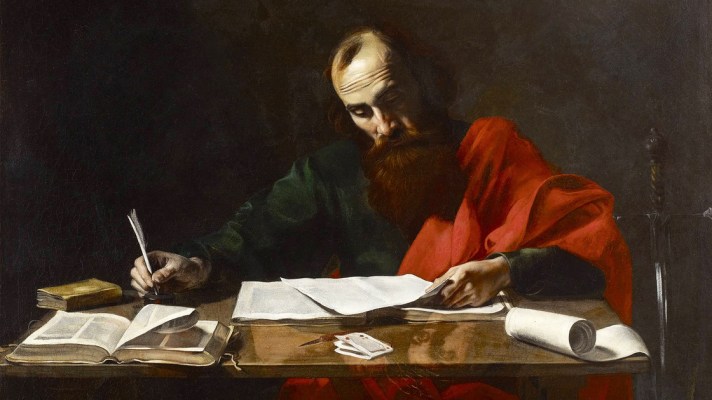

 Diggin' in the Word