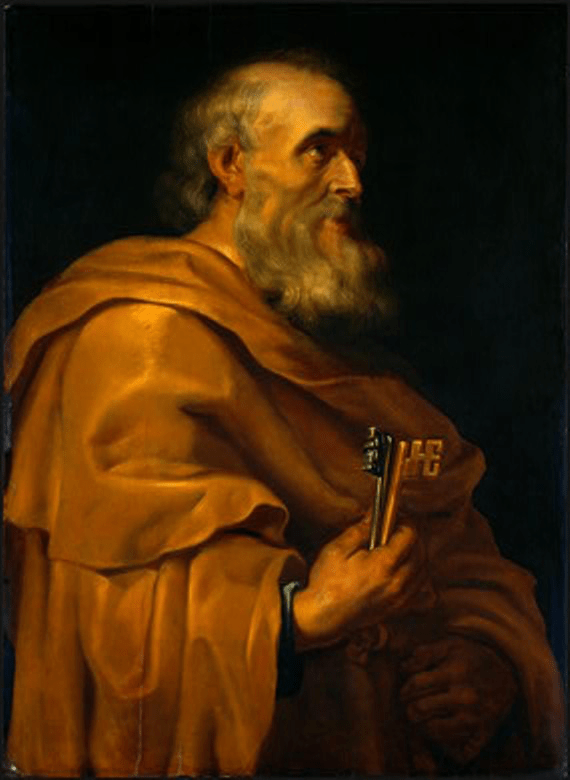
1 Peter Lesson Eleven

1 Peter 5:1-14 – Elders

Therefore, as a fellow elder and witness to the sufferings of the Messiah and also a participant in the glory about to be revealed, I exhort the elders among you: Shepherd God’s flock among you, not overseeing out of compulsion but freely, according to God’s will; not for the money but eagerly; not lording it over those entrusted to you, but being examples to the flock. And when the chief Shepherd appears, you will receive the unfading crown of glory. In the same way, you younger men, be subject to the elders. And all of you clothe yourselves with humility toward one another, because 

God resists the proud 

but gives grace to the humble.

Humble yourselves, therefore, under the mighty hand of God, so that He may exalt you at the proper time, casting all your care on Him, because He cares about you. 

Be serious! Be alert! Your adversary the Devil is prowling around like a roaring lion, looking for anyone he can devour. Resist him and be firm in the faith, knowing that the same sufferings are being experienced by your fellow believers throughout the world. 

10 Now the God of all grace, who called you to His eternal glory in Christ Jesus, will personally restore, establish, strengthen, and support you after you have suffered a little.  11 The dominion belongs to Him forever. Amen. 

12 I have written you this brief letter through Silvanus (I know him to be a faithful brother) to encourage you and to testify that this is the true grace of God. Take your stand in it! 13 The church in Babylon, also chosen, sends you greetings, as does Mark, my son. 14 Greet one another with a kiss of love. Peace to all of you who are in Christ. (HCSB)

As we conclude our study of 1 Peter, the focus is on leadership within the church. There are three possible reasons for Peter to address the elders specifically at the close of the letter.

  • Leaders may face the majority of the persecution, at least at the beginning.
  • It may be a reference to Ezekiel 9:6, where the judgment in God’s temple begins with the elders.
  • It may be because elders are the leaders of God’s people.

All are reasonable possibilities, and it may be that all three are a correct understanding of the passage.

Now, let’s define what a biblical elder is, as the understanding has changed in the minds of many since the church was first established. The term “pastor,” which is often used for the leadership of a church, is not a biblical term. What we today understand as a pastor is the same as the “elder” that Peter is talking about here. The Greek term is presbyteroi and was used to denote leadership positions in churches found in the New Testament.

  • Acts 11:30 They did this, sending it to the elders by means of Barnabas and Saul.
  • Acts 15:2 But after Paul and Barnabas had engaged them in serious argument and debate, the church arranged for Paul and Barnabas and some others of them to go up to the apostles and elders in Jerusalem concerning this controversy.
  • Acts 15:4 When they arrived at Jerusalem, they were welcomed by the church, the apostles, and the elders, and they reported all that God had done with them.
  • Acts 15:6 Then the apostles and the elders assembled to consider this matter.
  • Acts 21:18 The following day Paul went in with us to James, and all the elders were present.
  • Acts 14:23When they had appointed elders  in every church and prayed with fasting, they committed them to the Lord in whom they had believed.
  • 1 Timothy 5:17 The elders who are good leaders should be considered worthy of an ample honorarium,  especially those who work hard  at preaching and teaching.

Another thing to note about New Testament churches is that the term elder is always used in the plural. There was never one person in charge of a local congregation. I’m not suggesting you should leave your church if there is one pastor who is the sole authority figure. There are many other factors to consider in that decision. However, I am saying that a church modeled after the example in the Bible is led by a plurality of men who function like the term “elder” that Peter is using in this letter. 

Verse 2

Now that we’ve defined what an elder is let’s look at the responsibilities of an elder.

  • Elders are to shepherd God’s flock. This is a reminder that the congregation is not theirs, they belong to God, and God has placed the shepherd in a leading role. 
    • A primary task of shepherding is faithfully preaching the Word. 
    • Another task is raising new leaders within the congregation to carry on the work or plant a new church.
    • To ensure the flock is discipled in accordance with Matthew 28:19-20.
  • The term “overseeing” in Greek is the word episkopountes, signifying another role. 
    • From the context in this passage, the position of elder and overseer were the same in the New Testament church.
    • This is not necessarily true for the modern church. An overseer could be in an official position or as a lay helper in an area of the church.
  • They should never serve out of compulsion. If their heart is not in serving, they shouldn’t do it. Serving should be in response to the leading of the Holy Spirit and in line with God’s will. 
  • Serving should be a selfless act and not to try and become wealthy. There is always the danger that they could be tempted by the prospects of becoming wealthy through their ministry or even steal funds from the church. There are examples of the first in some megachurches and/or prosperity gospel churches. The New Testament has examples of false teachers driven by a love of money.
    • 2 Corinthians 2:17 For we are not like the many  who market God’s message  for profit. On the contrary, we speak with sincerity in Christ, as from God and before God.
    • 2 Cor 11:7-15 Or did I commit a sin by humbling myself so that you might be exalted,  because I preached the gospel of God to you free of charge? I robbed other churches by taking pay from them to minister to you. When I was present with you and in need, I did not burden anyone, for the brothers who came from Macedonia  supplied my needs. I have kept myself, and will keep myself, from burdening you in any way. 10 As the truth of Christ is in me, this boasting of mine will not be stopped in the regions of Achaia. 11 Why? Because I don’t love you? God knows I do! 12 But I will continue to do what I am doing, in order to deny the opportunity of those who want an opportunity to be regarded just as our equals in what they boast about. 13 For such people are false apostles, deceitful workers, disguising themselves as apostles of Christ. 14 And no wonder! For Satan disguises himself as an angel of light. 15 So it is no great thing if his servants also disguise themselves as servants of righteousness. Their destiny will be according to their works.
    • 1 Timothy 6:5-10 and constant disagreement among people whose minds are depraved and deprived of the truth, who imagine that godliness  is a way to material gain. But godliness with contentment is a great gain.For we brought nothing into the world, and we can take nothing out. But if we have food and clothing, we will be content with these. But those who want to be rich fall into temptation, a trap, and many foolish and harmful desires, which plunge people into ruin and destruction. 10 For the love of money is a root of all kinds of evil, and by craving it, some have wandered away from the faith and pierced themselves with many pains. 

Throughout the Bible, the relationship of leaders to those under them is often described as a shepherd-like relationship.

  • Psalm 23 – Yahweh’s relationship to David.
  • Isaiah 40:11 – Yahweh to Israel.
  • Jeremiah 23:1-4 – Israel’s corrupt shepherds will be replaced by faithful shepherds.
  • Ezekiel 34:1-10 – Yahweh will rescue His people from selfish shepherds.
  • Zechariah 11:4-17 – A caring shepherd is replaced by a worthless and uncaring shepherd.
  • Matthew 9:35-38 – Jesus appoints new shepherds for His people.
  • John 10:1-18 – Jesus is the good shepherd.
  • John 21:15-17 – Peter is to be a shepherd.

Verse 3

Elders are to act as examples and not as heavy-handed rulers. 

  • Matthew 20:25 But Jesus called them over and said, “You know that the rulers of the Gentiles dominate them, and the men of high position exercise power over them.
  • Mark 10:42 Jesus called them over and said to them, “You know that those who are regarded as rulers of the Gentiles dominate  them, and their men of high positions exercise power over them. 

Followers of Jesus are to be servants and not heavy-handed rulers.

  • Matthew 20:28just as the Son of Man did not come to be served, but to serve,  and to give His life—a ransom for many.
  • Mark 10:45 For even the Son of Man  did not come to be served, but to serve,  and to give His life —a ransom  for many.

Verse 4

This verse ties back into verse one with the idea of suffering followed by glory. The implication is that those who serve faithfully will receive a great reward later. Peter calls Jesus “the chief Shepherd,” a term not used anywhere else in the New Testament or the Septuagint. By using this title, Peter reminds all ministry leaders that they are servants under Jesus. The “crown” could be an extra reward for being a faithful servant, or it could be eternal life. The other New Testament references of “crown” or in Greek stephanos talk about entrance into heaven, so we should interpret the term as signifying eternal life.

Verse 5

Although there are various interpretations of what Peter means by the term “younger,” in this case, the literal interpretation is the correct one. Younger people, in general, are more prone to act in a disobedient manner. At the same time, Peter is not condoning lemming-like obedience if the elders are not acting in a manner prescribed for them. However, Peter is saying that those who are under leadership should follow and submit to leaders without complaining or resisting the guidance of the leaders. This is critical to create a spirit of unity and harmony within each local church body. A vital component of this is by acting with humility. When each of us remembers that we are created beings and sinners, it is more difficult to complain about others. Pride, the opposite of humility, often gets in the way when we try and accomplish things in a group.

Verse 6

Peter uses terminology here, “mighty hand,” that is connected with God delivering Israel out of Egypt.

  • Exodus 3:19 However, I know that the king of Egypt will not allow you to go, unless he is forced by a strong hand.
  • Exodus 32:11 But Moses interceded with the Lord his God: “Lord, why does Your anger burn against Your people You brought out of the land of Egypt with great power and a strong hand?
  • Deuteronomy 4:34 Or has a god attempted to go and take a nation as his own out of another nation, by trials, signs, wonders, and war, by a strong hand and an outstretched arm, by great terrors, as the Lord your God did for you in Egypt before your eyes?

Just as Yahweh delivered His people from bondage in Egypt, He will also deliver the recipients of Peter’s letter. The image of God’s mighty hand emphasizes the power of God.

Verse 7

Depending on the translation you use, it may read “cast” or “casting” all your care(s) on Him. The second option is a better understanding of the original Greek as it explains how we humble ourselves under God’s strong hand. There is a double implication in the text. Believers humble themselves by casting their worries on God, while those who are prideful will continue to worry. Worry is a form of pride in that when believers are filled with anxiety; they believe they must solve their problems in their own strength. They only trust a little “g” god, themselves. When we cast our anxiety on God, we demonstrate trust in Yahweh.

Verse 8

As Peter draws to a close in the letter, he continues to encourage his readers. In addition, Peter tells them to always be on guard.

  • Be serious.
  • Be alert.

Peter also uses a lion as symbology for Satan.

  • Roaring lion – used to strike fear into the hearts of God’s people. The roar is a metaphor for persecution to intimidate believers and cause them to abandon their faith. 
  • Devour – if Satan can cause believers to abandon their faith, then he has devoured them.

Consider the contrast between God and Satan.

  • God cares for His children. Asks them to bring their worries to Him. Promises to protect them.
  • Satan aims to bring terror to believers and tries to pile worry and fear on them.

Peter warns us that even though Satan is defeated, he is still a crazed enemy. However, if we don’t fear his bark (roar), we will never be devoured by his bite.

Verse 9

Peter continues his warning against Satan. In the previous verse, Peter warns us to be on our guard. In this verse, he encourages us to be proactive in resisting Satan. The Greek word for resist, antistete, is also used in an active tense in:

  • Acts 13:8  But Elymas the sorcerer (this is the meaning of his name) opposed  them and tried to turn the proconsul away from the faith.
  • Galatians 2:11  But when Cephas  came to Antioch, I opposed him to his face because he stood condemned.
  • 2 Timothy 3:8 Just as Jannes and Jambres  resisted Moses,  so these also resist the truth, men who are corrupt in mind,  worthless  in regard to the faith.
  • 2 Timothy 4:14-15 Alexander  the coppersmith did great harm to me. The Lord will repay him according to his works. 15 Watch out  for him yourself because he strongly opposed our words.

This verse also adds weight to the argument that the persecution that the readers were facing was not governed officially by the Roman government or the emperor. Instead, this was widespread discrimination and abuse suffered in the Greco-Roman world by Christians because of their allegiance to Jesus and refusal to participate in many of the normal societal activities. 

Verse 10-11

These two verses conclude the body of the letter and summarize the main points of the letter.

Verse 10

Peter focuses on God’s strength as the means by which believers can persevere and obtain salvation. God’s grace impacts believers in the following ways:

  • Restoration
  • Establishing
  • Strengthening
  • Supporting

All this occurs regardless of the believer’s circumstances, but they are especially beneficial during times of suffering.

Peter is also saying that before we attain glory, each of us will go through periods of trials and suffering. The phrase “suffered a little” should not be interpreted as a short period of our earthly existence, although it may. Instead, it should be compared to our eternal glory and residence in heaven. When viewed in that light, our earthly suffering, no matter how intense or long, is short in comparison.

2 Corinthians 4:16-18 Therefore we do not give up. Even though our outer person is being destroyed, our inner person is being renewed day by day. 17 For our momentary light affliction is producing for us an absolutely incomparable eternal weight of glory. 18 So we do not focus on what is seen, but on what is unseen. For what is seen is temporary, but what is unseen is eternal.

Verse 11

God is the sovereign ruler over all of creation for all of time.

Verse 12

Silvanus is Silas who is mentioned often in the book of Acts as Paul’s partner in ministry and missionary journeys. Silvanus would deliver the letter and act as an interpreter if the recipients had questions as to the meaning of what was written. The phrase “to be a faithful brother” indicates that Peter had absolute trust in Silvanus’ ability to interpret and answer questions on his behalf.

Peter then gives one last encouragement for them to take their stand in the grace of God. Peter is also implying that failing to stand would indicate apostasy and judgment on the last day.

Verse 13

There are various interpretations of the church in Babylon. The one that makes the most sense from a contextual standpoint in Peter’s letter is that Babylon represents the church at large. All of us are foreigners/exiles while we are living in our physical body here on earth. Our true home is heaven, and once we die, or Jesus returns, our exile will end, and we will live in our true home.

The “Mark” referenced here is John Mark, who went with Paul on his first missionary journey. Peter is not Mark’s literal father. Peter is likely older, maybe much older, and feels affection towards Mark as a father would towards a son.

Verse 14

Although it would seem strange to many cultures today, in the Greco-Roman and Mediterranean world, greeting others with a kiss was common practice. This practice indicated respect and brotherly love for others and was devoid of any sexual overtones.

Finally, closing with a wish of peace was significant to the recipients of the letter. They were being tossed by persecution and discrimination. They were in need of the peace that only Jesus could provide.

Applications

  • If you are in any type of leadership position within the church, make sure you are doing it for the right reason – according to God’s will? 
  • If you are in any type of leadership position, make sure you are doing it with the correct attitude? 
    • Not for any type of financial benefit.
    • With a spirit of humility and not heavy-handedness.
    • Setting a Christ-like example by serving as a leader.
  • Regardless of whether you are in a leadership position or not, do you support those over you? We may not always agree with them, but as long as they are not in disagreement with Scripture, we have no biblical grounds to complain about their leadership. It is easy to get discouraged when the congregation is always complaining and nitpicking about leaders, and it is little wonder that the average life-span of an elder (pastor) in the Western church is just over three years due to burn-out.
  • Do you approach spiritual warfare with a serious attitude? Western culture can picture Satan as a little red guy with a pitchfork or some similar picture. However, a proper understanding of him should drive us to consider his evil intent and desire to see us fail as a Christian. We should immerse ourselves in reading Scripture, prayer, an accountability partner, and Christian fellowship.
  • Do we rest in God’s grace and the assurance that no matter what we go through, an amazing and indescribable eternity awaits us?
1 Peter Lesson Three

1 Peter 2:1-10 – Living Stones

2 So rid yourselves of all malice, all deceit, hypocrisy, envy, and all slander. Like newborn infants, desire the pure spiritual milk, so that you may grow by it for your salvation, since you have tasted that the Lord is good. Coming to Him, a living stone—rejected by men but chosen and valuable to God— you yourselves, as living stones, are being built into a spiritual house for a holy priesthood to offer spiritual sacrifices acceptable to God through Jesus Christ. For it is contained in Scripture:

Look! I lay a stone in Zion,

a chosen and honored  cornerstone,

and the one who believes in Him

will never be put to shame!

So honor will come to you who believe, but for the unbelieving,

The stone that the builders rejected—

this One has become the cornerstone,

and

A stone to stumble over,

and a rock to trip over.

They stumble because they disobey the message; they were destined for this.

But you are a chosen race, a royal priesthood,

a holy nation, a people for His possession,

so that you may proclaim the praises 

of the One who called you out of darkness

into His marvelous light.

10 Once you were not a people,

but now you are God’s people;

you had not received mercy,

but now you have received mercy. (HCSB)

The focus of Peter’s message in these verses is on community relationships. The previous passage focused on the need for love among fellow Christians. In chapter two, Peter begins with a call to get rid of actions that disrupt the community of believers.

Verse 1

  • The sins listed in the first verse tear at the social fabric of the church, ripping away the love that binds them together.
    • Malice – an attitude similar to hatred with a desire to inflict pain, harm, or injury to another person. It includes holding and acting on grudges.
    • Deceit – refers to deliberate dishonesty. Anything less than speaking the full and honest truth from the heart is deceit. This is a selfish, two-faced attitude that deceives and hurts others for personal gain.
    • Hypocrisy – a person who is acting out a part and concealing their true motives.
    • Envy – a desire to possess what belongs to someone else and a feeling of displeasure produced by witnessing or hearing of the advantage or prosperity of others.
    • Slander – to speak against someone, to run others down verbally, assaults the character of a person, speech that harms another person’s status or reputation.

Verse 2

The central theme of the paragraph is in this verse, “desire the pure spiritual milk.” There are several themes associated with the “spiritual milk” theme.

  • Consuming spiritual milk results in growth.
  • Newborn babies crave milk; believers should have just as strong a craving for spiritual milk.
  • Milk is the very substance of life that enables Christians to grow spiritually.
  • The need for spiritual milk is not an indicator that they are new believers.
  • The milk believers are to long for contain two characteristics.
    • Pure – unadulterated and uncontaminated. Contaminated milk can produce sickness or death.
    • Spiritual – the root of the Greek word used for spiritual is logos, which means word.
  • The spiritual milk here is nothing less than the Word of God. But an underlying warning is contained here.
    • Pure milk leads to healthiness and growth.
    • Contaminated mild would lead to sickness or even death.
    • Correct teaching/preaching leads to spiritual growth. False or heretical teaching leads to sickness or death. False or heretical preachers are sickening or killing their congregation with tainted Scripture interpretation. As believers, we must be careful that those we listen to are not tainting the message.

Verse 3

Those who have truly experienced the love, mercy, and grace of Yahweh should, as a result, actively pursue Him in worship and obedience. The desire to grow spiritually comes from experiencing the Lord’s kindness. The believer is filled with a desire for more, never fully satisfied that they have enough of the Word and Yahweh. This shouldn’t be interpreted as a sense of frustration but rather as desiring more of God.

Verses 4-10 The Living Stones

This next section focuses on the concept of living stones, both Jesus as the living stone and those who make up the church as living stones. This is an amazing and beautiful picture, which I’ll unpack, hopefully giving you a better sense of its full meaning.

Verse 4

This verse is a little tricky as there are connections to the Old Testament from verse 3, Lord, but in this verse called the “living stone” as well as references to the Old Testament in the following verses. The use of the Old Testament term being linked to the living stone is important from a Christological standpoint as it infers that what is true of Yahweh is also true of Jesus.

Jesus is the living stone.

  • Living because of His resurrection.
  • Rejected by man.
    • Psalm 118:22 The stone that the builders rejected has become the cornerstone.
    • Isaiah 28:16 Therefore the Lord God said: “Look, I have a stone in Zion, a tested stone, a precious cornerstone, a sure foundation; the one who believes will be unshakeable.”
    • Acts 4:11 This Jesus is the stone rejected by you builders, which has become the cornerstone.
    • Romans 9:33 As it is written: Look! I am putting a stone in Zion to stumble over and a rock to trip over, yet the one who believes on Him will not be put to shame.
  • Chosen by Yahweh.
    • This contrasts with the rejection by man.
    • He is exalted through His resurrection.
  • These two ideas follow the situation of the Christians Peter is writing to.
    • They were despised by the unbelievers around them.
    • They were chosen and honored in Yahweh’s eyes.
    • They are destined for vindication after their earthly suffering.

Verse 5

In verse 4, Peter identified Jesus as the living stone. In verse 5, he calls followers of Jesus “living stones.” Why does Peter use the phrase “living stones?”

  • Because of their faith in the resurrected Christ.
    • When we place our faith in Jesus, we are buried and resurrected into the resurrected life of Jesus in the present.
    • We also wait for our new body at the end of the age.
  • This is the only place in the New Testament that believers are called living stones.
    • In other places, believers are called God’s temple or house.
      • 1 Corinthians 3:16 Don’t you yourselves know that you are God’s sanctuary and that the Spirit of God lives in you?
      • Ephesians 2:19-22 So then you are no longer foreigners and strangers, but fellow citizens with the saints, and members of God’s household, built on the foundation of the apostles and prophets, with Christ Jesus Himself as the cornerstone. The whole building, being put together by Him, grows into a holy sanctuary in the Lord. You also are being built together for God’s dwelling in the Spirit.
      • Hebrews 3:6 But Christ was faithful as a Son over His household. And we are that household if we hold on to the courage and the confidence of our hope.
      • The illustration is of a house in which believers make up the stones of the building.
    • The house (believer) is spiritual because it is animated and indwelt by the Holy Spirit.
  • Peter is identifying the New Testament church as the new temple, replacing the concept of the Old Testament temple.
    • Believers, as living stones comprising a spiritual house, are being built up through the teaching and discipleship that occurs in the New Testament church.
    • The function of the “building” (believers) is to function as a holy priesthood.
  • The idea of a holy priesthood should not be viewed in an individualistic context. Instead, Peter views this as the corporate church whose members are a holy priesthood.
    • Western society tends to view the concept of priesthood in an individualistic mindset.
    • Under the New Covenant, all believers have a priestly identity.
    • All believers have direct access to God through the cross and the resurrection of Jesus.
    • However, we should focus on the corporate body of Christ rather than individual members.
  • Priests offer spiritual sacrifices acceptable to God.
    • Prayer.
    • Thanksgiving.
    • Praise.
    • Repentance.
    • Offering our bodies to God for His service.
    • Offering of financial gifts.
    • Loving service to others.

Verse 6

This verse is taken from Isaiah 28:16 Therefore the Lord God said: Look, I have laid a stone in Zion, a tested stone, a precious cornerstone, a sure foundation; the one who believes will be unshakeable.

The context of Isaiah 28 is a judgment on Ephraim for disobedience and unbelief. The theme that Isaiah emphasized throughout the book is captured here, those who trust in the Lord will escape judgment, those who don’t will perish.

  • Isaiah 28:16 is fulfilled with the coming of Jesus.
  • A cornerstone establishes the design and structure of a building.
  • Jesus is the fortress, refuge, and stronghold.
  • Those who believe in Jesus will never be put to shame.
  • Just as Jesus is chosen and honored by God, believers will also be vindicated on the last day.
  • Believers will not experience the embarrassment of judgment but the glory of approval.

Verse 7

Depending on the translation you use verse 7 could have the word honor, as in the HCSB, or precious. The correct understanding of the original Greek is honor.

  • Honor for believers on the day of judgment.
  • Eschatological honor for Jesus.
  • The stone (Jesus) rejected by the builders (unbelievers) is the stone that believers rest their faith on.
  • Unbelievers reject the Gospel, which is the cause of their stumbling or tripping. This should be interpreted as judgment and eternity in hell.

Verse 8

The ideas in this verse are the Gospel message, Jesus, and unbelievers.

  • Jesus and His message, the Gospel, is offensive to many.
  • When unbelievers choose not to believe the Gospel and place their faith in Jesus, the very message that could bring them life instead causes them to stumble.
  • Disobedience is the cause, and all disobedience is because they fail to trust in God.
  • The stumbling mentioned in these verses is not accidental tripping; it is a willful rebellion by refusing to submit to the lordship of Yahweh.
  • The same thing led to the crucifixion of Jesus, refusing to submit and fulfilling their own desires.

Verse 9

There’s a lot going on in this verse, which contains three main themes; a royal priesthood, holy nation, and purpose of God’s people.

  • Royal priesthood.
    • God has chosen them.
    • A reminder that we serve royalty.
    • It is predominately corporate in nature.
      • But it doesn’t deny the fact that individuals serve priestly functions.
      • A proper understanding is that believers have priestly functions but always as members of a group who exercise priestly functions.
    • Both Israel as a nation and the church of Jesus are identified as a royal priesthood.
      • Exodus 19:6 “And you will be My kingdom of priests and My holy nation.” These are the words that you are to say to the Israelites.
      • Revelation 1:6 And made us a kingdom, priests to His God and Father – the glory and dominion are His forever and ever. Amen.
  • Holy nation.
    • Holy means to be set apart.
    • Both Israel and Jesus’ church are to be different than the world around them. They will be set apart by their holiness in obedience to Yahweh.
    • A people for His possession.
    • Individual believers all make a valuable contribution to Jesus’ church.
    • Christians are the true people of God, continuing His purpose that began with Abraham and Moses.
  • Purpose of God’s people.
    • To proclaim the praises of Yahweh.
      • They were called out of darkness (death).
      • They now live in marvelous light (life).
      • 2 Corinthians 4:6 For God who said, “Let light shine out of darkness,” has shone in our hearts to give the light of the knowledge of God’s glory in the face of Jesus Christ.
      • Conversion is an illustration of moving from darkness to light.
        • Acts 26:18 To open their eyes so they may turn from darkness to light and from the power of Satan to God, that by faith in Me they may receive forgiveness of sins and a share among those who are sanctified.
        • Ephesians 5:8 For you were once darkness, but now you are light in the Lord. Walk as children of light.
    • Isaiah 43:21 The people I formed for Myself will declare My praise.
    • Isaiah 43:7a Everyone called by My name and created for My glory.
    • Components of praising God.
      • Worship.
      • Evangelism.

Verse 10

The verse presents an amazing picture of God’s grace and mercy. There is also a connection to Hosea 2:23 I will sow her in the land for Myself, and I will have compassion on No Compassion; I will say to Not My People: You are My people, and he will say, “You are my God.”

  • This was a renouncing of Israel as God’s chosen people because of continuous sin. Yet, Yahweh vows to have mercy on them and restore them as His chosen people.
  • It is also the experience of the church of Jesus and Gentiles.
    • Gentiles once lived in darkness but have now been restored by the light.
    • Gentiles are now grafted into God’s chosen people.
  • Gentiles are the recipients of God’s grace and mercy through faith in Jesus.

Applications

  • Take the list of sins that is in verse one and do a self-assessment on whether or not you stumble in any of these areas. Even better, ask your spouse or close friends/co-workers. If you have sinned against anyone, you should apologize and ask for forgiveness. They may or may not give it, but that doesn’t change the fact that we are to ask forgiveness.
  • Do you desire spiritual milk for growth? With our busy lives, it can be challenging, but we should be reading Scripture every day. We should read through the entire Bible each year. The only way to know God, be obedient to His Word, and defeat the spiritual powers of darkness is by being immersed in Scripture. When Jesus was tempted by the devil, He quoted Scripture.
  • Do our lives reflect being a member of a holy priesthood? Are we any different than the world around us? If not, we need to confess our sins and do a course correction.
  • Do we rest in the security of the fortress of Jesus? There is nothing in this world bigger than Jesus. If we really trust Him, we will be secure no matter what the world throws at us.

1 Peter Lesson Two

1 Peter 1:13-25 – Holy Living

13 Therefore, with your minds ready for action, be serious and set your hope completely on the grace to be brought to you at the revelation of Jesus Christ. 14 As obedient children, do not be conformed to the desires of your former ignorance. 15 But as the One who called you is holy, you also are to be holy in all your conduct; 16 for it is written, Be holy, because I am holy.

17 And if you address as Father the One who judges impartially based on each one’s work, you are to conduct yourselves in fear during the time of your temporary residence. 18 For you know that you were redeemed from your empty way of life inherited from the fathers, not with perishable things like silver or gold,  19 but with the precious blood of Christ,  like that of a lamb without defect or blemish. 20 He was chosen before the foundation of the world but was revealed at the end of the times for you 21 who through Him are believers in God, who raised Him from the dead and gave Him glory, so that your faith and hope are in God.

22 By obedience to the truth, having purified yourselves for sincere love of the brothers, love one another earnestly from a pure heart, 23 since you have been born again—not of perishable seed but of imperishable—through the living and enduring word of God. 24 For

All flesh is like grass,

and all its glory like a flower of the grass.

The grass withers, and the flower falls,

25 but the word of the Lord endures forever.

And this is the word that was preached as the gospel to you. (HCSB)

There are three imperatives in this passage.

  • Unshakable hope in Jesus, verse 13
  • Holiness, verse 15
  • Live in reverent fear, verse 17

Verses 13-16

Verse 13

The word “therefore” reaches back to the first twelve verses in the letter. The readers are encouraged to live a godly life because they have a foundation in God’s saving work explained in verses 1-12. Order is essential here.

  • What God has done for us.
  • How we should live our lives.

If the order is reversed, we have a works-based righteousness instead of holiness being a result of God’s grace and power and our response to the love Jesus displayed by going to the cross.

  • Minds ready for action – means to be ready to undertake serious work.
  • Be serious – some translations have “sober” here. Sober is to be understood as having clear minds not impaired, distracted, or controlled by the things of the world.

Verse 14

There are several ideas flowing beneath the surface of this verse.

  • Even as followers of Jesus, we struggle with the temptation of this world and the danger of falling away from God.
  • However, as God’s children, we are to fight those temptations by living a life of obedience through faith and in God’s power and strength.
  • Just as children often have similarities with their earthly parents, we are to be similar to our heavenly Father.

Verse 15

  • The idea of being “called” should not be viewed as an invitation. Instead, it is a picture of God’s power in drawing people from a life in darkness to a life of light, from death to life.
  • Once again, the order is important. God’s power has pulled us from darkness and now equips us to live in holiness if we are obedient.
    • God’s people are to live differently from the world.
    • God’s people separate themselves from the evil desires of the world.
    • To be holy means to be apart from evil.

Verse 16

  • Why are we to be holy?
  • Because God is holy, and if we are God’s people, we should reflect God’s character.
    • Leviticus 11:44-45 For I am Yahweh your God, so you must consecrate yourselves and be holy because I am holy. You must not defile yourselves by any swarming creature that crawls on the ground. For I am Yahweh, who brought you up from the land of Egypt to be your God, so you must be holy because I am holy.
    • When thinking about Old Testament covenants, before Israel could be a blessing to other nations, they first had to be holy.
    • Holiness is the starting point for God’s covenant people.
  • Holy doesn’t mean sinless perfection. That is impossible in this life. It does mean to be set apart. If we are God’s children, then we should be acting like Him.

Verses 17-21 Theme is to live in reverent fear.

Verse 17

  • Believers are to live in fear of Yahweh.
  • The question is, what type of fear is Peter talking about?
    • Reverent fear – a feeling of utmost respect and honor towards Yahweh.
    • Terror fear – a feeling of trepidation and apprehension.
    • From the context of the passage and the general concept of the Christian life as being a life filled with joy, it seems clear that Peter is talking about reverent fear.
    • At the same time, we need to examine whether our reverent fear is still…reverent or if it has become dull over time.
    • A responsible and confident driver also has a healthy fear for the damage that their vehicle could inflict on others through reckless behavior.
  • Our loving Father will also be our impartial judge on the last day.

Verse 18

The first idea to note is that verses 18-19 together form a negative/positive couplet. First, Peter illustrates what does not redeem someone with what does redeem someone.

  • Redeemed
    • Signifies liberation.
    • In this verse, it signifies leaving the emptiness of life they inherited from their fathers.
    • In the Old Testament emptiness is often associated with the idol worship practiced by pagans.
    • In the New Testament, it illustrates pre-Christian life.
      • Romans 1:21  For though they knew God, they did not glorify Him as God or show gratitude. Instead, their senseless minds were darkened.
      • Ephesians 4:17  Therefore, I say this and testify in the Lord: You should no longer walk as the Gentiles walk, in the futility of their thoughts.
    • The life of unbelievers is a life characterized by futility, emptiness, and chasing after false gods.
      • Pursuing money.
      • Pursuing possessions.
      • Both are temporary.

Verse 19

The details of the purchase price are now revealed.

  • In contrast to the temporary things the lost pursue, believers are purchased with the everlasting and infinitely precious blood of Jesus.
  • Jesus poured out His life to redeem sinners.
  • Early Christians believed that Christ’s sacrifice as the sinless lamb fulfilled:
    • The Passover.
    • The prophetic suffering servant.
    • The entire Old Testament sacrificial system.

Verse 20

There are two main thoughts here:

  • Before the foundation of the world.
    • It was not mere chance that brought Jesus into the world at that particular time and place.
    • It was part of God’s plan.
    • Ephesians 1:4  For He chose us in Him, before the foundation of the world, to be holy and blameless in His sight.
  • Revealed at the end of the times.
    • Followers of Jesus enjoy the blessing of living at the time God is fulfilling His saving promises.
    • “The end of the times” signifies the time that started with the ministry, death, and resurrection of Jesus.
    • This does not mean, and should not be confused with, the eschatological end times.
    • Peter indicates that Jesus’ birth, life, and death ushered in “the end of the times.”

Verse 21

  • We are believers in God through Jesus, not through any other means. John 14:6b  No one comes to the Father except through Me.
  • Believers put their faith in God because of the finished work of Jesus.
  • Jesus’ resurrection is the foundation of the living hope found in 1:3.
  • A holy life is a life that trusts in God’s promises.
  • A holy life is one in which God is prized above all things, in which believers trust and hope in His goodness.

Verses 22-25 The theme is a command to love each other.

Verse 22

  • Purpose of their conversion is to love fellow believers.
  • It is achieved by obedience to the truth – faith in God’s promises of salvation.
  • It rises from a pure heart that has been cleansed by the blood of Jesus.
  • Peter uses two different Greek words for love in this verse.
    • One is brotherly love.
    • One is divine love, agape.
    • Unbelievers can display brotherly love to each other. However, it takes a Christian controlled by the Holy Spirit to show agape love.

Verse 23

  • Peter explains the origin of their birth.
    • Not of a perishable seed – human birth.
    • But of an imperishable seed – the Word of God.
      • Romans 10:17  So faith comes from what is heard, and what is heard comes through the message about Christ.
      • Galatians 3:2  I only want to learn this from you: Did you receive the Spirit by the works of the law or by hearing with faith?
    • A seed and the Word have similar characteristics.
      • A seed is small but, once planted has the power of life in it and produces fruit.
      • The Word is small and seemingly insignificant. Yet, it has power and life within it. The Word must be planted to do good, but when it is planted in a person’s heart, it produces good fruit.
      • Fruit produced by the Word is lasting, eternal fruit, but things of the flesh don’t last.

Verse 24

  • Peter quotes the text from Isaiah 40:6-8 here.
    • Israel will be restored from their exile in Babylon.
    • Babylon was viewed as invincible at the time that Israel was taken into exile.
    • Those persecuting the recipients of Peter’s letter may have been viewed as invincible.
    • In both cases, Peter is saying that their power is short-lived and that Yahweh and His people endure forever.

Vese 25

  • God’s Word is enduring.
  • It is imperishable.
  • Nothing can overpower God.
  • The promises contained in Isaiah are fulfilled in the proclamation of the Gospel.

Applications.

  • Do you take your faith seriously and prepare yourself for spiritual work? Peter’s words at the beginning of this passage exhort us always to be prepared and to have the proper attitude towards our salvation.
  • Do you take the holiness of God seriously and have a reverent fear of God? We love to read the passages that tell us how loving and merciful God is, which is true. But we often neglect or ignore the passages that tell us that God is also our judge. An infinitely holy God can’t be in the presence of sin. Will our lives allow us to enter into God’s presence or will we be cast out of His presence? We would do well to remember Matthew 7:23 Then I will announce to them, “I never knew you! Depart from Me, you lawbreakers.”
  • Do we immerse ourselves in the Word? We need to be reading the Bible daily, feeding on the truths contained in it. Those seeds of truth will plant themselves in our hearts and grow, producing fruit in our lives.
  • Do we have agape love for our brothers and sisters? Many countries have large megachurches, which in themselves are not necessarily bad. However, they often feel impersonal, and there is little to no connection with other believers. When we look back at the church in the book of Acts, we see a church that closely connected believers together. Make sure you are connected with a church that promotes connecting in smaller groups, replicating the intimacy that is found in the early church.