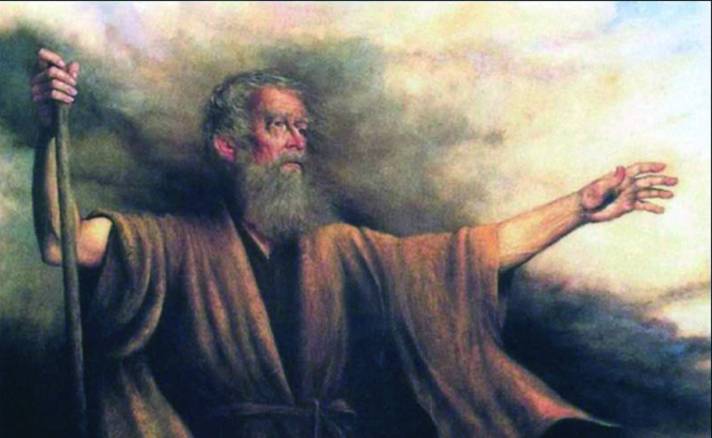
Malachi Lesson Eight

Malachi Lesson Eight – The Day of the Lord

“For indeed, the day is coming, burning like a furnace, when all the arrogant and everyone who commits wickedness will become stubble. The coming day will consume them,” says the Lord of Hosts, “not leaving them root or branches. But for you who fear My name, the sun of righteousness will rise with healing in its wings, and you will go out and playfully jump like calves from the stall. You will trample the wicked, for they will be ashes under the soles of your feet on the day I am preparing,” says the Lord of Hosts. “Remember the instruction of Moses My servant, the statutes and ordinances I commanded him at Horeb for all Israel. Look, I am going to send you Elijah the prophet before the great and awesome Day of the Lord comes. 6 And he will turn the hearts of fathers to their children and the hearts of children to their fathers. Otherwise, I will come and strike the land with a curse.” (HCSB)

With this lesson, we’ll bring the study of Malachi to a close. There is both judgment and hope contained in this passage, with a final encouragement that those who hold fast to the Lord will be blessed.

Verse 1

The imagery here is referring to the day of judgment when all will be judged. There are two possible eternal paths for each person.

  • Hell for the unrighteous and unrepentant.
    • They will become like stubble – a reference to chaff that is discarded in the harvest process. Chaff is also easily burned.
    • Burning like a furnace. Those who are “discarded” during the harvest process will face a fire that will torment and consume them. 
    • Joel 2:1-3 – Blow the horn in Zion; sound the alarm on My holy mountain! Let all the residents of the land tremble, for the Day of the Lord is coming; in fact, it is near— a day of darkness and gloom, a day of clouds and dense overcast, like the dawn spreading over the mountains; a great and strong people appears, such as never existed in ages past and never will again in all the generations to come. A fire destroys  in front of them, and behind them a flame devours. The land in front of them is like the Garden of Eden, but behind them, it is like a desert wasteland; there is no escape from them. 
    • They will have no hope, no future, no brighter day.
    • There will be no escape for those who live in disobedience to Yahweh.
    • Jesus warns that we shouldn’t fear the death of our body but what happens next.
    • We don’t know everything about hell, but there are some things we do know.
      • It is a real place.
      • It is a place of separation from God and all that is good.
      • It is a place of just punishment.
      • It is a place where there is memory.
      • It is a place of hopelessness. 

Verses 2-3

The first verse highlighted the judgment on the wicked. Here in the following two verses, we see what will happen to those that fear the Lord. 

  • The sun will rise over them. There are two interpretations of this illustration, and both are correct.
    • In the ancient Near East, it was common to describe the sun as the wings of a bird, as well as the healing that came with the protection found under the wings of a bird.
      • Psalm 84:11 For the Lord God is a sun and shield. The Lord gives grace and glory; He does not withhold the good from those who live with integrity.
      • Psalm 104:1-3 My soul, praise Yahweh! Lord my God, You are very great; You are clothed with majesty and splendor. He wraps Himself in light as if it were a robe, spreading out the sky like a canopy, laying the beams of His palace on the waters above, making the clouds His chariot, walking on the wings of the wind.
    • A reference to the return of Jesus, the Son.
      • Isaiah 60:19-21 The sun will no longer be your light by day, and the brightness of the moon will not shine on you; but the Lord will be your everlasting light, and your God will be your splendor. 20 Your sun will no longer set, and your moon will not fade; for the Lord will be your everlasting light, and the days of your sorrow will be over. 21 Then all your people will be righteous; they will possess the land forever; they are the branch I planted, the work of My hands, so that I may be glorified.
  • They will have unbridled joy. This illustration points ahead to a time when there will be no more sickness, no more darkness, no more sorrow, no more death, no more persecution, and no more sin.

Those who once were persecuted now find themselves in the favored position. I think it is important not to misunderstand the phrase “trample the wicked” as depicting the righteousness stepping on the wicked in an arrogant or self-righteous manner. Instead, it is the reversal of fortunes. Those who once physically and emotionally trampled on the righteous are now the ones who are trampled on in judgment from an infinitely holy God. Those who fear the Lord are given a place of honor for eternity, while those who rejected the Lord are given a place of condemnation.

Verse 4

Now Malachi refers Israel back to the law of Moses. However, this is the only instance in the Old Testament that a person or group of people are called to remember God’s law. It was often used in prayers for God to remember the person petitioning God in prayer. It was also used by God as a command to remember, but those cases didn’t involve the law. There are several points to consider regarding the phrase “remember the instruction” and “Horeb.”

  • Horeb was another name for Mt Sinai, and it has a strong connection with Yahweh’s covenant with Israel, which Moses received. 
  • It would cause Israel to fear God.
  • It would cause them to honor His name.
  • Israel was always called to remember God’s commands. Numbers 15:38-40 – 38 Speak to the Israelites and tell them that throughout their generations they are to make tassels for the corners of their garments, and put a blue cord on the tassel at each corner. 39 These will serve as tassels for you to look at, so that you may remember all the Lord’s commands and obey them and not become unfaithful by following your own heart  and your own eyes. 40 This way you will remember and obey all My commands and be holy to your God.
  • Malachi was calling Israel to live a lifestyle that was directed by the application of God’s Word and not by human wisdom, ambition, or cultural norms.

Verse 5

Not only does Horeb have a connection with Moses in the previous verse, but here there is a connection between Horeb and the prophet Elijah.

  • Exodus 3:1 – Meanwhile, Moses was shepherding the flock of his father-in-law Jethro, the priest of Midian. He led the flock to the far side of the wilderness and came to Horeb, the mountain of God.
  • 1 Kings 19:8 – So he got up, ate, and drank. Then on the strength from that food, he walked 40 days and 40 nights to Horeb, the mountain of God.

It is also the location where Israel pleaded to “not to continue to hear the voice of the LORD our God or see this great fire any longer, so that we will not die!” (Deuteronomy 18:16). This plea is the reason Moses told the people, “The Lord your God will raise up for you a prophet like me from among your own brothers. You must listen to him.” (Deuteronomy 18:15). The overwhelming position on this last verse is that Moses is pointing far into the future and identifying the Messiah. At the very least, it points to the succession of prophetic covenant mediators, of which Elijah is considered the greatest symbol.

Verse 6

The “Day of the LORD” referenced in verse five points not only to judgment but also to the ministry that must occur before that day.

Joel 2:28-31 – After this I will pour out My Spirit on all humanity; then your sons and your daughters will prophesy, your old men will have dreams, and your young men will see visions. 29 I will even pour out My Spirit on the male and female slaves in those days. 30 I will display wonders in the heavens and on the earth: blood, fire, and columns of smoke.31 The sun will be turned to darkness and the moon to blood before the great and awe-inspiring Day of the Lord comes.

The prophet Joel is pointing to a future period of revival before Jesus’ return.

There is also an implied reference to Messiah with Moses and Elijah, which we read about in the transfiguration account. Luke 9:29-31 – As He was praying, the appearance of His face changed,  and His clothes became dazzling white. 30 Suddenly, two men were talking with Him—Moses and Elijah. 31 They appeared in glory and were speaking of His death, which He was about to accomplish in Jerusalem. 

When we look at these last three verses of Malachi in conjunction with the transfiguration account, there are a couple of points we need to remember.

  • Moses was a prophetic servant.
    • He was an agent of deliverance for Israel and their bondage in Egypt.
    • He “officiated” the marriage covenant between Yahweh and Israel when the Mosaic covenant was instituted.
    • He brought God’s instructions to Israel and taught them that these instructions were to shape their relationship to Yahweh.
  • Elijah was the classic model of a prophet of repentance.
    • He was God’s prophetic messenger. 
    • He announced a new divine intervention and called for people to repent.
    • Those who failed to heed the words he spoke on behalf of Yahweh would be held accountable.
    • Jesus was the suffering servant.
      • He was the agent of deliverance for all mankind.
      • His blood instituted the New Covenant.
      • He called for people to repent.
      • He taught what was contained in Scripture, i.e., The Sermon on the Mount.
      • Those who don’t submit to His lordship will be held accountable on the day of judgment.

The “curse” that will come is eternal separation from God. It will be final and irrevocable.

As we close this book, we see a picture where Malachi draws a contrast between those whose actions display obedience to God and those whose actions are disobedient to God. There are two eternal destinations here.

  • It will be a day of blessing for those who have submitted to the lordship of Jesus Christ.
  • It will be a day of pain and suffering for those who have rejected Jesus Christ.

Applications

  • The foremost question to ask yourself is, “am I follower of Jesus?” If the answer is no, then the day of judgment will be the start of eternal torment. If the answer is yes, then the day of judgment will be the start of eternal joy. We will all answer that question as we stand before the throne of Jesus. Submit your life and serve Him here and now.
  • For those who are followers of Jesus, do you share your faith with the understanding that the lost around you are on the path to eternal torment? Is there an urgency in your evangelism? If not, pray for courage and opportunities to share your faith.
  • If you once were a faithful follower of Jesus but have fallen away, repent and return. That is one of the overarching themes of Malachi. God is patiently waiting for the rebellious to return. However, there will be judgment for those who fail to come back.

2 Peter Lesson Three

2 Peter 2:1-22 Lesson Three – A Warning on False Teachers

But there were also false prophets among the people, just as there will be false teachers among you. They will secretly bring in destructive heresies, even denying the Master who bought them, and will bring swift destruction on themselves. Many will follow their unrestrained ways, and the way of truth will be blasphemed because of them.  They will exploit you in their greed with deceptive words. Their condemnation, pronounced long ago, is not idle, and their destruction does not sleep. 

For if God didn’t spare the angels who sinned but threw them down into Tartarus and delivered them to be kept in chains of darkness until judgment; and if He didn’t spare the ancient world, but protected Noah, a preacher of righteousness, and seven others, when He brought a flood on the world of the ungodly; and if He reduced the cities of Sodom and Gomorrah to ashes and condemned them to ruin, making them an example to those who were going to be ungodly; and if He rescued righteous Lot, distressed by the unrestrained behavior of the immoral (for as he lived among them, that righteous man tormented himself day by day with the lawless deeds he saw and heard )— then the Lord knows how to rescue the godly from trials and to keep the unrighteous under punishment until the day of judgment, 10 especially those who follow the polluting desires of the flesh and despise authority. 

Bold, arrogant people! They do not tremble when they blaspheme the glorious ones; 11 however, angels, who are greater in might and power, do not bring a slanderous charge against them before the Lord. 12 But these people, like irrational animals—creatures of instinct born to be caught and destroyed—speak blasphemies about things they don’t understand, and in their destruction they too will be destroyed, 13 suffering harm as the payment for unrighteousness. They consider it a pleasure to carouse in the daytime. They are spots and blemishes, delighting in their deceptions  as they feast with you. 14 They have eyes full of adultery and are always looking for sin. They seduce unstable people and have hearts trained in greed. Children under a curse! 15 They have gone astray by abandoning the straight path and have followed the path of Balaam, the son of Bosor, who loved the wages of unrighteousness 16 but received a rebuke for his transgression: A donkey that could not talk spoke with a human voice and restrained the prophet’s irrationality. 

17 These people are springs without water, mists driven by a whirlwind. The gloom of darkness has been reserved for them. 18 For by uttering boastful, empty words, they seduce, with fleshly desires and debauchery, people who have barely escaped  from those who live in error. 19 They promise them freedom, but they themselves are slaves of corruption, since people are enslaved to whatever defeats them.  20 For if, having escaped the world’s impurity through the knowledge of our Lord and Savior Jesus Christ, they are again entangled in these things and defeated, the last state is worse for them than the first.  21 For it would have been better for them not to have known the way of righteousness than, after knowing it, to turn back from the holy command  delivered to them. 22 It has happened to them according to the true proverb: A dog returns to its own vomit, and, “a sow, after washing itself, wallows in the mud.” (HCSB)

Although this is a long passage, it’s important to tackle it in its entirety. Peter now addresses one of the main themes, if not the main theme, of the letter…false teachers. These false teachers had emerged within the church teaching that there was no second coming of Christ and, therefore, there wasn’t a need to live godly lives. This message was timely for Peter’s audience, as well as for us today, with many false teachers arising and with teachings contrary to what is contained within Scripture.

Verse 1

There are three characteristics of false teachers (prophets):

  • They lack divine authority.
  • They promise peace with God talks about judgment for disobedience.
  • They will be judged harshly by God.

The phrase “even denying the Master who bought them” indicates that these are not pagans from outside the church. These were individuals within the church who claimed faith in Jesus. They may very well have been faithful Christians at one point, but they had now turned away from the truth. There are two theological issues in interpreting this verse:

  • Can genuine believers commit apostasy and lose their salvation?
  • Was Peter teaching unlimited atonement, Christ died for all but only those who believe receive the benefit of atonement?

Let’s tackle the first question through the use of Scripture.

  • 1 Peter 1:5 – You are being protected by God’s power through faith for a salvation that is ready to be revealed in the last time.
  • Romans 8:28-39 – We know that all things work together for the good of those who love God: those who are called according to His purpose. 29 For those He foreknew He also predestined to be conformed to the image of His Son, so that He would be the firstborn among many brothers. 30 And those He predestined, He also called; and those He called, He also justified; and those He justified, He also glorified. 31 What then are we to say about these things? If God is for us, who is against us? 32 He did not even spare His own Son but offered Him up for us all; how will He not also with Him grant us everything? 33 Who can bring an accusation against God’s elect? God is the One who justifies. 34 Who is the one who condemns? Christ Jesus is the One who died, but even more, has been raised; He also is at the right hand of God and intercedes for us. 35 Who can separate us from the love of Christ? Can affliction or anguish or persecution or famine or nakedness or danger or sword? 36 As it is written: Because of You we are being put to death all day long; we are counted as sheep to be slaughtered. 37 No, in all these things we are more than victorious through Him who loved us. 38 For I am persuaded that not even death or life, angels or rulers, things present or things to come, hostile powers, 39 height or depth, or any other created thing will have the power to separate us from the love of God  that is in Christ Jesus our Lord!
  • 1 Corinthians 1:8-9 – He will also strengthen you to the end, so that you will be blameless in the day of our Lord Jesus Christ. God is faithful; you were called by Him into fellowship with His Son, Jesus Christ our Lord.
  • Philippians 1:6 – I am sure of this, that He who started a good work in you will carry it on to the completion until the day of Christ Jesus.
  • 1 Thessalonians 5:23-24 – Now may the God of peace Himself sanctify you completely. And may your spirit, soul, and body be kept sound and blameless for the coming of our Lord Jesus Christ. He who calls you is faithful, who also will do it.

Scripture confirms that those who genuinely belong to Jesus are secure in their salvation. Peter is describing those within the church who professed faith but never really submitted to the lordship of Jesus. They may have appeared to be Christians, but there was never a heart change. As challenges occur, they will be revealed as wolves within the flock, those whom Jesus never knew.

  • Acts 20:29-30 – 29 I know that after my departure savage wolves will come in among you, not sparing the flock. 30 And men will rise up from your own number with deviant doctrines to lure the disciples into following them.
  • Matthew 7:21-23 – 21 “Not everyone who says to Me, ‘Lord, Lord!’ will enter the kingdom of heaven, but only the one who does the will  of My Father in heaven. 22 On that day many will say to Me, ‘Lord, Lord, didn’t we prophesy in Your name, drive out demons in Your name, and do many miracles in Your name?’ 23 Then I will announce to them, ‘I never knew you! Depart from Me, you lawbreakers!’
  • Matthew 13:20-22 – 20 And the one sown on rocky ground—this is one who hears the word and immediately receives it with joy. 21 Yet he has no root in himself, but is short-lived. When pressure or persecution comes because of the word, immediately he stumbles. 22 Now the one sown among the thorns—this is one who hears the word, but the worries of this age and the seduction of wealth choke the word, and it becomes unfruitful.

The second question will be addressed later in this study.

Verse 2

Despite the false teachers speaking heresy, many will be attracted to the message that they speak. The phrase “unrestrained ways” refers to reckless sexual behavior that was being taught by the false teachers. In Greek culture, sexual activity outside of covenant marriage was acceptable, which is in direct conflict with Scripture. However, the false teachers had brought what was acceptable in their surrounding culture into the culture of the church. We need to ask ourselves if we see the same thing happening in our churches today. The church should help to shape our surrounding culture and not culture shape the church.

Verse 3

Peter now identifies the main focus of the false teachers, personal gain at the expense of the flock they were supposed to shepherd. These false teachers were only concerned about using religion as a means to make money. They commercialized Christianity for their own gain. We need to be careful about the churches and ministries that we support with our time, skills, and finances. Are they genuine, or is it a way for the leaders to fill their own pockets? The prosperity gospel is an especially dangerous false teaching, which, unfortunately, many have fallen into their trap. The promise of good health and financial gain does not align with what Jesus taught in Scripture. It doesn’t mean that God won’t bless some of us, so that we can bless others, but that we shouldn’t expect it. Many of the prosperity gospel “preachers” are living lavish lifestyles, well beyond expectations. What would Jesus, Paul, or any of the Apostles say about how they live?

Verses 4-6

In these verses, there are three illustrations that prove God’s judgment in the past. They get progressively smaller in scale.

  • Cosmic – against the angels for their pride and rebellion.
  • Worldwide – the flood for their apathy and disobedience.
  • Local – against Sodom and Gomorrah for the uncontrolled lust of the men of the cities.

The third illustration appears in various places in Scripture, and each time they represent sin and rebellion at its highest level. The illustrations describe a pattern of events; sin that is not confessed will lead eventually to judgment and destruction. The God of the Bible is the God of justice, His character is just, and He will not allow the scales of justice to remain out of balance as that would compromise His integrity, and that is something he will not and cannot do.

Verses 7-8

Peter points out that grace is always available to us. God’s judgment on sin is inevitable, but it is not inescapable. Let’s dig a little deeper into the reference to Lot. On a surface level, we may not consider Lot as a righteous individual. When it came to which land to settle and Abraham gave him a choice, it is easy to conclude that Lot was selfish in choosing what appeared as “prime real estate.” 

But God knows our heart, including Lot’s, while we live in a sinful environment. Peter’s letter stated that Lot “tormented himself day by day” by what he observed around him. The Greek word can also be translated as “tortured.” It is not hard to imagine that Lot was worn out by the depravity that he observed on a daily basis. 

Verse 9

Yet despite all Lot went through, God rescued a godly man from the trials he was experiencing. Although God can and does rescue believers from trials, it is not the norm, nor is it a biblical promise.

  • James 1:2 Consider it a great joy, my brothers, whenever you experience various trials. 

Verse 10a

The first part of verse 10 concludes this section of the passage. It makes it clear that the unrighteous, including the false teachers, will be included in God’s judgment. They are so self-centered that they exalt in their sinful behavior, and they “despise authority.” This is a telling statement as “despise” means to look down upon someone. In the case of the false teachers, they are looking down upon the rule of Jesus and denying His power and majesty.

Verse 10b

Peter is describing the attitude of the false teachers in two very strong words. 

  • Bold – someone who tramples on the rights, opinions, and interests of others…both human and divine.
  • Arrogant – someone who can’t be reasoned with, no amount of conversation with them will change their behavior, they will go on doing or teaching what they want, they believe they are correct, and everyone else is wrong.

Verse 11

God’s angels, superior to human beings, don’t criticize the fallen angels, even though it would be deserved, as God has already passed judgment on them. However, the false teachers knew no bounds, slandering both angels and God demonstrating their utter lack of reverence.

Verse 12

Although the false teachers have a disproportionally inflated image of their intellect, their understanding of spiritual matters is no different than irrational animals. Just like animals repeat their actions, these false teachers will do the same, and at some point, they will be caught and punished.

Peter also implies two deaths (destruction/destroyed). The first is their physical death, and the second is their eternal spiritual death being separated from God.

Verses 13-14

Peter reinforces the concept that they will face judgment and eternal torment for their actions. Although the pagan world had many sinful practices, they were normally conducted after sunset. However, these false teachers were even worse than the pagans. Not only did they start their activities before sunset, but it also appears that they turned the church’s fellowship meals and communion celebrations into a drunken celebration.

The phrase “eyes full of adultery” should be interpreted as lusting after every woman they saw and being unable to look upon a woman without some sexual fantasy being visualized. It seems that they had some measure of success as Peter says, “they seduce unstable people” as well as being skilled in the ways of greed, never satisfied with what they had.

Verse 15-16

 Peter now used an illustration from the Old Testament, the story of Balaam. Balaam was supposed to be a prophet of God, yet he loved money more than he loved God. This drove him to pursue fame and fortune and not obedience to God. He also taught immoral behavior. Because of this, he was rebuked by a donkey. Although we may chuckle at the idea of a donkey rebuking Balaam, the deeper meaning here is that a simple animal rebuked someone who had been intended to be a prophet for God and instead turned away from God.

Verse 17

These false teachers are unable to provide anything of lasting substance because their teaching has no foundation and is based upon falsehood. Their fate awaits them, the “gloom of darkness” for all eternity, a thick, fierce, and comfortless isolation without end.

Verses 18-19

We now see that the false teachers were at least partially successful with their empty words as they caused some to fall back into old habits that should have been left behind. The pagan world was ripe with sexual immorality. The false teachers, understanding how attractive these behaviors were, twisted the concept of Christian freedom to be understood as the freedom to pursue whatever activity they desired without consequences. They were able to seduce the weak by teaching that religious freedom was the freedom from all authority and moral demands of the Christian faith. However, Christian freedom is the ability to do what is right, based upon God’s Word.

Verses 20-22

As we consider these verses, we need to remember that two categories of people who are in the church; true followers of Jesus and those who are false Christians. The false teachers Peter is warning about in this passage clearly fall into the second category. The knowledge referenced in verse 20 is head knowledge and not heart knowledge. They could speak the language, but they really didn’t understand its meaning or embrace it. Being able to “speak the language” allowed them to lead some astray with their false teaching. 

The last two verses in the passage indicate that they had become so consumed in their pursuit of greed and sexual immorality that they had lost the ability even to enjoy the sin that they had been pursuing. They were worse off because they had deliberately rejected the truth they had learned, rejecting the way of Jesus, the forgiveness of sins, and the path to heaven. They chose hell over heaven, confirming the judgment Peter pronounced in verse 17.

Applications

  • Have you examined the teaching at the church you attend? Does it align with Scripture, or are there things that raise questions or don’t make sense? I’ve said it before in lessons, and I’ll say it again, we should always check what we are being taught. Peter is very clear, as is Paul in his writings that there were and still are false teachers that will lead believers away from the faith. That is why it is critical that we feed continuously on Scripture. The more we know what Scripture says, the easier it is to spot false teachers.
  • If we are one of those false teachers or false Christians, we need to repent and submit to the Lordship of Jesus. Forgiveness is always available if we humble ourselves and are repentant.
  • When we see or hear false teaching, or if another believer passes along teaching that is false, do we challenge it? We should never tolerate false teaching or teachers, and we need to warn others when this occurs.
  • If you currently are part of a congregation that contains false teaching and your challenges meet with resistance, or you are ignored, it is time to find a new church and warn others in the congregation of the danger they are in.
  • One cautionary note. None of the previous application points gives us a license to act in an unChristlike manner. We also need to make sure that it is clearly false teaching. If you are a Calvinist and the church follows Arminianism, if they teach pre-tribulation rapture and you believe in pre-wrath or any similar doctrinal disagreement points, these are not false teachings. We must agree on the basics of the Christian faith and salvation but extend grace on those points where theologians have different positions. 

Sermon on the Mount Lesson Eighteen

Entering the Kingdom – Matthew 7:13-23

13 “Enter through the narrow gate. For the gate is wide and the road is broad that leads to destruction, and there are many who go through it. 14 How narrow is the gate and difficult the road that leads to life, and few find it.

15 “Beware of false prophets who come to you in sheep’s clothing but inwardly are ravaging wolves. 16 You’ll recognize them by their fruit. Are grapes gathered from thornbushes or figs from thistles? 17 In the same way, every good tree produces good fruit, but a bad tree produces bad fruit. 18 A good tree can’t produce bad fruit; neither can a bad tree produce good fruit. 19 Every tree that doesn’t produce good fruit is cut down and thrown into the fire. 20 So you’ll recognize them by their fruit.

21 “Not everyone who says to Me, ‘Lord, Lord!’ will enter the kingdom of heaven,  but only the one who does the will of My Father in heaven. 22 On that day many will say to Me, ‘Lord, Lord, didn’t we prophesy in Your name, drive out demons in Your name, and do many miracles in Your name?’ 23 Then I will announce to them, ‘I never knew you! Depart from Me, you lawbreakers!’ (HCSB)

Now that the Sermon on the Mount is drawing to a conclusion, Jesus is encouraging His followers to make a decision. Remember, this message is addressed to believers and not unbelievers. However, how we live and the teaching we give and receive has a major impact on the path we follow. This passage contains one of the scariest passages in the entire Bible that every self-proclaimed follower of Christ should always remember. I’ll elaborate once we get to it.

Verses 13-14

13 “Enter through the narrow gate. For the gate is wide and the road is broad that leads to destruction, and there are many who go through it. 14 How narrow is the gate and difficult the road that leads to life, and few find it.

These first two verses require us to make a decision on what the terms gate and road are talking about.

  • Is the gate the beginning of the journey? Is it talking about the point of salvation and the road taken after that?
  • Or is the gate the end of the journey, the destination? Our physical death and eternal residence?

There is a great debate among theologians and scholars on this point. By the end of this, admittedly, abbreviated discussion on these two viewpoints, I hope you will conclude, as I have, that the first view is the correct one.

Let’s take a look at the original Greek words behind the two main concepts in verses 13-14

  • Narrow gate/road – Two different Greek words are used for narrow, one each in verses 13 and 14. The first simply means “narrow,” while the second means “tribulation” or “persecution.” Jesus is saying that the way of true discipleship is restricting, in the sense of a worldly view, and leads to opposition and persecution. We know from other passages in Scripture that Jesus faced persecution, and He told us that those who follow Him would also face persecution.
    • Matthew 5:10-11 Those who are persecuted for righteousness are blessed, for the kingdom of heaven is theirs. “You are blessed when they insult and persecute you and falsely say every kind of evil against you because of Me.”
    • 2 Timothy 3:12  In fact, all those who want to live a godly life in Christ Jesus will be persecuted.
    • 1 Peter 4:13-14  Instead, rejoice as you share in the sufferings of the Messiah, so that you may also rejoice with great joy at the revelation of His glory. If you are ridiculed for the name of Christ, you are blessed, because the Spirit of glory and of God rests on you.
    • Acts 14:22  strengthening the disciples by encouraging them to continue in the faith and by telling them, “It is necessary to pass through many troubles on our way into the kingdom of God.”
  • Wide gate/broad road – In Greek, this means spacious, easy, or prosperous. However, prosperous is not viewed in a positive light in this passage. It relates more to greed and selfishness. Ultimately, it leads to eternal death.
    • Philippians 3:19  Their end is destruction; their god is their stomach; their glory is in their shame. They are focused on earthly things.
    • 1 Timothy 6:9  But those who want to be rich fall into temptation, a trap, and many foolish and harmful desires, which plunge people into ruin and destruction.
    • 2 Peter 2:1, 3   But there were also false prophets among the people, just as there will be false teachers among you. They will secretly bring in destructive heresies, even denying the Master who bought them, and will bring swift destruction on themselves…They will exploit you in their greed with deceptive words. Their condemnation, pronounced long ago, is not idle, and their destruction does not sleep.
    • 1 Peter 3:16  He speaks about these things in all his letters in which there are some matters that are hard to understand. The untaught and unstable twist them to their own destruction, as they also do with the rest of the Scriptures.

Jesus is exhorting His followers that true discipleship is a rigorous path, and not many will undertake and complete the journey. The narrow gate and narrow path is faith in Jesus. Earlier in the Sermon on the Mount, Jesus condemned the Pharisees for missing this point and choosing the wide gate and broad road that is characterized by self-dependence and self-righteousness.  A true servant of God’s Kingdom will always be in the minority camp when compared against the lost and false Christians.

Verses 15-20

15 “Beware of false prophets who come to you in sheep’s clothing but inwardly are ravaging wolves. 16 You’ll recognize them by their fruit. Are grapes gathered from thornbushes or figs from thistles? 17 In the same way, every good tree produces good fruit, but a bad tree produces bad fruit. 18 A good tree can’t produce bad fruit; neither can a bad tree produce good fruit. 19 Every tree that doesn’t produce good fruit is cut down and thrown into the fire. 20 So you’ll recognize them by their fruit.

Although these verses talk about false teachers or fake Christians, they tie in neatly with the preceding two verses. Some observations about this passage.

Jesus uses three metaphorical comparisons to illustrate false teachers or fake Christians.

  • The wolf in sheep’s clothing.
    • A wolf may deceive for a period of time, but sooner or later, their true nature will come out.
    • The illustration of the wolf indicates an active and malicious motive behind their actions.
    • A wolf is an enemy of sheep, and if not confronted and removed from the flock, they will destroy the sheep.
    • Acts 20:27-31 27 for I did not shrink back from declaring to you the whole plan of God. 28 Be on guard for yourselves and for all the flock that the Holy Spirit has appointed you to as overseers, to shepherd the church of God, which He purchased with His own blood. 29 I know that after my departure savage wolves will come in among you, not sparing the flock. 30 And men will rise up from your own number with deviant doctrines to lure the disciples into following them. 31 Therefore be on the alert, remembering that night and day for three years I did not stop warning each one of you with tears.
    • Matthew 24:11 Many false prophets will rise up and deceive many.
    • Matthew 24:24  False messiahs and false prophets will arise and perform great signs and wonders to lead astray, if possible, even the elect.
  • Grapes and figs.
    • The first thing to note here is that these false teachers or fake Christians are not as disruptive as the wolves. However, that does not change the fact that they do not produce lasting Kingdom work.
    • A grapevine or fig tree will eventually produce fruit, even if you have to wait for the proper season.
    • A thornbush or thistle will never produce grapes or figs, no matter how long you wait.
    • Matthew 3:8  Therefore produce fruit consistent with repentance.
    • James 3:9-12  We praise our Lord and Father with it, and we curse men who are made in God’s likeness with it. 10 Praising and cursing come out of the same mouth. My brothers, these things should not be this way. 11 Does a spring pour out sweet and bitter water from the same opening? 12 Can a fig tree produce olives, my brothers, or a grapevine produce figs? Neither can a saltwater spring yield fresh water.
    • Philippians 1:11 filled with the fruit of righteousness that comes through Jesus Christ to the glory and praise of God.
    • Colossians 1:10  so that you may walk worthy of the Lord, fully pleasing to Him, bearing fruit in every good work and growing in the knowledge of God.
  • Thrown into the fire.
    • This implies God’s judgment.
    • John 15:6  If anyone does not remain in Me, he is thrown aside like a branch and he withers. They gather them, throw them into the fire, and they are burned.
    • This applies to those who were never genuine believers in the first place.
    • It is also a warning against believers who have false or hypocritical obedience in our lives. True believers are destined for eternal life but can still experience the unhealthy fruit of disobedience along the way
      • 1 Cor 3:1-4   Brothers, I was not able to speak to you as spiritual people but as people of the flesh, as babies in Christ. I gave you milk to drink, not solid food, because you were not yet ready for it. In fact, you are still not ready, because you are still fleshly. For since there is envy and strife among you, are you not fleshly and living like unbelievers? For whenever someone says, “I’m with Paul,” and another, “I’m with Apollos,” are you not unspiritual people?
      • 1 Cor 11:30-32  30 This is why many are sick and ill among you, and many have fallen asleep. 31 If we were properly evaluating ourselves, we would not be judged, 32 but when we are judged, we are disciplined by the Lord, so that we may not be condemned with the world.

Verses 21-23

21 “Not everyone who says to Me, ‘Lord, Lord!’ will enter the kingdom of heaven,  but only the one who does the will of My Father in heaven. 22 On that day many will say to Me, ‘Lord, Lord, didn’t we prophesy in Your name, drive out demons in Your name, and do many miracles in Your name?’ 23 Then I will announce to them, ‘I never knew you! Depart from Me, you lawbreakers!’

This is one of the scariest passages in the entire Bible and should cause every self-proclaimed believer to stop and make an honest and in-depth assessment of where they stand regarding obedience to Jesus, what He teaches, and the entirety of the truth contained in Scripture.

We can draw several conclusions from this passage.

  • More people say they are Christians than those who actually follow Jesus.
  • True followers of Jesus can’t lose their salvation, “I never knew you” is a clear indication that they were never genuine disciples.
  • Acknowledging Jesus as Lord with our lips, but not demonstrating obedience to His teaching, doing God’s will, is an indication of a false Christian. However, don’t confuse this with the false doctrine of works-based salvation.
    • 2 Timothy 2:19  Nevertheless, God’s solid foundation stands firm, having this inscription: The Lord knows those who are His, and Everyone who names the name of the Lord must turn away from unrighteousness.
  • Jesus is talking about the final, eschatological judgment each of us will face.
    • Luke 13:25-28  once the homeowner gets up and shuts the door. Then you will stand outside and knock on the door, saying, ‘Lord, open up for us!’ He will answer you, ‘I don’t know you or where you’re from.’ 26 Then you will say, ‘We ate and drank in Your presence, and You taught in our streets!’ 27 But He will say, ‘I tell you, I don’t know you or where you’re from. Get away from Me, all you workers of unrighteousness!’ 28 There will be weeping and gnashing of teeth in that place, when you see Abraham, Isaac, Jacob, and all the prophets in the kingdom of God, but yourselves thrown out.
  • Jesus is identifying three ways in which false Christians will try and deceive others.
    • Lip service, claiming loyalty to Jesus as Lord and God.
    • Spectacular signs.
    • Performing signs in Jesus’ name, thus claiming them to be the work of God when they aren’t.
      • Acts 19:13-16 13 Then some of the itinerant Jewish exorcists attempted to pronounce the name of the Lord Jesus over those who had evil spirits, saying, “I command you by the Jesus that Paul preaches!” 14 Seven sons of Sceva, a Jewish chief priest, were doing this. 15 The evil spirit answered them, “I know Jesus, and I recognize Paul—but who are you?” 16 Then the man who had the evil spirit leaped on them, overpowered them all, and prevailed against them, so that they ran out of that house naked and wounded.
      • Revelation 13:13-14  13 He also performs great signs, even causing fire to come down from heaven to earth in front of people. 14 He deceives those who live on the earth because of the signs that he is permitted to perform on behalf of the beast, telling those who live on the earth to make an image of the beast who had the sword wound and yet lived.

Summarizing what Jesus is conveying in verses 21-23 highlights the following points.

  • A genuine Christian will have evidence of good works in their lives.
    • However, salvation is not by works.
    • Anyone who trusts in their works for salvation is not saved.
    • Salvation is trusting in the finished work of Jesus alone.
      • Ephesians 2:8-9  For you are saved by grace through faith, and this is not from yourselves; it is God’s gift— not from works, so that no one can boast.
  • An absence of good works is an indicator of a false Christian.
    • A true Christian has the Spirit of God living in them, which will manifest itself by doing good works.
    • A false Christian doesn’t have the Spirit of God living in them, resulting in no fruit or fruit which doesn’t last.
  • These three verses are a warning to false (knowingly or unknowingly) Christians.
    • There are many paths to hell; many of them seemingly “religious.”
    • There is only one path to heaven,…repenting, and trusting in Jesus.

Applications

  • The first application is to ask yourself is if you really believe that Scripture is inerrant and infallible. Unless you answer “yes” to this question, it is impossible to follow Jesus’ commands and then be in God’s will. If you struggle in trusting the absolute truth of Scripture, pray that God would remove that doubt. Doubting the infallibility of Scripture is a lie from the devil designed to undermine our obedience and reduce or eliminate fruit from our lives.
  • Make an honest assessment of the path you are currently traveling. Are you on the narrow path or the broad path? Many are living, either deliberately or unknowingly, a false Christianity.
  • The “Sinner’s Prayer,” found nowhere in the Bible, has led many to believe that they are on the road to salvation when they may actually be on the road to hell. Jesus calls us to repentance, turning from our sinful habits, and trusting and turning to Him in a life of obedience.
  • Evaluate the church you attend and the sermons they preach. They should be Jesus centered and not “me” centered. Always search Scripture and don’t blindly follow what your pastor says. Pastors who are offended by this may be giving false teaching. If your church is not teaching Scripture, Jesus, repentance, and hell as a real place, you need to find a new church that does. If they teach the prosperity gospel or an easy Christianity, you need to find a new church. Jesus never taught that message.
  • Does your life demonstrate producing lasting fruit in Kingdom service? If not, go back to application point #2 and reevaluate.