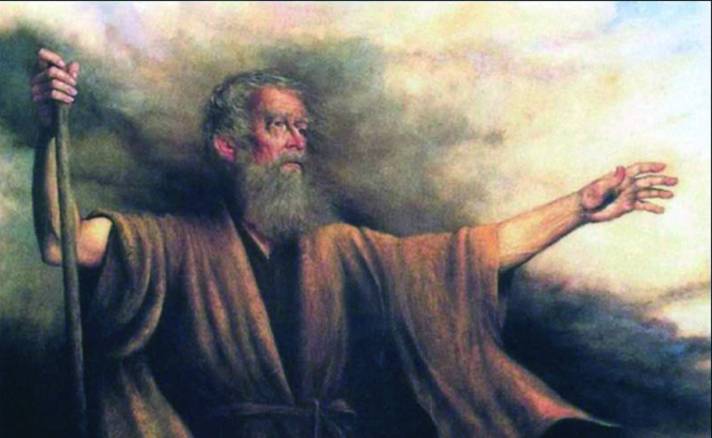
Ecclesiastes Lesson Two

Ecclesiastes Lesson Two: The Limits of Wisdom – Ecclesiastes 1:12-18

I, the Teacher, have been king over Israel in Jerusalem. 13 I applied my mind to seek and explore through wisdom all that is done under heaven. God has given people this miserable task to keep them occupied. 14 I have seen all the things that are done under the sun and have found everything to be futile, a pursuit of the wind.

15 What is crooked cannot be straightened; 

what is lacking cannot be counted. 

16 I said to myself, “Look, I have amassed wisdom far beyond all those who were over Jerusalem before me, and my mind has thoroughly grasped wisdom and knowledge.” 17 I applied my mind to know wisdom and knowledge, madness and folly; I learned that this too is a pursuit of the wind.

18 For with much wisdom is much sorrow; 

as knowledge increases, grief increases. (HCSB)

We’ll look at this passage as one coherent whole. When we consider what’s written in Ecclesiastes came from the mouth of Solomon in the later stage of his life, and he was widely commended for his wisdom and knowledge, it can be both discouraging and comforting that the acquisition of knowledge has its limits. It can be discouraging because no matter how hard a person tries, they will never understand everything. It is comforting for the same reason; the pursuit of knowledge should not be the goal itself.

Now, let’s take a deeper look at this passage.

  • The teacher sought to attain wisdom and knowledge.
    • The pursuit of wisdom wasn’t just a passing fancy or a whim.
    • Pursuing wisdom was a passion for the teacher.
      • A primary theme in wisdom and philosophic writing is that a life of wisdom is the highest of all callings.
      • Plato believed the work of a philosopher was the purest form of living.
    • 1 Kings 4:29-34 – God gave Solomon wisdom, very great insight, and understanding  as vast as the sand on the seashore. 30 Solomon’s wisdom was greater than the wisdom of all the people of the East, greater than all the wisdom of Egypt. 31 He was wiser than anyone—wiser than Ethan the Ezrahite, and Heman, Calcol, and Darda, sons of Mahol. His reputation extended to all the surrounding nations. 32 Solomon composed 3,000 proverbs, and his songs numbered 1,005. 33 He described trees, from the cedar in Lebanon to the hyssop growing out of the wall. He also taught about animals, birds, reptiles, and fish. 34 People came from everywhere, sent by every king on earth who had heard of his wisdom, to listen to Solomon’s wisdom.
    • Why does the teacher call the task of acquiring wisdom a “miserable task?”
      • The teacher is challenging the widely-held view of the time that the pursuit of knowledge fulfills their life and gives them permanent significance.
      • The teacher finds it a hopeless task; he can’t find the answers he seeks.
      • The teacher views life as being under the sovereign rule of God.
      • Philosophers and their work are under the control of God. 1 Corinthians 3:19-20 – For the wisdom of this world is foolishness with God, since it is written: He catches the wise in their craftiness; 20 and again, The Lord knows that the reasonings of the wise are meaningless.
    • Although some believe verse fourteen pertains to both physical as well as intellectual pursuits, when the context of this section is considered, it makes more sense to interpret the teacher’s focus as being on intellectual pursuits only.
      • All intellectual work done by an individual will disappear with time and their passing. None of it has eternal worth.
      • The phrase “a pursuit of the wind” should be interpreted in the following manner.
        • You can chase the wind but never catch it.
        • Even if you were able to catch the wind, you wouldn’t have anything of substance.
      • The pursuit of wisdom won’t satisfy the heart.
    • Verse fifteen should be understood in two different ways.
      • Not everything can be changed, referring specifically to mistakes made in the past.
        • We can’t undo the mistakes we’ve made in the past.
        • Since we can’t change the past, we should stop worrying about the mistake itself.
          • This doesn’t mean we shouldn’t learn from the mistake to avoid repeating it.
          • It doesn’t mean we shouldn’t confess and repent of the behavior if it is sinful.
          • It does mean we should move forward and not be weighed down by the past.
      • Even God can’t change the past.
        • However, God has the power to straighten what has been twisted and supply what is lacking.
        • God can change how the past affects people.
          • For the unbeliever, the past is a heavy weight that can drag a person down.
          • For a believer, past mistakes can push them back on the correct path and guide them forward. Faith in the redemptive power of Jesus is the key.
        • Jesus often straightened out the twisted and provided when there was a need.
          • Luke 13:11-17 – a woman was there who had been disabled by a spirit for over 18 years. She was bent over and could not straighten up at all. 12 When Jesus saw her, He called out to her, “Woman, you are free of your disability.” 13 Then He laid His hands on her, and instantly she was restored and began to glorify God. 14 But the leader of the synagogue, indignant because Jesus had healed on the Sabbath, responded by telling the crowd, “There are six days when work should be done;  therefore come on those days and be healed and not on the Sabbath day.” 15 But the Lord answered him and said, “Hypocrites! Doesn’t each one of you untie his ox or donkey from the feeding trough on the Sabbath and lead it to water? 16 Satan has bound this woman, a daughter of Abraham, for 18 years—shouldn’t she be untied from this bondage on the Sabbath day?” 17 When He had said these things, all His adversaries were humiliated, but the whole crowd was rejoicing over all the glorious things He was doing.
          • Matthew 12:10-13 – There He saw a man who had a paralyzed hand. And in order to accuse Him they asked Him, “Is it lawful to heal on the Sabbath?” 11 But He said to them, “What man among you, if he had a sheep that fell into a pit on the Sabbath, wouldn’t take hold of it and lift it out? 12 A man is worth far more than a sheep, so it is lawful to do what is good on the Sabbath.” 13 Then He told the man, “Stretch out your hand.” So he stretched it out, and it was restored, as good as the other.
          • Matthew 15:29-31 – Moving on from there, Jesus passed along the Sea of Galilee.  He went up on a mountain and sat there, 30 and large crowds came to Him, having with them the lame, the blind, the deformed, those unable to speak, and many others. They put them at His feet, and He healed them.31 So the crowd was amazed when they saw those unable to speak talking, the deformed restored, the lame walking, and the blind seeing. And they gave glory to the God of Israel. 
          • John 6:1-13 – After this, Jesus crossed the Sea of Galilee (or Tiberias ). And a huge crowd was following Him because they saw the signs that He was performing by healing the sick. So Jesus went up a mountain and sat down there with His disciples. Now the Passover, a Jewish festival, was near. Therefore, when Jesus looked up and noticed a huge crowd coming toward Him, He asked Philip, “Where will we buy bread so these people can eat?” He asked this to test him, for He Himself knew what He was going to do. Philip answered, “Two hundred denarii  worth of bread wouldn’t be enough for each of them to have a little.” One of His disciples, Andrew, Simon Peter’s brother, said to Him, “There’s a boy here who has five barley loaves and two fish—but what are they for so many?” 10 Then Jesus said, “Have the people sit down.” There was plenty of grass in that place, so they sat down. The men numbered about 5,000. 11 Then Jesus took the loaves, and after giving thanks He distributed them to those who were seated—so also with the fish, as much as they wanted. 12 When they were full, He told His disciples, “Collect the leftovers so that nothing is wasted.” 13 So they collected them and filled 12 baskets with the pieces from the five barley loaves that were left over by those who had eaten. 
        • Solomon was viewing problems from the perspective of “under the sun,” meaning he wasn’t bringing God into the discussion. This is why the problems were insurmountable.
    • The second understanding is a problem that can’t be solved.
      • Some problems are not solvable from a human perspective.
      • Some problems have critical information missing, which would aid in finding the correct answer.
      • More than anyone else, the intellectual understands the futility of humanity. They can’t answer some of the fundamental questions of life.
      • God’s ways are so much higher than ours; we’ll never fully understand some of the questions we have.
  • In the final three verses of this passage, the teacher acknowledges that wisdom and experience will not solve all of our problems.
    • If we try and go through life focused on explanations, we’ll be unhappy for two reasons.
      • There are no logical reasons for some of the things people experience. God is under no obligation always to provide explanations, and if He did, we might not understand anyway.
      • God has ordained His people to live by promises and not explanations.
        • By faith and not by sight.
        • John 20:29 – Jesus said, “Because you have seen Me, you have believed. Those who believe without seeing are blessed.”
    • The teacher comes to the conclusion that acquiring great wisdom only added to his difficulties in life.
      • Increasing one’s wisdom and knowledge leads to an increase in sorrow and grief.
      • For those who don’t ponder the problems of life, there is an innocence of not having to wrestle with the “why’s” and try to understand God.
    • If we think back to Genesis 3, where Adam and Eve were tempted by Satan, we have a clearer understanding of this picture.
      • When they sinned, they received an experiential understanding of good and evil.
      • This revelation resulted in their alienation from God.
      • The increase in knowledge only increased their sorrow.
      • This cycle has afflicted mankind ever since the fall in the Garden of Eden.
  • For many people, life is boring and monotonous.
  • For the Christian, life should be an open door and not a closed circle.
    • The believer experiences daily blessings from God.
    • While it is true we can’t understand or explain everything; life is not built on explanations.
    • For the Christian, life is built on the promises of God.
    • God’s Word is full of His promises.
    • As a believer, if your life resembles a closed circle, you need to turn back to Jesus and experience once again the fullness and blessing of living in a close relationship with God.

Applications

  • Seeking after wisdom for the sake of seeking is wasted time. Education for the purpose of our vocation is not a bad thing unless our motivation is wrong. Follow the path of God’s will for our life and find your wisdom in Scripture.
  • When incidents occur where there is no explanation, don’t try and force an explanation. God’s ways are higher than ours and always perfect. In this life, we may never understand all the things that happen to us. That’s certainly been my experience. Focus on God’s promises and find peace in them.
  • The only wisdom we should chase after is found in Scripture. 
  • Fullness in life is found in Christ, not in anything the world will try and use as a substitute. 

Acts Lesson Eleven

Acts Lesson Eleven: 5:17-42 – Truth and Consequences

17 Then the high priest took action. He and all his colleagues, those who belonged to the party of the Sadducees, were filled with jealousy. 18 So they arrested the apostles and put them in the city jail. 19 But an angel of the Lord opened the doors of the jail during the night, brought them out, and said, 20 “Go and stand in the temple complex, and tell the people all about this life.” 21 In obedience to this, they entered the temple complex at daybreak and began to teach. 

When the high priest and those who were with him arrived, they convened the Sanhedrin—the full Senate of the sons of Israel—and sent orders to the jail to have them brought. 22 But when the temple police got there, they did not find them in the jail, so they returned and reported, 23 “We found the jail securely locked, with the guards standing in front of the doors, but when we opened them, we found no one inside!” 24 As the commander of the temple police and the chief priests heard these things, they were baffled about them, as to what could come of this. 

25 Someone came and reported to them, “Look! The men you put in jail are standing in the temple complex and teaching the people.” 26 Then the commander went with the temple police and brought them in without force, because they were afraid the people might stone them. 27 After they brought them in, they had them stand before the Sanhedrin, and the high priest asked, 28 “Didn’t we strictly order you not to teach in this name? And look, you have filled Jerusalem with your teaching and are determined to bring this man’s blood on us!” 

29 But Peter and the apostles replied, “We must obey God rather than men. 30 The God of our fathers raised up Jesus, whom you had murdered by hanging Him on a tree. 31 God exalted this man to His right hand as ruler and Savior, to grant repentance to Israel, and forgiveness of sins. 32 We are witnesses of these things, and so is the Holy Spirit whom God has given to those who obey Him.” 

33 When they heard this, they were enraged and wanted to kill them. 34 A Pharisee named Gamaliel, a teacher of the law who was respected by all the people, stood up in the Sanhedrin and ordered the men  to be taken outside for a little while. 35 He said to them, “Men of Israel, be careful about what you’re going to do to these men. 36 Not long ago Theudas rose up, claiming to be somebody, and a group of about 400 men rallied to him. He was killed, and all his partisans were dispersed and came to nothing. 37 After this man, Judas the Galilean rose up in the days of the census and attracted a following. That man also perished, and all his partisans were scattered. 38 And now, I tell you, stay away from these men and leave them alone. For if this plan or this work is of men, it will be overthrown; 39 but if it is of God, you will not be able to overthrow them. You may even be found fighting against God.” So they were persuaded by him. 40 After they called in the apostles and had them flogged, they ordered them not to speak in the name of Jesus and released them. 41 Then they went out from the presence of the Sanhedrin, rejoicing that they were counted worthy to be dishonored on behalf of the Name. 42 Every day in the temple complex, and in various homes, they continued teaching and proclaiming the good news that Jesus is the Messiah. (HCSB)

In this lesson, we’ll see how the persecution against the church grows. Still, at the same time, the church stands firm in its beliefs and conviction, denying the religious establishment to continue proclaiming the Gospel.

Let’s do a quick summary of Acts to this point before diving further into this passage. After the events at Pentecost, the message of the resurrection of Jesus spread rapidly throughout Jerusalem, as well as the surrounding area. This led to many professing faith in Jesus. The Apostles not only preached the Gospel, but they also performed many signs and wonders. Their work left little doubt that God was behind this new movement. However, as is often the case, the established order was not happy with this new movement. The religious leaders had opposed Jesus, crucified Him, and were now starting to fight against the Apostles as they saw their grip on religious teaching and authority slipping. There is a quote by a Christian martyr, Hugh Latimer, who said, “Whenever you see persecution, there is more than a probability that truth is on the persecuted side.”

I will break this passage into four sections with corresponding themes.

  • The religious council was attacking the truth, 5:17-28.
  • The Apostles were affirming the truth, 5:29-32.
  • Gamaliel was avoiding the truth, 5:33-39.
  • The church was announcing the truth, 5:40-42.

Attacking the Truth: Acts 5:17-28

There were three reasons that the religious leaders, the Sadducees, arrested the Apostles.

  • Peter and John had not obeyed the official order to stop preaching in the name of Jesus. By refusing to obey, they were guilty of defying the law of the nation.
  • The message of the church was in direct conflict with the doctrine of the Sadducees, who didn’t believe in a resurrection, by teaching and giving evidence that Jesus had, in fact, been resurrected.
  • The religious leaders were filled with jealousy because of the success and acceptance of these uneducated and unauthorized men. 

This time it wasn’t just Peter and John who were arrested; it was all twelve of the Apostles. The passage indicates that they were put in a “city jail.” This would be a structure where those incarcerated would be visible to anyone passing by. The irony is that even while being detained in an openly visible structure, they would still be released by God’s hand. 

The faith displayed by the Apostles is an example to all of us. They knew that they had been ordered to stop teaching in Jesus’ name, they knew they had disobeyed the Sanhedrin’s order, they knew that this was a serious offense, but most importantly they knew that they were being obedient to God and Jesus’ command to go and make disciples. This knowledge gave them unshakeable faith and determination regardless of the consequences.

Their faith was rewarded as during the night, an angel set them free. This fact pours more irony on the already stoked fire. Not only don’t Sadducees believe in the resurrection, but they also don’t believe in angels (Acts 23:8). However, the angel didn’t just set the Apostles free; they were told to go right back to preaching the Gospel, the very act that put them in the jail they were just freed from. What did they do? They obediently went back to the same location and continued to preach the same message. How many of us would follow in their footsteps, going from freedom right back to the actions that got us jailed in the first place?

In the meantime, the Sanhedrin had convened and asked for the “prisoners” to be brought before the council. One can only imagine their astonishment as they went to the jail, with the guards on duty, in full view of everyone, and the Apostles were nowhere to be found. This astonishment was likely compounded when the situation was explained to the Sanhedrin. The religious leaders were trying to stop the Apostles from performing miracles, but another miracle had occurred because the religious leaders had put them in jail!

Let’s take a moment to contrast the two groups.

  • Sanhedrin.
    • Educated.
    • Ordained.
    • Approved.
    • Lacking in a ministry of power.
  • Apostles.
    • Ordinary laymen.
    • Uneducated.
    • Ministry powered by the Holy Spirit.

The religious council was desperately trying to protect themselves, their positions, and hold on to their dead traditions. The Apostles were risking their physical lives to share the Gospel. The church was proclaiming the new; the religious council was defending the old.

There are numerous emotions in this section.

  • Jealousy – verse 17.
  • Baffled – verse 24.
  • Fear – verse 26.

Still, the high priest accuses them of defying the law and stirring up trouble. The high priest wouldn’t even mention Jesus’ name, instead saying “in this name” and “this man’s blood.” However, even this was an admission that the church was growing. It’s possible that the high priest may have sensed a critical moment here. If the Apostles were correct, then the Sanhedrin was guilty of unjustly executing Jesus, and His blood was on their hands. As the trial progresses, the Apostles become the judges, and the council is on trial.

Affirming the Truth: Acts 5:29-32

The conviction of the Apostles didn’t waver from Peter had stated in Acts 4:19-20. They continued to obey God and trust Him, regardless of their circumstances or perceived danger. They stood firm in serving only one master, God. Diplomats try to reach an agreeable outcome for everyone; ambassadors faithfully represent those who sent them. The Apostles acted as faithful ambassadors to God; 2 Corinthians 5:20 Therefore, we are ambassadors for Christ, certain that God is appealing through us. We plead on Christ’s behalf, “Be reconciled to God.” 

Paul restates the charges he made in chapters three and four and then declares other facts on the events happening in Jerusalem.

  • The Sanhedrin was responsible for the death of Jesus.
  • Jesus has been raised from the dead.
  • Not only was Jesus resurrected, but He also sits at God’s right hand.
    • The place of honor, power, and authority.
    • Stephen would see Jesus standing at God’s right hand.
  • The work of the Holy Spirit is evidence that Jesus kept His promise that He would send the Helper.

The statement that Jesus had been raised from the dead must have been particularly unsettling to the Sadducees as that was in direct conflict with their theology. 

Peter once again calls on the Sanhedrin to repent, submit to the lordship of Jesus, and receive salvation. Once again, the council ignores the very message that would lead to their eternal rescue. If we take a moment to reflect on the Apostle’s challenge to the Sanhedrin, it is really quite remarkable. The very organization that held the power of religious authority and religious punishment in Israel is being challenged to their face by a group of common folk. 

Avoiding the Truth: Acts 5:33-39

The main player in this section is Gamaliel, a highly respected Pharisee. Since the Pharisees and Sadducees were often at odds with each other, it is not a stretch to think Gamaliel’s position was at least partly motivated by a desire to see the Sadducees not accomplish what they had set out by arresting the Apostles and bringing them before the Sanhedrin. Let’s consider some facts regarding this man.

  • He was a scholar who was highly respected by the people.
  • He was rather liberal in his application of the Law.
  • He was moderate in how he approached problems, as evidence by this event.
  • He was Paul’s teacher (Acts 22:3).
  • He was the grandson of the famous rabbi, Hillel.
  • Rabbinic tradition stated he had the title of president of the high court.
  • His power within the Sanhedrin is evidenced by him and not the high priest, ordering the Apostles to be removed from the proceedings.
  • As a Pharisee, he would have at least had sympathy with the Apostles theologically.
    • A belief in the coming Messiah, resurrection, and life after death.
    • Oral tradition that gave them flexibility and openness to change.
  • When the Sadducees agreed to his advice, this was an indication of how well respected and distinguished he was in Jewish society.

We might think that what Gamaliel did was wise and helpful to the young church. However, there were several aspects of his advice that demonstrated a lack of wisdom and understanding.

  • He grouped Jesus together with two rebels. 
    • This is evidence that he had already rejected the evidence that the Apostles presented.
    • To him, Jesus was just another zealous Jew who was trying to free Israel from Rome.
    • Theudas and Judas never did the things attributed to Jesus. Neither were raised from the dead.
  • Gamaliel assumed that history would repeat itself.
    • Both Theudas and Judas had rebelled against the establishment.
      • Both were subdued.
      • Their followers abandoned the cause and fled.
    • If the Sanhedrin were patient, the same thing would happen again.
    • While it is true that cycles occur in history, the events taking place were breaking into new territory.
      • Ministry on the level of what Jesus accomplished had never occurred before. 
      • The events surrounding His crucifixion were new; darkness, earthquake, the veil being torn in two in the temple.
      • Jesus was resurrected and seen by hundreds before being seen ascending to heaven.
      • The events surrounding Pentecost were new.
      • God had visited the earth in the form of a man.
    • Gamaliel’s assumption is that if something is not from God, it must fail. This fails to take into account man’s sinful nature and the presence of Satan in the world.
      • Cults often grow faster than the church and cause many to be trapped in lies.
        • Mormons.
        • Jehovah’s Witnesses.
      • False religions.
        • Islam.
        • Buddhism.
        • Hinduism.
      • It is true that in the end, they will all fail. However, in the meantime, these false religions are leading millions to eternal damnation.
  • His motivation.
    • The council was facing an issue that demanded a decision, and he was promoting a position of neutrality.
      • However, neutrality is a decision.
      • Each person is either for or against God; there is no middle ground.
      • His vote could be interpreted as “no,” but maybe someday he would believe…if the movement persevered.
    • Jesus made it clear that one can’t be neutral about Him and His message. Matthew 12:30 Anyone who is not with Me is against Me, and anyone who does not gather with Me scatters. 
    • The council knew what Elijah said in 1 Kings 18:21 Then Elijah approached all the people and said, “How long will you hesitate between two opinions? If Yahweh is God, follow Him. But if Baal, follow him.” But the people didn’t answer him a word.
    • Being neutral is often a quiet and cowardly decision to reject God. The first group destined for hell is the cowards. Revelation 21:8 But the cowards, unbelievers, vile, murderers, sexually immoral, sorcerers, idolaters, and all liars – their share will be in the lake that burns with fire and sulfur, which is the second death.
  • If Gamaliel was really afraid of fighting against God, he should have honestly investigated the evidence presented, searched through Scripture, listened to the eyewitnesses, and asked God for wisdom. 
    • He was presented with the opportunity of eternal salvation but rejected it.
    • Daniel Defoe, who wrote Robinson Crusoe, stated that nobody was born a coward. “Truth makes a man of courage and guilt makes that man of courage a coward.”
    • What some would call caution, God would call cowardice.
    • The Apostles were ambassadors.
    • Gamaliel was a religious politician.

Announcing the Truth: Acts 5:40-42

There were at least some in the Sanhedrin that wanted to kill the Apostles. However, Gamaliel’s speech tempered the flames, and they reached a compromise. The compromise was that they would receive a flogging, likely thirty-nine lashes, they were commanded to no longer speak in the name of Jesus, and they were released. 

  • Deuteronomy 25:1-3 “If there is a dispute between men, they are to go to court, and the judges will hear their case. They will clear the innocent and condemn the guilty. If the guilty party deserves to be flogged, the judge will make him lie down and be flogged in his presence with the number of lashes appropriate for his crime. He may be flogged with 40 lashes, but no more. Otherwise, if he is flogged with more lashes than these, your brother will be degraded in your sight. 
  • 2 Corinthians 11:24 Five times I received 39 lashes from Jews.
  • There were strict guidelines for carrying out this punishment.
    • Although Deuteronomy 25:3 states forty lashes, over time, the standard practice was to give thirty-nine in case of a miscount. 
    • Regardless of how many lashes were given, it was a severe punishment.
    • The recipient was placed in a kneeling position with their upper body bare.
    • The lash was a triple strap of calf hide.
    • Two lashes were given across the back and then one across the chest, with the cycle repeated as necessary to reach the number required by the punishment.
    • People had been known to die during the punishment.

As brutal as the punishment was, it still wasn’t enough to stop them from obeying God. Much to the contrary, they left the Sanhedrin rejoicing that they were worthy of sharing in the suffering of their Lord. Also, they continued to meet in homes and gather in the temple area, teaching and proclaiming the Gospel message.

Applications.

  • No matter how difficult your circumstances, do you trust that God is with you, and do you have faith to follow Him? There were numerous times that it would have been easier for the Apostles to fall away, yet they held firm. Have you taken the necessary spiritual steps to prepare yourself for persecution? Do you spend time in the Word daily, pray without ceasing, gather with other believers, and hold firm to obedience to God? Reassess these areas of your life and prepare yourself to face persecution. None of us desire it, many will not face it to the level in this passage, but some of us will.
  • When confronted with falsehood, stand firm in the truth. A practice of mine is that whenever I’m in a discussion with others about spiritual matters, usually unbelievers, but it can be with other believers over doctrinal issues, as much as possible, I let Scripture do the arguing/convincing. If I try and support a position with my words, it becomes an opinion. However, if I use Scripture, more weight is added to the discussion. Additionally, if the other parties in the conversation continue to reject what Scripture says, they are rejecting God. 
  • If you do face actual persecution, whatever the form, rejoice that you have been permitted to share this with Jesus, knowing that He is walking with you during the experience.
  • Don’t be neutral in your Christian walk. Your actions either align with or go against God. There are no gray areas. Be firm yet gentle in your actions, always letting the light of Christ shine through you, penetrating the darkness of this world and reaching the lost with the saving message of the Gospel.

Acts Lesson Four

Acts Lesson Four – Acts 2:14-47 The Sermon, the Response, the Church

14 But Peter stood up with the Eleven, raised his voice, and proclaimed to them: “Men of Judah and all you residents of Jerusalem, let me explain this to you and pay attention to my words. 15 For these people are not drunk, as you suppose, since it’s only nine in the morning. 16 On the contrary, this is what was spoken through the prophet Joel: 

17 And it will be in the last days, says God, 

that I will pour out My Spirit on all humanity; 

then your sons and your daughters will prophesy, 

your young men will see visions, 

and your old men will dream dreams. 

18 I will even pour out My Spirit 

on My male and female slaves in those days, 

and they will prophesy. 

19 I will display wonders in the heaven above 

and signs on the earth below: 

blood and fire and a cloud of smoke. 

20 The sun will be turned to darkness 

and the moon to blood 

before the great and remarkable Day of the Lord comes. 

21 Then everyone who calls 

on the name of the Lord will be saved. 

22 “Men of Israel, listen to these words: This Jesus the Nazarene was a man pointed out to you by God with miracles, wonders, and signs that God did among you through Him, just as you yourselves know. 23 Though He was delivered up according to God’s determined plan and foreknowledge, you used lawless people to nail Him to a cross and kill Him. 24 God raised Him up, ending the pains of death, because it was not possible for Him to be held by it. 25 For David says of Him: 

I saw the Lord ever before me; 

because He is at my right hand, 

I will not be shaken. 

26 Therefore my heart was glad, 

and my tongue rejoiced. 

Moreover, my flesh will rest in hope, 

27 because You will not leave me in Hades 

or allow Your Holy One to see decay. 

28 You have revealed the paths of life to me; 

You will fill me with gladness 

in Your presence. 

29 “Brothers, I can confidently speak to you about the patriarch David: He is both dead and buried, and his tomb is with us to this day. 30 Since he was a prophet, he knew that God had sworn an oath to him to seat one of his descendants on his throne. 31 Seeing this in advance, he spoke concerning the resurrection of the Messiah: 

He was not left in Hades, 

and His flesh did not experience decay.

32 “God has resurrected this Jesus. We are all witnesses of this. 33 Therefore, since He has been exalted to the right hand of God and has received from the Father the promised Holy Spirit, He has poured out what you both see and hear. 34 For it was not David who ascended into the heavens, but he himself says: 

The Lord declared to my Lord, 

‘Sit at My right hand 

35 until I make Your enemies Your footstool.’

36 “Therefore let all the house of Israel know with certainty that God has made this Jesus, whom you crucified, both Lord and Messiah!” 

37 When they heard this, they came under deep conviction and said to Peter and the rest of the apostles: “Brothers, what must we do?” 

38 “Repent,” Peter said to them, “and be baptized, each of you, in the name of Jesus Christ for the forgiveness of your sins, and you will receive the gift of the Holy Spirit. 39 For the promise is for you and for your children, and for all who are far off, as many as the Lord our God will call.” 40 And with many other words he testified and strongly urged them, saying, “Be saved from this corrupt generation!”

41 So those who accepted his message were baptized, and that day about 3,000 people were added to them. 42 And they devoted themselves to the apostles’ teaching, to the fellowship, to the breaking of bread, and to the prayers. 

43 Then fear came over everyone, and many wonders and signs were being performed through the apostles. 44 Now all the believers were together and held all things in common.  45 They sold their possessions and property and distributed the proceeds to all, as anyone had a need.  46 Every day they devoted themselves to meeting together in the temple complex, and broke bread from house to house. They ate their food with a joyful and humble attitude, 47 praising God and having favor with all the people. And every day the Lord added to them those who were being saved. (HCSB)

The passage we will study today can be split into three sections. The first is verses 14-21, and the second is verses 22-41, and the final one in verses 42-47.

The Introduction: verses 14-21.

Peter refutes the claim of the scoffers that they were drunk. A Jew wouldn’t eat or drink anything before 9 AM on a Sabbath or feast day. Therefore, what the pilgrims were witnessing was not caused by drunken behavior. Another point to note is that throughout this passage, Peter only addresses the Jews (resident or pilgrim) who witnessed the event. Peter is addressing the Jewish nation and proving to them that the Messiah has been raised from the dead. He quotes Joel 2:28-32 in verses 17-21, not to say that the entire prophecy had been fulfilled, but that the first part, verses 2:17-18, had just occurred and that verses 19-21 would occur when Jesus returns. Between those two events is the age of the Church.

Here are some points to note in this section.

  • Raised his voice – a common Semitic expression when beginning to speak.
  • Proclaimed to them – means to speak seriously and with gravity. It was often used for prophetic or inspired speeches.
  • “Men of Judah” and “residents of Jerusalem” – refer to the same group. This is a typical Semitic style of speech or writing.
  • Peter directs them away from the faulty thinking that the pilgrims were witnessing drunken behavior to the correct understanding that they were witnessing the fulfillment of prophecy before their eyes.

In verses 17-21, Peter quotes from Joel 2:28-32. Some points to note about the setting when Joel uttered this prophecy.

  • It was given after a locust plague had devastated the land, creating a severe famine.
  • Joel called the people to repentance.
  • Repentance would lead to the restoration of their prosperity.
  • In turn, this would lead to the event that happened here, at Pentecost.

Peter now applies this passage to the current situation.

  • Peter is convinced that the Messianic Age began with the resurrection of Jesus.
  • They were now living in the last days.
  • The rabbinic consensus was that the Spirit would return as a universal gift at the end times.
  • The pouring out of the Spirit on the believers at Pentecost was evidence that the end times had begun.
  • Support for all 120 of the believers, male and female, receiving the Spirit was Joel’s statement that sons and daughters would prophesy.
  • The Spirit was not just for the Jews. God will pour out His Spirit on all humanity. The Gentiles could now be included in God’s family.

Verse 21 must be viewed as the most crucial verse in this section of the passage.

  • “Then everyone who calls on the name of the Lord will be saved.”
  • In the sermon that Peter gives, the “Lord” was Jesus.
    • It tells of His death.
    • It tells of His resurrection.
    • It tells of His exaltation.
  • Whoever calls on His name or whoever confesses Jesus as Lord will be saved.

The Sermon: verses 22-41. 

Many scholars and theologians believe that this section of the passage reflects the most basic form of the Christian kerygma, the death of Jesus linked to His resurrection. It is found throughout the book of Acts and follows the basic formula, “Jesus of Nazareth whom you killed…but God raised.” Peter includes a prelude here to reflect on Jesus’ earthly ministry.

  • Miracles – the mighty acts of Jesus.
  • Wonders – points to a deeper reality and in Acts is only found in conjunction with “signs.”
  • Signs.

Peter is stressing to the audience that they should have understood that the miracles, wonders, and signs that Jesus performed should have led them to recognize that Jesus was the appointed Messiah. Verses 22-23 establishes the guilt of the Jewish crowd and puts them under conviction. This would lead to a large number repenting and professing faith in Jesus.

Now that Peter has stated the basic Christian confession that Jesus is God’s appointed Messiah, Peter sets out to support this claim with scriptural proof from Psalm 16:8-11. Let’s look at some points behind Peter’s usage of the passage from Psalms.

  • This psalm is written by David, which is important as its application to Jesus is based on the Davidic descent of the Messiah.
  • It may appear that the psalm was a plea to God for vindication and avoidance of death and Hades.
  • However, Peter applies this psalm messianically as it’s a prophecy that David can’t apply to himself.
  • Verse 27 is the key. 
    • David expresses confidence that he would not be abandoned to the grave. Yet, he did die and was buried.
    • The “Holy One” refers to Jesus as He was resurrected, and His body suffered no decay.
  • Verse 28 doesn’t add to the argument about the resurrection, but it does refer to Jesus as the “source of life” (Acts 3:15) and the path to a new life through His resurrection.

In verses 29-31, Peter explains his application of this psalm to Jesus.

  • David died, so the psalm can’t apply to him.
  • It is a prophecy David intended for a descendant who would sit on the Davidic throne.
  • It applies to Jesus, who has risen and is, therefore, the messianic descendant David spoke about.
  • The psalm is used to prove the messianic status of Jesus, not His resurrection.
  • The proof of the resurrection is the eyewitness account of the disciples.
  • It depicts David’s vision that the Messiah would not be bound by death.
  • Since Jesus burst the shackles of death by His resurrection, He is the Messiah that David saw.

Another point to remember about the crowd in general. Many would have been familiar with what had transpired two months earlier at Passover, Jesus’ crucifixion. Peter reminds them that they were witnesses to the entire process; crucifixion, death, burial, and resurrection.

In verses 32-35, Peter gives an exaltation to Jesus.

  • God resurrected Jesus from the dead.
  • The resurrection fulfilled the prophecy of David.
  • The Apostle’s eyewitness accounts are proof of Jesus’ resurrection.
  • God has exalted Jesus to sit at His right hand.
  • God has given the gift of the Holy Spirit to Jesus.
  • Jesus has poured out the Holy Spirit on mankind.
  • The Apostles were witnesses to Jesus’ resurrection. The crowds were witnesses to the outpouring of the Holy Spirit at Pentecost.
  • Only Jesus, exalted at God’s right hand, has the authority to dispense the Spirit.
  • Peter uses Psalm 110:1 as scriptural proof.
    • David spoke of someone ascending to heaven and sitting at God’s right hand. David didn’t ascend to heaven, so he couldn’t have been talking about himself.
    • David must have been speaking of a future descendent, the Messiah. 
    • The outpouring of the Spirit affirms that the Messiah ascended to heaven.
    • David predicted this ascent.
    • Therefore, Jesus is the Messiah.

Verse 36

The conclusion of Peter’s sermon comes full circle to the beginning point, Jesus is Lord. Peter’s use of the psalms was designed to resonate with the Jewish audience and their understanding of the Messiah. There was no doubt that Jesus was the prophesied living Lord, Master, and Messiah.

Verses 37-40

The Jewish crowd heard Peter’s point loud and clear. They were guilty of rejecting Jesus, and in some cases, implicitly or explicitly involved in Jesus’ crucifixion. The phrase “cut to the heart” is uncommon, in the original Greek, but an extremely strong term. Peter’s sermon had clearly impacted the audience, and now they desired to know what they could do in response. Peter’s response contains four elements:

  • Repent – turn from disobedience to God.
  • Be baptized – signifying dying to your old self and being raised a new creation.
  • Forgiveness – the person’s sins are forgiven.
  • Receive the Holy Spirit – all believers receive the Holy Spirit after submitting to Jesus.

Peter concludes with a promise; all who call on the name of the Lord will be saved! This promise is universal. It is not exclusive to any people group or country. The poorest believer is equal to the richest. God’s plan of salvation is for all to enjoy.

We can also surmise from the context that Peter’s sermon was longer than what is recorded here using the phrase “and with many other words.” We don’t know what those words were, but the essential portion is recorded for us. Additionally, his use of the phrase “corrupt generation” harkens back to the Old Testament that was used to depict stubborn, rebellious, and faithless people. The crowd was part of that generation. They had witnessed the Messiah and had rejected Him. 

Verse 41

Peter’s sermon and appeal to leave a corrupt generation resulted in around 3,000 new believers who were baptized and added to the original 120 believers. That is miraculous multiplication within the church.

First Characteristics of the New Testament Church: verses 42-47.

This section could be further subdivided; verse 42 and verses 43-47.

Verse 42

Not only does this show how the new converts were brought into the new church, but it also is an indication of the bare minimum but still essential components of any church and is still applicable today.

  • Teaching – the faithful teaching of Scripture is a foundational aspect of any church. It is also a key component of discipleship. If we don’t know what’s in Scripture, how are we supposed to follow Jesus?
  • Fellowship – the basic meaning of the Greek word used here is “association, communion, fellowship, and close relationship.” In secular Greek, it could also denote the sharing of goods. From the context within this passage, it is clear this was intended for the early believers.
  • Breaking of bread – the primary meaning is participating in communion. It could also mean sharing a normal meal together, reminiscent of a pot-luck dinner. Everybody contributed as they could, and everybody enjoyed it together.
  • Prayers – there is no doubt that prayer was a key component of the early church. This could have involved keeping the formal prayer hours of Judaism, but most likely was an indicator of a vibrant personal and corporate prayer life among the believers.

Verses 43-47

Points to note from this section.

  • The Apostles were performing miracles (signs and wonders).
    • The people displayed reverent fear because of the miracles that they witnessed.
    • The word “everyone” indicates that even non-believers were impacted by what they witnessed.
  • The church enjoyed fellowship.
    • The Greek indicates a gathered community.
    • There was a strong sense of unity.
    • They shared with and took care of each other.
    • Shared resources were in keeping with the Old Testament ideal of community equality…no poor among them found in Deuteronomy 15:4.
  • They remained faithful to their Jewish heritage.
    • They devoted themselves to worshipping together.
    • They worshipped with a unity of purpose guided by the Holy Spirit.
    • By worshipping in the temple, they were able to present a recurring witness to the lost around them.
  • The temple may have been the place of worship, but the home was the place of fellowship.
    • Sharing a meal together.
    • A shared time of rejoicing.
    • A time of sharing burdens.
  • God responds to faithfulness.
    • The early church was blessed.
    • Their numbers grew exponentially.
    • They found favor with God and with their community.

This was a time of perfect innocence for the early church. They existed in unity, trusting each other and being truthful in their actions. They also had not yet experienced the dishonesty that would appear within the young church. Finally, opposition and persecution had not arisen.

Peter’s sermon, the first evangelistic sermon of the New Testament church, contains the following points. Each of the points is vital as we share the Gospel and should be included in our message.

  • Jesus’ life and ministry made it possible for Him to be our Savior (verse 22). It demonstrated that He was not a mere man; He was God’s answer to the issue of sin.
  • His death on the cross achieved salvation (verse 23).
  • His resurrection confirmed the success of over sin and death and validated His work (verses 24-25).
  • His exaltation enabled Him to send the Holy Spirit, who makes our salvation a reality in our daily lives.
  • His present exalted state confirms His Lordship and Messianic title representing His reign. During this period, He will defeat all rebellion to God (verses 34-36).
  • His second coming will complete His work (implied in verse 35).
  • In light of who Jesus is and what He has done, our salvation depends entirely on Him (verses 36, 38). Our receiving salvation requires us to admit our need through repentance and submitting to Jesus as Savior and Lord. This results in us receiving the Holy Spirit and being baptized in His name (verse 38).

Applications

  • Do we let the Holy Spirit lead and direct us, or do we work blindly in our flesh?
  • When we share the Gospel, do we include the elements that Peter used? Look back at the section covering this and craft your witness around this structure. 
  • When possible, let Scripture speak for Scripture. God’s Word is powerful, much more powerful than any message we could ever craft. 
  • Do our churches and small groups incorporate the elements listed in Acts 2:42? If they don’t, they should. If they won’t, find new ones.
  • We should be generous when fellow brothers and sisters have genuine needs. If we trust God, He will take care of us when our needs arise.

Acts Lesson One – Introduction and the Promise of the Holy Spirit

Acts Lesson One – Introduction and the Holy Spirit

With this lesson, we will embark on a lengthy journey through the Book of Acts. It is a fascinating account of the birth of the church and the early missionary journeys to spread the Gospel. In our modern world, with so many gadgets and gimmicks used in the church, it is refreshing to go back to the basics and see how the Gospel spread through faithful servants empowered by the Holy Spirit.

Before we begin the first lesson on the Book of Acts, let’s look at background information to establish the basic facts or positions surrounding the entire book.

Author – There is almost universal acceptance that Luke wrote both Acts and the Gospel by his name. There is no reason to doubt Luke’s authorship of the Book of Acts.

Date – There are three main positions regarding the dating of Acts.

  • Sometime between A.D. 57-64.
    • Because of the book’s abrupt ending, which doesn’t talk about the outcome of Paul’s arrest.
    • Nero’s persecution of Christians is not mentioned in the book.
    • The writing doesn’t indicate that Luke was aware of Paul’s epistles, which could have influenced or been included in Acts.
  • Sometime between A.D. 70-90.
    • Because verse one states, “the first narrative” in reference to his Gospel, Acts must have been written after it. 
    • Since Acts was written after Luke’s Gospel, a dating of the Gospel is critical to identifying the dating of Acts.
      • From the structure of the Gospels, it appears that Luke borrowed material from Mark’s Gospel, which is dated around A.D. 65. 
      • Allowing for a reasonable period of time between Mark and Luke would point towards a date after A.D. 70 for Luke’s Gospel.
      • Most scholars who support a middle dating place Acts between A.D. 70-80.
    • Scholars and theologians who support late dating are in the minority. However, there is a split within the “late date” camp.
      • A.D. 95-100
        • The basis for this dating is on references to the information contained in Antiquities by the Jewish historian Josephus, published in A.D. 93. 
        • However, the connection to Josephus’ book is weak at best as the references pertained to commonly known Jewish events.
        • The favorable picture between Christians and Roman authorities doesn’t fit this later dating as imperial persecutions had begun.
      • A.D. 125-150
        • This dating is based solely on the language contained in Acts when compared to writings by the Apostolic Fathers.
        • Understandably, this is the weakest position.

The most convincing dating of the book is somewhere between A.D. 70-80.

Recipient

There are numerous possibilities that scholars and theologians have wrestled with through the centuries, some more believable than others. The origin of “Theophilus” in Greek means “lover of God.” So does this mean that it could have been written to a group of people and not an individual? That’s a possibility. However, “Theophilus” was a widely used name at the time Acts was written. Additionally, the phrase “most excellent” would also suggest a single person and not a group of people. Although we can conclude that Acts was most likely originally written to one person, there is no arguing that its final destination was intended to the broader Christian community.

Purpose – To reinforce the certainty of the Gospel message and the early church through a historical account of followers of Christ.

Themes

  • World Mission
  • Providence of God
  • Power of the Holy Spirit
  • Restored Israel
  • Inclusive Gospel
  • Faithful Witnesses
  • Relationship to the World
  • Triumph of the Gospel

We should also read Acts on three levels.

  • It is the story of the early church.
  • It is a book about Jesus.
  • It is a book that continues today with the principal characters being us, present-day believers in Jesus who continue to carry out His mission to reach the lost.

Acts 1:1-11

I wrote the first narrative, Theophilus, about all that Jesus began to do and teach  until the day He was taken up, after He had given orders through the Holy Spirit to the apostles He had chosen.  After He had suffered, He also presented Himself alive to them by many convincing proofs, appearing to them during 40 days and speaking about the kingdom of God. While He was together with them, He commanded them not to leave Jerusalem, but to wait for the Father’s promise. “This,” He said,“is what you heard from Me; for John baptized with water, but you will be baptized with the Holy Spirit not many days from now.” So when they had come together, they asked Him, “Lord, are You restoring the kingdom to Israel at this time?” He said to them, “It is not for you to know times or periods that the Father has set by His own authority. But you will receive power when the Holy Spirit has come on you, and you will be My witnesses in Jerusalem, in all Judea and Samaria, and to the ends of the earth.” After He had said this, He was taken up as they were watching, and a cloud took Him out of their sight. 10 While He was going, they were gazing into heaven, and suddenly two men in white clothes stood by them. 11 They said, “Men of Galilee, why do you stand looking up into heaven? This Jesus, who has been taken from you into heaven, will come in the same way that you have seen Him going into heaven.” (HCSB)

Verses 1-3

This section presents the introduction of the book from Luke to Theophilus. I won’t restate the discussion on the recipient raised in the introduction to the book, but I will expand a bit on the style presented in the first.

Book dedications were common in Greek culture. Luke had dedicated his Gospel to Theophilus in Luke 1:3, and now he continues that trend in the first verse in Acts. Luke summarized his Gospel in the first verse with the concise statement, “about all that Jesus began to do and teach.”  Looking at that statement, there is one key observation centered around the word “began.” This implies that the work is not finished. As we take our journey through Acts, we’ll see that the work that Jesus began continued, and it continues today. The work will not be finished until Jesus returns. The summary ends at the beginning of verse two with the phrase “until the day He was taken up.” 

Beginning in the second half of verse two, the “new” story begins in Acts. 

  • There was a period of instruction given to the apostles to carry on the work He began.
  • This was a transition period as Jesus handed over the keys to them.
  • Luke points out that the same Spirit that empowered Jesus during His earthly ministry would now empower the apostles as they continued the work. 
  • Jesus taught them directly during His earthly ministry. Now, they would be taught and led by the Spirit.

Starting in verse three, Luke presents the fact that Jesus rose after His crucifixion and is alive. The phrase “after He had suffered” refers to the trial, crucifixion, and death of Jesus. However, His death was not the end. After He rose on the third day, He appeared to His followers repeatedly over a period of forty days. The imagery from the wording of the passage is not that Jesus was with them for the entire time; rather, He came and went during the forty-day period. The fact that Jesus appeared to the apostles during this time was essential for their primary role in Acts of being witnesses to His resurrection.

  • Acts 1:22
  • Acts 2:32
  • Acts 3:15
  • Acts 5:32
  • Acts 10:39-41
  • Acts 13:31

Here is a summary of Luke’s argument that Jesus is the resurrected Messiah.

  • The resurrection is a fact – the disciples knew Jesus had been raised from the dead.
  • If the resurrection is a fact, it proves Jesus’ deity. Jesus claimed to be divine before His crucifixion. God would not have raised Jesus from the dead if His claim to deity was false.
  • A divine Christ must speak the truth because God is truthful and must speak truthfully.
  • If Jesus speaks the truth, we can trust everything that He teaches. We can trust the Bible because Jesus taught it was the Word of God. We can believe that God has forgiven our sins because Jesus taught that God would do that for all who believe in Him.

The reference to forty days has strong ties to Old Testament events and the period after Jesus’ baptism.

  • Moses spent forty days on Mt. Sinai receiving the law.
  • Elijah spent forty days on Mt. Horeb.
  • Jesus’ temptation in the wilderness was forty days.
  • Now Jesus will spend forty days preparing His followers to carry on the mission.
  • Forty days also fit the dating of Pentecost.
    • Resurrection on the third day.
    • Appeared for forty days.
    • Approximately one week in the upper room.
    • Pentecost, fifty days after the crucifixion.

What did Jesus speak to His followers about during this time of instruction? It is likely from looking at other conversations that He had in the Gospels that Jesus used the Old Testament to show that He was the expected Messiah. His followers would now carry on the work He had started.

Verse 4

The original construction of this verse in Greek sheds light on what Jesus’ followers had been doing. The verse literally means “stop departing from Jerusalem.” This implies that they had been coming and going from Jerusalem. Jesus tells them to stay in the city and wait for the Father’s promise, introduced in Luke 24:49 and explicitly revealed in the following verse.

There is a lesson here for us. How often do we try and rush off and do things before the proper time? Or even worse, how often do we try and do things in our strength and not in the power of the Holy Spirit? 

Verse 5

Here Luke presents a reminder to the beginning of Jesus’ ministry with reference to the water baptism that John the Baptist was conducting in the Jordan River. However, the reference here is to the one-time occurrence of the outpouring of the Holy Spirit at Pentecost. John’s baptism was one of repentance and is still used today to signify a person committing their life to Christ and entering into the spiritual family of God. In contrast to the water baptism, new converts to Jesus would now receive the presence and the power of the Holy Spirit. As we move through Acts, we will see this pattern repeated in various sequences. However, two things are essential to the conversion experience; repentance and the gift of the Spirit.

Verses 6-8

These verses tie neatly together with the disciples asking when the kingdom will come, Jesus rebuking their speculation, and refocusing them on the task He give them.

Although initially, the location of the conversation is vague, it becomes clear over the next several verses that this conversation is the last one that takes place between Jesus and His followers. It occurs right before His ascension and takes place on the Mt. of Olives. Because of Jesus’ previous comments to His followers about the coming of the Spirit and the fulfillment of God’s promises, the disciples had come to the conclusion that the final appearance of God’s kingdom could be right around the corner.

However, Jesus redirects their attention to the task at hand for all of His followers. 

  • They are not to worry about when that would occur.
    • That is solely in line with God’s purposes and authority.
    • Even Jesus had no knowledge of when this would occur.
  • To speculate on dates and times is pointless.
  • The return of Jesus doesn’t revolve around speculation about the timing.
  • It does revolve around God’s purpose.
    • Salvation of the lost in the world.
    • The quickest way to the return of Jesus is worldwide evangelism.

Verse eight puts the disciple’s question in the proper perspective. The restoration of the kingdom would involve a worldwide missions movement. Jesus’s statement is looking towards the future, both imminent and long-term. Jesus promised His followers two things.

  • They will receive power through the Holy Spirit.
    • Jesus’ followers receive divine power once they repent and place their faith in Him.
      • This applied to the original disciples.
      • It applies to us today.
    • The Greek word used for power is the same word that described the miracles that Jesus performed in the Gospels. Jesus’ followers receive the same power that He used when performing miracles.
  • They will be Jesus’ witnesses.
    • The geographical picture presented in verse eight is a rough outline for the entire book.
      • Jerusalem
        • Jerusalem is central to Luke’s Gospel.
          • The temple scenes of Jesus’ infancy.
          • The long journey to Jerusalem.
          • Jesus’ passion in the city that killed its prophets.
        • The story of Jesus led to Jerusalem.
        • The story of the church led from Jerusalem.
      • Judea – Understood as the Davidic kingdom to include the coastal territories and Galilee.
      • Samaria – Because of its non-Jewish population.
      • The ends of the earth – In the setting of the Acts, it would be understood as Rome since that is where the book ends. However, the same phrase is found in the prophets to mean distant lands. Our understanding today is that it represents the entire world where people live. The ends of the earth will not be fulfilled until all people groups have been reached by the Gospel.

Christians are constantly faced with two temptations regarding missionary work.

  • One is the temptation to idleness.
    • Jesus has saved me, so I’m good.
    • I have a nice church.
    • Everything is comfortable.
    • I’ll just sit back and wait for Jesus to return.
  • The second temptation is the one that the disciples were getting caught up in, thinking they could do the Lord’s work in the world’s way and their own power.
    • Establish the kingdom politically.
    • Put Christians into high positions in the government.
    • Impose our vision of society on the world.
    • Although we shouldn’t accept the evil in the world, it is foolish to think we can change things without God’s power.

Verses 9-11

The passage ends with the disciples witnessing Jesus’ ascension and the encounter with the angels.

Some things to note about the ascension.

  • It is found only here, in Acts 1:2 and Luke 24:51.
  • It is closely related to many New Testament passages that speak of Jesus’ exaltation to the Father. Two examples are:
    • 1 Timothy 3:16
    • 1 Peter 3:21
  • It depicts Jesus’ final departure of the resurrected Lord from the earth, ending the forty-day period of appearances.
  • There are connections with other biblical narratives.
    • The taking up of Enoch.
    • The taking up of Elijah.
    • The cloud that enveloped Mt. Sinai.
    • Clouds were often associated with theophanies.
      • The transfiguration in Luke 9:28-36.
      • The same picture occurs here as Jesus is surrounded by a cloud as He ascends.
  • It also gives further basis for the witness of the disciples who testify to Jesus’ resurrection and ascension as first-hand witnesses.
  • Luke stresses this point no fewer than five times in these three verses.

Now that the ascension is complete, two angels appear on the scene. There are several points to note about this.

  • Angels often accompanied heavenly visitations as interpreters of the event.
    • The significance of the empty tomb in Luke 24:4-9.
    • The disciples who stood looking into the sky in this section.
    • They addressed the disciples as “Men of Galilee.”
      • A strong Galilean witness is a central theme in Luke-Acts.
      • The women of Galilee witnessed the crucifixion.
    • Although it is understandable that the disciples would stare at the sky in amazement, the rebuke of the angels is necessary.
      • Events of a high spiritual experience are not the end.
      • It was time to act on what they had seen and become witnesses and testify to the truth of the crucifixion, resurrection, and ascension.
      • The rebuke was followed by a promise, Jesus would return in the same way that He departed, on the clouds.

Applications

  • Have we placed our faith and trust in a  resurrected Jesus and received power from the Holy Spirit? 
  • Do we study God’s Word so that we understand and can speak to the deity of Jesus? It doesn’t necessarily mean we need to memorize all the prophecies in the Old Testament about Him, but we do need to have an understanding and know where to look as we witness to the lost around us.
  • Do we wait until the correct time in our ministry endeavors and do them in the power of the Holy Spirit and not from our desire?
  • We should never pay attention, get involved with, or think we know when Jesus will return. Jesus was clear that He didn’t know when that would occur, so how can we make ourselves higher than Jesus?
  • Are we involved in mission work of some type? This doesn’t necessarily mean we need to go live in another country. However, it does mean that we are prepared and intentional about sharing the Gospel message to those we interact with and not being lazy Christians.

Malachi Lesson Eight

Malachi Lesson Eight – The Day of the Lord

“For indeed, the day is coming, burning like a furnace, when all the arrogant and everyone who commits wickedness will become stubble. The coming day will consume them,” says the Lord of Hosts, “not leaving them root or branches. But for you who fear My name, the sun of righteousness will rise with healing in its wings, and you will go out and playfully jump like calves from the stall. You will trample the wicked, for they will be ashes under the soles of your feet on the day I am preparing,” says the Lord of Hosts. “Remember the instruction of Moses My servant, the statutes and ordinances I commanded him at Horeb for all Israel. Look, I am going to send you Elijah the prophet before the great and awesome Day of the Lord comes. 6 And he will turn the hearts of fathers to their children and the hearts of children to their fathers. Otherwise, I will come and strike the land with a curse.” (HCSB)

With this lesson, we’ll bring the study of Malachi to a close. There is both judgment and hope contained in this passage, with a final encouragement that those who hold fast to the Lord will be blessed.

Verse 1

The imagery here is referring to the day of judgment when all will be judged. There are two possible eternal paths for each person.

  • Hell for the unrighteous and unrepentant.
    • They will become like stubble – a reference to chaff that is discarded in the harvest process. Chaff is also easily burned.
    • Burning like a furnace. Those who are “discarded” during the harvest process will face a fire that will torment and consume them. 
    • Joel 2:1-3 – Blow the horn in Zion; sound the alarm on My holy mountain! Let all the residents of the land tremble, for the Day of the Lord is coming; in fact, it is near— a day of darkness and gloom, a day of clouds and dense overcast, like the dawn spreading over the mountains; a great and strong people appears, such as never existed in ages past and never will again in all the generations to come. A fire destroys  in front of them, and behind them a flame devours. The land in front of them is like the Garden of Eden, but behind them, it is like a desert wasteland; there is no escape from them. 
    • They will have no hope, no future, no brighter day.
    • There will be no escape for those who live in disobedience to Yahweh.
    • Jesus warns that we shouldn’t fear the death of our body but what happens next.
    • We don’t know everything about hell, but there are some things we do know.
      • It is a real place.
      • It is a place of separation from God and all that is good.
      • It is a place of just punishment.
      • It is a place where there is memory.
      • It is a place of hopelessness. 

Verses 2-3

The first verse highlighted the judgment on the wicked. Here in the following two verses, we see what will happen to those that fear the Lord. 

  • The sun will rise over them. There are two interpretations of this illustration, and both are correct.
    • In the ancient Near East, it was common to describe the sun as the wings of a bird, as well as the healing that came with the protection found under the wings of a bird.
      • Psalm 84:11 For the Lord God is a sun and shield. The Lord gives grace and glory; He does not withhold the good from those who live with integrity.
      • Psalm 104:1-3 My soul, praise Yahweh! Lord my God, You are very great; You are clothed with majesty and splendor. He wraps Himself in light as if it were a robe, spreading out the sky like a canopy, laying the beams of His palace on the waters above, making the clouds His chariot, walking on the wings of the wind.
    • A reference to the return of Jesus, the Son.
      • Isaiah 60:19-21 The sun will no longer be your light by day, and the brightness of the moon will not shine on you; but the Lord will be your everlasting light, and your God will be your splendor. 20 Your sun will no longer set, and your moon will not fade; for the Lord will be your everlasting light, and the days of your sorrow will be over. 21 Then all your people will be righteous; they will possess the land forever; they are the branch I planted, the work of My hands, so that I may be glorified.
  • They will have unbridled joy. This illustration points ahead to a time when there will be no more sickness, no more darkness, no more sorrow, no more death, no more persecution, and no more sin.

Those who once were persecuted now find themselves in the favored position. I think it is important not to misunderstand the phrase “trample the wicked” as depicting the righteousness stepping on the wicked in an arrogant or self-righteous manner. Instead, it is the reversal of fortunes. Those who once physically and emotionally trampled on the righteous are now the ones who are trampled on in judgment from an infinitely holy God. Those who fear the Lord are given a place of honor for eternity, while those who rejected the Lord are given a place of condemnation.

Verse 4

Now Malachi refers Israel back to the law of Moses. However, this is the only instance in the Old Testament that a person or group of people are called to remember God’s law. It was often used in prayers for God to remember the person petitioning God in prayer. It was also used by God as a command to remember, but those cases didn’t involve the law. There are several points to consider regarding the phrase “remember the instruction” and “Horeb.”

  • Horeb was another name for Mt Sinai, and it has a strong connection with Yahweh’s covenant with Israel, which Moses received. 
  • It would cause Israel to fear God.
  • It would cause them to honor His name.
  • Israel was always called to remember God’s commands. Numbers 15:38-40 – 38 Speak to the Israelites and tell them that throughout their generations they are to make tassels for the corners of their garments, and put a blue cord on the tassel at each corner. 39 These will serve as tassels for you to look at, so that you may remember all the Lord’s commands and obey them and not become unfaithful by following your own heart  and your own eyes. 40 This way you will remember and obey all My commands and be holy to your God.
  • Malachi was calling Israel to live a lifestyle that was directed by the application of God’s Word and not by human wisdom, ambition, or cultural norms.

Verse 5

Not only does Horeb have a connection with Moses in the previous verse, but here there is a connection between Horeb and the prophet Elijah.

  • Exodus 3:1 – Meanwhile, Moses was shepherding the flock of his father-in-law Jethro, the priest of Midian. He led the flock to the far side of the wilderness and came to Horeb, the mountain of God.
  • 1 Kings 19:8 – So he got up, ate, and drank. Then on the strength from that food, he walked 40 days and 40 nights to Horeb, the mountain of God.

It is also the location where Israel pleaded to “not to continue to hear the voice of the LORD our God or see this great fire any longer, so that we will not die!” (Deuteronomy 18:16). This plea is the reason Moses told the people, “The Lord your God will raise up for you a prophet like me from among your own brothers. You must listen to him.” (Deuteronomy 18:15). The overwhelming position on this last verse is that Moses is pointing far into the future and identifying the Messiah. At the very least, it points to the succession of prophetic covenant mediators, of which Elijah is considered the greatest symbol.

Verse 6

The “Day of the LORD” referenced in verse five points not only to judgment but also to the ministry that must occur before that day.

Joel 2:28-31 – After this I will pour out My Spirit on all humanity; then your sons and your daughters will prophesy, your old men will have dreams, and your young men will see visions. 29 I will even pour out My Spirit on the male and female slaves in those days. 30 I will display wonders in the heavens and on the earth: blood, fire, and columns of smoke.31 The sun will be turned to darkness and the moon to blood before the great and awe-inspiring Day of the Lord comes.

The prophet Joel is pointing to a future period of revival before Jesus’ return.

There is also an implied reference to Messiah with Moses and Elijah, which we read about in the transfiguration account. Luke 9:29-31 – As He was praying, the appearance of His face changed,  and His clothes became dazzling white. 30 Suddenly, two men were talking with Him—Moses and Elijah. 31 They appeared in glory and were speaking of His death, which He was about to accomplish in Jerusalem. 

When we look at these last three verses of Malachi in conjunction with the transfiguration account, there are a couple of points we need to remember.

  • Moses was a prophetic servant.
    • He was an agent of deliverance for Israel and their bondage in Egypt.
    • He “officiated” the marriage covenant between Yahweh and Israel when the Mosaic covenant was instituted.
    • He brought God’s instructions to Israel and taught them that these instructions were to shape their relationship to Yahweh.
  • Elijah was the classic model of a prophet of repentance.
    • He was God’s prophetic messenger. 
    • He announced a new divine intervention and called for people to repent.
    • Those who failed to heed the words he spoke on behalf of Yahweh would be held accountable.
    • Jesus was the suffering servant.
      • He was the agent of deliverance for all mankind.
      • His blood instituted the New Covenant.
      • He called for people to repent.
      • He taught what was contained in Scripture, i.e., The Sermon on the Mount.
      • Those who don’t submit to His lordship will be held accountable on the day of judgment.

The “curse” that will come is eternal separation from God. It will be final and irrevocable.

As we close this book, we see a picture where Malachi draws a contrast between those whose actions display obedience to God and those whose actions are disobedient to God. There are two eternal destinations here.

  • It will be a day of blessing for those who have submitted to the lordship of Jesus Christ.
  • It will be a day of pain and suffering for those who have rejected Jesus Christ.

Applications

  • The foremost question to ask yourself is, “am I follower of Jesus?” If the answer is no, then the day of judgment will be the start of eternal torment. If the answer is yes, then the day of judgment will be the start of eternal joy. We will all answer that question as we stand before the throne of Jesus. Submit your life and serve Him here and now.
  • For those who are followers of Jesus, do you share your faith with the understanding that the lost around you are on the path to eternal torment? Is there an urgency in your evangelism? If not, pray for courage and opportunities to share your faith.
  • If you once were a faithful follower of Jesus but have fallen away, repent and return. That is one of the overarching themes of Malachi. God is patiently waiting for the rebellious to return. However, there will be judgment for those who fail to come back.

Malachi Lesson Four

Malachi Lesson Four – Judah’s Unfaithfulness

10 Don’t all of us have one Father? Didn’t one God create us? Why then do we act treacherously against one another, profaning the covenant of our fathers? 11 Judah has acted treacherously, and a detestable thing has been done in Israel and in Jerusalem. For Judah has profaned  the Lord’s sanctuary, which He loves, and has married the daughter of a foreign god. 12 To the man who does this, may the Lord cut off  any descendants from the tents of Jacob, even if they present an offering to the Lord of Hosts. 

13 And this is another thing you do: you cover the Lord’s altar with tears, with weeping and groaning, because He no longer respects your offerings or receives them gladly from your hands. 

14 Yet you ask, “For what reason?” Because the Lord has been a witness between you and the wife of your youth. You have acted treacherously against her, though she was your marriage partner and your wife by covenant. 15 Didn’t the one God make us with a remnant of His life-breath? And what does the One seek? A godly offspring. So watch yourselves carefully, and do not act treacherously against the wife of your youth. 

16 “If he hates and divorces his wife,” says the Lord God of Israel, “he covers his garment with injustice,” says the Lord of Hosts. Therefore, watch yourselves carefully, and do not act treacherously. (HCSB)

This passage begins with a rhetorical question about Judah’s lineage. In contrast to the beginning of Malachi, which addresses a physical bloodline lineage (Jacob), here the focus is on the spiritual lineage of Judah.

Verse 10

The first two questions in verse ten lead into the passage’s focus; why do we act wrongly against each other, trampling on the covenant of their ancestors?

The terms “Father” and “creator” both refer to God in a complementary manner. In addition, the terms “us” and “we” refer to all of mankind, while the “one another” is referencing those who are in a covenant relationship with Yahweh, the people of Israel. Therefore, let’s look at the idea of God’s fatherhood from both an Old and New Testament perspective.

  • Old Testament – A unique and exclusive relationship Yahweh established with Israel by His grace in choosing them through Abraham, redeeming them from Egypt, and forming the covenant with them at Mt. Sinai.
  • New Testament – Those in Christ are sons of God. However, one significant difference is that Christians are God’s child by adoption. In contrast, Israel is God’s son because He brought them into existence as a nation. 

In this passage, the context is the proper treatment of fellow Jews as spiritual siblings. The phrase “one another” literally means “a man with his brother.” Correctly understanding the original meaning adds weight to the statement as the Bible repeatedly views the ill-treatment of a brother as a serious offense. Judah pleaded for Joseph’s life in Genesis 37:27b “For he is our brother, our own flesh.” If Israel grasped the idea that God brought them as a group into a covenant relationship with Him, they should have understood that faithfulness was not only required to Yahweh but to each other, too.

The last part of verse ten refers not only to breaking a marriage covenant, referred to in verse fourteen, but also the covenant with Yahweh, the “covenant of our fathers.” Since the charge is against the entire nation of Israel and not just the priests, it points to the Mosaic covenant, which applied to Israel as a nation. 

Verse 11

The term “detestable” actually softens the meaning of the original Hebrew, which is better understood as an “abomination.” The root for abomination is “hate” or “abhor,” often referred to as actions resulting in the most serious form of defilement, which would require destruction or death as a penalty. It was applied to various immoralities such as homosexuality, prostitution, child sacrifice, witchcraft, dishonesty, violence, and perversion of justice. It was also used to describe reprehensible religious behavior such as idolatry. 

Ezekiel rebuked the priests for committing an abomination, “When you brought in foreigners, uncircumcised in both heart and flesh, to occupy My sanctuary, you defiled My temple.” (Ezekiel 44:7a). It was also recorded in 2 Chronicles 36:14, “All the leaders of the priests and people multiplied their unfaithful deeds, imitating  all the detestable practices of the nations, and they defiled the LORD’s temple that He had consecrated in Jerusalem.

Malachi’s charges were very serious. The same abominations that condemned the Canaanites to extinction recorded in Ezra 9:1-14 and resulted in death, destruction, and exile on a treasonous and apostate Israel were now being practiced by the covenant community that had been brought back from exile.

The Israelite men were marrying women who worshipped pagan gods, which resulted in the introduction of destructive forces to the covenant family of Israel. Marriage outside the covenant community, specifically the Canaanites, was forbidden by Moses because of the danger of turning the people away from God. 

  • Deuteronomy 7:3-4 Do not intermarry with them. Do not give your daughters to their sons or take their daughters for your sons, because they will turn your sons away from Me to worship other gods. Then the LORD’s anger will burn against you, and He will swiftly destroy you.
  • Exodus 34:16 Then you will take some of their daughters as brides for your sons. Their daughters will prostitute themselves with their gods and cause your sons to prostitute themselves with their gods.

Israel’s pre-exilic history in the Bible records numerous examples of the spiritual dangers associated with entering into relationships with pagans. However, it is clear to see that post-exilic Israel struggled with the same issue, as recorded in Ezra 9 and Nehemiah 13:23-30. Malachi also records the continued struggles with disobedience, even among the priests.

Verse 12

This is a difficult verse, especially when looking at the original Hebrew text. However, it is linked back to the previous verses and the term “cut off” denotes a radical removal or eradication. The same term was used in the following passages.

  • Genesis 9:11a I confirm My covenant with you that never again will every creature be wiped out (cut off) by the waters of a flood.
  • Joshua 11:21a At that time Joshua proceeded to exterminate (cut off) the Anakim from the hill country.

Being “cut off” should be viewed as a divine sentence of condemnation, with the eventual result of one’s name being cut off from the family of Israel.

Verses 13-16 deal with violations of the marriage covenant and an implied breach of Israel’s covenant with Yahweh.

Verse 13

The context of this verse is that the people failed to understand why Yahweh didn’t accept their offerings or respond to their weeping and groaning. The people were pouring out their hearts from a position of selfishness and a hardened heart, but their pleas were useless as long as their actions didn’t line up with God’s instructions. 

Verse 14

Here we find the answer as to why the weeping, groaning, and offerings referenced in the previous verse were not being accepted. The men in question had betrayed and broken the covenant relationship with their wives. However, it’s even more heinous than just breaking the marriage covenant. They had divorced their Jewish wives and married pagan wives. There are three main points to consider in this verse and the charge against the men.

  • The men had acted treacherously against their wives. 
  • The treachery is that the men had broken the marriage covenant that their wives had entered into with them.
  • The men were casting aside their marriage partners, the ones they had made a vow to love and protect within the marriage covenant.

Israel’s behavior was an insult to Yahweh before who they had sworn their covenants. Their breaking of the marriage covenant oaths and their mistreatment of their wives was another way Israel was slandering Yahweh, just like the insulting sacrifices described in 1:6-14.

Verse 15

This verse contains two main parts – the first deals with children, and the second deals with the marriage covenant.

Even though the men had divorced their wives, there still existed a remnant of the spiritual bond found in the marriage covenant. Moreover, the “oneness” of the marriage covenant has as its purpose of producing godly children with the assistance of God. Thus, it is now appropriate to review biblical marriage, which often is in at least contrast if not outright conflict with our modern view of marriage.

  • To Israelite families, the concept that having children was an option would have been offensive or ridiculous. 
    • Modern families often view their personal happiness or fulfilling life goals as the primary reason to get married. Children are an option.
    • This position is in direct conflict with the Bible, which instructed mankind to be fruitful and multiply. Genesis 1:28a God blessed them, and God said to them, “Be fruitful, multiply, fill the earth, and subdue it.
    • Not having children would be ignoring God’s command to be “fruitful.”  
  • God’s intended purpose for a man and woman to enter into a marriage covenant was fruitfulness. As a side note, this is also a condemnation against same-sex marriage. Same-sex marriage is not able to fulfill the biblical mandate by being fruitful and having children.

The last part of the verse once again deals with the marriage covenant and the unfaithfulness that the men showed. We (husbands) must always be on guard that we don’t act treacherously against our wives. In the context of the passage, the treachery was divorce. However, treachery, in our modern world, can take on many other practices. Here are a few of them.

  • Adultery
  • Pornography
  • Mistreatment
  • Abuse
  • Neglect

The list could be much longer, but the idea is that any action on the husband’s part that in some way negatively impacts the marriage covenant could be viewed as “treachery.”

Verse 16

There has been some disagreement about the “scope” of divorce in this verse. Many translations portray it as a general condemnation against divorce. However, that viewpoint would be in conflict with several passages in the Law that permitted or referred to divorce.

  • Deuteronomy 24:1-4
  • Leviticus 22:13
  • Numbers 30:9
  • Deuteronomy 22:13-19
  • Deuteronomy 22:28-29
  • Matthew 19:9
  • Even God had “divorced” the northern kingdom of Israel for her unfaithfulness and spiritual adultery – Jeremiah 3:8.

It appears from the context of the passage that the issue of divorce in this passage is the treacherous actions of the husbands, which violated the marriage covenant. The men had engaged in unjustifiable divorce for their own personal reasons or convenience. Any man who divorces his wife simply on the grounds that he no longer likes her is committing violence against her. These men had divorced their wives out of hate or greedy desires. They had forgotten the responsibilities that, as husbands, they were to pursue on behalf of their wives.

  • Blessings
  • Goodness
  • Praise
  • Peace
  • Justice

The husbands were robbing their wives of these and other things.

Applications

  • If we bring our requests before God in prayer and none are getting answered, even after significant periods of time, we need to examine the situation. It could be that our prayers are not aligned with God’s will. Or it could be, as in this passage, that we are living in disobedience or have committed some grave offense against God and/or others. If it is the latter case, we need to repent both to God and the individual(s) we have sinned against. They may or may not accept our apology, but we still need to do it. Some situations/relationships may never be restored. However, as the offender, we still need to make an attempt.
  • Entering into a covenant should not be taken lightly. In this passage, we see the seriousness of a covenant and the consequences of breaking a covenant. We sin not only against the person(s) in the covenant, but we also dishonor God by our actions.
  • There is a warning here about entering into a marriage covenant with an unbeliever. At the same time, that is not a biblical reason for divorcing a spouse. 
  • Although God hates divorce and it is never the first choice in a broken relationship, there are allowances for it in Scripture. If you were the offender, refer back to the first application. If you were the victim, know that God can heal all of our hurts, even though it may not feel that way as you are going through the situation or shortly thereafter. Just because a person has been the victim in a divorce doesn’t mean they should be made to feel dirty or shameful; they are not a lesser Christian for what happened. As fellow brothers or sisters in Christ, we should never judge or look down upon them, and neither should the church. As Jesus said in John 8:11b, “‘Neither do I condemn you,’ said Jesus. ‘Go, and from now on do not sin anymore.’”