
1 Peter Lesson One

A Living Hope – 1 Peter 1:1-12

Today’s lesson begins a study on 1 Peter. Before digging into the first passage to discuss, let’s set the stage with some background information.

Destination and Situation of the Readers: Written to the churches in Asia Minor who were faced with suffering and persecution for their faith.

Date: Likely around A.D. 62-63 before Nero’s persecution begins.

Author: The author claims to be Peter, and there is no evidence in the writer’s letter to disagree with his authorship.

Theme: To encourage believers to hold fast while they endure the suffering and persecution of the present evil age, knowing that they will receive a great reward on the day of salvation.

Theology: The author presents three theological lessons in this book.

  • Hope in the midst of suffering.
  • Christians belong to the ancestral people of God.
  • The blessings that believers enjoy now or hope to enjoy in the future, Christ’s death and resurrection, and Christ’s victory over all evil spiritual beings.

Now, let’s look at today’s lesson.

1 Peter, an apostle of Jesus Christ:

To the temporary residents dispersed in Pontus, Galatia, Cappadocia, Asia, and Bithynia, chosen according to the foreknowledge of God the Father and set apart by the Spirit for obedience and for sprinkling with the blood of Jesus Christ.

May grace and peace be multiplied to you.

A Living Hope

Praise the God and Father of our Lord Jesus Christ. According to His great mercy,  He has given us a new birth into a living hope through the resurrection of Jesus Christ from the dead and into an inheritance that is imperishable, uncorrupted, and unfading, kept in heaven for you. You are being protected by God’s power through faith for a salvation that is ready to be revealed in the last time. You rejoice in this,  though now for a short time you have had to struggle in various trials so that the genuineness of your faith—more valuable than gold, which perishes though refined by fire—may result in praise, glory, and honor at the revelation of Jesus Christ. You love Him, though you have not seen Him. And though not seeing Him now, you believe in Him and rejoice with inexpressible and glorious joy, because you are receiving the goal of your faith, the salvation of your souls.

10 Concerning this salvation, the prophets who prophesied about the grace that would come to you searched and carefully investigated. 11 They inquired into what time or what circumstances the Spirit of Christ within them was indicating when He testified in advance to the messianic sufferings and the glories that would follow. 12 It was revealed to them that they were not serving themselves but you. These things have now been announced to you through those who preached the gospel to you by the Holy Spirit sent from heaven. Angels desire to look into these things. (HCSB)

Verses 1-2

Peter, an apostle of Jesus Christ: To the temporary residents dispersed in Pontus, Galatia, Cappadocia, Asia, and Bithynia, chosen according to the foreknowledge of God the Father and set apart by the Spirit for obedience and for sprinkling with the blood of Jesus Christ. May grace and peace be multiplied to you.

Some things to note about these first two verses.

  • The introduction is not in a standard format for letters of the period.
  • Peter introduces himself as an apostle of Jesus.
    • This should not be interpreted as being merely a messenger of Christ.
    • Jesus designated Peter as an authoritative messenger and interpreter of the Gospel.
    • This means that the letter is not just good advice; it is a binding apostolic word for the church.
  • The letter is addressed to “the temporary residents.” Other translations may say “pilgrims.”
    • Because they are “chosen” by God, they are residing temporarily on earth.
      • 1 Peter 2:11  Dear friends, I urge you as strangers and temporary residents to abstain from fleshly desires that war against you.
      • Hebrews 11:13  These all died in faith without having received the promises, but they saw them from a distance, greeted them, and confessed that they were foreigners and temporary residents on the earth.
    • Their true home is in heaven.
  • They are “chosen according to the foreknowledge of God.” This is a challenging concept to wrap our brains around, and there is much discussion and debate on the ideas of predestination and foreknowledge. The two main camps are the Calvinists and the Arminians, and what makes it even more challenging is that Scripture can support both of their positions. I won’t get into a lengthy and detailed discussion of the two camps, as that would be an entire lesson. The important point to reflect on here is that the recipients of the letter are believers of the Gospel.
    • Romans 8:29  For those He foreknew He also predestined to be conformed to the image of His Son, so that He would be the firstborn among many brothers.
    • 2 Thessalonians 2:13  But we must always thank God for you, brothers loved by the Lord, because from the beginning God has chosen you for salvation through sanctification by the Spirit and through belief in the truth.
  • This is a cyclical letter intended for each of the churches listed, located in modern-day Turkey.
  • The believers are being sanctified by the Holy Spirit.
    • Conversion is not just an intellectual understanding of the Gospel.
    • It involves obedience and submission to the Gospel.
  • They have been cleansed by the sacrificial blood of Jesus.
  • Entrance into the New Covenant has two parts.
    • Obedience to the Gospel.
    • Cleansing through the sacrificial blood of Jesus.
  • The Trinity is contained in the introduction, Father, Son, and Holy Spirit.
  • It closes with a prayer that grace and peace be multiplied in their lives.

Verses 3-5

Praise the God and Father of our Lord Jesus Christ. According to His great mercy,  He has given us a new birth into a living hope through the resurrection of Jesus Christ from the dead and into an inheritance that is imperishable, uncorrupted, and unfading, kept in heaven for you. You are being protected by God’s power through faith for a salvation that is ready to be revealed in the last time.

Peter begins this section with the theme for the entire passage, praise for God.

  • Because He has given us a new birth.
    • None of us can take credit for the new birth.
    • It is entirely through God’s grace and mercy.
  • He has given us a living hope.
    • The resurrection of Jesus.
    • Victory over death.
    • Everything they could suffer in this world is insignificant compared with the future blessings of resurrection and eternity with God.
  • He has given us an inheritance.
    • In the Old Testament, the land was the inheritance.
    • In the New Covenant, Peter understands that the inheritance is the end-time hope that all believers have.
    • Our eternal home is in heaven.
    • It is still a physical hope: a new heaven and a new earth.
      • 2 Peter 3:13  But based on His promise, we wait for the new heavens and a new earth, where righteousness will dwell.
      • Revelation 21:1  Then I saw a new heaven and a new earth, for the first heaven and the first earth has passed away, and the sea no longer existed.
  • However, the focus on salvation should be on our future glory.
    • Inheritance is another way of looking at our salvation. Our full and final inheritance will be received in the new heaven and new earth.
    • It will be revealed in the last time; our salvation is a future event.
    • Believers can rest in the assurance that God’s power will protect them through their trials here and bring them to salvation.
      • This doesn’t mean we won’t’ experience trials.
      • But God will preserve us so that we will receive our final inheritance.
      • This requires faith on our part.
      • God’s protection works in conjunction with our believing.
        • The root of sin is unbelief.
        • If we are faithful, God’s power protects us from unbelief and sin.

Verses 6-9

You rejoice in this,  though now for a short time you have had to struggle in various trials so that the genuineness of your faith—more valuable than gold, which perishes though refined by fire—may result in praise, glory, and honor at the revelation of Jesus Christ. You love Him, though you have not seen Him. And though not seeing Him now, you believe in Him and rejoice with inexpressible and glorious joy, because you are receiving the goal of your faith, the salvation of your souls.

In verses 3-5, the focus was on praise to God. Now, in verses 6-9, the focus shifts to joy and love, even as they face various trials.

  • There are two types of trials.
    • Those brought on by our own poor choices.
    • Those that God allows us to experience to shape and mold us for greater works and keep us on the narrow path.
      • Acts 14:22  Strengthening the disciples by encouraging them to continue in the faith and by telling them, “It is necessary to pass through many troubles on our way into the kingdom of God.”
      • Romans 5:3-4  And not only that, but we also rejoice in our afflictions, because we know that affliction produces endurance, endurance produces proven character, and proven character produces hope.
      • James 1:2-4  Consider it great joy, my brothers, whenever you experience various trials, knowing that the testing of your faith produces endurance. But endurance must do its complete work, so that you may be mature and complete, lacking nothing.
      • These trials are never enjoyable, but God is working out His plan through them.
  • The persecutions of Christians under the rule of Nero were starting at the time this letter was written.
    • Nero’s persecution was the first of nine conducted by the Roman Empire.
    • The persecutions lasted for about 250 years.
    • Peter’s death was likely during this first persecution.

Verse 7

Why does God allow us to suffer?

  • Suffering functions as the test for faith.
    • Those with genuine faith will persevere through the trials.
      • They will continue to trust God even in the deepest valleys of suffering.
      • Their faith will be strengthened and purified through the sufferings.
      • Their transformation into Christ-likeness includes the ability to undergo suffering to glorify God.
    • Those who have a shallow or false faith will not persevere through the sufferings. In the end, they will be seen as false Christians.
  • The trials of life test our faith to prove its sincerity. A faith that cannot be tested cannot be trusted. A person who abandons their faith when the going gets tough is only proving that they had no faith at all.
  • We also suffer because our “new life” values are in direct conflict with a fallen and sinful world. In our current world, this has led to secularism and pluralism negatively affecting the church-many hot topics in the world clash with the truth of Scripture.
    • Same-sex marriage.
    • All religions lead to the same God and heaven.
    • Relative truth, each of us has our own set of truth values, and we must accept and respect the truths of others.
    • The idea that some portions of Scripture are a fairy tale.
    • The lack of personal responsibility and accountability. I can do anything I want. I’m not at fault for my actions.
    • There are more, but in each case, the values of a follower of Jesus are in direct conflict with the world.

Verse 8

What is our hope based on?

  • The end of verse 7 answers that, the revelation of Jesus, and verse 8 expounds on it.
    • Our sufferings should not make us miserable.
    • Our lives should be filled with love for Jesus.
    • Jesus is precious to those who believe in Him.
    • The recipients of the letter, and us, have never seen Him, yet we believe in Him.
    • Believing is not based on seeing. John 20:29  Jesus said, “Because you have seen Me, you have believed. Those who believe without seeing are blessed.”
  • Peter’s main point here is that the hope of believers is not destroyed by the trials they undergo. Their lives are characterized by a hope that fills the present with love and joy while they wait for the eternal joy in anticipation. If we trust Jesus with our present salvation, we can also trust Him with our future salvation.

Verse 9

This expounds on the previous verse be defining the reward awaiting those who believe in Jesus.

  • The reason for the believer’s love and joy is the promise of future salvation.
  • We see from verse 5 that it will be completed “in the last time.”
    • This doesn’t mean that salvation isn’t a present-tense idea.
    • As in many places in the Bible, this is an “already, not yet” concept that will not reach its completion until Jesus returns.
    • Believers enjoy salvation now but will experience its fullness at a future date.

Verses 10-12

10 Concerning this salvation, the prophets who prophesied about the grace that would come to you searched and carefully investigated. 11 They inquired into what time or what circumstances the Spirit of Christ within them was indicating when He testified in advance to the messianic sufferings and the glories that would follow. 12 It was revealed to them that they were not serving themselves but you. These things have now been announced to you through those who preached the gospel to you by the Holy Spirit sent from heaven. Angels desire to look into these things.

Verse 10

This verse builds upon the previous verse in expanding upon the idea of salvation.

  • The salvation that was prophesied in the past, the recipients of the letter were now experiencing.
    • Believers in Jesus are the fulfillment of prophecy.
    • The prophecy was intended for Peter’s readers.
  • This salvation was not experienced in the same way by the Old Testament prophets.
    • God’s grace through the New Covenant.
    • The prophets carefully investigated the salvation they prophesied about.

Verse 11

  • The prophets didn’t live in the time of fulfillment.
  • Their prophecies were inspired by the Spirit of Christ, indicating authority and accuracy.
  • The prophets predicted these events but didn’t know when they would occur.
  • They hoped to experience the fulfillment of their prophecies.
  • The recipients of the letter do live in the time of fulfillment.
  • The prophets discovered that Jesus would first suffer and only after that would glory follow.
    • Often, this is a pattern in our lives.
    • Suffering is not a sign that Jesus has forsaken us.
    • Suffering is a sign of our fellowship with Jesus.
    • Suffering does not reduce the living hope given to us through the death and resurrection of Jesus.

Verse 12

  • Although the prophets desired to live in the time of fulfillment, God revealed to them that they would not experience it.
  • The Old Testament prophecies do not apply to the recipients but were intended for them.
  • The prophets were guided by the Spirit of Christ, but those who evangelize the Gospel message do so through the power of the Holy Spirit.
  • The Gospel fulfills what is contained in the Old Testament.
  • Believers are blessed to live in the time of prophetic fulfillment. Matthew 13:16-17  “But your eyes are blessed because they do see, and your ears because they do hear! For I assure you: Many prophets and righteous people longed to see the things you see yet didn’t see them; to hear the things you hear yet didn’t hear them.”
  • Angels don’t experience the Gospel in the same way that humans do since they are not the recipients of redemption.
    • Angels marvel at what God has done through the sacrifice of Jesus.
    • The recipients of the letter actually experience it.

Applications.

  • Do we consider ourselves “temporary residents” of the earth? As a follower of Christ, our identity is in Him and not our country, ethnicity, the school we attended, job, etc. This may be hard for some to come to grips with, but our true identity is not defined by anything on this earth.
  • As a follower of Christ, our future hope is secure. Do you really believe that, or do you struggle with the assurance of your salvation? If you believe in the infallible truth of Scripture, you should never doubt your salvation if you have placed your trust in Jesus. Doubting is the ploy of the enemy to hamper your work for God.
  • All of us will suffer trials as we go through life. Some of us will suffer more than others. Do you focus on the present trial, or do you focus on the future assurance?
  • Understand that biblical salvation is offensive to the culture we live in. As we share the Gospel message, we will face opposition. Some opposition may be minor, but some could be quite violent. Our task, both individually and corporately as the church, is to faithfully and boldly preach the true Gospel message whenever and wherever the opportunity presents itself.
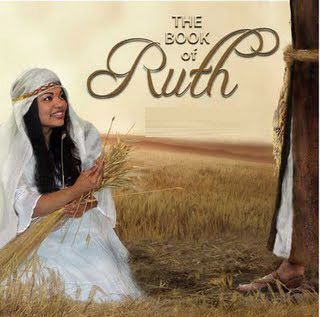

Ruth Lesson Eight

The Royal Line – Ruth 4:13-22

13 Boaz took Ruth and she became his wife. When he was intimate with her, the Lord enabled her to conceive, and she gave birth to a son. 14 Then the women said to Naomi, “Praise the Lord, who has not left you without a family redeemer today. May his name become well known in Israel. 15 He will renew your life and sustain you in your old age. Indeed, your daughter-in-law, who loves you and is better to you than seven sons, has given birth to him.” 16 Naomi took the child, placed him on her lap, and took care of him. 17 The neighbor women said, “A son has been born to Naomi,” and they named him Obed. He was the father of Jesse, the father of David.

David’s Genealogy from Judah’s Son

18 Now this is the genealogy of Perez:

Perez fathered Hezron.

19 Hezron fathered Ram,

who fathered Amminadab.

20 Amminadab fathered Nahshon,

who fathered Salmon.

21 Salmon fathered Boaz,

who fathered Obed.

22 And Obed fathered Jesse,

who fathered David. (HCSB)

The concluding section of chapter four is broken down into two parts: the narrative around the child born to Boaz and Ruth and a ten-generation genealogy.

Verse 13

Boaz took Ruth and she became his wife. When he was intimate with her, the Lord enabled her to conceive, and she gave birth to a son.

Facts to note concerning this verse.

  • Boaz fulfilled his promise to marry Ruth.
  • Ruth’s social progression has reached its conclusion.
    • A Moabite foreigner (2:10).
    • Lowest on the servant scale (2:13)
    • Maidservant (3:9).
    • Boaz’s wife.
  • Boaz fulfilled his promise to continue the family line of Mahlon.
  • Ruth becomes pregnant through Yahweh.
    • Ruth was married to Mahlon for ten years but was not able to get pregnant.
    • Ruth quickly became pregnant after marrying Boaz, maybe on the wedding night.
    • Yahweh closed Ruth’s womb during a marriage that was not based on obedience.
    • Yahweh opened Ruth’s womb and honored the prayers presented in verses 11-12.
  • At least nine months elapse between the beginning of the verse and the end.
  • Ruth gives birth to a son, establishing Mahlon’s lineage.
  • The royal line is preserved through the actions of these two humble and obedient people.

Verses 14-15

14 Then the women said to Naomi, “Praise the Lord, who has not left you without a family redeemer today. May his name become well known in Israel. 15 He will renew your life and sustain you in your old age. Indeed, your daughter-in-law, who loves you and is better to you than seven sons, has given birth to him.”

The women are likely neighbors or at least townspeople who know the situation surrounding Naomi, Ruth, and Boaz. In the Old Testament, praise or blessings denoted positive relationships between the two parties. The women also acknowledge that a family redeemer has now arrived on the scene for Mahlon’s lineage.

The one question in verse 14 is who is “his name” referring to, Yahweh or Obed?

  • The focus on the verse seems to be on Obed and not Yahweh, although Yahweh is to be praised.
  • The last part of verse 14 indicates that the “name” is currently not well known in Israel.
  • Obed’s name will become well known throughout Israel in the future, if for no other reason than he’s King David’s grandfather.
  • The “name” is clearly referring to Obed.

In verse 15, the women discuss the implications of the birth of a son.

  • When Naomi first returned from Moab, she was bitter and destitute.
  • With the birth of Obed, her fortunes have completely reversed.
  • Naomi no longer needs to be concerned about her future welfare.
  • The idea that Ruth is better than seven sons is a remarkable statement.
    • In Israel, the ideal family consisted of seven sons – the women are saying Ruth is better than an ideal Israelite family.
    • This also could be a prophetic reference to David, as he had seven brothers and became Israel’s greatest king.

Verses 16-17

16 Naomi took the child, placed him on her lap, and took care of him. 17 The neighbor women said, “A son has been born to Naomi,” and they named him Obed. He was the father of Jesse, the father of David.

Some clarification is needed on verse 16, depending on the translation you are using. Some translations use the terms “bosom” and “nurse” in this verse. Those terms can be misleading as Naomi doesn’t become a wetnurse to her grandson. The original Hebrew word that is misleadingly translated to “bosom” is actually referring to the front of a person’s body and is implying embracing a loved one. The original word that refers to “nurse” is better translated as a nanny, someone to care for the child. In essence, verse 16 is saying that Naomi will take care of Obed as any joyous and loving grandmother would care for their grandchild. In Naomi’s case, her fortunes have come full circle. Once stripped of all male support and protection, she now has an immediate redeemer/protector in Boaz and a future redeemer/protector in Obed.

Verse 17 concludes the story of Boaz, Ruth, and Naomi in the birth and naming of the baby boy. There are several things to note about this.

  • This is the only reference in the Old Testament where women, other than the mother, were present at the naming of a baby.
    • However, this doesn’t mean the women had a role in naming the baby.
    • But it does mean they were there to witness the celebration and share in its significance.
  • The child is a son.
    • The form is in the normal form of an ancient Near East birth announcement, as found in Isaiah 9:6 and Jeremiah 20:15.
    • Because the family needed a male child to act as the future kinsman-redeemer, the birth of a son was a significant event for the family.
  • The name Obed is not explained in the text.
    • It is a form of the Hebrew word meaning “to serve.”
    • It is an abbreviated form of Obadiah, which means “servant of Yahweh.”
    • Is the boy to be viewed as a servant of Yahweh or a servant of Naomi?
      • If it is the first, then the child will take away the bitterness that Naomi mentions in 1:20-21 and to redeem the estate of her late husband.
      • If it is the second, the child serves by restoring her prosperity and providing security in her old age.
      • It could be a combination of both.
  • The historical significance does not lie in Obed directly. His significance lives on and is achieved through his grandson David.

Verses 18-22

As the book of Ruth closes, the author presents the importance of the book in a concluding genealogy.

  • The biggest need in the period of the judges was a king, since “everyone did whatever he wanted” (Judges 21:25).
  • The faithful actions of Naomi, Boaz, and Ruth led not only to a restoration of the family but also the provision of a king.
  • As the grand narrative of the Bible progresses, we see how Yahweh keeps His covenant faithfulness through His people.
  • The genealogy, which points to David, has a greater significance for us. This exact same list is included in Jesus’ genealogy in the first chapter of Matthew.
    • We see that the story of Ruth points not just to David, but ultimately to Jesus.
    • Jesus is the Savior and Redeemer of all humanity if they place their trust in Him.

Summary and Conclusion on Ruth

  • The book begins with a funeral and ends with a wedding.
  • It opens with famine and closes with fullness.
  • Ruth’s love and obedience brought joy and blessing.
  • Prophetical.
    • God shows His disfavor on Israel because of their disobedience (chapter 1).
    • God uses a gentile (Ruth), just as later gentiles would be reached with the Gospel (Acts 15:14).
    • Naomi’s blessing came after Ruth’s wedding. In the same way, Israel will be restored and blessed after Christ and His church are united.
  • Typical.
    • Boaz is a picture of Christ.
    • Jesus is the ultimate kinsman-redeemer.
      • He is the Lord of the harvest.
      • He supplies our needs.
      • He redeems us.
      • He gives us rest.
  • Practical.
    • Backsliding has its consequences.
      • Naomi lost her husband.
      • She lost her sons.
    • No matter how tough the circumstances we are experiencing, the best place to be is in the will of God.
    • God is willing to forgive and restore backsliders.
    • The time we spend in disobedience can never be regained.
    • But we can regain our joy and testimony.

Applications

  • Do we rejoice in the blessings and celebrations of others? If we don’t, is it because of jealousy? Just as we share in the sorrows of those around us, we should also join in their celebrations, giving glory to God for each one of them.
  • Do we keep all parts of our promise? Boaz fulfilled everything he vowed to do. Do we resemble him in our actions, or do we stop short of total fulfillment if it gets tough or we just feel like it?
  • Have we been redeemed by Jesus? If you haven’t placed your eternity in His hands, why?
  • If you’ve been redeemed but have backslidden, don’t wait to return to Him. He stands with open arms to welcome back each truly repentant heart who realizes the mistake they’ve made. Don’t let pride or guilt stand in the way of blessings.

Sermon on the Mount Lesson Eight

The Truth About Oaths – Matthew 5:33-37

This is the eighth part of the series as we continue our journey through the Sermon on the Mount, covering Matthew 5:33-37.

33 “Again, you have heard that it was said to our ancestors,  You must not break your oath, but you must keep your oaths to the Lord. 34 But I tell you, don’t take an oath at all: either by heaven, because it is God’s throne; 35 or by the earth, because it is His footstool; or by Jerusalem, because it is the city of the great King. 36 Neither should you swear by your head, because you cannot make a single hair white or black. 37 But let your word ‘yes’ be ‘yes,’ and your ‘no’ be ‘no.’  Anything more than this is from the evil one. (HCSB)

Before digging into the passage itself, we need to define one term and understand how it was interpreted in 1st century Israel and why Jesus is focusing on it in this passage.

Oath – A solemn vow or promise to fulfill a pledge. Any breach of one’s undertaking affirmed by an oath would be attended by a curse. An example is the Lord affirmed that he had established a covenant and a curse with Israel; that is, a breach of the covenant would be followed by a curse (Elwell).

Deuteronomy 29:14-15 14 I am making this covenant and this oath not only with you, 15 but also with those who are standing here with us today in the presence of the Lord our God and with those who are not here today.

The oath was a manner of guaranteeing a promise in Israelite society and the ancient Near East. The parties of the covenant invoked their deity, or deities, to witness the agreement, then bound themselves with specific sanctions, curses and blessings, symbolized by melting substitutionary wax figures or cutting animals in half, as seen in 1 Samuel 11:7  He took a team of oxen, cut them in pieces, and sent them throughout the land of Israel by messengers who said, “This is what will be done to the ox of anyone who doesn’t march behind Saul and Samuel.” As a result, the terror of the Lord fell on the people, and they went out united.

Oath-taking became quite complicated in intertestamental Judaism. The system of binding vows was so complicated as to allow the initiator to deceive anyone not familiar with the system. The net result was that the oath became a primary means of defrauding outsiders, hence Jesus’ condemnation of the system as examined in this passage (Myers).

This may seem like a long-winded discourse on the definition of an oath, but since it is the main point of the passage, it is important that we completely understand the setting and circumstances that Jesus is addressing here.

In various places in the Sermon on the Mount, Jesus is reminding the Jews about things they should already know or understand. That applies to this passage. The Jewish teachers had always insisted on the paramount obligation of telling the truth. The Rabbis had various saying about the obligation of telling the truth.

  • The world stands fast on three things, on justice, on truth, and on peace.
  • Four persons are shut out from the presence of God—the scoffer, the hypocrite, the liar, and the retailer of slander.
  • One who has given his word and who changes it is as bad as an idolater (Barclay).

This is especially true if the truth was guaranteed by an oath. Exodus 20:7 – Do not misuse the name of the Lord your God, because the Lord will not leave anyone unpunished who misuses His name. This verse is not talking about the use of bad language. Instead, it is talking about breaking an oath promised in the name of Yahweh. Numbers 30:2 When a man makes a vow to the Lord or swears an oath to put himself under an obligation, he must not break his word; he must do whatever he has promised.

Jesus was speaking not against oaths themselves but against the abuses of oaths and the corresponding abuse of the truth that went with them. We see this most clearly when we look in the broadest way at the positive teaching about oaths throughout Scripture. In the Law, the Jews were instructed to make oaths in the name of Yahweh. Deuteronomy 10:20 You are to fear Yahweh your God and worship Him. Remain faithful to Him and take oaths in His name.

We also read where Yahweh took oaths. The Abrahamic Covenant is an example. God promised that the land would be Abrahams’ and would belong to his seed forever.

What Jesus is talking about is a two-fold situation that had become commonplace in 1st century Israel.

  • Taking an oath when it was neither necessary nor proper. People who did this swore by their life or any other “thing.” The result was that even the most solemn statements appeared to be on this level also. It was exactly as if a servant who lived in the household of an honorable state official should go around talking about the honorable house, the honorable chair, the honorable mop, or the honorable dishpan. His speech would then have much less meaning when he called the lord of the house, “your honor.” In opposition to this, Jesus often insisted, as many of the rabbis did also, that the use of an oath to substantiate a simple statement was wrong.
  • The second perversion of the proper use of oaths by the people of Christ’s time was worse. It was evasive swearing. People who were afraid to swear by the name of the Lord because they were not telling the full truth began to swear by things, and because mere things were not thought to be as significant as the name of God, this second class of oaths was not considered to be binding. Some persons swore by:
    • Their own life 1 Samuel 1:26  Please, my lord,” she said, “as sure as you live,  my lord, I am the woman who stood here beside you praying to the Lord.
    • Their health Psalm 15:4  who despises the one rejected by the Lord but honors those who fear the Lord, who keeps his word whatever the cost.
    • Others swore by the king 1 Sam. 17:55 Then the woman said to Elijah, “Now I know you are a man of God  and the Lord’s word from your mouth is true.”
    • Others swore, as Jesus indicates, by their head, the earth, heaven, the temple, or Jerusalem, Matthew 5:34–36.
    • All such oaths were evasive (Boice).

Yahweh hates false oaths.

  • Zechariah 8:17  Do not plot evil in your hearts against your neighbor, and do not love perjury, for I hate all this”—this is the Lord’s declaration.
  • Ecclesiastics 5:5  Better that you do not vow than that you vow and not fulfill it.

What is Jesus talking about in the last verse, the reference to the evil one? There are likely two ways to view this.

  • If it is necessary to take an oath from someone, that necessity arises from the evil that is in the individual. If there were no evil in that person, an oath wouldn’t be necessary. The fact that it is sometimes necessary to make someone take an oath is a demonstration of the evil in Christless human nature.
  • The fact that it is necessary to make people take an oath in certain situations comes from the fact that this is an evil world. In a perfect world, in a world which was the kingdom of God, no taking of oaths would be necessary. It is necessary only because of the evil in the world.

What Jesus is saying is this, a truly good person will never need to take an oath; the truth of the sayings and the reality of the promises of that person doesn’t need a guarantee. But the fact that oaths are still necessary is the proof that people are not good and that this is not a good world. This places two obligations upon the Christian.

  • To make ourselves such that others will so see our transparent goodness that they will never ask an oath from us.
  • To seek to make this world such a world that falsehood and infidelity will be so eliminated from it that the necessity for oaths will be abolished (Barclay).

Jesus is addressing here, as He does in many places of Scripture, an issue with our hearts. Jesus understands the deceitfulness of the human heart, for people sometimes invoked an oath in order to conceal an attempt to deceive. By contrast, Jesus’ disciples should be people of such integrity of character and truthfulness of heart that whatever they say is absolutely believable and dependable. A person of integrity is one who, in daily conversation, is so truthful, dependable, genuine, straightforward, and reliable that his or her words are believed without an oath.

Jesus’ point is that a disciple’s simple word should be considered as trustworthy as a signed document or contract. When he goes further to suggest that “anything beyond this is evil,” Jesus indicates that swearing by something in order to deceive can only have one source—the evil one, Satan (Wilkins).

How do we apply this passage to our lives?

  • Examine our lives. Are we truthful and trustworthy? If not, we need to start there and change our behavior.
  • Do we trust our Christian brothers and sisters? If not, is it because of something they did previously? If that is true, we need to discuss that with them to clear the air.
  • Our lives and words should confirm our trustworthiness and preclude the need to make promises to our Christian brothers and sisters.
  • Our internal “heart condition” will manifest itself in our external action. There is an indestructible link between the two. Obedience to Jesus and His teachings will shape our heart condition, which in turn will lead to a fruitful life. If you are not producing fruit have you done a heart examination lately?

Sermon on the Mount Lesson Seven

Marriage is Sacred – Matthew 5:31-32

In this seventh part of the Sermon on the Mount, we’ll look at what Jesus has to say about marriage and divorce.

31 “It has been said, ‘Anyone who divorces his wife must give her a certificate of divorce.’ 32 But I tell you that anyone who divorces his wife, except for marital unfaithfulness, causes her to become an adulteress, and anyone who marries the divorced woman commits adultery. (HCSB)

It is no coincidence that these two verses follow on the heels of the passage that talks about sexual sin. Sexual sin often leads to divorce.

It is also a passage that has caused much debate within the church and theological circles regarding the exact meaning and interpretation of this passage. Additionally, in today’s society, where divorce is rampant, amongst believers and unbelievers alike, some may disagree with what I write here or even become angry. However, I base what follows on Scripture and not my personal views.

In its original design, marriage is a life-long commitment between a man and a woman. There can be no other interpretation of the institution of marriage when Scripture is the foundation. For those who believe in same-sex unions, there is no biblical basis. If we truly are followers of Christ, we can’t compromise on this point. At the same time, it doesn’t mean that we are to treat those who do believe in same-sex unions in a hateful, derogatory, or demeaning manner. In some Christian circles, homosexuality is viewed as a worse sin than others. We need to remember that any sin will separate us from God, not just certain ones.

We also need to realize that we live in a fallen world. Sin is rampant around us, especially sins of a sexual nature. Although God hates divorce, Jesus is telling that in the case of marital infidelity, divorce is an option, although it should never be the first option.

Before we dive further into this passage, let’s talk a look at the Jewish background surrounding marriage and divorce, since the vast majority of the original hearers of this message were of Jewish background (Barclay).

  • From a theoretical standpoint, no nation ever had a higher ideal of marriage than Israel.
  • It was the sacred duty of a man to marry.
  • A man could delay or abstain from marriage only if he was going to dedicate his life to studying the Law (Scripture).
  • Otherwise, if a man refused to marry and have children, it was understood that he had broken the commandment that instructed men to be fruitful and multiply. He also diminished the image of God and destroyed his posterity.
  • The Jews despised divorce. The rabbis had numerous sayings:
    • We find that God is long-suffering to every sin except the sin of unchastity.
    • Unchastity causes the glory of God to depart.
    • Every Jew must surrender his life rather than commit idolatry, murder, or adultery.
    • The very altar sheds tears when a man divorces the wife of his youth.

However, practice often did not follow the stated ideals. In the male-dominated society of ancient Israel, women were, in the eyes of the Law, a thing and not a person. She was subject to the authority of her father or husband. A woman could not divorce her husband for any reason, but a man could divorce his wife for any cause. According to Rabbinic law, “A woman may be divorced with or without her will; but a man only with his will.”

The application was based upon Deuteronomy 24:1  If a man marries a woman, but she becomes displeasing to him because he finds something improper about her, he may write her a divorce certificate, hand it to her, and send her away from his house.

The key words in this verse are “something improper.” It is the interpretation of these two words that the whole argument, within Jewish society, of the grounds for divorce hinged. In all matters of Jewish law, there were two schools of thought. There was the school of Shammai, which was the strict, severe, austere school; and there was the school of Hillel, which was the liberal, broad-minded, and generous school. Shammai and his school defined something improper as meaning unchastity and nothing but unchastity. ‘Let a wife be as mischievous as the wife of Ahab,’ they said, ‘she cannot be divorced except for adultery.’ To the school of Shammai, there was no possible ground of divorce except only adultery and unchastity.

On the other hand, the school of Hillel defined something improper in the widest possible way. They said that it meant that a man could divorce his wife if she spoiled his dinner by putting too much salt in his food, if she went in public with her head uncovered, if she talked with men in the streets, if she spoke disrespectfully of her husband’s parents in his presence, or if she was troublesome or quarrelsome. Taking it even further, Rabbi Akiba said that the phrase translated here as, but she becomes displeasing to him meant that a man might divorce his wife if he found a woman whom he considered to be more attractive than her.

In a fallen and sinful world, it is not difficult to see that the school of Hillel found more backing and application in the area of divorce. As Jesus enters into the scene of Jewish life, divorce had become so easy and commonplace that women were becoming unwilling to marry as there was no security in the marriage bond.

Jesus is speaking in a practical sense to correct the warped interpretation of the school of Hillel. He begins with the phrase, “But I tell you.” He is correcting the interpretive mistakes prevalent in Jewish culture by reminding them that only marital infidelity is an acceptable reason for divorce. At the same time, He is not commanding divorce in these circumstances but allowing it if reconciliation could not be obtained between the husband and the wife. Jesus hates divorce and would always prefer repentance and restoration between the parties involved but also understands that in some cases, the hurt is too deep or that there may be unrepentant and continuing adulterous behavior from one of the spouses.

Jewish Law, as well as Greek and Roman, agreed that lawful divorce allows a person to remarry. Taken in this context, Jesus’ words allow remarriage for the non-offending party in a divorce based upon marital infidelity. All other reasons for divorce results in an adulterous relationship in a future marriage.

Jesus’ purpose is also not to cover every detail regarding divorce and remarriage. He was addressing a problem specific to first-century Israel. At the same time, He is directing them to understand the intention behind the Law. Just as verses 5:22 and 5:28 don’t prohibit all forms of anger or sexual desire verse 5:32 does not present every conceivable just or unjust grounds for divorce. Paul interprets it in this light as he presents a second legitimate grounds for divorce in 1 Cor 7:15  But if the unbeliever leaves, let him leave. A brother or a sister is not bound in such cases.

When viewing these two cases, it may be best to ask the question, “what do these two exceptions have in common?”

  • Both destroy at least one of the two fundamental components of marriage as described in Gen 2:24  This is why a man leaves his father and mother and bonds with his wife, and they become one flesh.
    • Leaving and cleaving (from parents to spouse).
    • Become one flesh in unity.
  • Both leave one party without any options if reconciliation is refused.
  • Both recognize the seriousness of divorce and that it should only be a last resort.
  • It is similar to ex-communication for unrepentant sinners.

I’m going to address one additional case not handled in Scripture, but that also destroys at least one of the two fundamental components of marriage. The additional case is the issue of an abusive relationship, unfortunately too common in society today. First, let’s try and define what an abusive relationship isn’t and what it is.

  • What it isn’t.
    • Plain, vanilla disagreement. Guess what? If you are married, you will have conflict. There is no such thing as a disagreement free marriage.
    • One spouse working long hours to provide for the family while the other is left to primarily take care of the house. Or even situations where both work long hours and the house becomes neglected.
    • Conflicts in values, especially if one is a Christian and the other isn’t. Of course, the Christian spouse should never be forced to compromise their Biblical values to meet the desires of the non-Christian spouse. Depending on the circumstances that could transition to “what is” abuse.
  • What it is.
    • Physical abuse. This has no place in a marriage.
    • Emotional/verbal abuse. This one can be muddied at times. I personally wouldn’t call “nit-picking” your spouse as emotional abuse, although it can be frustrating. Instead, berating, demeaning, or making your spouse feel less than a person created in God’s image is not ok. It is actually abuse towards God. I realize that I can’t and won’t cover every possible example, and some may not agree with I wrote under emotional abuse.
    • Sexual abuse. Yes, this can and does occur in marriage relationships. One spouse should never force themselves on the other. Sex is meant to be a beautiful joining of a man and woman.
    • Financial abuse. Depriving or controlling funds or keeping a separate account unknown to your spouse.
    • Digital abuse. In today’s social media environment, it is possible to abuse your spouse by posting unflattering texts or pictures.

I would encourage all married couples, or those about to be married, to read Ephesians 5:22-33. IF we would read and follow what is contained there, we wouldn’t have to worry about this area at all.

Now, how do we make applications from this passage?

  • If you are contemplating divorce, hit “pause.” Is the reason one of those listed above? If not, then divorce is not the biblical answer. If the reason is one of those listed above, first ask yourself an honest question, “have I done all that I can to reconcile the marriage?” If you answer “no,” then what more can you do? If you answer “yes,” then you have biblical grounds for divorce. It was never God’s design for this, but it does happen in a fallen world.
  • Are you friends with anyone who is in the situation described in the previous bullet? Talk to them about their issue, as much as they are willing to talk. You may be a facilitator to their reconciliation.
  • If you are already divorced, regardless of the reason, there is grace and forgiveness. For those who divorced under biblical grounds, whether you remarried or not, you should put aside any negative feelings you may have. Divorce can be excruciatingly painful, but it is not the end. For those who divorced outside of biblical grounds, repentance is needed, especially if you were the initiator for the divorce. This may also require you to apologize to your former spouse, even if they reject the apology.
  • We should also never lose sight of our identity. It is not in our jobs, neighborhood, or spouse. As a Christian, our identity is in Jesus. Our worth is found in Jesus. Our value is found in Jesus.
  • We would also do well to remember what Jesus told the woman caught in adultery in John 8:10-11  When Jesus stood up, He said to her, “Woman, where are they? Has no one condemned you?” No one, Lord,” she answered. “Neither do I condemn you,” said Jesus. “Go, and from now on do not sin anymore.” Too often, the focus is on “Neither do I condemn you” instead of where it needs to be, “Go, and from now on do not sin anymore.”
  • The final application is if you have fallen short of Jesus’ instruction in these two verses, “Go, and from now on do not sin anymore.”

Sermon on the Mount Lesson Six

Adultery Begins in the Heart – Matthew 5:27-30

In this sixth part of the Sermon on the Mount, we’ll look at what Jesus has to say about adultery and sexual purity.

Matthew 5:27-30: 27 “You have heard that it was said, Do not commit adultery. 28 But I tell you, everyone who looks at a woman to lust for her has already committed adultery with her in his heart.  29 If your right eye causes you to sin,  gouge it out and throw it away. For it is better that you lose one of the parts of your body than for your whole body to be thrown into hell.  30 And if your right hand causes you to sin, cut it off and throw it away. For it is better that you lose one of the parts of your body than for your whole body to go into hell!

Before we dive in, let’s define some of the key terms.

Adultery: In His teachings, Jesus stands firmly in the traditions of the Mosaic law and prophecy by regarding adultery as a sin. But He extends the definition to include any man who lusts in his mind after another woman, whether she is married or not. It is thus unnecessary for any physical contact to take place since the intent is already present. By this teaching, Jesus demonstrates that, under the new covenant, motivation is to be considered just as seriously as the mechanical act of breaking or keeping a particular law. Sexual activity is to be confined to the marriage relationship only, and if a married man or woman has sexual intercourse with someone other than the spouse, that person has committed adultery (Harrison).

Lust: An intense craving or desire, often of a sexual nature. Though used relatively infrequently (twenty-nine times) in Scripture, and a common theme can be seen running through its occurrences. The word is never used in a positive context; rather, it is always seen in a negative light, relating primarily either to a strong desire for sexual immorality or idolatrous worship (Akin).

Hell: In this lake of fire, God punishes the wicked, along with Satan and his followers (Matthew 25:41), bringing an end to evil. There are four features of hell:

  • Sinners occupy hell – Revelation 21:8  But the cowards, unbelievers, vile, murderers, sexually immoral, sorcerers, idolaters, and all liars—their share will be in the lake that burns with fire and sulfur, which is the second death.”
  • Hell exists for the retribution of evil deeds.
    • Matthew 16:27  For the Son of Man is going to come with His angels in the glory of His Father, and then He will reward each according to what he has done.
    • 2 Corinthians 5:10  For we must all appear before the tribunal of Christ, so that each may be repaid for what he has done in the body, whether good or worthless.
  • Hell is a final place of bondage and isolation from righteousness.
    • Revelation 20:14-15  14 Death and Hades were thrown into the lake of fire. This is the second death, the lake of fire. 15 And anyone not found written in the book of life was thrown into the lake of fire.
    • Matthew 13:42   They will throw them into the blazing furnace where there will be weeping and gnashing of teeth.
  • Sinners suffer penalties in hell.
    • Matthew 8:12  But the sons of the kingdom will be thrown into the outer darkness. In that place there will be weeping and gnashing of teeth.”
    • Luke 12:48   But the one who did not know and did things deserving of blows will be beaten lightly. Much will be required of everyone who has been given much. And even more will be expected of the one who has been entrusted with more.

As we dive into this passage, there are four main theological principles to keep in mind:

  • Adultery: It goes against God’s design for marriage, breaks the marriage covenant, it is often a well-hidden trap, it has consequences.
  • Chastity: Sexual purity is commended; chastity is required in the marriage covenant; we shouldn’t associate with the sexually immoral.
  • Self-indulgence: Demonstrates a lack of self-restraint, we give in to our sinful desires, we place ourself ahead of God.
  • Self-denial: A requirement to follow Jesus, and we do it not only for ourselves but to protect those around us.

Now we’ll break this passage into two sections.

Verses 27-28  27 “You have heard that it was said, Do not commit adultery. 28 But I tell you, everyone who looks at a woman to lust for her has already committed adultery with her in his heart.

Jesus is defining that the standard of his followers is to be, quite simply, chastity before marriage and fidelity afterward. At the same time, He is not teaching against having normal yearnings and desires for the opposite sex. However, the proper place for this is inside the marriage covenant. Additionally, adultery was considered one of the most serious offenses because it broke the relationship that was a reflection of God and his people. Finally, for the original hearers of this message, Jews, they would understand that this was also a way to describe Israel and their pursuit of false gods. Adultery, in its most basic understanding, is a sin against God.

  • Potiphar’s wife, tempting Joseph.
    • Genese 39:9  No one in this house is greater than I am. He has withheld nothing from me except you, because you are his wife. So how could I do such a great evil and sin against God?
  • David confessing his sin after the affair with Bathsheba.
    • Psalm 51:4 Against You—You alone—I have sinned and done this evil in Your sight. So You are right when You pass sentence; You are blameless when You judge.

Never in the history of the western world since the death of Greek and Roman paganism has fidelity in marriage been so threatened, or an uncontrolled indulgence of free sexual passions been so encouraged or praised. In the first place, it is threatened by the mass media, which uses the lure of sex to push materialism and to glamorize the pursuit of mere pleasure. This is acute simply because the media have a scope and immediacy in this age that they have possessed in no other. One writer has noted that sex is “the cornerstone of mass persuasion and the symbol par excellence of the life of leisure and consumption.”

The Christian ethic of faithful and monogamous marriage is also threatened in our day, perhaps even more seriously than by the mass media, by a new hedonism symbolized by the so-called “playboy philosophy.” Hedonism is the philosophy that makes pleasure the chief goal in life, and it is as evident in the pursuit of the second home, the third car, and the right and proper friends, as it is in adultery and premarital sex experimentation.

Another issue in marriage is speaking in a disparaging way regarding one’s marriage. To speak disdainfully of married life, to talk about it with an attitude of sarcasm, to speak about it in a manner that exalts the world’s definition and ignores biblical marriage is to blaspheme God. And since God established marriage, we should get our advice about marriage from…the Bible, not from secular books, television, or movies.

Here are a few passages to read:

  • Hebrews 13:4
  • Proverbs 18:22
  • Genesis 2:24
  • 1 Corinthians 13:4-7
  • Proverbs 19:14
  • 1 Peter 3:7
  • Ephesians 5:22-33
  • Colossians 3:18-19
  • Proverbs 31:10
  • Proverbs 12:4
  • Mark 10:9

Too often, we base marriage on a narrow or simplified concept. Man has a trinitarian nature in that we possess a body, soul, and spirit. Marriage needs to be approached with this three-part nature taken into consideration.

  • Body: Scripture is clear that a husband and wife are not to deny each other sexually.
    • 1 Corinthians 7:2-5  But because sexual immorality is so common, each man should have his own wife, and each woman should have her own husband. A husband should fulfill his marital responsibility to his wife, and likewise a wife to her husband. A wife does not have the right over her own body, but her husband does. In the same way, a husband does not have the right over his own body, but his wife does. Do not deprive one another sexually—except when you agree for a time, to devote yourselves to prayer. Then come together again; otherwise, Satan may tempt you because of your lack of self-control.
    • Neither partner should coerce or manipulate their partner by using the above passage. Within marriage, sex should be a mutually satisfying experience that honors God.
    • A wife who always has a “headache” or a husband who is always out with the guys is a marriage headed for trouble.
    • At the same time, if the marriage is based solely on sex, it is a marriage headed for trouble.
    • And while we’re on the subject of the body, we might hear the excuse my husband/wife is no longer attractive; they’ve let their body go, etc. That person needs to take a long look in the mirror. Odds are they aren’t what they used to be either. We should pay more attention to the inside of the person rather than the outside.
  • Soul: This refers to the intellectual and emotional aspects of a person. A union of souls is one that shares many of the same interests, both intellectually and emotionally.
  • Spirit: A marriage of spirit to spirit is one between two followers of Christ and is the type of marriage that God intended. It is also a marriage that places Jesus first.
    • Marrying a non-Christian is a recipe for unhappiness.
    • Consider Solomon.
      • Blessed by God and renowned for his wisdom.
      • He placed geographical alliance above his alliance with God by marrying Pharaoh’s daughter.
      • This was not God’s will.
      • It led to his downfall.
      • Solomon knew his action was wrong, 2 Chronicles 8:11  Solomon brought the daughter of Pharaoh from the city of David to the house he had built for her, for he said, “My wife must not live in the house of David king of Israel because the places the ark of the Lord has come into are holy.”
  • A marriage that is solidly built upon these three principles is one that can withstand any storm.

Here Jesus is not limiting the idea of adultery to only sexual relations outside of marriage; He is talking about sexual sin in general. The grammar of verse 28a leads to two possible translations. Jesus could be speaking of one who “looks at a woman with the intention of committing adultery” or to one who “looks at a woman for the purpose of getting her to lust after him.” Either way, the present tense participle blepōn refers to one who continues to look rather than just casting a passing glance, and in either case, the mere viewing or mental imagining of a naked body is not what is being discussed. Instead, Jesus is condemning lustful thoughts and actions—those involving an actual desire (the most literal translation of the verb epithymeō) to have sexual relations with someone.

Verses 29-30  29 If your right eye causes you to sin,  gouge it out and throw it away. For it is better that you lose one of the parts of your body than for your whole body to be thrown into hell.  30 And if your right hand causes you to sin, cut it off and throw it away. For it is better that you lose one of the parts of your body than for your whole body to go into hell!

It is important to understand that Jesus is using hyperbole here to make a point. Unfortunately, in church history, there are examples, albeit disputed, of those who took these two verses literally. However, Jesus is saying that we should get rid of anything that may cause us to sin. The eye is often the vehicle through which the temptation stimulates our lust, and the hand represents the way in which the thought is physically carried out. Even the reference to the right eye and right hand have meaning here. In antiquity, the right hand was viewed as more valuable. We are to have a single-eyed and single-handed commitment to our spouse.

Depending on the translation you read, it could say, “causes you to sin” or “causes you to stumble.” Regardless, the Greek word here is skandalon. Skandalon is a form of the word skandalēthron, which means the bait-stick in a trap. It was the stick or arm on which the bait was fixed and which operated the trap to catch the animal lured to its own destruction. So, the word came to mean anything which causes a person’s destruction (Barclay). We are to dig out any of the habits that tempt us down the path of sinful behavior. These could include

  • The vast majority of television shows or movies produced today have some type of suggestive behavior, foul language, or revealing clothing.
  • Pornography.
  • Television talk shows that often contain subjects or conversations of a sexual nature.
  • Magazines, even those that appear innocent.

Jesus is calling for His followers to remove the poison and protect yourself from such filth. If there is a habit or pleasure that leads us down the path of sinful ruin, we must remove it from our lives.

Have you ever noticed that no matter how hard you try to overcome or remove them, it almost always ends up in failure? There are really only two ways to defeat these forbidden thoughts.

  • Christian action
    • Fill your life with Christian service
    • Think about others before yourself
    • This doesn’t mean we neglect our families or responsibilities. There needs to be balance. Growing up, I personally witnessed one family that fell apart because one spouse was always at some church event or activity, totally neglecting the house.
    • It does mean filling our idle time with productive Christian service or more time in Bible reading, prayer, and meditation.
  • Fill our minds with wholesome thoughts. The way to defeat evil thoughts is to think of wholesome things.

Jesus is clear that there will be judgment for those who wander down this path. The consequences are eternal separation from God in a place Jesus often talks about, hell.

Now let’s consider some application points from this passage.

  • Make an honest evaluation of your habits and activities. If your Christian brothers and sister or your pastor knew about your habits and activities, would that make you uncomfortable? If you can answer “yes” to any habits or activities, you should remove them from your life. Share these with your accountability partner for support.
  •  Once you identify those habits or activities what safeguards can you utilize to keep from venturing over the line? Identify the boundaries or fences that you can put in place to protect yourself.
  • Do you give yourself solely to your spouse? Do you treat your spouse with the dignity and respect they deserve as a person created in the image of God? If you are unsure, then have a heart-to-heart talk and be willing to listen to what they say. Often, we are totally unaware of how our actions or words affect our spouse. Anything less demeans your spouse.

I want to close with a word of encouragement. If you struggle in this area, you are not alone. Most of the statistical studies on the use of pornography, as one measure of sexual health, among church attendees, both male and female, show that over 50% view pornography on a somewhat regular basis. Jesus is clear that sexual sin leads to eternal consequences. However, if you truly repent and surrender to Jesus and turn from those harmful habits, you will receive forgiveness.

Sermon on the Mount Lesson Five

Murder Begins in the Heart – Matthew 5:21-26

In this fifth part of my series on the Sermon on the Mount, we will look at Matthew 5:21-26.

21 “You have heard that it was said to our ancestors, Do not murder, and whoever murders will be subject to judgment. 22 But I tell you, everyone who is angry with his brother will be subject to judgment. And whoever says to his brother, ‘Fool!’ will be subject to the Sanhedrin. But whoever says, ‘You moron!’ will be subject to hellfire. 23 So if you are offering your gift on the altar, and there you remember that your brother has something against you, 24 leave your gift there in front of the altar. First go and be reconciled with your brother, and then come and offer your gift. 25 Reach a settlement quickly with your adversary while you’re on the way with him, or your adversary will hand you over to the judge, the judge to the officer, and you will be thrown into prison. 26 I assure you: You will never get out of there until you have paid the last penny!  (HCSB)

Up until verse 20 of the Sermon on the Mount, the call for internal righteousness is presented in a positive light. Now, Jesus begins to address things in a negative light.

As we proceed through this passage, we’ll be concentrating on four themes found within this passage.

  • Murder/anger in a physical, emotional, or verbal sphere. 
  • Being subject to judgment.
  • An adversary/accuser.
  • Being reconciled to one another.

First, let’s define key words/concepts that we will explore.

  • Murder: The biblical understanding of murder is contained in Exodus 20:13 and Deuteronomy 5:17. The commandment says “kill,” but the original meaning of the Hebrew word is murder. Therefore, the 6th Commandment talks about the taking of another person’s life for personal or selfish motives. Jesus takes the understanding further by saying that even contemplating this action in our hearts is evil (Elwell).
  • Judgment: In Scripture, it is closely related to God’s justice. In all His relationships, God acts justly and morally. Human beings, created by God, are morally structured to positively respond to God’s righteous demands on their lives. Divine judgment, involving God’s approval or disapproval upon each human act, is a natural consequence of the Creator-creature relationship between God and humanity. Thus judgment, simply defined, is the divine response to human activity. God, the Creator, must also be God the Judge. Since God is just, He responds with either punishments or rewards to what each person does. One’s moral accountability to God, a quality not shared by the rest of creation, is an essential ingredient of being created in God’s image. Creation in the divine image meant that God and man could communicate with each other in such a way that all people were able to understand God’s moral requirements and willingly respond to them. In a purely technical sense, judgment includes God’s approval upon acts which please Him; but more frequently, judgment is understood negatively in the sense that God punishes those who violate His commands. Since the fall, all human activity stands under God’s negative judgment (Elwell) Rom 2:12 All those who sinned without the law will also perish without the law, and all those who sinned under the law will be judged by the law.
  • Reconciled: Restoration of friendly relationships and of peace where before there had been hostility and alienation. Ordinarily, it also includes removing the offense, which disrupted peace and harmony. This was especially true in the relation of God with humanity when Christ removed the enmity existing between God and mankind by His sacrifice. Scripture speaks first of Christ’s meritorious, substitutionary death in effecting the reconciliation of God with sinners; of sinners appropriating this free gift by faith; the promised forgiveness and salvation that become the sinners’ possession by grace; and, finally, reconciliation to God (Elwell).
    • Rom 5:10   For if, while we were enemies, we were reconciled to God through the death of His Son, then how much more, having been reconciled, will we be saved by His life!
    • 2 Cor 5:19  That is, in Christ, God was reconciling the world to Himself, not counting their trespasses against them, and He has committed the message of reconciliation to us.
    • Eph 2:16  He did this so that He might reconcile both to God in one body through the cross and put the hostility to death by it.
  • Accuser/adversary: Any foe, opponent, or enemy of God and his saints. The apostle Peter’s description of the devil as “your adversary.”
    • 1 Peter 5:8   Be serious! Be alert! Your adversary the Devil is prowling around like a roaring lion, looking for anyone he can devour.
    • This has led to the use of “the Adversary” as a reference to Satan in literature and popular speech. The Hebrew noun שָׂטָן (satan) means “adversary” or “accuser.” The term appears in Job 1–2 as a title for a heavenly being who has some sort of prosecutorial or adversarial role in the heavenly court (Elwell).
      • Job 1:6–9  One day the sons of God came to present themselves before the Lord, and Satan also came with them. The Lord asked Satan, “Where have you come from?” “From roaming through the earth,” Satan answered Him, “and walking around on it.”Then the Lord said to Satan, “Have you considered My servant Job? No one else on earth is like him, a man of perfect integrity, who fears God and turns away from evil.” Satan answered the Lord, “Does Job fear God for nothing?
      • Zechariah 3:1  Then he showed me Joshua the high priest standing before the Angel of the Lord, with Satan standing at his right side to accuse him.
    • The word can also be used in a general sense for an accuser in a human legal context.
      • Psalm 109:6  Set a wicked person over him; let an accuser stand at his right hand.
    • Or for a military or political enemy
      • 1 Samuel 29:4   The Philistine commanders, however, were enraged with Achish and told him, “Send that man back and let him return to the place you assigned him. He must not go down with us into battle only to become our adversary during the battle. What better way could he regain his master’s favor than with the heads of our men?
    • By the New Testament, the Hebrew word satan has come into Greek as Σᾰτάν (Sătan), a name for the devil (Barry).
      • Luke 13:16  Satan has bound this woman, a daughter of Abraham, for 18 years—shouldn’t she be untied from this bondage on the Sabbath day?”
    • This being’s role as an accuser is mentioned once in the NT where Satan is called ὁ κατήγωρ (ho katēgōr, “the accuser”) (Barry).
      • Revelation 12:9–10  So the great dragon was thrown out—the ancient serpent, who is called the Devil and Satan, the one who deceives the whole world. He was thrown to earth, and his angels with him. 10 Then I heard a loud voice in heaven say: The salvation and the power and the kingdom of our God and the authority of His Messiah have now come,
        because the accuser of our brothers has been thrown out: the one who accuses them before our God day and night.

Verses 21-22  21 “You have heard that it was said to our ancestors,  Do not murder,  q and whoever murders will be subject to judgment. 22 But I tell you, everyone who is angry with his brother will be subject to judgment. And whoever says to his brother, ‘Fool!’  will be subject to the Sanhedrin. But whoever says, ‘You moron!’ will be subject to hellfire.

As noted above, the definition of murder is the premeditated killing of another person. The Hebrew word is rasah and does not apply to killing animals (Genesis 9:3), defending your home (Exodus 22:2), accidentally killing someone (Deuteronomy 19:5), executions conducting by the state (Genesis 9:6), or involvement in certain types of warfare. It does apply to accessory to murder (2 Samuel 12:9) and those who have a responsibility to punish known murderers but fail to do so (1 Kings 21:19).

Since man was created in God’s image, a person should not murder another.

The penalty for murder was death; it was not to be reduced to a lesser sentence (Numbers 35:31).

The phrase “you have heard” is an introduction to three forms of murder that do not include the physical act of taking another’s life.

  • Anger (1 John 3:15) When we are inappropriately angry with people, we attempt to take their identity and value as God’s creature away from them, the ultimate form of which is the physical act of murder. The righteousness expected of God’s subjects is not only in avoiding physical murder but in eliminating anger from our relationships.
  • The second case is calling another disciple “raca,” a transliteration of an Aramaic term implying “empty-headed.” This term of contempt was a personal and public insult. Name-calling was highly insulting in Jewish culture because a person’s identity was stripped away, and an offensive identity substituted (Wilkins).
  • The third case is saying “you fool” to a disciple. This likewise was highly insulting in Jewish culture, because moral connotations were attached to the term (Proverbs 10:23). The original language word for “fool” is a form of the Greek word moros (the origin of the English word “moron”), indicating a person who consistently acts like an idiot. To treat one’s brother with such contempt was to strip away his personal identity and wrongly make the person into something he or she was not (Wilkins).

The Jewish rabbis taught against such anger and such words. They spoke of ‘oppression in words’ and of ‘the sin of insult.’ They had a saying: ‘Three classes go down to Gehenna and return not—the adulterer, he who puts his neighbor openly to shame, and he who gives his neighbor an insulting name.’ Anger in a person’s heart and anger in a person’s speech are equally forbidden. (Barclay)

Do we commit murder? By this definition, yes. We lose our temper and keep hold of our grudges. We gossip. We kill by neglect, spite, and jealousy. And we would learn that we actually do worse things than these if only we could see our hearts as God is able to see them. It is no accident that even in our speech, such things sometimes are termed character assassination, or that we speak of destroying a person by words. This is literally true, and we do it. Jesus says we are not to be that way as Christians.

Those who are slaves of their anger, who speak in a demeaning or disrespectful way to others, who destroy another’s good name, may not have committed murder in action, but they are murderers in their hearts.

Of course, there is righteous anger. Jesus spoke in righteous anger against the hypocritical so-called leaders of His day. Paul spoke in justified anger against the legalizers who were trying to undermine the true faith of the Galatian believers. David gave voice to anger in the imprecatory Psalms. But, if we are honest with ourselves, it is not very often that our anger is like that; we must admit that far more often we are angry at some wrong done against ourselves, real or imaginary, some insult, or some undeserved neglect (Boice).

Finally, “brother” in this passage is not a reference to a biological sibling; it refers to a spiritual brother or sister. Matthew 5:44, 7:3-5, 12:49-50, 18:15, 21, 35, 23:8, 25:40, 28:10.

This does not mean it is ok to be angry with non-believers. However, Jesus is saying that it is particularly bad to get angry with fellow believers who have been spared God’s wrath. Restraining one’s wrath against a fellow believer is a virtue still desperately needed today.

Verses 23-24  23 So if you are offering your gift on the altar, and there you remember that your brother has something against you, 24 leave your gift there in front of the altar. First go and be reconciled with your brother, and then come and offer your gift.

Here, Jesus is dealing with occasions when His disciples have offended another person, not when they have been offended. Reconciliation is the responsibility of the one who has wronged someone else, though a reciprocal attitude is understood (Matthew 18:21–22; Mark 11:25). The expression “offering your gift at the altar” assumes a sacrifice being given in the temple at Jerusalem. To leave immediately indicates the importance of reconciliation because Jesus’ audience was from Galilee, and the effort to attend the temple sacrifice was significant (Wilkins).

Of course, we cannot guarantee that another person will agree to be reconciled with us, but we should make every effort “as far as it depends on” us (Romans 12:18). “Has something against you” probably implies a “just claim” and also suggests that we ought not to bring up our grievances with others that they do not yet know about but that we deal with situations in which others remain upset with us. How many of our churches would or should be temporarily emptied if these commands were taken seriously? The Christian sacrifice is first of all one of trusting in Christ, but true discipleship will necessarily lead to reconciliation with fellow believers. Neither one without the other can save a person (1 John 1:8–9 with 2:9) (Blomberg).

But two important things have to be noted. First, it was never held that sacrifice could atone for deliberate sin. If someone committed a sin unawares or was swept into sin in a moment of passion when self-control broke, then sacrifice was effective; but if a person deliberately, defiantly, callously and with open eyes sinned, then sacrifice was powerless to atone.

Second, to be effective, sacrifice had to include confession of sin and true repentance; and true repentance involved the attempt to rectify any consequences sin might have had. The great Day of Atonement was held to make atonement for the sins of the whole nation, but the Jews were quite clear that not even the sacrifices of the Day of Atonement could avail unless people were first reconciled to their neighbors. The breach between human beings and God could not be healed until human beings could reconcile their differences. If someone was making a sin offering, for instance, to atone for theft, the offering was held to be completely unavailing until the thing stolen had been restored; and, if it was discovered that the item had not been restored, then the sacrifice had to be destroyed as unclean and burned outside the Temple. The Jews were quite clear that people had to do their utmost to put things right themselves before they could be right with God. (Barclay)

Jesus is also clear about this basic fact—we cannot be right with God until we are right with one another; we cannot hope for forgiveness until we have confessed our sin, not only to God, but also to others, and until we have done our best to remove the practical consequences of it. We sometimes wonder why there is a barrier between us and God; we sometimes wonder why our prayers seem unavailing. The reason may well be that we have erected that barrier, through being at odds with our neighbors, or because we have wronged someone and have done nothing to put things right (Barclay).

We see starting in these two verses and ending with verse 25, a remedy for anger.

  • Admit we get angry – verse 23
  • Correct the injustice – verse 24
  • Act immediately once we realize the injustice we committed – verse 24
  • Ask God to change our heart – verse 25

Romans 12:19-21 “Friends, do not avenge yourselves; instead, leave room for His wrath. For it is written: Vengeance belongs to Me; I will repay, says the Lord. But if your enemy is hungry, feed him. If he is thirsty, give him something to drink. For in so doing you will be heaping fiery coals on his head. Do be conquered by evil, but conquer evil with good.”

Verses 25-26  25 Reach a settlement quickly with your adversary while you’re on the way with him, or your adversary will hand you over to the judge, the judge to the officer, and you will be thrown into prison.  26 I assure you: You will never get out of there until you have paid the last penny!

These two verses have caused some interesting discussion amongst theologians and differing religious views. The main thrust is of averting God’s wrath on Judgment Day before it is too late to change one’s eternal destination. The Roman Catholic church uses, incorrectly, these verses to support the idea of purgatory. However, we could never pay enough for our sins to get out of hell (Blomberg).

Jesus likely has two ideas in mind in these verses.

  • He is giving practical advice. It is the experience of life that if a quarrel, or a difference, or a dispute is not healed immediately, it can go on breeding worse and worse trouble as time goes on. Bitterness breeds bitterness. If at the very beginning, one of the parties had had the grace to apologize or to admit fault, a grievous situation need never have arisen. If ever we are in a disagreement with someone else, we must get the situation corrected quickly. It may mean that we must be humble enough to confess that we were wrong and make an apology; it may mean that, even if we were in the right, we have to take the first step towards healing the hurt. When personal relations go wrong, in most cases immediate action will mend them; but if that immediate action is not taken, they will continue to deteriorate, and the bitterness will spread in an ever-widening circle.
  • It may be that in Jesus’ mind, there was something even more basic than this. It may be that He is saying: ‘Put things right with your neighbors while life lasts, for someday—we don’t know when—life will finish, and we will go to stand before God, the final Judge of all.’ The greatest of all Jewish days was the Day of Atonement. Its sacrifices were held to atone for sin known and unknown, but even this day had its limitations. The Talmud clearly lays it down: ‘The Day of Atonement does atone for the offenses between man and God. The Day of Atonement does not atone for the offenses between a man and his neighbor unless the man has first put things right with his neighbor.’ Here again, we have the basic fact—we cannot be right with God unless we are right with one another. We must live so that the end will find us at peace with all people (Barclay).

Remaining imprisoned until a debt is repaid down to the last penny elicits a sense of impossibility, since the debtor had no chance to work to create funds. The “penny,” kodrantes, is the Roman bronze/copper coin quadrans, the smallest Roman coin. Jesus uses this scenario to return to the seriousness of the problem of anger. Unreconciled anger is the inner equivalency of murder, which is impossible to repay. To leave problems unreconciled is to allow the sin that has been created to continue to destroy relationships between people.

Fulfilling the law’s command, “Do not murder” is not accomplished simply by avoiding legal homicide. Jesus reveals that the intent of the law is to nurture relationships. Jesus’ disciples must have a daily urgency about maintaining a healthy life in their relationships, both with other disciples and with non-disciples. Anything we do that strips away the personal distinctiveness of a brother or sister is sin, and it is our responsibility to become reconciled.

Our internal heart attitudes are manifested in our external behavioral attitudes.

When we reflect on the message contained in Matthew 5:21-26, we see a message that is timely in today’s world. That is one of treating people with dignity. The striking feature of the first antithesis is its emphasis on the dignity of the human being created in the image of God. Not only are we not to take the physical life of a human, but we are not to do anything that demeans a person’s dignity.

Another essential feature of the first antithesis is our responsibility to be ministers of reconciliation so that human relationships reflect the glory of God. Jesus’ illustration of hurrying to make reconciliation even if the disciple is offering a sacrifice accentuates the urgency of maintaining healthy relationships. Religious activity that attempts to appease our relationship with God is meaningless if it is not based on purity in our human relationships. We are not to come to worship with the knowledge that we have treated someone wrongly.

As ministers of reconciliation, however, there are limits to what we can accomplish. We cannot force another person to forgive us. Sometimes it takes time for another person to trust us after we have hurt them. The obligation remains for us to pursue reconciliation, but it may not be according to our timetable. That is why we should be so careful with our words and actions. We can never take back a word uttered, and a hurt inflicted often leaves lasting scars.

Jesus’ sayings require us to think carefully about what He is not saying. It is possible to be angry and not to sin (Eph. 4:26). Throughout Scripture, we see evidence of righteous indignation against sin, which is called anger. Jesus demonstrated this in the cleansing of the temple (Matthew 21:12–17), and in His parables, God displays anger and wrath (Matthew 18:34; 22:7). In the criticisms against the religious leaders during his final fateful week in Jerusalem, Jesus referred to the teachers of the law and Pharisees as “blind fools” (Matthew 23:17), using a related term to what he prohibits in 5:22. But this was not flippant name-calling. They really were fools because they were blindly allowing their religious practices to distort their lives with God.

Jesus’ teaching is sometimes used to advocate opposition to capital punishment. But the prohibition of the Old Testament that Jesus continues to uphold is against murder, not killing per se. Moreover, Jesus is addressing personal activity, not governmental responsibility. The judicial taking of life in punishment for crime is authorized in Exodus 21 and is the most likely intention of Paul’s statements in Romans 13:1–5. There are four areas where the taking of life is sometimes justified according to these passages: capital punishment, maintaining law and order, self-defense, and a just war (Wilkins). These ideas will be looked at later as we continue our journey through the Sermon on the Mount.

Applications

  • First, we need to understand the foundational principle that Jesus talks about here and in other places in the Sermon on the Mount. It isn’t always the literal interpretation of His message, but often the figurative interpretation that convicts us. The odds of anyone reading this post and committing actual, physical murder is close to, if not completely, nil. However, probably 100% of those reading or hearing this message has at one time or another committed “murder” in the sense that Jesus is talking about here. We need to understand that our words can create deep pain, and once we understand that to pray for the Holy Spirit to lead and guide us in our conversations. For some, this may be a difficult and slow transformation, but Jesus is calling for us to stop using destructive speech even as we watch the world around us filled with destructive speech on a continual basis. We can either conform to our Lord and Savior, or we can conform to the world around us. We have control over the direction we take in this area.
  • When we realize that we have hurt someone, we need to be quick in mending the situation. Often, we won’t do this because of pride. Pride is the root of all sin. Pride caused Satan to try and usurp Yahweh’s rightful place. Humility and submission are characteristics of Jesus. We also control whether we will remain prideful and display the characteristic of Satan, or practice humility and submission as followers of Christ. This is true even if the wronged person refuses our apology. Jesus calls us to be peacemakers, not troublemakers.
  • If we struggle in this area, we need to pray and ask God to change our hearts. We need to be transformed from the inside out. All of us are in need of major heart surgery, and Jesus is the great physician. He can cut all the disease out of us…if we submit to His Lordship. In today’s world, submission is not a popular practice. Yet, imagine how different the world would be if we practice submission.
  • Finally, the one connecting theme through this passage is to treat others with dignity and respect. Don’t we want others to treat us in that manner? If we expect that from others, we should demand it of ourselves in our interaction with others. All of us are created in the image of God regardless of our gender, the color of our skin, our ethnicity, or our denomination. When we get to heaven, there won’t be separate sections for these groups. We will ALL live in peace and harmony with each other. Shouldn’t we strive for that here?

Sermon on the Mount Lesson Three

Salt and Light – Matthew 5:13-16

As we continue our journey through the Sermon on the Mount, this post will look at Matthew 5:13-16. In the Beatitudes, Jesus describes the characteristics of His followers. In these verses, He is instructing how they are to interact and impact the world around them.

13 “You are the salt of the earth. But if the salt should lose its taste, how can it be made salty? It’s no longer good for anything but to be thrown out and trampled on by men. 14 “You are the light of the world. A city situated on a hill cannot be hidden. 15 No one lights a lamp and puts it under a basket, but rather on a lampstand, and it gives light for all who are in the house. 16 In the same way, let your light shine before men, so that they may see your good works and give glory to your Father in heaven. (HCSB)

In this passage, there are two main themes, salt and light. In addition, there are two supporting themes; the ideas of being thrown out and trampled on and a lampstand/city on a hill. Each of these themes will now be looked at in greater detail.

You are the salt of the earth.

Salt – There are seven different ways to understand the meaning of “salt” in this passage. Three or four are more apparent and contain a stronger argument for accepting their meaning. However, all could be applied to the understanding of this passage. Let’s take a look at each one in turn.

  • Salt is connected with the idea of purity or purifying something. Joining this understanding with the word means that Jesus is instructing His followers to be examples of purity. Even our speech should be pure. Paul addresses this in Col 4:6, Your speech should always be gracious, seasoned with salt, so that you may know how you should answer each person. In today’s world, standards, in general, tend to be low. However, Christians are called to the highest of standards in their lives. This is especially true for honesty and moral issues where temptations exist all around us (Barclay).
  • Salt is a preservative. Before refrigeration was used, salt was the principal method for preserving food and preventing it from rotting.
    • Apart from Jesus, the world is rotten with sin; it is spiritually dead.
    • Jesus calls for the disciples to arrest corruption and moral decay in the world.
    • Salt doesn’t do any good sitting on a shelf; it must be applied to be effective.
      • Christians must allow God to “rub” them into the world.
      • It means we must be “Christian” wherever we are and whatever we do (Boice).
    • Just as salt was rubbed into meat or fish to slow the decay, the disciples influence the moral decay of the world in the same way.
    • Christians are called to have a “preserving” effect, through the power of the Holy Spirit, on the world around them. Christians must be the cleansing effect on society by defeating corruption and making it easier for others to be good (Barclay).
    • Salt is not needed in heaven, but it is necessary on the earth.
      • Disciples perform God’s work on the earth.
      • The lost world needs the influence of Christ’s church (Weber).
  • Salt is added to food to enhance its flavor.
    • God’s Kingdom and everything about it is far from boring; it is a joyous and fulfilling life.
    • But followers can live like a spiritually dead person.
    • Believers are called to live according to their new nature, not the old self.
    • Christians should be filled with joy, purpose, and hope regardless of the circumstances, they are different, and that should be readily visible.
    • The Christian who does not live according to their “salt nature” is useless is advancing God’s Kingdom (Weber).
    • Christians are to lend flavor to a flavorless world through the power of Jesus and the Gospel message.
      • The world will never be satisfied without Jesus.
      • Our lives should be a testimony of the fullness and satisfaction of living in union with Jesus (Boice).
    • Our lives must exhibit a difference from the lost of the world; if it doesn’t, are we any different than they are?
    • Salt is an essential element of the human diet added as a seasoning. The disciples would “season” the world around them (Wilkins).
  • Salt makes you thirsty.
    • As a disciple, do you make anyone thirsty for Jesus?
      • Do you exhibit joy, satisfaction, and peace, even when things are not going well?
      • Doing so makes the lost “thirsty” for what we have.
    • Our responsibility is not to satisfy our thirst; it is to point others to Jesus, so their thirst is quenched.
    • When we do that, Jesus’ life and character will flow out of us, and others will see and be drawn to it (Boice).
  • Salt is readily available.
    • Jesus is saying He delights in using the common, not the special.
    • He didn’t say we were the gold or platinum of the earth.
    • It is from the common things that God brings the greatest glory to His name 1 Cor 1:26-29, 26 Brothers, consider your calling: Not many are wise from a human perspective, not many powerful, not many of noble birth. 27 Instead, God has chosen what is foolish in the world to shame the wise, and God has chosen what is weak in the world to shame the strong. 28 God has chosen what is insignificant and despised in the world —what is viewed as nothing—to bring to nothing what is viewed as something, 29 so that no one can boast in His presence.
  • In small quantities, salt could be used as a fertilizer. The disciples would enhance the growth of God’s work in the world (Wilkins).
  • Viewed in a broad sense, salt was a vital necessity for everyday life. In the same way, the disciples are vitally important to the world in a general religious sense (Wilkins).
  • In addition, salt was part of an Old Testament covenant with God as outlined in Leviticus 2:13, You are to season each of your grain offerings with salt; you must not omit from your grain offering the salt of the covenant with your God. You are to present salt with each of your offerings.

But if the salt should lose its taste, how can it be made salty? It’s no longer good for anything but to be thrown out and trampled on by men.

Just as “salt” has numerous meanings in this passage, “losing saltiness” also has several meanings. However, Jesus is not talking about a true follower losing their salvation. Let’s look at the idea of “losing saltiness” in detail.

  • Losing saltiness means to “become defiled.” The believer is no longer pure in their actions or motivations.
  • Salt can lose its “saltiness” by being mixed with other substances and becoming worthless as a preservative. If a follower of Jesus conforms to the norms of the world, they are being mixed and lose their saltiness.
    • Believers who fail to arrest corruption become worthless as agents of change and redemption.
    • Christians may make peace with the world and avoid persecution, but they are then rendered impotent to fulfill their divinely ordained role and will ultimately be rejected by those they sought compromise with (Blomberg).
  • Jesus may be engaging in hyperbole here. Genuine disciples would never lose their saltiness, but those who were not truly transformed would be exposed as their external covered wore off, and their true nature was revealed. These false disciples would then be trampled on.
  • However, in Jewish synagogues, there was a custom that if a Jew became an unbeliever and then returned to the faith, before being accepted back into the synagogue, they must, in penitence, lie across the doorway and invite people to step on their back as they entered. Some early Christian churches adopted that practice for a period of time. In effect saying, “trample upon me (salt) which has lost its flavor.”

14You are the light of the world. A city situated on a hill cannot be hidden. 15 No one lights a lamp and puts it under a basket, but rather on a lampstand, and it gives light for all who are in the house. 16 In the same way, let your light shine before men, so that they may see your good works and give glory to your Father in heaven.

Light is used to illuminate the darkness, expose what is around us, reveal the truth, and expose danger. The contrast between light and dark is a profound metaphorical contrast between good and evil.

  • Isaiah talks about Jesus being a light to the world in Isaiah 49:6, He says, “It is not enough for you to be my Servant raising up the tribes of Jacob and restoring the protected ones of Israel. I will also make you a light for the nations, to be My salvation to the ends of the earth.”
  • Jesus is the light of the world, John 8:12,  Then Jesus spoke to them again: “I am the light of the world. Anyone who follows Me will never walk in the darkness but will have the light of life.” John 9:5, As long as I am in the world, I am the light of the world.”
  • The “world” is spiritually dark.
    • Many prefer the “dark.”
    • But most will not admit it.
    • Evil is an irreducible component of man.
  • Jesus’ life and message of salvation bring light to those in darkness.
  • The “light” of Jesus reveals evil and sin in the world, and there are only two possible reactions.
    • Hate Christ. If you don’t turn to Him, the implication is that you turn from Him.
    • You realize your depravity and fallen nature and turn and embrace Him, allowing Jesus to bear your sins and transform you.
  • Light is not inherent in the believer; it is a reflected light, the character and nature of God.
    • They can reflect the light to the extent they receive it. This requires being open to receiving instruction (light) and obedient in following it.
    • Then reflect it to others.
  • Jesus’ followers should reflect the light of Jesus.
    • The Christian acts metaphorically as the moon; the moon reflects the sun into the darkness.
    • The question is, what type of moon are we?
      • Are we a full moon that reflects the full nature of Jesus?
      • Are we a half or a quarter moon?
      • Or a new moon, invisible.
    • The same question applies to the church at large (Boice).
  • Christians must let their good works shine in a lost world, so that others may praise God.

These works (fruit) should be viewed as fruit of repentance glorifying God and not self-glorification (Blomberg) Matthew 3:8, Therefore produce fruit consistent with repentance.

  • It is a present state, “you are,” not a future promise.
  • Believers who don’t shine their light are going against their new nature as God’s new creation.
  • Believers are to make sure nothing comes between them and the source of the light  (Weber).
    • 2 Cor 3:18, We all, with unveiled faces, are looking as in a mirror at the glory of the Lord and are being transformed into the same image from glory to glory; this is from the Lord who is the Spirit.
    • Phil 2:13-16, For it is God who is working in you, enabling you both to desire and to work out His good purpose. 14 Do everything without grumbling and arguing, 15 so that you may be blameless and pure, children of God who are faultless in a crooked and perverted generation, among whom you shine like stars in the world. 16 Hold firmly to the message of life. Then I can boast in the day of Christ that I didn’t run or labor for nothing.
  • Jesus leverages the Old Testament Jewish understanding of the concept of light:
    • Jerusalem was a light to the Gentiles.
    • Famous Rabbis were called a “lamp of Israel.”
    • People never lit their own light.
    • God lit Israel’s lamp.
    • The light that shown from a nation (Israel) or God’s people (Jews) was a borrowed light.
  • A city on a hill can’t be hidden. It is easily seen from a long distance. This is in direct opposition to a city in a valley. It can’t be seen unless you search for it.
  • Lamps provide the most benefit when they are located where they can provide the most illumination.
  • Light is something meant to be seen. Christians and Christianity are meant to be seen. There should be no secret disciples or invisible churches. A Christian should be more visible in the world than they are when physically inside the church. Jesus said His followers were the light of the world, not the light of the church.
  • Light is a guide. Christians are to illuminate the way to Christ by living as examples. This often requires making a stand against a particular action or activity and requires moral strength and courage.
  • A light can be a warning. We are to act when we observe others heading down a road of despair. However, this must be done in the right manner. Warnings are not to done in anger, irritation, criticism, condemnation, or in a manner to hurt. The only way to be effective is to warn in a spirit of love (Barclay).
  • The lost need to see our good deeds, but those deeds also need to be attractive. It should be done in the spirit of joy and not with a cold heart.
    • The deeds are to draw attention to God, not ourselves.
    • Christians are never to think of what they have done. Instead, they are to think about what God has enabled them to do.
    • Matthew 6:1-6, Be careful not to practice your righteousnessin front of people, to be seen by them. Otherwise, you will have no reward from your Father in heaven.So whenever you give to the poor, don’t sound a trumpet before you, as the hypocrites do in the synagogues and on the streets, to be applauded by people. I assure you: They’ve got their reward!But when you give to the poor, don’t let your left hand know what your right hand is doing,so that your giving may be in secret. And your Father who sees in secret will reward you.“Whenever you pray, you must not be like the hypocrites, because they love to pray standing in the synagogues and on the street corners to be seen by people. I assure you: They’ve got their reward!But when you pray, go into your private room, shut your door, and pray to your Father who is in secret. And your Father who sees in secret will reward you.

Application: How can we apply the message to our lives?

  • Are we living as the salt of the earth?
    • Do we practice purity? We can ask this question in many areas of our lives; the music we listen to, the shows or movies we watch, the clothes we wear (to include any messages printed on them), what we put in our bodies, the conversations or jokes we tell or tolerate. We can, and should, examine each of these areas. If we let a little spoilage enter our lives, it can lead to a bigger problem that soon consumes us. At what point do we say, “hmm, I went too far?” The best solution is never to let it happen in the first place.
    • Do we confront the sin in the world in a manner that is constructive, rather than destructive? Not saying anything about a situation is the same as condoning it, which means you accept it. There are only two sides in the eternal spiritual struggle. Choosing to not fight against sin is the same as being on the side of sin.
    • Do our lives reflect the joy of being a Christian, and do we draw others to Jesus through our lives? There are two Gospels, the informational and the incarnational. Often, we are more effective with the incarnational method.
  • Are we reflecting the light of Christ to a lost and dying world?
    • Are we a new, quarter, half, three quarter, or full moon? It may not be possible to always be in the full moon state, but we should never be in the new moon.
    • Do the lost around us even see a difference between the unbeliever and us? It is a sad statement that many supposed Christians are no different than those who don’t follow Christ. If we don’t reflect a difference, why should they even be interested in finding out about Jesus?
    • Do we let the things of this world block the light of Jesus? Do our activities and friends make it difficult to spend time in Scripture, prayer, and quiet time? There are many “innocent” idols in our modern world. However, the definition of an idol is anything that prevents us from focusing on and spending time with God. Root out the idols in your life.
  • Give praise to God in all things.
    • It should never be about us unless it’s our testimony. Even then, the focus must quickly shift to where we were to where God has brought us through His grace.
    • It’s not about being a better you; it’s about being a better follower of Jesus and living our lives to glorify God, spread the Gospel, and build the Kingdom.
  • Never think you don’t matter in the spiritual battle between good and evil. God often uses the small things and small people. God can and will use us to accomplish His work in the world, if we submit to Him. Often, the smaller you become, the more effective His work in you will be. Our lives are to be a picture frame within which Jesus is to be seen. God is not interested in us being a gold or beautifully carved frame. He wants us to be empty frames because when we come to God with an empty frame, He will put Jesus there. And when people look at you, they will see Jesus.