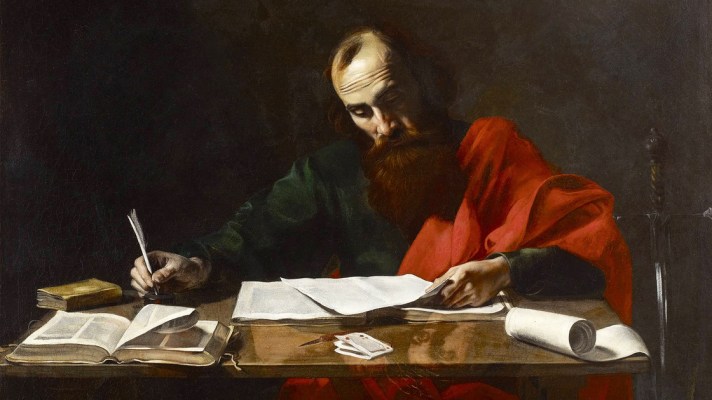
3 John Lesson

3 John – Praise for Faithful Service and a Warning About Prideful Action

The Elder: 

To my dear friend Gaius: I love you in the truth. 

Dear friend, I pray that you may prosper in every way and be in good health physically just as you are spiritually. For I was very glad when some brothers came and testified to your faithfulness to the truth—how you are walking in the truth. I have no greater joy than this: to hear that my children are walking in the truth. 

Dear friend, you are showing faithfulness by whatever you do for the brothers, especially when they are strangers. They have testified to your love in front of the church. You will do well to send them on their journey in a manner worthy of God, since they set out for the sake of the Name, accepting nothing from pagans. Therefore, we ought to support such men so that we can be coworkers with the truth. 

I wrote something to the church, but Diotrephes, who loves to have first place among them, does not receive us. 10 This is why, if I come, I will remind him of the works he is doing, slandering us with malicious words. And he is not satisfied with that! He not only refuses to welcome the brothers himself, but he even stops those who want to do so and expels them from the church. 

11 Dear friend, do not imitate what is evil, but what is good. The one who does good is of God; the one who does evil has not seen God. 12 Demetrius has a good testimony from everyone, and from the truth itself. And we also testify for him, and you know that our testimony is true. 

13 I have many things to write you, but I don’t want to write to you with pen and ink. 14 I hope to see you soon, and we will talk face to face. 

Peace be with you. The friends send you greetings. Greet the friends by name. (HCSB)

I’ll divide this lesson into four parts.

  • John’s greeting – verses 1-4.
  • John’s commendation of Gaius – verses 5-8.
  • John’s condemnation of Diotrephes and commendation of Demetrius – verses 9-12.
  • John’s farewell – verses 13-14.

John’s Greeting

The basic theme of this section is: When believers walk in the truth, they bring joy to Christian friends and mentors.

John begins this letter with the same title he used in 2 John, “elder.” We don’t know much about the recipient of this letter, Gaius, but we can infer several things from the context of the letter.

  • John clearly loved Gaius, as he used the phrase “dear friend” four times in the letter. The English rendering of the original Greek weakens the intent behind the phrase. It conveys a feeling of deep agape love that John has for Gaius.
  • From the context of the letter, it is likely that Gaius is wealthy as he is well-known for his hospitality to traveling believers.
  • Since John mentioned in verse four that he receives great joy when his children walk in the truth, it is likely that Gaius was one of John’s converts.
  • Gaius may have been ill since John was praying for his physical health to be as good as his spiritual health.

John now goes on to praise Gaius for his conduct in the church and toward other believers.

  • Gaius was recognized by others for his faithful conduct.
  • He obeyed God’s Word.
  • He walked in the truth.
  • What made Gaius’ life a good testimony?
    • He walked in truth, God’s Word.
    • He meditated on the Word.
    • He practiced it in his daily life.
  • Gaius’ life was wrapped in the truth.
    • True living comes from living truth.
    • Jesus is the truth. John 14:6 – Jesus told him, I am the way, the truth, and the life. No one comes to the Father except through Me.
    • Jesus is revealed in God’s Word, which is God’s truth. John 17:17 – Sanctify them by the truth; Your word is truth.
    • The Holy Spirit is truth. 1 John 5:6 – Jesus Christ—He is the One who came by water and blood, not by water only, but by water and by blood. And the Spirit is the One who testifies,  because the Spirit is the truth.
    • Jesus teaches us the truth.
    • The Spirit of God uses the Word of God to reveal the Son of God. This, in turn, enables us to obey the will of God and walk in truth.
  • Gaius was faithful in what he believed, and he was faithful in how he lived.
  • Loyalty to Christ and the Gospel marked his life.
  • John then says he has no greater joy than hearing that one of his children is a faithful follower of Christ.
    • This was similar to how Paul talked about his converts. 
    • Anyone who has led a person to Christ is joyful when they hear the person is continuing to walk in faith and not drift away.

John’s Commendation of Gaius

The basic theme for this section is: Extending hospitality toward traveling missionaries brings God’s commendation. Believers should help missionaries work together for the truth.

John’s commendation of Gaius, which actually began in the introduction to this letter, now continues. Let’s take a closer look at why John was praising the actions of Gaius.

  • First, there is nothing to indicate that Gaius was a preacher.
  • It appears that Gaius was an enabler to those who were traveling evangelists.
    • We need to remember that during the first century, lodging was not plentiful, and what did exist was often associated with the darker habits of society.
    • John praises Gaius for his support to brothers who were “strangers.” The Greek term for a stranger would mean someone unknown or from another area; they weren’t native to the place they were visiting.
    • In 2 John, we learned of the importance of Christian hospitality.
      • In that letter, John warned against helping false teachers.
      • In this letter, John commends Gaius for showing hospitality to faithful ministers.
      • Gaius’ actions were an encouragement to both believers in general, as well as to the traveling evangelists.
    • The idea of hospitality is a challenge in today’s world because of violence and false teachers.
      • In the early church, traveling evangelists often carried letters of recommendation from their home church. An example is in Romans 16:1 – I commend to you our sister Phoebe, who is a servant of the church in Cenchreae.
      • It is important that we know the background of those to which we may extend hospitality.
    • Not only did Gaius open his home to the evangelists, but he also provided financial assistance to them.
      • The term “send” doesn’t just mean wishing them well as they continue their journey.
      • The Greek term implies aid of some sort, most likely financial aid or food.
      • Gaius proved his faith through his works. James 2:14-16 – What good is it, my brothers, if someone says he has faith but does not have works? Can his faith save him? 15 If a brother or sister is without clothes and lacks daily food 16 and one of you says to them, “Go in peace, keep warm, and eat well,” but you don’t give them what the body needs, what good is it? 
    • Gaius’ actions also served as a witness to others.
      • Jesus taught that God’s servants deserve support. Luke 10:7 – Remain in the same house, eating and drinking what they offer, for the worker is worthy of his wages. Don’t be moving from house to house.
      • However, John points out in verse seven that believers are to provide support, not pagans.
      • Consider Abraham’s response when the king of Sodom made an offering to him. Genesis 14:21-24 – Then the king of Sodom said to Abram, “Give me the people, but take the possessions for yourself.” 22 But Abram said to the king of Sodom, “I have raised my hand in an oath to Yahweh, God Most High, Creator of heaven and earth, 23 that I will not take a thread or sandal strap or anything that belongs to you, so you can never say, ‘I made Abram rich.’ 24 I will take nothing except what the servants have eaten. But as for the share of the men who came with me—Aner, Eshcol, and Mamre—they can take their share.”
      • Many churches make it clear at offering time that gifts from unbelievers are not expected. 
    • Gaius’ actions displayed obedience to God.
      • Those who receive spiritual blessings from those who preach should share their material blessings with the preacher. 1 Corinthians 9:11 – If we have sown spiritual things for you, is it too much if we reap material benefits from you?
      • Believers can support ministry endeavors outside their local church, but they should contribute a portion of their offerings to their local congregation.
    • Gaius was a coworker with the traveling evangelists.
      • Gaius received the truth.
      • Gaius walked in the truth.
      • Giaus was a coworker and helper to those spreading the truth.
      • Walking in the truth is the same as walking in love.
  • Unfortunately, not everyone in the church is a Gaius.

John’s Condemnation of Diotrephes and Commendation of Demetrius

There are two themes for this section is: 

  • Prideful people who slander and spread gossip oppose Christian hospitality.
  • We can recommend a person to other churches for hospitality and ministry when that person’s life supports God’s truth.

John now turns his attention to another church member, Diotrephes, who is the opposite of Gaius.As we take a deeper look at Diotrephes, I want us to think about how that looks in the church we attend, or maybe you’ve seen this same behavior in a previous church. Regardless of when or where you saw it, the behavior is an example of someone who operates on pride and wants to be the “boss,” often leaving a wake of bodies behind them as they go. Sometimes it can be the pastor, but often it is someone in a lower level of leadership within the church or a lay member who is trying to “empire build.”

  • It’s apparent from the context of John’s letter that Diotrephes was prideful.
  • We don’t know the position Diotrephes held, but it’s likely he was an elder because of the level of influence and control he had over the congregation.
  • What is clear is that Diotrephes shunned fellowship with one of the apostles, John.
  • Why would Diotrephes do this?
    • As previously mentioned, Diotrephes was a prideful and selfish individual.
      • These are two of Satan’s favorite tools to disrupt the church.
      • If John challenged or removed Diotrephes, then Satan would be the loser.
    • He placed himself before the preeminence of Christ.
    • John challenged his dictator-like actions.
    • John was a threat to the “authority” of Diotrephes in that local congregation.
    • John knew the truth about Diotrephes and was willing to expose his ungodly actions.
  • Diotrephes also lied about John.
    • He slandered John to the other church members.
    • It’s obvious from the context of the letter that Diotrephes had a circle of followers; otherwise, the congregation would have removed him from his position.
    • There are some people who will believe anything they hear about others without verifying whether it’s true or not.
    • This example reminds us of why we need to carefully weigh what others say and act on truth and not lies.
  • Not only did Diotrephes shun John, but he also rejected those associated with John.
    • Diotrephes treated John’s associates as “guilty by association.” 
    • It’s true that, as believers, we shouldn’t associate with certain groups of individuals.
      • Apostates – found in 2 Peter.
      • Alliances with unbelievers – 2 Corinthians 6:14-15.
      • Those who hold doctrinal positions that don’t agree with Scripture – Romans 16:17-19.
    • At the same time, there are doctrinal matters which don’t undermine the Gospel. We shouldn’t let those differences create discord in the body of Christ. Two examples:
      • The method of baptism.
      • Church government. 
    • We need to agree on the “majors,” the basic tenets of Christianity, and extend grace on the “minors.”
  • Diotrephes even went a step further than just rejecting John and his associates.
    • He disciplined those who disagreed with him.
    • Even though Diotrephes didn’t have the authority or the biblical basis for expelling those who disagreed with him, he still did it.
    • Scripture does contain instructions and examples of church discipline, which should be followed.
    • But church discipline is not a tool for a dictator to use to protect themself.
    • Church discipline is a tool for a congregation to use to promote purity and glorify God.
  • Diotrephes wanted to be served and not serve others.
  • It’s not difficult to identify church dictators.
    • They like to talk about themselves and what they’ve done for the Lord.
    • They have a habit of judging and condemning those who disagree with them.
    • They put labels on others and put them in categories.

John then switches the focus of his attention from Diotrephes to Demetrius. What a contrast between these two church members. Let’s take a closer look at Demetrius.

  • John warns his readers to imitate what is good, not to imitate what is evil.
    • Diotrephes represented evil. Those who practice evil don’t know God.
    • Demetrius represented good. Those who practice good belong to God.
  • We might ask if it’s ok to imitate a human leader. The answer is yes, as long as they are imitating Christ.
    • We can’t see God.
    • We can see God at work in the lives of His children.
  • Those who live a godly life dedicated to serving the Lord are an encouragement to fellow believers. Hebrews 10:24 – And let us be concerned about one another in order to promote love and good works.
  • Demetrius was a man worthy of imitating.
    • He had a good testimony from everyone.
    • He was well known.
    • He was well respected.
    • He was loved by the believers around him.
  • Not only did Demetrius have a good testimony from the believers in the church, but he also had a good witness from the truth, the Word.
    • Just like Gaius, Demetrius walked in truth.
    • He obeyed God’s Word.
    • Neither was perfect, but they were consistent in their lives by seeking to honor God.
  • Demetrius also had a good testimony from John.
    • John knew Demetrius had a good testimony from the church.
    • This aligned Demetrius with John, which would make Demetrius an enemy of Diotrephes.
  • Once John traveled to this church, there would be quite an alignment against Diotrephes.
    • There would be authority figures both from outside and inside this church to confront the actions of Diotrephes.
    • We don’t know the outcome, but the best solution is that Diotrephes would receive the rebuke, repent, and become a productive member of the congregation.

John’s Farewell

The theme for this section is: Personal friendship can be expressed through written means, but it is better expressed face to face.

John now concludes this letter in a manner similar to 2 John. It’s possible the format John used was the standard way to end letters in John’s time.

  • John planned to visit the church soon.
    • There is no indication of what “soon” might mean.
    • But it was likely an encouragement to both Gaius and Demetrius, as well as a veiled warning to Diotrephes.
  • John preferred to discuss things in person rather than through a letter.
  • Considering the turmoil that Diotrephes was causing in the church, John’s use of the phrase “peace be with you” must have been encouraging.
  • Those associated with John also sent their greetings.
  • John encouraged them to greet each other by name.

Applications

  • Open your home and assist others in ministry when you are able to do it. This can be challenging and uncomfortable at times, maybe all the time. However, Scripture instructs us to help one another in doing God’s work. When we assist others in ministry, we also receive a blessing in aiding their work.
  • When we do help others, don’t look to people for a reward. Our reward comes from God. Be content that what you are doing is “Kingdom work,” and don’t do it for public recognition.
  • Be careful that pride and temptations don’t cause you to fall away from the truth, especially if you occupy a position of leadership or influence. Our actions affect those around us, both positively and negatively. 

2 John Lesson

2 John – Praise for obedience and warning about false teachers

 The Elder: 

To the elect  lady and her children: I love all of you in the truth—and not only I, but also all who have come to know the truth — because of the truth that remains in us and will be with us forever. 

Grace, mercy, and peace will be with us from God the Father and from Jesus Christ, the Son of the Father, in truth and love. 

I was very glad to find some of your children walking in the truth, in keeping with a command we have received from the Father. So now I urge you, dear lady—not as if I were writing you a new command, but one we have had from the beginning—that we love one another. And this is love: that we walk according to His commands. This is the command as you have heard it from the beginning: you must walk in love. 

Many deceivers have gone out into the world; they do not confess the coming of Jesus Christ in the flesh.  This is the deceiver and the antichrist. Watch yourselves so you don’t lose what we have worked for, but that you may receive a full reward. Anyone who does not remain in Christ’s teaching but goes beyond it, does not have God. The one who remains in that teaching, this one has both the Father and the Son. 10 If anyone comes to you and does not bring this teaching, do not receive him into your home, and don’t say, “Welcome,” to him; 11 for the one who says, “Welcome,” to him shares in his evil works. 

12 Though I have many things to write to you, I don’t want to do so with paper and ink. Instead, I hope to be with you and talk face to face  so that our joy may be complete. 

13 The children of your elect sister send you greetings. (HCSB)

I’ll be dividing this lesson into four parts.

  • Introduction – verses 1-3.
  • Christians must practice the truth – verses 4-6.
  • Christians must protect the truth – verses 7-11.
  • The farewell – verses 12-13.

Introduction

Before we start a deeper look at this epistle, let’s take a look at some introductory information.

  • The letter was sent to Christians in the general area of Ephesus.
  • It was written around or just after 1 John was written.
  • The theme is very similar to 1 John; encourage and strengthen Christians to walk in love with others and resist false teaching.
  • Emphasizes obeying God’s commands.
  • It is a highly personal letter reflecting John’s affection and concern for these believers.

Now, let’s take a deeper look at these three verses.

  • The overarching idea in the first three verses is “May God’s blessings be upon the people I love, people who let the truth live in them.”
  • John starts with the term “elder.”
    • The Greek word for elder is presbyteros.
    • The title of elder was used for someone in a position of authority and responsibility.
    • In the context of the letter, it indicated that John had authority and responsibility for the recipients of the letter.
    • The use of elder instead of John’s name is a further reflection of the relationship between the author and the recipients.
  • One word that John hammers home is the word “truth.”
    • It occurs four times in these three verses, highlighting its significance to John’s message.
    • The Greek word for truth is aletheia, which means “in truth,” “upon truth,” and “according to truth,” pertaining to being a real or an actual event or state.
    • It means reality as opposed to mere appearance.
    • Jesus is “the truth.” John 14:6 – Jesus told him, “I am  the way, the truth, and the life. No one comes to the Father except through Me. 
    • God’s Word is truth. John 17:17 – Sanctify them by the truth; Your word is truth.
    • The Spirit of Truth teaches us. John 16:13 – When the Spirit of truth comes, He will guide you into all the truth. For He will not speak on His own, but He will speak whatever He hears. He will also declare to you what is to come.
  • John used the theme of “truth” at the beginning of this letter because there were false teachers leading the sheep astray.
    • John never tolerated false teachers.
    • There is a deadly difference between truth and error, and John would not tolerate error.
    • The truth would appeal to the minds of the readers.
  • The other important word in these verses is “love.”
    • It occurs twice in this section.
    • The Greek word used here is agape.
    • It means to have a love for someone or something based upon sincere appreciation and high regard.
    • Love would appeal to the hearts of the readers.
  • The next issue we need to discuss is the identity of “the elect lady and her children.”
    • Among scholars and theologians, there are three main interpretations of this phrase.
      • It is a figurative reference to a local church and its members. If this is true, then verse thirteen would also be a reference to a local church.
      • It is a reference to the universal church of believers.
      • The recipient is an individual lady and her children.
    • The majority believe the first choice is the correct one. It’s a metaphorical or symbolic way of identifying a local church and its members.
      • The term “lady,” or kuria in Greek, is the feminine form of “lord.”
      • This hints at the idea of the church being the bride of Christ.
      • This idea also meshes well with verse thirteen; churches are “sister” of each other.
      • Those who come to faith in a local church are the “children” of the “elect lady.”
  • John concludes this section with words common in ancient Christian greetings; grace, mercy, and peace.

Christians Must Practice the Truth

  • The overarching theme in verses four to six is, “It is a joy that some of you are walking in the truth. We are commanded to love one another and to walk in obedience to God’s commands.”
  • In this section, we find another word that repeats itself. The words “walk/walking” occurs three times in this section.
    • In the original Greek, this would convey an action beyond simply understanding truth. It would require acting on the truth.
    • It’s not enough for believers to know the truth. We must demonstrate the truth through our actions wherever we are.
    • When someone “walks in the truth,” it means they are obeying the truth and allowing it to control their lives.
    • John 14:15 – If you love Me, you will keep My commands.
  • John is “very glad” that some of the believers are walking in the truth.
    • Although not apparent from the English rendering, John had met some of the members of the church during his travels and observed their obedience. John wasn’t saying that only a portion was walking in obedience.
    • It also makes the Father “very glad” when His children walk in obedience to His Word.
    • Shepherd leaders are also “very glad” when members of their flock walk in obedience to God’s Word.
  • Another word that occurs repeatedly is “command.”
    • Command occurs four times in these three verses.
    • The commands are given by the Father.
      • Each commandment is an expression of love.
      • The will of God is the revelation of God’s heart. Psalm 33:11 – The counsel of the Lord stands forever, the plans of His heart from generation to generation.
      • Obedience to God’s Word is a revelation of our love, not an expression of fear. 1 John 5:3 – For this is what love for God is: to keep His commands. Now His commands are not a burden.
      • False teachers try to make God’s commandments appear harsh and difficult, offering their followers “true” freedom, which is really false freedom. 2 Peter 2:19 – They promise them freedom, but they themselves are slaves of corruption, since people are enslaved to whatever defeats them.
      • The greatest freedom is obedience to God’s perfect will.
      • Those who are true followers of Christ and love God would never think His commandments are harsh or unbearable.
  • John now moves on to the command to love one another.
    • Loving others is not a new command; it goes back to the Old Testament, where Jews were told to love both their neighbors and strangers.
      • Leviticus 19:18 – Do not take revenge or bear a grudge against members of your community, but love your neighbor as yourself; I am Yahweh.
      • Deuteronomy 10:19 – You also must love the foreigner, since you were foreigners in the land of Egypt.
    • However, what is new is that with the incarnation of Jesus, there is a new emphasis on brotherly love, agape, as demonstrated in Jesus’ life, and the expectation that we follow His example and love others in the same manner. 
    • A reasonable question to ask is, “is it possible to command love?” The short answer is yes! But we need to understand what defines Christian love.
      • It’s not a feeling or special kind of “religious emotion.”
      • It’s an act of will that enables us to interact with and accept others.
      • Christian love is treating others in the same way God treats you.
      • It’s possible to extend love to others even when we really don’t like them.
        • People can be rude to us, but we can be kind in return.
        • People may persecute us, but we can pray for them, and when the opportunity presents itself, we can be kind to them.
        • If we followed our feelings, we would retaliate.
        • But if we allow the Holy Spirit to control our lives, we can act like Jesus would have acted in Christian love.
    • Love and obedience go together.
      • We can’t separate our relationship with God from our relationship with others.
      • If we say we love God, but we hate our brothers or sisters, how can we say we love God?
      • If we walk in obedience to God, His love is made perfect in us toward others.
  • When we look at these three verses together, we see the themes of truth, love, and obedience blended.
    • Believing in the truth, Christ, and the Word leads to our salvation.
    • The evidence of salvation is love and obedience.
    • Love and obedience are strengthened as we grow in the knowledge of the truth.
      • Ephesians 4:15 – But speaking the truth in love, let us grow in every way into Him who is the head—Christ.
      • John 7:17 – If anyone wants to do His will, he will understand whether the teaching is from God or if I am speaking on My own.
    • Obedience allows us to learn more truth, and the more truth we learn, the more we love Jesus, who is the truth.
    • Instead of living in a vicious circle of defeat, we live in a victorious circle of love, truth, and obedience.

Christians Must Protect the Truth

  • The theme for this section is that believers must not be led astray by the world’s deceivers, those who don’t acknowledge Jesus. We shouldn’t help them in any way, which would be assistance to those practicing evil.
  • In this section, John warns about the deceivers in the world.
  • In the context of this letter, it addresses the false teaching of docetism or proto-Gnostics who denied the incarnation of God the Son.
  • The Greek word for deceiver is planos, and it means more than just teaching false doctrine.
    • It does mean teaching false doctrine.
    • It also means to lead people astray or to lead them into wrong living.
    • John had already taught that what we believe determines how we act. Wrong or false doctrine will lead to wrong living.
  • Where did the deceivers come from?
    • They came from inside the church.
    • They professed faith in Jesus but were false believers.
      • Jude 3-4 – Dear friends, although I was eager to write you about the salvation we share, I found it necessary to write and exhort you to contend for the faith that was delivered to the saints once for all. For some men, who were designated for this judgment long ago, have come in by stealth; they are ungodly,  turning the grace of our God into promiscuity and denying Jesus Christ, our only Master and Lord
      • 1 John 2:19 – They went out from us, but they did not belong to us; for if they had belonged to us, they would have remained with us. However, they went out so that it might be made clear that none of them belongs to us
      • Acts 20:30 – And men will rise up from your own number with deviant doctrines to lure the disciples into following them.
  • John also warns there are many deceivers.
    • 2 Peter 2:1-2 – But there were also false prophets among the people, just as there will be false teachers among you. They will secretly bring in destructive heresies, even denying the Master who bought them, and will bring swift destruction on themselves. Many will follow their unrestrained ways, and the way of truth will be blasphemed because of them
    • These deceivers are also the “antichrists” John warned about in 1 John 2:18-23.
  • To protect the truth requires a faithfulness to the basic doctrines of the Christian faith.
    • The deceivers had departed from the truth and church fellowship.
    • The deceivers were dangerous.
  • John points out three dangers the church and its members face from the deceivers.
    • The danger of losing what we have worked for.
      • John warns the readers to “watch yourselves.”
        • The deceivers will try and falsely offer something you don’t have.
        • In reality, they will take away what you do have.
      • Satan is a thief, and so are his minions.
      • The full reward John is talking about is an abundant entrance into the eternal kingdom.
        • Believers will receive rewards in heaven. Both John and Paul talk about that in Scripture.
          • Revelation 4:10 – The 24 elders fall down before the One seated on the throne,  worship the One who lives forever and ever, cast their crowns before the throne, and say.
          • 1 Corinthians 9:25 – Now everyone who competes exercises self-control in everything. However, they do it to receive a crown that will fade away, but we a crown that will never fade away
          • 2 Timothy 4:8 – There is reserved for me in the future the crown of righteousness, which the Lord, the righteous Judge, will give me on that day, and not only to me, but to all those who have loved His appearing
    • The danger of going beyond what Scripture says.
      • The Greek term for “goes beyond it,” proago, means to go beyond the established boundaries of teaching or instruction, failing to obey properly.
      • The false teachers will try and come off as “progressive” in their thinking.
      • However, the progress they push actually abandons the doctrine that Jesus is God the Son, who came in the flesh.
      • We all know of examples today where pastors, churches, or denominations have “gone beyond” what is contained in Scripture to promote a “kindler, gentler, all inclusive” Gospel.
        • Same-sex marriages and non-binary genders are two of the more recent examples.
        • However, both go “beyond Scripture,” which is clear that God created male and female and that marriage is between a man and a woman.
      • Learning is good, but anytime it leads us away from the fundamental doctrines of the person and work of Jesus Christ, then we are on dangerous ground.
  • The danger of welcoming or receiving false teachers.
    • As we consider verse ten, we need to view it in the context of first-century practices of hospitality.
      • As opposed to today, there weren’t many inns for travelers to stay. This was especially true for traveling Christians who tried to stay away from the evil influences in the world.
      • Christians were encouraged to open their homes to visitors.
        • Romans 12:13 – Share with the saints in their needs; pursue hospitality.
        • Hebrews 13:2 – Don’t neglect to show hospitality, for by doing this some have welcomed angels as guests without knowing it.
      • Believers who showed hospitality to servants of God were helping those who were spreading the truth, the Gospel.
    • Those who were showing hospitality to false teachers were sharing in their evil works.
    • The true doctrine of Christ is a test of truth, a foundation for fellowship, and a bond for mutual cooperation.
    • The same principle applies today.
      • We may have Mormons or Jehovah’s Witnesses come to our door, spreading their false doctrine.
        • We should never be rude to them; see the section above about love.
        • But, we should point out their false teaching and show them the truth contained in Scripture.
        • One additional method of trying to limit their damage is to take as many of their resources as possible and then burn them so they won’t do any harm.
      • There are also false teachers on television, radio, youtube, etc., who spread false teaching. We need to be alert so that we don’t inadvertently aid them in any way.
    • Why was John so focused on not accidentally helping the wrong people?
      • It would give the false teacher the impression their heretical teaching was acceptable.
      • It would be possible to become influenced by them.
      • It would provide the false teacher with ammunition on their next stop that you supported them. Our disobedience could lead to someone else’s destruction.
    • John was not saying that only believers could/should enter your house.
      • Engaging the lost is required to lead them to Christ.
      • Often, a comfortable setting such as our home is a good place to do that.
    • John is saying we shouldn’t receive, enable, or encourage false teachers who represent antichristian groups.

The Farewell

  • John now closes this letter much in the same way he will close 3 John.
  • There are several points in these last two verses.
    • John emphasizes the importance of Christian fellowship.
    • John is saying we should experience joy when we gather with other believers.
    • Receiving letters from fellow believers is important but not as important as face-to-face meetings.
    • The letter that John wrote doesn’t contain all the things he wanted to discuss with them.
    • John was planning on visiting this family or church in person.
  • John concludes the letter by saying the children of their elect sister send greetings.
    • As previously discussed in the first section of this lesson, this most likely refers to a church and its members.
    • This demonstrates that Christian churches in the first century were concerned about other churches; there wasn’t any competition or disunity.

Applications

  • John commended the recipients of the letter for walking in the truth but also commanded them to walk in the truth. Examine your walk. Do you walk in the truth? Do you walk in love, which means following the commands the Father has given us? If you do, keep doing it. If you don’t, pray for the Holy Spirit to give you the strength to walk in God’s power and love others just as God loves us.
  • Be watchful for false teachers around your home, in your workplace, in your community, and your church. If you find some, don’t enable them in any manner. Confront them with the truth of the Gospel. Warn your spiritual brothers and sisters, so they don’t fall victim to their heresy. As believers, we must always confront and correct false teaching.
  • Engage in fellowship with other believers. While written and voice correspondence is important, they will never replace the importance of face-to-face meetings. We should meet often with fellow believers to encourage and support each other.
  • Pray for the other churches around you, regardless of their denomination or demographics. The one caveat is that they are a church that teaches the truth and doesn’t compromise to be socially acceptable in a fallen world.

1 John Lesson Two

1 John Lesson Two: 1 John 1:5-2:6 – The Necessity of Obedience

Now this is the message we have heard from Him and declare to you: God is light, and there is absolutely no darkness in Him. If we say, “We have fellowship with Him,” yet we walk in darkness, we are lying and are not practicing the truth. But if we walk in the light  as He Himself is in the light, we have fellowship with one another, and the blood of Jesus  His Son cleanses us from all sin. If we say, “We have no sin,” we are deceiving ourselves, and the truth is not in us. If we confess our sins, He is faithful and righteous to forgive us our sins and to cleanse us from all unrighteousness. 10 If we say, “We don’t have any sin,” we make Him a liar, and His word is not in us. 

2 My little children, I am writing you these things so that you may not sin. But if anyone does sin, we have an advocate with the Father—Jesus Christ the Righteous One. He Himself is the propitiation for our sins, and not only for ours, but also for those of the whole world. 

This is how we are sure that we have come to know Him: by keeping His commands.  The one who says, “I have come to know Him,” yet doesn’t keep His commands, is a liar, and the truth is not in him. But whoever keeps His word, truly in him the love of God is perfected. This is how we know we are in Him: The one who says he remains in Him  should walk just as He walked. (HCSB)

I’ll divide this lesson into two parts.

  • Fellowship with God – verses 1:5-2:2.
  • Walking in Obedience – verses 2:3-6.

Fellowship with God

As we begin our study of this passage, I’d like us to consider a theme that John likely implied in his message; the foundation of fellowship is repentance and obedience. Now, let’s take a closer look at this section.

  • God is light. What does John mean when he makes this declaration?
    • First off, John switches his focus from Jesus to the Father in this section.
    • It would seem that verse six holds the key to understanding the connection between the first four verses of the letter and this section.
      • Since God is light, there is no darkness in His character.
      • Only those who walk in the light have fellowship with God.
      • What does it mean to walk in the light?
        • To follow the instructions of God.
        • Although all of us will sin, the prevalent pattern is one of obedience to the Word.
  • What is meant by the use of the metaphors “light” and “dark?”
    • Light. We’ll look at what scholars and theologians believe is meant by the term.
      • It implies life.
      • It means to be ethical.
      • It means to be morally good.
      • There is no place for evil in the light.
      • It contains absolute truth.
      • It contains absolute righteousness.
      • It goes all the way back to Genesis 1:3.
      • It became incarnate in the birth of Jesus as the light of the world.
      • Jesus is the light and the source of life.
    • Darkness.
      • It implies death.
      • It is a picture of falsehood.
      • It signifies ignorance of the truth.
      • It describes a life controlled by sin.
      • Since God is light and only those who walk in the light have fellowship with Him, the idea of walking in darkness would be a barrier to fellowship.
      • Those walking in darkness are in a spiritual state of death since eternal life is only found in fellowship with Jesus.
  • People who say they are followers of Christ yet who habitually walk a path of sin don’t have fellowship with God. These people are false believers and are deceiving themselves.
  • When we do walk in the light, two things occur.
    • We have fellowship with other believers and with God.
    • Our sins are forgiven.
      • It doesn’t mean we are freed from our sinful nature.
      • The verb is in the present tense, meaning forgiveness is a continuous and progressive action.
        • Our sins are continually being removed.
        • We experience a progressive sanctification, a transformation into the likeness of Jesus.
      • All sins are forgiven. Even the most heinous will be forgiven if a person genuinely repents and follows Jesus.
  • In verse eight, John moves to the theme of a false understanding of sin. John may have felt this was necessary because either the recipients of the letter had fallen under the spell of false teachers or they somehow began to believe the idea themselves.
    • Let’s remember there are two kinds of sin.
      • Doing things we shouldn’t be doing.
      • Not doing the things we should be doing.
    • The longer we are a believer, the more likely it is that a believer will turn from sinful behavior and engage in edifying behavior.
    • At the same time, because of our sinful nature, we will never be able always to act as Jesus would act.
      • None of us are capable of perfect love.
      • Because we are incapable of perfect love, we have sin.
  • However, if we acknowledge and confess our sins, Jesus will forgive and cleanse us.
    • This is a key point. Even though we will always struggle with and commit sin, we can live in a state of forgiveness by confessing and repenting, being cleansed through the blood of Jesus.
    • At the same time, we shouldn’t abuse this grace by continuing to commit sin.
    • Scholars have two positions in the interpretation of verse nine.
      • The first one is that it refers to the confession of sins at the time of salvation.
        • This is a once-for-all confession that solves the problem of judgment for sin.
        • This would cover sins we commit after salvation but before we are able to confess them.
      • The second is that a Christian doesn’t have to confess their sins after becoming a Christian since they already have forgiveness in Christ.
        • We don’t have to keep a track record of our sins and confess them.
        • We live with the understanding that our sins are already forgiven, and we have freedom in Christ.
      • The problem with the second position is that Jesus taught His disciples to pray “forgive us our trespasses” in the Disciples’ Prayer.
      • When we think about healthy, loving relationships, the norm is to ask for forgiveness when you offend someone. The same should be true of our relationship with God. We should confess our sins and not just “assume” we are forgiven.
  • As we look at verse ten, we should remember there are numerous verses that tell us we continue to sin after our conversion.
    • Philippians 3:12.
    • James 2:10, 3:2, 3:8, and 4:17.
    • Because Christians do sin after conversion, we shouldn’t deny our sin.
    • When we do that, we are saying that God is a liar.
    • Instead, we confess our sins and receive restoration.
  • As chapter two begins, we see John adopting a tone reserved for people he would have had a fond connection with. The first two verses are a continuation of the end of chapter one, dealing with the theme of sin.
    • John encourages the readers not to sin, but knowing they will sin in some manner, is encouraging them in the knowledge that Jesus is our advocate before the Father.
    • Jesus has already paid the price for our sins and intercedes with the Father on our behalf.
    • We also see the limitless nature of His sacrifice. His atoning blood is sufficient to cover every individual who has ever lived. There are several facts regarding this statement.
      • Scripture is clear that not everyone will be saved – Matthew 7:14, 1 Corinthians 6:9, and Galatians 5:21. However, Scripture is also clear that everyone who desires can be saved – Revelation 22:17.
      • It also means that we, as believers, should be sowing seeds wherever we go. We never know who will respond to the Gospel. Our role isn’t to decide who gets to hear the message. Our role is to share the message whenever and wherever.

Walking in Obedience

In 1 John 2:3, John drives home a critical point all of us should remember, both for ourselves as well as fellow believers we interact with. Following the commands of Jesus and walking in obedience is a key litmus test. John was addressing an issue that was facing Christians in the region of Ephesus. Let’s take a closer look at this.

  • It appears that Gnosticism was the main threat to the faith of the believers around Ephesus.
    • Gnosticism prided itself on knowing God through mystical enlightenment.
    • However, this knowledge didn’t necessarily have an impact on their moral behavior.
    • Gnostics didn’t understand that sin was a barrier to their relationship with God.
  • John was making a direct rebuke to this false belief.
    • At the same time, we need to remember that John didn’t say we would never sin.
    • We may not even have a consistent desire not to sin.
    • But the bottom line is that believers won’t live in complete disregard to God’s commands.
    • The Gnostics weren’t even trying to keep God’s commands.
  • If, as believers, we say we know God but completely disregard His commands, we are lying to ourselves and to others. We are not being truthful. We should also remember the devil is a liar. 
  • However, if we do follow God’s commands, then the love of God is in us.
  • Scholars struggle with the meaning of “the love of God” in verse five.
    • Does it mean the love of God for the Christian?
    • Or does it mean the Christian’s love for God?
    • Actually, either is possible, and both are theologically sound.
  • This section concludes with 5b-6.
    • The understanding is similar to what James wrote; a believer is identified by his works.
    • John is saying we will identify believers by their walk. If they are genuine believers, they will walk as Jesus walked.
    • Works never save us, but they are a badge of identification that someone truly knows and follows Christ.

Applications

  • What is your attitude towards sin and confession of sin? Conceivably, we could lie from one end of the spectrum to the other, believing we no longer need to confess our sins to trying to laundry list every little thing we do wrong. One is a flippant attitude towards sin, and the other borders on legalism. The best practice to follow is to try and confess as soon as we commit a sin, especially those we know we committed. However, there may be times when we sin against someone and do not even realize it. I believe Scripture is clear, an example being the disciples’ prayer, that “general confession” will cover those sins we’ve forgotten the specifics of and the sins we are unaware we’ve committed.
  • If you think you don’t sin and are a “good person,” you are deceiving yourself. All of us will stumble at some point, and confessing our sins provides restoration in our relationship with God.
  • If we see a fellow believer clearly not walking in the light, we need to bring it to their attention. We need to do it with a gentle spirit, as in Galatians 6:1. There may be times when we need to ask our Christian friends to evaluate us. This is never an easy or comfortable practice, but it can keep us on the narrow path. Scripture commands us to correct disobedience and to walk alongside our brothers and sister, just as they should walk alongside us. 

Acts Lesson Seventeen

Acts Lesson Seventeen: Acts 8:1-25 The Gospel Spreads

Saul agreed with putting him to death. 

On that day a severe persecution broke out against the church in Jerusalem, and all except the apostles were scattered throughout the land of Judea and Samaria. Devout men buried Stephen and mourned deeply over him. Saul, however, was ravaging the church. He would enter house after house, drag off men and women, and put them in prison. 

So those who were scattered went on their way preaching the message of good news. Philip went down to a city in Samaria and proclaimed the Messiah to them. The crowds paid attention with one mind to what Philip said, as they heard and saw the signs he was performing. For unclean spirits, crying out with a loud voice, came out of many who were possessed, and many who were paralyzed and lame were healed. So there was great joy in that city. 

A man named Simon had previously practiced sorcery in that city and astounded the Samaritan people, while claiming to be somebody great. 10 They all paid attention to him, from the least of them to the greatest, and they said, “This man is called the Great Power of God!” 11 They were attentive to him because he had astounded them with his sorceries for a long time. 12 But when they believed Philip, as he preached the good news about the kingdom of God and the name of Jesus Christ, both men and women were baptized. 13 Then even Simon himself believed. And after he was baptized, he went around constantly with Philip and was astounded as he observed the signs and great miracles  that were being performed. 

14 When the apostles who were at Jerusalem heard that Samaria had welcomed God’s message, they sent Peter and John to them. 15 After they went down there, they prayed for them, so the Samaritans might receive the Holy Spirit. 16 For He had not yet come down on  any of them; they had only been baptized in the name of the Lord Jesus. 17 Then Peter and John laid their hands on them, and they received the Holy Spirit. 

18 When Simon saw that the Holy Spirit was given through the laying on of the apostles’ hands, he offered them money, 19 saying, “Give me this power too, so that anyone I lay hands on may receive the Holy Spirit.” 

20 But Peter told him, “May your silver be destroyed with you, because you thought the gift of God could be obtained with money! 21 You have no part or share in this matter, because your heart is not right before God. 22 Therefore repent of this wickedness of yours, and pray to the Lord that the intent of your heart may be forgiven you. 23 For I see you are poisoned by bitterness and bound by iniquity.” 

24 “Please pray to the Lord for me,” Simon replied, “so that nothing you have said may happen to me.”

25 Then, after they had testified and spoken the message of the Lord, they traveled back to Jerusalem, evangelizing many villages of the Samaritans. (HCSB)

Today’s lesson can be divided into three parts.

  • The introduction of Saul as the main persecutor of the church.
  • Philip’s evangelism in Samaria.
  • The story of Simon the Sorcerer.

Verses 1-3

Luke introduced Saul at the end of the previous chapter. Now, he introduces Saul as the main antagonist of the early church. Before moving on, let’s get a detailed picture of Saul from various sections of Scripture.

  • Born in Tarsus of Cilicia – Acts 22:3.
  • A Hebrew of Hebrews – Philippians 3:5.
  • The son of a Pharisee – Acts 23:6.
  • A Roman citizen – Acts 16:37.
  • Educated in Jerusalem by Gamaliel – Acts 22:3.
  • A devoted Pharisee – Acts 26:4-5.
  • A blameless life when measured against the Law – Philippians 3:6.
  • On the path to becoming a great leader in the Jewish faith – Galatians 1:14.
  • Zealous for the Law leading him to persecute the church – Galatians 1:13-14.
  • Served God with a clear conscience – 2 Timothy 1:3.
  • Persecuted both men and women to death – Acts 22:4.
  • Entered synagogues to arrest, imprison, and beat believers – Acts 22:19.
  • A blasphemer against Jesus – 1 Timothy 1:13.

When considering the background and characteristics of Saul, it is only by the grace of God that such a man could be used to be the greatest evangelist and church planter, as well as writing 28% of the New Testament.

A couple of points to consider over these first few verses.

  • The scattering mentioned likely pertains to the Hellenistic believers as the apostles were not scattered. The Hellenistic view that God was not bound to a place or nation would have rubbed the religious leaders of Judaism the wrong way. In contrast, the Aramaic-speaking Christians had remained faithful to some Jewish institutions. However, this led to the following actions.
    • The persecution and scattering led to the Gospel being spread quicker and further.
    • The second phase of the Great Commission began; the witness to all Judea and Samaria.
  • Saul began to “ravage” the church. 
    • The Greek word used here would denote wild beasts such as lions, bears, or leopards tearing at the flesh.
    • He went from house to house, attacking both men and women. 

Verses 4-8

Instead of being distraught by the turn of events from Saul’s persecution, the believers took the message of the Gospel to new fields.

A quick historical reminder about Samaritans; they were a mixture of Jewish and Gentile heritage. The region was formed when the Assyrians invaded and captured the ten northern tribes of Israel in 732 B.C., deporting some and resettling Gentiles into the region to intermarry with the Jews. The Samaritans had their own temple, priesthood, and both Jew and Samaritans opposed interaction with the other. 

Now, let’s identify the essential points from these verses.

  • The Christians scattered from Jerusalem were faithful in proclaiming the Gospel in the areas where they went.
  • Philip was chosen as a deacon, Acts 6:5, but like Stephen, he grew into an influential evangelist, Acts 21:8.
    • In verse four, the word “preaching” means to evangelize.
    • In verse five, the word “proclaim” means to announce as a herald.
    • Philip was God’s chosen herald to spread the Gospel in Samaria.
    • To reject the messenger would mean to reject the message and the one who commissioned the herald to deliver it, God.
  • Philip not only shared the Gospel, but he also performed miracles among them.
    • Many who were demon-possessed were healed.
    • Many who had physical ailments were healed.
    • However, the emphasis is on the Gospel. 
    • They believed in the Gospel because they saw the miracles. 
      • In believing the Gospel, they were saved. 
      • The miracles didn’t save them.
    • There was great joy among the inhabitants because of the work of Philip.
  • The Gospel had now begun its outward arc from Jerusalem.
    • Samaritans were part Jew and part Gentile.
    • God built a bridge between the two enemies and united them in Christ.
    • Soon the bridge would extend to the Gentiles in an ever-widening arc.
    • In the Gospel, there are no unacceptable people, no physical rejects, and no place for prejudice.

Verses 9-25

A basic biblical principle is that whenever there is a movement of God’s work, Satan will try and hijack that movement with false teachers or false doctrine. It happened in the Old Testament, and it continues now in the church age. The enemy doesn’t want the church to advance and win souls, so he will try anything to derail the work of the church. 

Let’s further break this section down into two parts. Verses 9-13 and 14-25.

Verses 9-13

We see here a contrast between true holy work done through the power of the Holy Spirit and work that is done through other forces, often demonic or dark in nature. There are times that seemingly good works are, in fact, not done through holy power. Jesus warns of this in Matthew 7:21-23, even going so far as to say that some who do works in His name are deceivers. Let’s look at some details of this section of the passage.

  • Because the people were astounded and amazed at Simon’s tricks, they believed the things he said. 
    • Scripture doesn’t say precisely what he said, but it does say that the people called him “the Great Power of God,” which he didn’t deny.
    • This was not only misleading the people as to where his “power” came from but was blasphemy since it wasn’t the work of God.
    • Simon was an example of those who practice “lawlessness” as described in 2 Thessalonians 2:1-12.
  • He was popular and recognized by the people.
    • They all paid attention to him.
    • He had been working among them for a long time.
    • He enjoyed the attention and adulation.
  • The work of the Holy Spirit through Philip now began to shift people from Simon to Philip.
    • The people saw the work of Philip.
      • People were healed.
      • Demons were cast out.
    • The people heard the Gospel message.
      • They became followers of Jesus.
      • They were baptized.
    • Simon was likely afraid he would lose all or most of his following.
      • He “believed.” 
        • It was a false belief.
        • Jesus spoke about how the demons even believed in Him. Believing doesn’t mean following.
        • Simon’s belief was based on wanting to acquire the power he saw manifested in Philip.
      • Simon fooled Philip with his false belief.
        • Although Philip was doing work through the power of the Holy Spirit, Simon was able to fool him. 
        • Both Jesus and Paul warn about false believers and/or teachers infiltrating the church and causing harm. 
        • We must always be on guard against those who would harm the church from the inside. 
          • Enemies from the outside are often easy to spot.
          • Enemies on the inside are much harder to see but often do more significant damage.
      • We don’t know for sure, but it’s possible the reason Simon followed Philip everywhere was to try and learn the “secret” behind Philip’s miracles.

Verses 14-25

Before we jump into the issue of Simon in this section of the passage, two other points need to be discussed.

  • The apostles sent Peter and John to Samaria. Why did this occur?
    • From a historical standpoint, we know that there was a deep and long divide between the Jews and the Samaritans. The two groups had their own view of Judaism and even a somewhat different Pentateuch. Unity is a critical factor in the church.
    • The Holy Spirit had fallen on them yet. This brings up point number two.
  • Why didn’t the Holy Spirit fall on them at conversion?
    • Just as the Jewish church had their Pentecost moment, now the Samaritan church will have theirs. 
    • By having Peter and John go to them, lay hands on them, and for them to receive the Holy Spirit would demonstrate that they were no longer two separate people groups in Jesus’ church. They were now one. 
    • Peter was given the keys to the kingdom of heaven by Jesus in Matthew 16:19.
      • Peter opened the door to the Jews at Pentecost.
      • He now opened the doors to the Samaritans.
      • He would later open the doors to the Gentiles in Acts 10.
  • The first ten chapters in Acts show a transition from Jew to Samaritan to Gentile. 

Now let’s move on to the conclusion of the narrative addressing Simon’s prideful heart.

Just as in Simon’s following Philip around to see if he could discover the secret behind the power of Philip’s ministry, he now sees Peter and John lay hands on the people and wants the same ability. However, he views it as a commodity and thinks he can purchase it from the apostles. We can draw a few conclusions from the final section of this passage.

  • Simon was never truly converted.
    • May your silver be destroyed with you.
    • You have no share in this matter.
    • Your heart is not right before God.
    • Repent of your wickedness. This phrase is usually reserved for unbelievers.
    • He was poisoned by bitterness.
    • He was bound by iniquity.
    • All of these factors lead to an overwhelming conclusion that Simon was never saved.
  • Simon’s response is also telling.
    • He seems more concerned about avoiding the consequences that Peter pronounced.
    • Instead of offering a prayer of repentance, he asks Peter to pray for him.
      • We shouldn’t confuse this with asking others to pray for our needs.
      • However, only the individual can repent and pray for forgiveness.
      • Those who won’t pray a prayer of repentance for themselves won’t enter God’s kingdom.
  • This narrative shows how close a person can get to salvation and still not cross the threshold.
    • Simon heard the Gospel.
    • Simon saw the miracles. 
    • He made a verbal profession of faith.
    • He was baptized.
    • He was never born again.
    • He was a clever counterfeit. 
    • If he was not discovered, he could have caused untold damage from inside the church.
  • Peter and John then make their way back to Jerusalem.
    • As they passed through Samaria on the return journey, they shared the Gospel.
    • They didn’t waste an opportunity to reach the lost.
    • Through the efforts of Philip, Peter, and John, the Gospel was now spreading throughout Samaria.

Applications

  • Ministry must be done in the power of the Holy Spirit. Successful ministry is never done in our strength. It may appear to work for a time, but eventually, it will crumble, and nothing will be left.
  • We must always be on the lookout for counterfeit Christians who would undermine the church from within. These same people would also cause the church to look foolish to those on the outside who need to hear the Gospel and come to salvation. 
  • Don’t let pride and jealousy stand between you and salvation. Simon had an unhealthy desire for the power that he saw demonstrated, and instead of submitting to Christ and being used for kingdom work, he tried a shortcut. No matter where God places you, no matter your spiritual gifting, be joyful as you contribute to the kingdom. 
  • Always look for opportunities to share the Gospel, even when you aren’t planning on sharing. Peter and John didn’t waste the opportunities on the trip back to Jerusalem. We run into people every day who are on the path to hell. Don’t miss those chances to share.

Acts Lesson Seven

Acts 4:13-31 – The Sanhedrin’s Dilemma

13 When they observed the boldness of Peter and John and realized that they were uneducated and untrained men, they were amazed and recognized that they had been with Jesus. 14 And since they saw the man who had been healed standing with them, they had nothing to say in response. 15 After they had ordered them to leave the Sanhedrin, they conferred among themselves, 16 saying, “What should we do with these men? For an obvious sign, evident to all who live in Jerusalem, has been done through them, and we cannot deny it! 17 However, so this does not spread any further among the people, let’s threaten them against speaking to anyone in this name again.” 18 So they called for them and ordered them not to preach or teach at all in the name of Jesus. 

19 But Peter and John answered them, “Whether it’s right in the sight of God for us to listen to you rather than to God, you decide; 20 for we are unable to stop speaking about what we have seen and heard.” 

21 After threatening them further, they released them. They found no way to punish them, because the people were all giving glory to God over what had been done; 22 for this sign of healing had been performed on a man over 40 years old. 

23 After they were released, they went to their own people and reported everything the chief priests and the elders had said to them. 24 When they heard this, they all raised their voices to God and said, “Master, You are the One who made the heaven, the earth, and the sea, and everything in them. 25 You said through the Holy Spirit, by the mouth of our father David Your servant: 

Why did the Gentiles rage 

and the peoples plot futile things? 

26 The kings of the earth took their stand 

and the rulers assembled together 

against the Lord and against His Messiah.

27 “For, in fact, in this city both Herod and Pontius Pilate, with the Gentiles and the people of Israel, assembled together against Your holy Servant Jesus, whom You anointed, 28 to do whatever Your hand and Your plan had predestined to take place. 29 And now, Lord, consider their threats, and grant that Your slaves may speak Your message with complete boldness, 30 while You stretch out Your hand for healing, signs, and wonders to be performed through the name of Your holy Servant Jesus.” 31 When they had prayed, the place where they were assembled was shaken, and they were all filled with the Holy Spirit and began to speak God’s message with boldness. (HCSB)

In the previous lesson, we covered Peter’s defense to the charges and how the Sanhedrin’s case contained no foundation. Now, the ball is firmly back in the Sanhedrin’s court. What were they going to do in response to the healing of the lame man and Peter’s defense of the situation?

Verses 13-14

The Sanhedrin faced a serious dilemma. Since they had publicly arrested Peter and John and placed them in jail the previous day, they now had to figure out how to proceed. However, the “trial” had not gone according to their plans. They probably expected these “uneducated” men to crumble after being brought before the council. Instead, Peter and John challenged the religious leaders. Here are some facts that the council needed to consider as they continued with this charade.

  • They couldn’t deny that a miracle had occurred. The man who had been lame since birth, a man who was easily recognized by many, possibly even some on the religious council, was standing before them with no physical disability.
  • How could uneducated and untrained men perform this miracle? They were ordinary fishermen, not scribes or authorized priests in the Jewish religious circle.
  • Peter and John were disciples of Jesus, but Jesus was dead.
  • The council was likely surprised by the courage and confidence that Peter and John displayed before them.
  • Miracles, by themself, are not proof of Jesus’ resurrection or the truth of Peter’s message.
  • Satan can perform miracles – 2 Thessalonians 2:9-10 The coming of the lawless one is based on Satan’s working, with all kinds of false miracles, signs, and wonders, 10 and with every unrighteous deception among those who are perishing. They perish because they did not accept the love of the truth in order to be saved.
  • False prophets can do wonders – Deuteronomy 13:1-5 If a prophet or someone who has dreams  arises among you and proclaims a sign or wonder to you, and that sign or wonder he has promised you comes about, but he says, ‘Let us follow other gods,’ which you have not known, ‘and let us worship them,’ do not listen to that prophet’s words or to that dreamer. For the Lord your God is testing you to know whether you love the Lord your God with all your heart and all your soul. You must follow the Lord your God and fear Him. You must keep His commands and listen to His voice; you must worship Him and remain faithful to Him. That prophet or dreamer must be put to death, because he has urged rebellion against the Lord your God who brought you out of the land of Egypt and redeemed you from the place of slavery, to turn you from the way the Lord your God has commanded you to walk. You must purge the evil from you.
  • The miracle, the message, and the events that had occurred since Pentecost were all supporting evidence that Jesus was alive and the church was powered by the Holy Spirit.
  • Peter used the Old Testament in both sermons to support his claims. This is evidence of a true prophet, as shown above in Deuteronomy 13:1-5.
  • The Sanhedrin was left speechless after Peter’s defense and the healed man standing before them.

Verses 15-18

Asking Peter and John to leave the council was a standard procedure once all the evidence and arguments were finished. This allowed the council to have an open discussion among itself, with no outside distractions or interruptions. From the short narrative in these verses, we see the following facts.

  • With the statement “what should we do with these men,” it was clear that they were indecisive about how to proceed.
  • They acknowledged that a miracle had occurred.
  • The miracle was widely known. There was no way the council could cover it up or deny that it happened.
  • Jesus’ disciples were popular with the people, as witnessed by the explosive growth of the church and that people came to hear their message.
  • There was no charge the council could pin on Peter and John.
  • The only thing the council could do was use their position and power to threaten this new religious movement. They would forbid any teaching that referred to Jesus.

There is one other significant point to consider in this section. It’s contained in verse 17, and depending on your translation, it appears as “this” (HCSB), “it” (ESV), or “thing” (NIV). What is “this” referring to? Does the Sanhedrin want to stop the further spread of the knowledge of the miracle that occurred? That is not possible; that “cat was out of the bag.” What the council was concerned about was the Gospel, the preaching of Jesus, and His resurrection. The focus of their attention was stopping this fledgling movement in its infancy. 

Verses 19-22

Peter and John continue down the courageous road they started on when they presented the defense of their actions. They refused to accept the decision of the council. Their response made it clear that they would follow God and not what the council was telling them. There was no way that they would stop preaching about Jesus. We can all learn from the boldness of the Apostles in rejecting instruction from man that conflicted with what God or Scripture proclaimed. At the same time, we need to make sure that civil disobedience or our personal crusades are actions that don’t tarnish Jesus’ Kingdom. At this point, let’s take a short history lesson from Scripture on civil disobedience.

  • The Jewish midwives were disobeying the pharaoh and not killing the babies in Exodus 1.
  • Moses’ parents in Hebrews 11:23.
  • Daniel in chapters one and six.
  • Shadrach, Meshach, and Abednego in Daniel 3.
  • In each of these cases, there was clear direction from God.
    • The midwives and Moses’ parents knew it was wrong to kill children.
    • Daniel and his friends knew it was wrong to eat food offered to idols or bow down to idols.
    • Peter and John knew that they were under orders to preach the Gospel to the ends of the earth.
    • In each case, the people were following instructions from God and not a personal agenda.
  • In each case, they also acted with courtesy and respect even as they defied the instructions of man. It is possible to both respect and disobey authority when authority runs contrary to God’s instruction.
    • Romans 13.
    • Titus 3:1-2.
    • 1 Peter 2:13-25.

 The greatest example of unjust suffering is Jesus. In His suffering, Jesus taught us three things.

  • Righteous protest against injustice always involves suffering.
  • Righteous protest against injustice always requires sacrifice.
  • Righteous protest must be motivated by love.

As followers of Jesus, we need to be careful not to wrap our prejudice as righteous indignation and make ourselves look like courageous soldiers. We must always examine our hearts to ensure we are not starting a “holy war” to satisfy our inner frustrations.

Another way to look at this problem is to examine four possible courses of action that Christians can take. Only one of these is biblical.

  • Monastic – views the world and all governments as corrupt, and the only solution is to retreat from the world. 
  • Secular – the world is the only source of authority, and God is denied. This option is foolish as there is no counterbalance to an evil or tyrannical government.
  • Cowardly – authority rests in both the world and in God, but the world has the predominant position. Pilate chose this option when he handed Jesus over to be crucified.
  • Biblical – authority rests in the world and God, with God in the predominant position. The government has authority but is not independent from God. When the two conflict, we must follow God.

Christians with courage should be law-abiding citizens until that law contradicts the clearly written law of God, at which point the higher authority (God) takes over.

Verses 23-31

Peter and John go back to the rest of the disciples and report the details on what happened. After this, they all joined together in praise and prayer to God. They were united in prayer. There’s a lesson here on the early church that the modern church all too often forgets, the importance of prayer. The early church understood that prayer was necessary to defeat the plans of the enemy. Prayer meetings in modern churches, if they even have prayer meetings, often resemble a party or concert. The meeting contains little sense of urgency or the danger we face because most of us live a “comfortable” Christian walk. If followers of Jesus were more intentional about following the Great Commission and being bold, there would be more urgency and need for prayer.

As we examine their prayer, we notice that they didn’t ask for their circumstances to be changed or for the religious rulers who were hostile to the Gospel to be removed from their positions. Instead, they asked for power to make the best of their circumstances and accomplish what He had already predestined. They desired to glorify Jesus, not themselves.

Their prayer was based on Scripture; they used the beginning of Psalm 2 for their prayer. Through Scripture, God speaks to us and tells us what He wants us to do. In prayer, we talk to God and make ourselves available to do His will. Prayer is not telling God what to do or what we want; it is asking God to do His will through our lives. 

1 John 5:14-15 Now this is the confidence we have before Him: Whenever we ask anything according to His will, He hears us. 15 And if we know that He hears whatever we ask, we know that we have what we have asked Him for.

The contextual setting of Psalm 2 describes the revolt of the nations against Yahweh and the Messiah, but it originated in the crowning of an Israelite king and the subsequent refusal of some of the vassal leaders to pay homage and submit to the king. Now, the early church is applying this psalm to their situation with Herod, Pilate, the Romans, and some of the Jews as the disobedient vassal rulers.

In response, God shook the place where they had gathered, and they were all filled with the Holy Spirit, enabling them to boldly preach the Gospel. We mustn’t misunderstand the concept of them being filled again with the Holy Spirit. This was not another Pentecost. This demonstrates that believers must be continually filled with the Holy Spirit to accomplish God’s work, and it is possible for our “tank to run dry” if we are not in right fellowship with God. If we are living in sin, if we are not reading Scripture, if we are not praying to God, if we are not using our gifts in service can all lead to our spiritual tank running dry. However, we see in this example the opposite. The believers were in a healthy and faithful relationship with God, and they were continually being filled with God’s power, the Holy Spirit.

Christian courage depends upon biblical praying grounded in the sovereignty of God.

A summary of this passage reveals several key points.

  • Strength to face suffering.
    • They were united in fellowship. This is a recurring theme in Acts, the united fellowship of believers. For those of us who live in individualistic countries, this theme often runs counter to our culture.
    • The sovereignty of God. Because God is in control of all things, we have nothing to fear if we walk in obedience.
    • Their united prayer was saturated with Scripture. We must spend time daily in God’s Word and let it soak into our innermost being. Psalm 119:11 I have treasured Your word in my heart so that I may not sin against you.
  • Fellowship helps in times of crisis.
    • When we gather with like-minded believers, we gain strength and encouragement, knowing we are not alone. 
    • When we share our situation with our support group, we unburden ourselves. We can receive wise counsel and not act on our emotions.
    • When we gather with our support group, we can spend time in prayer together. Being together helps us to focus on God and His sovereignty instead of being overwhelmed by our problems.
  • Acknowledging God’s sovereignty helps in times of crisis.
    • When we are experiencing a crisis, the enemy seems powerful and seem weak in comparison.
    • We may experience suffering, and some could be quite severe. But in the end, God will turn it into good.
    • Evil is a reality, but God is a deeper and more powerful reality.

Applications.

  • Don’t let a lack of formal seminary training prevent you from being a bold witness for Christ. Instead, submit and let the Holy Spirit fill and guide you each day. For those who do have formal seminary training, don’t let the education make you arrogant and forget that without the Holy Spirit, your words will ring hollow.
  • Be bold in the face of persecution. We serve the highest power in the universe, the living God, and we have nothing to fear when we walk in accordance with His will.
  • Gather together with other believers in unity. We desperately need each other for support, encouragement, and correction. Lone-ranger Christians are ineffective Christians. 
  • Pray. Pray together, pray alone, pray without ceasing. It is our most effective weapon in spiritual warfare. Nothing else stops the efforts of the enemy as much as prayer. 

Acts Lesson Six

Acts Lesson Six – 4:1-12: Persecution Begins

4 Now as they were speaking to the people, the priests, the commander of the temple police, and the Sadducees confronted them, because they were provoked that they were teaching the people and proclaiming the resurrection from the dead, using Jesus as the example. So they seized them and put them in custody until the next day, since it was already evening. But many of those who heard the message believed, and the number of the men came to about 5,000. 

The next day, their rulers, elders, and scribes assembled in Jerusalem with Annas the high priest, Caiaphas, John and Alexander, and all the members of the high-priestly family.  After they had Peter and John stand before them, they asked the question: “By what power or in what name have you done this?” 

Then Peter was filled with the Holy Spirit and said to them, “Rulers of the people and elders: If we are being examined today about a good deed done to a disabled man—by what means he was healed— 10 let it be known to all of you and to all the people of Israel, that by the name of Jesus Christ the Nazarene—whom you crucified and whom God raised from the dead—by Him this man is standing here before you healthy. 11 This Jesus is 

the stone rejected by you builders, 

which has become the cornerstone. 

12 There is salvation in no one else, for there is no other name under heaven given to people, and we must be saved by it.” (HCSB)

In chapter four of Acts, the official persecution of the New Testament church begins, which Jesus had predicted would occur.

  • Matthew 10:17-20 – 17 Because people will hand you over to sanhedrins and flog you in their synagogues, beware of them.18 You will even be brought before governors and kings because of Me, to bear witness to them and to the nations. 19 But when they hand you over, don’t worry about how or what you should speak. For you will be given what to say at that hour, 20 because you are not speaking, but the Spirit of your Father is speaking through you.
  • Luke 21:12-15 – 12 But before all these things, they will lay their hands on you and persecute you. They will hand you over to the synagogues and prisons, and you will be brought before kings and governors because of My name. 13 It will lead to an opportunity for you to witness. 14 Therefore make up your minds not to prepare your defense ahead of time, 15 for I will give you such words and a wisdom that none of your adversaries will be able to resist or contradict.

Peter’s message produced two very different results.

  • Approximately 2,000 more came to faith in Jesus.
  • The religious leaders rejected the message and tried to silence the Apostles.

Now let’s look at each group that is referenced in the first verse. It would be easy to skim over this, but it speaks to the level of attention and persecution that is beginning.

  • Priests.
    • The priestly caste in general.
    • They were opposed to Jesus before His crucifixion.
    • They were now opposed to the witness of Jesus’ followers.
    • Their teaching was being undermined by the Apostle’s teaching.
  • Commander of the Temple Police.
    • Not Roman troops.
    • These were the people who arrested Jesus.
    • Apart from the Roman governor and the Roman army, he was the second most powerful person in Jerusalem.
      • Romans first.
      • High Priest second.
      • Commander of the Temple Police third.
  • Sadducees.
    • Not the numerically biggest group in the Sanhedrin.
    • Upper class.
    • Powerful in position and with significant financial backing.
    • They understood that to survive the Roman occupation; they would have to cooperate with the occupiers. Hence, they had established close ties with the Roman authorities and would do anything to keep that influence.

So we see that power-brokers in the Jewish religious system were united in an effort to crush this new religious movement which threatened the stability and the positions of power that they now occupied. Instead of pursuing the truth, they were more concerned with preserving their prestige, status, and wealth.

We see in verse two what it was that was really bothering the religious leaders.

  • The Apostles were teaching the people.
    • Religious teaching was reserved for the priests, Sadducees, Pharisees, rulers, elders, and teachers of the Law.
    • In their minds, teaching was reserved for those who had attended a rabbinical academy and received the approval to begin teaching independently.
      • This was a point about Jesus that had really bothered them.
      • Still, Jesus had intrinsic authority in His teaching.
        • The people marveled at His teaching and followed Him to hear more.
        • His teaching was so powerful that at one point, when the temple guards were sent to arrest Jesus, they returned to the religious leaders and explained their failure (John 7:46.
      • Now they didn’t have one man to deal with; they had a group who spoke with the same level of authority.
        • The Apostles never attended rabbinical schools.
        • They came from simple backgrounds.
          • Fishermen.
          • Tax-collectors.
          • Untaught people. 
        • But they were teaching like Jesus, with authority, and the people were listening.
  • The Apostles were teaching about Jesus and God the Father raising Him from the dead.
    • Teaching only about resurrection would likely not have resulted in the persecution that now starts.
      • The Sadducees didn’t believe in the resurrection.
      • The Pharisees did believe in the resurrection.
        • This split in belief was later used by Paul to divide the Sanhedrin (Acts 23:6-9).
    • The Apostles were teaching about a resurrection on the last day.
    • They were teaching about the resurrection of Jesus.
      • If true, this would lead to several conclusions.
        • It would validate Jesus’ identity.
        • It would prove His nature and the value of what He came to do.
        • It would indict the religious leaders in the murder of their Messiah.

The religious leaders now resorted to a common, worldly method of retaining control. They used power in an attempt to intimidate and control the Apostles.

  • Power.
    • Economic power.
    • Authoritarian power – courts, legal system, and military.
    • Positional power.
      • You can preach when we allow it.
      • We can stop you anytime we feel like it.
      • We can arrest you without just cause.
  • Intimidation.
    • Putting them in jail was not necessary.
    • The Apostles were preaching in the open and not hiding.
    • They could have had brought them before the Sanhedrin the following morning.

The following day, as the Sanhedrin met, reveals additional powerful forces brought against the fledgling church.

  • Rulers – most likely those in positions of authority within the Jewish government.
  • Elders – distinguished older men who lived in Jerusalem and wielding great influence.
  • Scribes – teachers of the Law.
  • Annas – the high priest.
    • Although the Romans had removed him from the official position years earlier, he was still the power behind the position of the high priest.
    • In Israel, the high priest occupied that position for life. The Jews would consider Annas the true high priest until he died.
    • He connived to have his five sons and one son-in-law become high priest after he was removed from the position.
  • Caiaphas – the son-in-law and acting high priest.
    • He conspired along with Annas to have Jesus killed.
    • They may have begun to devise a similar plot against Jesus’ followers.
  • John and Alexander – not much is known about them. Most likely, they were members of the priestly family.

As we consider what had taken place so far, we need to review the responsibility of the Sanhedrin in Jewish life.

  • They were responsible for protecting the Jewish faith.
  • They were required to examine any new teacher or teaching within Israel (Deuteronomy 13).
  • They had the right to investigate what the fledgling church was doing, but they didn’t have the right to arrest innocent men and refuse to examine the evidence that was presented honestly.

The council now asks by what power, authority, or name they had healed the lame man. They unwittingly presented Peter with an opportunity to witness, and he took full advantage of the opportunity.

Peter now begins his defense.

  • Peter demonstrates respect for the council as he explains how the lame man was healed.
  • There is also a not-so-subtle jab at the religious leaders regarding their arrest.
    • Since the question that they ask is about the healing of the lame man, Peter is implying that the only reason they could have been arrested was for healing him.
    • Healing the man is not a crime.
  • Peter then says it was through the name of Jesus that the lame man was healed. 
    • The religious council likely thought they had heard the last of Jesus after His crucifixion.
      • But the Apostles were teaching that Jesus was alive.
      • To the Sadducees, who didn’t believe in the resurrection, this would have been tantamount to a heavy religious slap in the face.
  • Peter’s defense is guided by the Holy Spirit, just as Jesus had told them.
    • Luke 21:15 For I will give you such words and a wisdom that none of your adversaries will be able to resist or contradict. 
    • Peter quotes Psalm 118:22, a direct messianic reference that Jesus also quoted in Matthew 21:42.
    • Peter tells the council that they are the builder, but they rejected God’s stone, Jesus.
    • The image of a stone or rock is scattered throughout the Old Testament and is often symbolic of God. 
    • The stone can be a blessing or a stumbling block.
      • A blessing to those who place their faith in Jesus.
      • A stumbling block to those who reject Jesus.
  • Peter concludes his defense by stating that not only was the lame man healed in the name of Jesus but that Jesus is the only way to salvation and restoration with God.
  • In Peter’s short defense, we see a tactic that Paul would also use later. Not only did Peter speak in defense of their actions, but he also used it as an opportunity to witness to the truth of Jesus to the religious council, the very ones who should have already known who Jesus is.
  • Peter’s sermon can be summarized around four points.
    • The religious leaders were guilty of killing Jesus. 
    • Jesus rose from the dead; He was alive! The very God that the religious leaders worshiped is the God who raised Jesus and placed Him at His right hand, proving that Jesus is God the Son, the savior of the world.
    • God’s purpose was fulfilled despite the opposition of the religious leaders. 
    • Jesus is the only way to salvation.

A point to remember as we continue our journey through Acts, after chapter three, only three other chapters in total don’t mention persecution. This would imply that persecution, at some level, might be a necessary part of every believer’s life. Scripture would seem to confirm this.

  • 2 Timothy 3:12 In fact, all those who want to live a godly life in Christ Jesus will be persecuted.
  • John 15:20 Remember the word I spoke to you: “A slave is not greater than his master.” If they persecuted Me, they will also persecute you. If they kept My word, they will also keep yours.

There is an essential point for the modern church to consider here. How often did we/do we hear about suffering as being an expected part of the Christian life? I know that was never mentioned to me before I submitted to the Lordship of Jesus. I understand it now and don’t run from it. When we look at the shallowness of the modern church, especially in the affluent West, we need to consider whether the church’s neglect in this area has led to a significant number of shallow Christians who view salvation as a “get out of hell, free” card, but who otherwise don’t live as a faithful follower of Jesus. As Jesus said, we must count the cost.

Applications

  • The church must teach that persecution will occur. As we witness to the lost, we must talk about persecution. As we walk with Jesus, we must prepare ourselves for persecution. For many of us, persecution is something we read about. However, we have many brothers and sisters around the world who face persecution on a daily basis. And according to Scripture, those of us who don’t currently face persecution may soon find out circumstances rapidly changing, especially as we view what’s happening around the world.
  • We should never fear persecution. As followers of Jesus, we are to walk in His footsteps. Matthew 10:28 Don’t fear those who kill the body but are not able to kill the soul; rather, fear Him who is able to destroy both soul and body in hell.
  • Walk and live in the power of the Holy Spirit. The power behind the early church was the Holy Spirit. Ordinary, uneducated men were accomplishing remarkable things powered by God. The Holy Spirit is sometimes called the “forgotten God,” because the modern church often doesn’t rely on Him. 
  • No matter the circumstances or challenges we face, let the Holy Spirit lead you as you share the Gospel with the lost around you. Jesus is the only path to salvation.

Acts Lesson Five

Acts Lesson Five – Acts 3:1-26 Miraculous Healing, Powerful Preaching

Now Peter and John were going up together to the temple complex at the hour of prayer at three in the afternoon. And a man who was lame from birth was carried there and placed every day at the temple gate called Beautiful, so he could beg from those entering the temple complex. When he saw Peter and John about to enter the temple complex, he asked for help. Peter, along with John, looked at him intently and said, “Look at us.” So he turned to them, expecting to get something from them. But Peter said, “I don’t have silver or gold, but what I have, I give you: In the name of Jesus Christ the Nazarene, get up and walk!” Then, taking him by the right hand he raised him up, and at once his feet and ankles became strong. So he jumped up, stood, and started to walk, and he entered the temple complex with them—walking, leaping, and praising God. All the people saw him walking and praising God, 10 and they recognized that he was the one who used to sit and beg at the Beautiful Gate of the temple complex. So they were filled with awe and astonishment at what had happened to him. 

11 While he was holding on to Peter and John, all the people, greatly amazed, ran toward them in what is called Solomon’s Colonnade. 12 When Peter saw this, he addressed the people: “Men of Israel, why are you amazed at this? Or why do you stare at us, as though we had made him walk by our own power or godliness? 13 The God of Abraham, Isaac, and Jacob, the God of our fathers, has glorified His Servant Jesus, whom you handed over and denied in the presence of Pilate, when he had decided to release Him. 14 But you denied the Holy and Righteous One and asked to have a murderer given to you. 15 You killed the source of life, whom God raised from the dead; we are witnesses of this. 16 By faith in His name, His name has made this man strong, whom you see and know. So the faith that comes through Him has given him this perfect health in front of all of you. 

17 “And now, brothers, I know that you did it in ignorance, just as your leaders also did. 18 But what God predicted through the mouth of all the prophets—that His Messiah would suffer—He has fulfilled  in this way. 19 Therefore repent and turn back, so that your sins may be wiped out, that seasons of refreshing may come from the presence of the Lord, 20 and that He may send Jesus, who has been appointed for you as the Messiah. 21 Heaven must welcome Him until the times of the restoration of all things, which God spoke about by the mouth of His holy prophets from the beginning. 22 Moses said: 

The Lord your God will raise up for you a Prophet like me from among your brothers. You must listen to Him in everything He will say to you. 23 And everyone who will not listen to that Prophet will be completely cut off from the people.

24 “In addition, all the prophets who have spoken, from Samuel and those after him, have also announced these days. 25 You are the sons of the prophets and of the covenant that God made with your ancestors, saying to Abraham, And all the families of the earth will be blessed through your offspring. 26 God raised up His Servant and sent Him first to you to bless you by turning each of you from your evil ways.” (HCSB)

As we look at this passage, it can be divided into two main parts:

  • Verses 1-11 centered around the power of Jesus.
  • Verses 12-26 centered around Peter’s message to the crowd.

Also, keep in mind the following ideas as we dig into this passage:

  • Verses 1-5: As we are involved in ministry, it may require us to see the opportunities and to determine the real needs of the people we minister to, and identify any resources we may have to help them.
  • Verses 6-11: As we serve, our service can’t be conducted in our own strength. It is only through divine power according to God’s will that will count in the end.
  • Verses 12-16: Our service for Jesus begins first with self-denial, centers on Him, and proclaims faith in His name.
  • Verses 17-26: By God’s grace, repentance brings forgiveness through Jesus, and that forgiveness is available to all who would call on His mighty name.

Verses 1-5

We’ll look at these verses in light of two key ideas. One idea is correctly understanding the needs around us. The second idea is a correct understanding of the rabbinical view on charity.

  • Correctly understanding the needs around us.
    • The lame man.
      • The man was born lame; all of us are born sinners.
      • The man couldn’t walk; no sinner can walk in a way that pleases God.
      • The man was outside the temple; sinners are outside God’s temple, the church.
      • The man was begging; sinners are beggars; they are searching for the fix that will satisfy their wants.
    • The need wasn’t money.
      • The man needed healing.
      • The man needed restoration to corporate worship. According to Old Testament Law, those who were crippled were not allowed inside the temple. Leviticus 21:18 No man who has any defect is to come near: no man who is blind, lame, facially disfigured, or deformed.
    • Peter and John were presented with an opportunity for ministry.
      • Peter didn’t perform the miracle to remove the man’s handicap.
      • Peter did it for two reasons.
        • To save the man’s soul.
        • To demonstrate the power of the Holy Spirit.
    • The man illustrates the state of each of us who has not submitted to the Lordship of Jesus.
  • Correctly understanding the rabbinical view on charity.
    • There were three pillars in the Jewish faith; the Torah, worship, and charity.
      • Charity was one of the main ways of kindness.
      • Charity was considered a major expression of a person’s devotion to God.
      • Worshippers entering the temple would be drawn to giving charity to a lame beggar, thus demonstrating their piety.
    • Charity was not just a characteristic of the Jewish faith; it was an expected part of their worship life.

These first five verses illustrate how we, as believers, can practice charity in a lost world.

  • We can share the greatest gift possible, the Gospel message.
  • The lame man represents those who are in disobedience to God, sinners.
  • Each of us has opportunities, maybe daily, to be a “Peter” to a lame man.

Verses 6-11

The first section set the stage; a lame man in need of healing. However, from the study of the first section, we understand that he only looked at the surface need, money, so that he could eat. He didn’t understand his deeper need. If he were healed of his disability, he would be able to work and no longer have to beg.

You can almost feel the anticipation-the man begging for alms. Peter and John were staring intently at him and telling him to look at them. No doubt in his mind he was going to receive a gift, maybe even a large one since they engaged him in that manner. However, the gift he received was not what he was expecting, yet it went far beyond his grandest imagination. He was instantly and completely healed of his disability. 

Peter, in the name of Jesus, commanded the lame man to walk! In a biblical context, a name is more than a label. It is a representation of the person and is an extension of the person’s being and personality. To call in to use the name of Jesus is a call upon the authority and power of Jesus. Jesus, through Peter, was continuing the healing ministry He conducted while walking the earth. The healing power spread from his feet to his ankles. He jumped up and began to walk. Not only that, he entered the temple with Peter and John. Previously, as a lame beggar, he sat outside the temple begging for alms. Now, not only was he healed of his physical impairment, he was given spiritual acceptance as well. For the first time in his life, he was considered worthy to enter the house of worship.

There is little wonder that the man was not only walking, but he was leaping and praising God in God’s house. The word for “leap” used here is a rare one. It is the same word used in Isaiah 35:6a, “Then the lame will leap like a deer.” The people inside the temple recognized the man; doubtless, they had seen him hundreds of times, yet here he was inside the temple, and he was not only walking, but he was also leaping for joy and praising God. At the sight, they were filled with awe and astonishment, which prepared them for the message that Peter would now speak.

Verses 12-26

Peter now uses the opportunity presented to share the Gospel and for the members of the crowd to receive forgiveness for their sins. Just as in verses 2:14, 22, Peter addresses them as “Men of Israel.” Peter had preached Jesus to them and accused them of denying their Messiah. Just a few weeks earlier, Peter had denied Jesus three times. However, Peter has confessed his sin and was restored to Jesus; he was able to forget and move on from his failure.

In Peter’s sermon at Pentecost, he needed to refute the accusation that Jesus’ followers were drunk. Here, Peter needed to refute the idea that Peter and John had healed the man by their own power. Jesus was the true source of the power that healed the lame man. Not only that, Jesus was glorified by the God of their fathers; Abraham, Isaac, and Jacob. 

Before a sinner can be lead to repentance, there must be conviction. Imagine a sick patient. Before they will accept treatment, they must believe that they are sick. Only then will they take treatment from the doctor. Peter now turns the temple into a courtroom, laying out the evidence that Jesus is God. How could two ordinary fishermen perform a healing miracle unless God was working through them? Nobody could deny the fact of the miracle. They had seen the lame man countless times at the entrance to the temple. Yet, here he was leaping and praising God in the temple. To deny the miracle was not an option. This left only one choice. Accept the miracle as genuine, and since the miracle was done in the name of Jesus to admit that Jesus is the living Son of God and that His name has power.

This section also deals with the Jewish responsibility in the death of Jesus. There are four points regarding this topic contained in this section of the passage.

  • They did it in ignorance. In the Old Testament, there was a difference between unintentional and deliberate sins; Leviticus 4-5, Numbers 15:22-31.
    • Those who sin deliberately were a rebel against God and were to be cut off from their people.
    • Those who sinned unintentionally were given an opportunity to repent and seek God’s forgiveness. Ignorance doesn’t remove the guilt, but it does alter the circumstances.
  • Nowhere in Acts is there a blanket condemnation of the Jews for the death of Jesus. Only the Jews in Jerusalem are given that responsibility.
  • Gentiles shared in the blame; lawless men 2:23, Pilate 3:13.
  • The suffering of Jesus was part of God’s plan of salvation for mankind, 3:18.

Peter now draws on the Old Testament, and the greatest prophet found there, Moses. Any Jew who had even a slight understanding and knowledge of Scripture would see the link Peter was making. Belief in Moses should produce belief in Jesus. At the same time, belief in Jesus does not nullify the belief in Moses. Peter demonstrates that Moses pointed to Jesus in Deuteronomy 18:15-19.

Peter closes the sermon by reminding them that they are the natural heirs of the promises that date back to Genesis 22:18, “And all the nations of the earth will be blessed by your offspring because you have obeyed My command.” Every prophet of Yahweh looked forward to the coming of the Messiah, from Moses all the way to John the Baptist.

The “offspring” referred to in verse 25 is singular. The Abrahamic covenant points to Jesus. Jesus is the sole offspring through which the blessing would come. He was Israel’s Messiah.

As we look back on this passage, there are two points we would do well to remember.

  • Ministry is meant to be done in teams. Lone rangers often do not last long in ministry.
    • Throughout Acts, we see ministry done in teams.
    • When Jesus sent out the twelve along with the seventy, they were sent out in pairs; Mark 6:7 and Luke 10:1.
    • When Peter addressed the crows at Pentecost, he stood up with the eleven; Acts 2:14.
    • When Peter went to the home of Cornelius, he took six brothers with him; Acts 10:23 and 11:12.
    • Biblical context dictates that ministry is done with teams.
    • Each believer has one or more spiritual gifts to equip the team to function as a whole.
    • Ecclesiastes 4:9-12 gives four benefits of teams:
      • Greater fruitfulness – Two are better than one because they have a good reward for their efforts.
      • Help in times of personal failure – For if either falls, his companion can lift him up, but pity the one who falls without another to lift him up.
      • Warmth of affirmation in times of need – Also, if two lie down together, they can keep warm; but how can one person alone keep warm?
      • Strength to face attacks – And if someone overpowers one person, two can resist him. A cord of three strands is not easily broken.
  • Ministry is meant to be done in power, the power of the Holy Spirit.
    • Throughout Acts and much of the New Testament, we see the power of the Holy Spirit evident in the life of the church.
    • In the example in this passage of the lame man, we see that spiritual poverty is a greater curse than economic poverty. An economically poor church that is filled with the power of the Holy Spirit is, in reality, a rich church.
    • With the increase in affluence within much of the church community in the West, the dependence on God has declined. The church is identified with its ornate building, its famous pastor, a worship team that could perform in any major theater, or any other worldly measure of richness. But it may not have any spiritual richness.

Applications

  • As we engage with individuals in the world around us, pray for wisdom and discernment for their actual needs, not their surface needs. Just as the example in this passage, there may be a distinct difference between the two.
  • As we are involved in ministry, do we try and do it in our own power, or do we submit to the leading of the Holy Spirit and work through His power?
  • Do we glorify Jesus in our work? We may never perform a miraculous healing, but whatever ministry work we are engaged in, we should always give glory where it is due, Jesus.
  • Do we try and engage in ministry by ourselves, or are we part of a team? Being a lone ranger is dangerous on a couple of points. First, it is easier to take the credit for success instead of glorifying Jesus with success. Second, it is much easier to succumb to sinful temptations when we go it alone.