1 John Lesson Ten

1 John Lesson Ten: 1 John 5:1-5 – Proving Our Love Through Obedient Faith

Everyone who believes that Jesus is the Messiah has been born of God, and everyone who loves the Father also loves the one born of Him. This is how we know that we love God’s children when we love God and obey His commands. For this is what love for God is: to keep His commands. Now His commands are not a burden, because whatever has been born of God conquers the world. This is the victory that has conquered the world: our faith. And who is the one who conquers the world but the one who believes that Jesus is the Son of God? (HCSB)

John continues his discourse on the connection between love, faith, and obedience. A good summary statement for this passage is – The true Christian overcomes the world by their faith and demonstrates their salvation by obeying God’s commands, and those commands are not a burden.

When we consider what John is saying in verse one, let’s take a moment to consider how Christianity differs from every other main world religion. All of the other religions involve humanity vainly trying to work their way to God. It may involve legalistic practices or earning merit through various activities. In contrast, Christianity involves God coming to humanity and humanity responding to the invitation. The difference often creates a stumbling block. We try to rationalize why an all-powerful God would pursue His creation. The one overarching reason is that God loves His creation and doesn’t want anyone to spend eternity separated from Him. 

Now, let’s take a closer look at this passage.

  • A Christian is a person who has been born again.
    • They believe and have placed their faith in the finished work of Jesus Christ.
    • The new birth transforms them from children of disobedience into children of God.
  • John uses the term “born of God” seven times in this first epistle, using it to describe the characteristics of a believer.
    • They practice righteousness – 1 John 2:29.
    • They don’t practice sin – 1 John 3:9.
    • They love other believers – 1 John 4:7.
    • They overcome the temptations of the world – 1 John 5:4.
    • They guard themselves against Satan – 1 John 5:18.
  • John emphasizes the trilogy of love, obedience, and truth as tests for inclusion in God’s spiritual family.
    • If we love God as our Father, we will also love our fellow believers.
    • Our love for fellow believers will lead to obedience.
    • When we love others, it creates a willingness to serve others.
  • The Christian who believes that obedience to God’s Word is a burden doesn’t understand biblical love.
    • Christians are not to love the world, belong to it, or yield to it.
    • They have overcome the temptations of the world and the devil and false teachers.
    • They overcome it by faith in God, not through individual power or wisdom.
  • When we look at the context and historical setting of this letter, it appears John was addressing a situation in Ephesus, where the antichrists were acting in a hateful manner towards believers.
    • We don’t have to love perfectly to demonstrate a regenerate heart.
    • If we demonstrate hate towards other believers, as the antichrists did, we can’t have confidence we have been born again.
  • John addresses the question of whether or not following God’s commands is a burden or not.
    • How many times have you or someone you know struggled with being obedient to God’s commands?
    • How often do you think that God’s commands are restricting your life?
    • John makes a convicting statement when he says, “His commands are not a burden.”
    • The world would disagree with this statement. How often have we heard, from unbelievers, that Christians don’t have any fun?
    • It’s true that disobeying God is easier than following Him. But then the consequences are easier to experience, too.
    • For one example, let’s consider the sin of sex outside of marriage. Let’s consider some of the consequences.
      • Those who engage in this practice treat one another as objects to fulfill our desires. They don’t treat each other as a valued human being.
      • Those who have multiple partners run a serious risk of catching a sexual disease. Some of the diseases can have lifelong consequences or even result in death.
      • With multiple partners, there is always the risk of jealousy, resulting in violence.
      • If one of the individuals is married, they are violating the marriage covenant, resulting in various consequences.
        • A broken marriage.
        • Children who are torn from their parents or develop negative feelings towards the offending party.
        • The financial burden of a broken marriage.
    • When two people engage in a marriage covenant and don’t violate it, they will not experience any of the consequences listed above.
    • When we consider this example, we see that sin has a consequence. When those consequences are “paid,” we clearly see that God’s commands, in this case, “don’t commit adultery,” is not a burden when we compare the cost in consequences.
    • This sheds understanding when Jesus said in Matthew 11:30 – For My yoke is easy and My burden is light.
  • John ends this passage of Scripture with two verses that can challenge and bring doubt to the minds of believers. This centers around the phrase, “has been born of God conquers the world.”
    • First off, until we get to heaven, every believer will struggle with sin and make mistakes, some more than others.
    • Because of the “sin struggle,” some believers may feel that they have not conquered the world and are, therefore, not a true Christian. However, this is a false understanding of what John is trying to say here.
    • First, we need to come to grips with what John means by “the world.”
      • John may be referring to the false teachings that say Jesus is not the Son of God and didn’t come in the flesh.
      • John may be referring to the temptations of the world; the lust of the flesh, the lust of the eyes, and the pride of life.
      • John may be referring to the threat of open hatred the world brings against followers of Christ.
    • Regardless of which one John was referring to, all are possible, and all are included in the final victory that has already been won.
      • We won it in a past tense understanding when we submitted to Jesus.
      • We win it in the present tense when we refuse to deny Him.
    • All who have been born again have overcome the world and can claim the victory.
    • In John 16:33, Jesus declares, “Be courageous! I have conquered the world.
    • Jesus’ victory has overcome evil and set us free from the power of Satan.
    • Our victory is based on faith.
      • When we place our faith in Jesus, nothing can separate us from the love of God.
        • Romans 8:37-39 – No, in all these things we are more than victorious through Him who loved us. 38 For I am persuaded that not even death or life, angels or rulers, things present or things to come, hostile powers, 39 height or depth, or any other created thing will have the power to separate us from the love of God that is in Christ Jesus our Lord!
        • 1 Corinthians 15:57 – But thanks be to God, who gives us the victory through our Lord Jesus Christ!
      • The believer is victorious over the world because of their faith in Jesus.
    • When we understand what John is saying in these two verses, we should feel fear or discouragement when we struggle with sin. Instead, we should be encouraged because even though we do struggle with sin, Jesus has already won the victory for us.

Applications

  • Do an evaluation on yourself, or have a trusted family member or close friend who is a believer regarding the characteristics of a Christian.
    • Do you practice righteousness?
    • Do you avoid sin?
    • Do you extend love to your spiritual family?
    • Do you overcome the temptations of the world?
    • Do you guard yourself against Satan?
    • We will never be perfect in these areas, but we should be victorious more than we stumble.
  • Do you consider God’s commands a burden or an easy path? If you consider them a burden, reevaluate that area and consider the consequences of not following God’s instructions. On the surface, being obedient may seem like a burden, but when you consider the consequences being obedient is a much easier path.
  • Don’t become discouraged when you do stumble. Every believer will stumble at some point. There are several issues to consider when we sin.
    • Are you like the Gnostics and believe that sinning is ok since you’ve professed faith in Jesus? If you are in this camp, your understanding of saving faith is skewed, and you may not be a genuine follower of Jesus.
    • Does it become a habit where you become numb to your sin? This is dangerous and may lead you into falling away from the faith.
    • The opposite, excessively beating yourself up when you sin, is also dangerous. You may begin to believe that you aren’t really a Christian and fall away from the faith.
    • The healthy response is to confess your sin and move past it in victory immediately.

1 John Lesson Four

1 John Lesson Four: 1 John 2:18-27 – The Importance of Right Belief

18 Children, it is the last hour. And as you have heard, “Antichrist is coming,” even now many antichrists have come. We know from this that it is the last hour. 19 They went out from us, but they did not belong to us; for if they had belonged to us, they would have remained with us. However, they went out so that it might be made clear that none of them belongs to us. 

20 But you have an anointing from the Holy One, and all of you have knowledge. 21 I have not written to you because you don’t know the truth, but because you do know it, and because no lie comes from the truth. 22 Who is the liar, if not the one who denies that Jesus is the Messiah? This one is the antichrist: the one who denies the Father and the Son. 23 No one who denies the Son can have the Father; he who confesses the Son has the Father as well. 

24 What you have heard from the beginning must remain in you. If what you have heard from the beginning remains in you, then you will remain in the Son and in the Father.  25 And this is the promise that He Himself made to us: eternal life. 26 I have written these things to you about those who are trying to deceive you. 

27 The anointing you received from Him remains in you, and you don’t need anyone to teach you. Instead, His anointing teaches you about all things and is true and is not a lie; just as He has taught you, remain in Him. (HCSB)

I will split this lesson into two parts.

  • The Antichrist and false believers – verses 18-23.
  • Remaining steadfast and obedient – verses 24-27.

The Antichrist and False Believers

John’s letter was written to believers who were facing many of the same challenges we face today, false teachers (antichrists) who lead people away from the true Gospel and Scripture. These individuals, both then and now, tear apart the unity which should be present in the church. The antichrists follow and teach heretical Christology and lead believers astray and in opposition to Christ. Let’s look at the challenges facing the readers of John’s letter.

  • The antichrists were secessionists. Instead of maintaining unity, they left the church.
  • They taught a docetic Christology; Jesus’ human body was an illusion. They only believed in the divinity of Jesus and not the human element.
  • There were some who only believed in the human side, not believing that Jesus was also God.
  • Either interpretation is possible depending on how one understands verse twenty-two.

Today there are several false teachings that have risen in the church.

  • The idea of more than two genders.
  • The acceptance of same-sex marriage. 
  • The prosperity Gospel. 
  • Avoiding teaching the holiness of God and the dangers of sin.

There are more, but these are probably the main ones you may face in today’s church. However, John makes it clear these antichrists shouldn’t discourage us or make us surprised. Scripture is clear that in the “last days,” the period after Christ’s resurrection and before His return, there will be false teachers, and people will search after the “truth” that is attractive to them. 

Verse nineteen contains a two-pronged warning.

  • The shallow teaching and lack of discipleship prevalent in the modern church have created believers who will abandon the faith at the first sign of challenges or persecution.
    • Scripture is clear that following Jesus comes at a cost.
      • Believers aren’t guaranteed an easy life.
      • Sacrifice is often required of believers.
      • Believes may be sent to a location they wouldn’t choose.
      • Hardship, at some point, is to be expected.
    • Many modern churches don’t disciple believers, both new and mature.
      • When we look at how Jesus interacted with those around Him, we see a system where He taught, and then they applied the teaching. 
      • Discipleship isn’t a six or twelve-week course; it is a lifestyle that results in transformation.
      • Biblical teaching is often offensive and runs counter to the world. Yet, that is precisely how believers should live.
  • There are antichrists, wolves, in both leadership roles as well as in the general congregation.
    • Those in leadership roles are more dangerous.
      • They use their position to promote false teaching.
      • They will accuse those who disagree with them of being intolerant or not expressing “love.”
      • At times they can bring an entire church down or lead a large group away from the faith.
    • The congregational wolves may not create as much widespread damage, but they shouldn’t be underestimated. They can be just like cancer, slowly spreading their damage through the church.

What do we have to protect ourselves from these dangers? John talks about anointing and knowledge.

  • The anointing clearly points to the Holy Spirit.
    • Jesus was anointed by the Holy Spirit at the beginning of His ministry.
    • Scripture teaches that Jesus will send the “Spirit of truth” in John 14:17.
    • The Holy Spirit will teach believers all things – John 14:26.
  • The knowledge points to the Bible.
    • We are taught about God.
    • We are taught how to be obedient and what is expected.
    • We are warned about false teachers.
    • The Bible is the sole source of truth and instruction in a fallen world.

When John is talking about the truth, he is talking about Scripture. If we are followers of Christ, we should be immersing ourselves in reading the Bible. If we do that, we are constantly feeding on the truth. When believers don’t constantly immerse themselves in Scripture, they are in danger of falling for lies and falling away from God.

John now switches from believers who know and follow the truth to those who deny the truth contained in Scripture.

  • The main lie John addresses here is the false teaching that Jesus is not the Messiah.
    • Those who deny that Jesus is the Messiah are on the side of the antichrist.
    • John uses the word “liar” as a connotation for the devil.
    • In Johannine theology, the height of heresy is the denial of Jesus as the Messiah.
  • The designation of antichrist has a two-fold meaning.
    • In one sense, it is the specific apocalyptic figure who will arise at the end of time.
    • It also is a designation for anyone who opposes Jesus by rejecting His true identity.
  • In both cases, the end result is both the Father and the Son.
    • While the false teachers may not have denied the Father, their actions created a different consequence for them.
    • By denying that Jesus is the Messiah, the Son of God, the Father is implicitly denied.
    • Therefore, by denying that Jesus is the Messiah, they demonstrate they never truly knew the Father.
    • Acceptance of denial of Jesus is equivalent to acceptance of denial of the Father – John 10:30 The Father and I are one.
  • A person who denies the Son has no child-parent relationship with God. A believer enters a relationship with the Father through their relationship with Jesus. Matthew 10:32-33 “Therefore, everyone who will acknowledge Me before men, I will also acknowledge him before My Father in heaven. 33 But whoever denies Me before men, I will also deny him before My Father in heaven.”

Remaining Steadfast and Obedient

As we begin this section, there are two important points to emphasize.

  • John hammers home the point of steadfast faithfulness with the word “remain.” He uses it three times in verse twenty-four.
    • The relationship where the believer remains firmly rooted with God through their relationship with Jesus can’t be underemphasized. It is key to the entire relationship.
    • John highlights the order, first through the Son and then through the Father. As mentioned previously, without a relationship with the Son, there is no relationship with the Father.
    • When the relationship is done according to Scripture, the believer gets a relationship with the Son and the Father.
  • The second point to discuss is the meaning of “what you have heard from the beginning.”
    • There are three possible interpretations of this phrase. Let’s look at each one in increasing relevance.
      • It could refer to Jesus’ preexistence with the Father.
      • It could refer to the possibility of the readers hearing Jesus’ message in person during His time of ministry.
      • It is most likely referring to the original apostolic message prior to and at their time of conversion.
    • This would contrast with the false message the heretics were speaking and which John was warning them about. 

Verse twenty-five begins with “and,” indicating a blessing we receive when we remain in what we’ve heard from the beginning. Let’s look at a couple of things from this verse.

  • The Greek form of the verb is present tense, indicating the promise is available now for those who believe Jesus is the Messiah.
  • Who does “the promise that He…made” refer to?
    • The structure of the grammar allows it to refer to both the Father and the Son.
    • However, from a functional standpoint, the promise of eternal life comes from the Father through the Son.
    • Through this section, John stresses the relationship with both the Father and the Son. Therefore, it makes the best sense to interpret that John is referring to both with the term “He.”
  • The promise is eternal life. The promise should be understood in a two-pronged meaning.
    • It refers to the future promise of eternal life with the Father and Son.
    • It also refers to the present experience of a relationship with the Father and the Son.
    • In both John’s Gospel and this letter, eternal life refers to both the present and the future.
      • The forgiveness of sins has moved the believer from darkness to light in the present age.
      • The defeat of sin and death through the cross and the resurrection of Jesus secures the believer a future dwelling place in the kingdom of God.

As John moves into verse twenty-six, he returns to the warning about the false teachers, the antichrists.

  • The false teachers believed and were teaching a false doctrine.
  • Their goal was to drag others away from the faith.
  • Not only was this a danger in John’s time, but it also a danger we face today with false teachers. Believers need to be on guard against false teaching, challenge it, and warn others when they identify it.

As John moves into the final verse of this passage, he tells the readers to remain rooted in the teaching and illumination of the Holy Spirit.

  • John is referring to a linking of the Spirit and the Word in this verse.
    • The Word is the source of absolute truth, and the Spirit enables us to understand this truth and gives us the strength to put it into practice.
    • When the two are combined, it gives the believer the ability to discern and avoid false teachers and teaching.
  • The reader might misunderstand and think John is telling them they don’t need human teachers.
    • John does not deny the importance of sound human teaching.
    • The fact John wrote this epistle to the readers is proof that John values human teaching.
  • John ends this passage with the phrase, “remain in Him.” This reminds us of Jesus’ words in John 15:4, “remain in Me.” To remain in Jesus is only possible when the believer has a close personal relationship with the Father through the Son.

Applications

  • Believers need to cling to the truth that Jesus is the divine Son of God. Jesus is both fully human and fully divine. Jesus was born of a virgin, lived a sinless life, was crucified, died, was buried, and on the third day, He rose and sits at the right hand of the Father.
  • Let the Spirit lead your life. The Spirit should both illuminate you to the truth in Scripture as well as those who spew false teaching. 
  • When we identify false teaching, we need to confront it and warn others about it. It’s not enough to do only one. Suppose we saw a criminal but didn’t warn others; that wouldn’t be right. The same idea applies to false teachers. It’s not enough to identify them. We also need to warn others, so they aren’t harmed by them.

Acts Lesson Nineteen

Acts Lesson Nineteen: 9:1-31 – The Commissioning of Saul (Paul)

Meanwhile, Saul was still breathing threats and murder against the disciples of the Lord. He went to the high priest and requested letters from him to the synagogues in Damascus, so that if he found any men or women who belonged to the Way, he might bring them as prisoners to Jerusalem. As he traveled and was nearing Damascus, a light from heaven suddenly flashed around him. Falling to the ground, he heard a voice saying to him, “Saul, Saul, why are you persecuting Me?” “Who are You, Lord?” he said. 

“I am Jesus, the One you are persecuting,” He replied. “But get up and go into the city, and you will be told what you must do.” 

The men who were traveling with him stood speechless, hearing the sound but seeing no one. Then Saul got up from the ground, and though his eyes were open, he could see nothing. So they took him by the hand and led him into Damascus. He was unable to see for three days and did not eat or drink. 

10 There was a disciple in Damascus named Ananias. And the Lord said to him in a vision, “Ananias!” 

“Here I am, Lord!” he said. 

11 “Get up and go to the street called Straight,” the Lord said to him, “to the house of Judas, and ask for a man from Tarsus named Saul, since he is praying there. 12 In a vision  he has seen a man named Ananias coming in and placing his hands on him so he can regain his sight.” 

13 “Lord,” Ananias answered, “I have heard from many people about this man, how much harm he has done to Your saints in Jerusalem. 14 And he has authority here from the chief priests to arrest all who call on Your name.” 

15 But the Lord said to him, “Go! For this man is My chosen instrument to take My name to Gentiles, kings, and the Israelites. 16 I will show him how much he must suffer for My name!” 

17 So Ananias left and entered the house. Then he placed his hands on him and said, “Brother Saul, the Lord Jesus, who appeared to you on the road you were traveling, has sent me so that you can regain your sight and be filled with the Holy Spirit.” 

18 At once something like scales fell from his eyes, and he regained his sight. Then he got up and was baptized. 19 And after taking some food, he regained his strength. 

Saul was with the disciples in Damascus for some days. 20 Immediately he began proclaiming Jesus in the synagogues: “He is the Son of God.” 

21 But all who heard him were astounded and said, “Isn’t this the man who, in Jerusalem, was destroying those who called on this name and then came here for the purpose of taking them as prisoners to the chief priests?” 

22 But Saul grew more capable and kept confounding the Jews who lived in Damascus by proving that this One is the Messiah. 

23 After many days had passed, the Jews conspired to kill him, 24 but their plot became known to Saul. So they were watching the gates day and night intending to kill him, 25 but his disciples took him by night and lowered him in a large basket through an opening in the wall. 26 When he arrived in Jerusalem, he tried to associate with the disciples, but they were all afraid of him, since they did not believe he was a disciple. 27 Barnabas, however, took him and brought him to the apostles and explained to them how Saul had seen the Lord on the road and that He had talked to him, and how in Damascus he had spoken boldly in the name of Jesus. 28 Saul was coming and going with them in Jerusalem, speaking boldly in the name of the Lord. 29 He conversed and debated with the Hellenistic Jews, but they attempted to kill him. 30 When the brothers found out, they took him down to Caesarea and sent him off to Tarsus. 31 So the church  throughout all Judea, Galilee, and Samaria had peace, being built up and walking in the fear of the Lord and in the encouragement of the Holy Spirit, and it increased in numbers. (HCSB)

Acts Lesson Nineteen: 9:1-25 – The Commissioning of Saul (Paul)

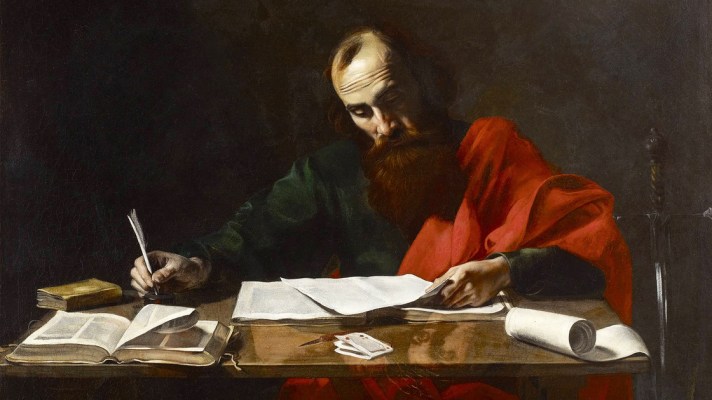
The narrative now switches from the mission work among the Samaritans and Gentiles by Philip to Saul, who I will call Paul from this point forward. Paul was a witness to the execution of Stephen and was likely aware of the evangelism efforts of the early church. Paul was so incensed by what he perceived as the blasphemous conduct of the Christian church that he became a one-man wrecking crew, trying to destroy the church by rounding up every believer he could find. However, on his way to Damascus to arrest any Christian he might find there, Paul had a one-on-one encounter with Jesus. I’ll break this lesson into three parts.

  • Paul’s encounter with Jesus, verses 1-9.
  • Paul’s encounter with Ananias, verses 10-19.
  • Paul’s in Damascus, verses 20-25.
  • Paul in Jerusalem, verses 26-31.

Paul’s encounter with Jesus – verses 1-9.

Before we dig into this passage, it can be neatly summarized in three points.

  • Paul saw a light.
  • Paul heard a voice.
  • Paul obeyed a call.

Every sinner lives in a world of darkness until the light of Jesus illuminates them to the truth of who Jesus is and how Jesus can take away their sins and restore their fellowship with God.

There is another interesting point regarding Paul and what would eventually be his calling to bring the Gospel to the lost. The church of Jesus is one united body made up of both Jews and Gentiles. Paul was both Jewish and Gentile. He was a Jew by birth but a Gentile by citizenship. Paul was trained in Old Testament scripture, well versed in Greek philosophy, and knowledgeable in Roman law. Paul was the ideal choice to bring the Gospel message as his life was an example of both Jew and Gentile being equal in Christ. 

Now let’s return to the passage. There is some debate about whether or not the Sanhedrin would have jurisdiction in this case, which involved individuals living outside of the Jewish nation. Historical records do indicate that the high priest had been given rights of extradition in earlier times. Therefore, it is possible that the Roman government still granted the high priest this same right. Paul also speaks, in 2 Corinthians 11:24, of receiving scourgings from synagogues. Regardless, Paul left Jerusalem with authorization letters from the Sanhedrin to arrest any believers he may find. The very idea that Paul would make that journey illustrates the level of zeal he possessed in rooting out the members of the young church. The distance between the two cities is approximately 150 miles, requiring a journey of around 10-14 days to complete. 

Historical records indicate that, at the time, Damascus had a sizeable Jewish population, with as many as 30-40 synagogues in the city. Since there were already believers there, it is apparent that the church was being effective in its evangelism efforts. It is also likely that some of the believers fled the persecution that was occurring in Jerusalem, which may have also factored into Paul’s desire to go to Damascus and bring the believers back.  

From the point that Paul experienced the blinding light, he is a broken man. Here is why he was broken.

  • Paul had relentlessly persecuted the followers of Christ.
  • Paul now has a one-on-one encounter with Christ, confirming His resurrection.
  • In persecuting the followers of Jesus, Paul now understands that he was persecuting the risen Lord.
  • Persecution against any believer is persecution against the church of Jesus.
  • In persecuting the risen Lord, Paul was an enemy of God.
  • The realization that he was an enemy of God completely flips his world. What he thought he was doing for God, he now realizes he was doing against God.

Jesus then instructs Paul to go into the city and wait for further instructions. Without even questioning what was asked of him, he obeys the command. 

Paul’s companion travelers were a witness to what occurred even though they didn’t receive the same revelation.

  • They could verify that a heavenly manifestation occurred.
  • However, they were not the recipients of it, but they could attest to the change that happened to Paul after the event.

There could be several reasons for Paul not eating or drinking for three days.

  • It could be an expression of repentance.
  • It could be because of shock and confusion.
  • It could be because of his broken spirit upon realizing what he had done against God.
  • It could be a combination of all of the above.

Paul’s encounter with Ananias – verses 10-19a.

The narrative now switches to a disciple named Ananias. Not only does Jesus appear to Ananias in a vision, but He also appears in a vision to Paul that Ananias would come to him, lay hands on him, and that he would regain his sight.

One has to wonder what went through Ananias’ mind as he was told to seek out the, at that time, biggest threat to the church, Paul. I believe it also gives a glimpse to Ananias’ standing within the Christian community in Damascus. Although it is possible that any believer could have been called to perform this task, it would make Paul’s acceptance into the Damascus Christian church easier if Paul’s advocate was a well-respected member, or possibly even someone in a leadership position.

Evidence of Ananias’ doubt and concern is evidenced by his statement that he’s heard how much damage Paul has inflicted on the church and that the purpose of Paul’s visit is known within the Christian community. 

There is a linkage between verses 15 and 16. Paul, once the persecutor, was now to become the persecuted as he shared the Gospel. 

From Ananias’ greeting to Paul, “brother,” it is clear that Paul was now part of the body of Christ. His spiritual conversion had occurred somewhere between the initial meeting with Jesus and his period of reflection while he waited for Ananias to lay hands on him. Ananias informs Paul that Jesus sent him, verifying the vision that Paul received, and Paul regained his sight. Ananias then baptized Paul and Paul began to eat and regain his strength. 

Paul in Damascus – verses 19b-25.

If there were any doubts about the validity of Paul’s conversion, his actions in proclaiming the Gospel in the synagogues would have dispelled those doubts. Still, his astounding conversion amazed the believers in Damascus. It would appear that his zeal in evangelism far surpassed his previous zeal in trying to arrest and kill Christians.

In verse 24, the Greek word that was translated into “proving” means to join or put together. From the context of the passage, it appears that what Paul was joining was Old Testament passages that pointed to Jesus and then explained how Jesus fulfilled them. Paul’s previous schooling under Gamaliel now bears fruit as Paul is able to articulate how Jesus is the fulfillment of numerous Old Testament prophecies and skillfully deflect any attempts by the Jews to prove otherwise. 

Eventually, this led to the Jews in Damascus hatching a plot to kill Paul. The phrase “after many days” is somewhat misleading, as Luke underplays the amount of time. We know from Galatians 1:17-18 that the time Paul spent in Damascus was three years. Once the plan to kill Paul was known, his disciples came up with a plan to ensure his escape.

Since the Jews were watching the gates, they had to come up with a plan that would avoid the use of the gates. Paul also mentions this event in 2 Corinthians 11:32-33. There he says that the governor under King Aretas, a Nabatean king, was guarding the city. Why would an Arabian king be looking for Paul? It is quite possible that during his time in Damascus, he also embarked on a mission trip to the surrounding Arab areas. The Jews likely joined forces with the Nabateans to capture Paul, with the Jews watching the gates and the Nabatean forces watching the surrounding areas. Regardless of the forces arrayed against Paul, he was able to make good his escape from Damascus and made his way to Jerusalem.

Paul in Jerusalem, verses 26-31.

Although Paul had been evangelizing in Damascus for approximately three years, he still wasn’t trusted or accepted in Jerusalem. The memory of what he had done to the believers previously in Jerusalem was still fresh in their minds. Undoubtedly, they believed that his “conversion” was a ploy to infiltrate and then crush the Jerusalem church. A few points about their rejection of Paul.

  • It would be reasonable to believe that the church in Damascus would have relayed the news about Paul’s work there. Therefore, their rejection is somewhat strange.
  • Possibly Paul’s disappearance for almost three years lent a feeling of suspicion to the validity of his conversion.
    • Where did he go?
    • What did he do?
    • Why did he wait so long to contact the elders in Jerusalem?
    • What right did he have to call himself an apostle?

It was the efforts of Barnabas that led to a breakthrough in the Jerusalem’s church acceptance of Paul. This is the same Barnabas from Acts 4:36-37, known as the “son of encouragement” to those around him. Because of Barnabas’ reputation, there is no reason to find a hidden meaning behind his support of Paul. It was through the effort of Barnabas that Paul was accepted into the Jerusalem Christian community. 

Paul now begins his preaching of the Gospel in Jerusalem. We don’t know how long it took, but eventually, the Hellenistic Jews plotted to kill Paul. Let’s look at this topic in more detail.

  • The Hellenistic Jews were the same ones plotted against Stephen, leading to his martyrdom.
  • Paul was a Hellenistic Jew and likely felt an obligation or responsibility to take up the mantle left by Stephen. Paul makes a reference to this in Acts 22:20.
  • The Hellenists were not going to let Paul become the new Stephen. 
  • To understand more fully what transpired, read Acts 22:17-21, where Paul gives a more detailed account of this event.
    • Jesus appears to Paul in a vision and tells him to leave.
    • The church leaders help Paul to leave Jerusalem and go to Tarsus.
    • The fact that they believed Paul’s vision demonstrates proof that the Jerusalem church had fully accepted and trusted Paul by this point.
  • Paul doesn’t appear in Acts again until Acts 11:25 when Barnabas brings Paul to the church at Antioch.
    • That places Acts 11:25 about seven to ten years after Paul left Jerusalem and ten to thirteen years after his conversion.
    • It is safe to believe that Paul used Tarsus as a base for reaching the Gentiles with the Gospel.
    • It is possible that some of the trials listed in 2 Corinthians 11:24-26 occurred during the seven years in question.
      • Only one Roman beating is recorded in Acts (16:22), with two others unaccounted for.
      • The five Jewish beatings are not recorded anywhere.
      • Only one shipwreck is recorded in Acts 27. leaving two unaccounted for.
    • Although Paul doesn’t appear for about seven years, it seems he was far from idle during that time.

Luke now inserts a summary verse.

  • The Gospel was being spread just as Jesus commanded.
  • The center would shift from Jerusalem to Antioch.
  • The key leader would shift from Peter to Paul.
  • The Gospel would be taken to the ends of the earth.
  • Although it was a time of peace for the church, it wasn’t a time of complacency.
    • They grew spiritually.
    • They grew in numbers.

Applications

  • If you have a clear word or instruction from God, are you obedient even when it may not make sense? Both Paul and Ananias were obedient even though Paul had to do a 180, and Ananias was called to go visit the very person he should’ve been avoiding.
  • Do you make an active effort to share the Gospel? Regardless of our spiritual gifting, Jesus commands all of us to bring the Gospel to the lost.
  • When you come in contact with others who are either sharing a false message, either purposely or because of lack of understanding, do you attempt to correct them? We should never condone false teaching in the church, even if our actions could harm us.

Acts Lesson Seventeen

Acts Lesson Seventeen: Acts 8:1-25 The Gospel Spreads

Saul agreed with putting him to death. 

On that day a severe persecution broke out against the church in Jerusalem, and all except the apostles were scattered throughout the land of Judea and Samaria. Devout men buried Stephen and mourned deeply over him. Saul, however, was ravaging the church. He would enter house after house, drag off men and women, and put them in prison. 

So those who were scattered went on their way preaching the message of good news. Philip went down to a city in Samaria and proclaimed the Messiah to them. The crowds paid attention with one mind to what Philip said, as they heard and saw the signs he was performing. For unclean spirits, crying out with a loud voice, came out of many who were possessed, and many who were paralyzed and lame were healed. So there was great joy in that city. 

A man named Simon had previously practiced sorcery in that city and astounded the Samaritan people, while claiming to be somebody great. 10 They all paid attention to him, from the least of them to the greatest, and they said, “This man is called the Great Power of God!” 11 They were attentive to him because he had astounded them with his sorceries for a long time. 12 But when they believed Philip, as he preached the good news about the kingdom of God and the name of Jesus Christ, both men and women were baptized. 13 Then even Simon himself believed. And after he was baptized, he went around constantly with Philip and was astounded as he observed the signs and great miracles  that were being performed. 

14 When the apostles who were at Jerusalem heard that Samaria had welcomed God’s message, they sent Peter and John to them. 15 After they went down there, they prayed for them, so the Samaritans might receive the Holy Spirit. 16 For He had not yet come down on  any of them; they had only been baptized in the name of the Lord Jesus. 17 Then Peter and John laid their hands on them, and they received the Holy Spirit. 

18 When Simon saw that the Holy Spirit was given through the laying on of the apostles’ hands, he offered them money, 19 saying, “Give me this power too, so that anyone I lay hands on may receive the Holy Spirit.” 

20 But Peter told him, “May your silver be destroyed with you, because you thought the gift of God could be obtained with money! 21 You have no part or share in this matter, because your heart is not right before God. 22 Therefore repent of this wickedness of yours, and pray to the Lord that the intent of your heart may be forgiven you. 23 For I see you are poisoned by bitterness and bound by iniquity.” 

24 “Please pray to the Lord for me,” Simon replied, “so that nothing you have said may happen to me.”

25 Then, after they had testified and spoken the message of the Lord, they traveled back to Jerusalem, evangelizing many villages of the Samaritans. (HCSB)

Today’s lesson can be divided into three parts.

  • The introduction of Saul as the main persecutor of the church.
  • Philip’s evangelism in Samaria.
  • The story of Simon the Sorcerer.

Verses 1-3

Luke introduced Saul at the end of the previous chapter. Now, he introduces Saul as the main antagonist of the early church. Before moving on, let’s get a detailed picture of Saul from various sections of Scripture.

  • Born in Tarsus of Cilicia – Acts 22:3.
  • A Hebrew of Hebrews – Philippians 3:5.
  • The son of a Pharisee – Acts 23:6.
  • A Roman citizen – Acts 16:37.
  • Educated in Jerusalem by Gamaliel – Acts 22:3.
  • A devoted Pharisee – Acts 26:4-5.
  • A blameless life when measured against the Law – Philippians 3:6.
  • On the path to becoming a great leader in the Jewish faith – Galatians 1:14.
  • Zealous for the Law leading him to persecute the church – Galatians 1:13-14.
  • Served God with a clear conscience – 2 Timothy 1:3.
  • Persecuted both men and women to death – Acts 22:4.
  • Entered synagogues to arrest, imprison, and beat believers – Acts 22:19.
  • A blasphemer against Jesus – 1 Timothy 1:13.

When considering the background and characteristics of Saul, it is only by the grace of God that such a man could be used to be the greatest evangelist and church planter, as well as writing 28% of the New Testament.

A couple of points to consider over these first few verses.

  • The scattering mentioned likely pertains to the Hellenistic believers as the apostles were not scattered. The Hellenistic view that God was not bound to a place or nation would have rubbed the religious leaders of Judaism the wrong way. In contrast, the Aramaic-speaking Christians had remained faithful to some Jewish institutions. However, this led to the following actions.
    • The persecution and scattering led to the Gospel being spread quicker and further.
    • The second phase of the Great Commission began; the witness to all Judea and Samaria.
  • Saul began to “ravage” the church. 
    • The Greek word used here would denote wild beasts such as lions, bears, or leopards tearing at the flesh.
    • He went from house to house, attacking both men and women. 

Verses 4-8

Instead of being distraught by the turn of events from Saul’s persecution, the believers took the message of the Gospel to new fields.

A quick historical reminder about Samaritans; they were a mixture of Jewish and Gentile heritage. The region was formed when the Assyrians invaded and captured the ten northern tribes of Israel in 732 B.C., deporting some and resettling Gentiles into the region to intermarry with the Jews. The Samaritans had their own temple, priesthood, and both Jew and Samaritans opposed interaction with the other. 

Now, let’s identify the essential points from these verses.

  • The Christians scattered from Jerusalem were faithful in proclaiming the Gospel in the areas where they went.
  • Philip was chosen as a deacon, Acts 6:5, but like Stephen, he grew into an influential evangelist, Acts 21:8.
    • In verse four, the word “preaching” means to evangelize.
    • In verse five, the word “proclaim” means to announce as a herald.
    • Philip was God’s chosen herald to spread the Gospel in Samaria.
    • To reject the messenger would mean to reject the message and the one who commissioned the herald to deliver it, God.
  • Philip not only shared the Gospel, but he also performed miracles among them.
    • Many who were demon-possessed were healed.
    • Many who had physical ailments were healed.
    • However, the emphasis is on the Gospel. 
    • They believed in the Gospel because they saw the miracles. 
      • In believing the Gospel, they were saved. 
      • The miracles didn’t save them.
    • There was great joy among the inhabitants because of the work of Philip.
  • The Gospel had now begun its outward arc from Jerusalem.
    • Samaritans were part Jew and part Gentile.
    • God built a bridge between the two enemies and united them in Christ.
    • Soon the bridge would extend to the Gentiles in an ever-widening arc.
    • In the Gospel, there are no unacceptable people, no physical rejects, and no place for prejudice.

Verses 9-25

A basic biblical principle is that whenever there is a movement of God’s work, Satan will try and hijack that movement with false teachers or false doctrine. It happened in the Old Testament, and it continues now in the church age. The enemy doesn’t want the church to advance and win souls, so he will try anything to derail the work of the church. 

Let’s further break this section down into two parts. Verses 9-13 and 14-25.

Verses 9-13

We see here a contrast between true holy work done through the power of the Holy Spirit and work that is done through other forces, often demonic or dark in nature. There are times that seemingly good works are, in fact, not done through holy power. Jesus warns of this in Matthew 7:21-23, even going so far as to say that some who do works in His name are deceivers. Let’s look at some details of this section of the passage.

  • Because the people were astounded and amazed at Simon’s tricks, they believed the things he said. 
    • Scripture doesn’t say precisely what he said, but it does say that the people called him “the Great Power of God,” which he didn’t deny.
    • This was not only misleading the people as to where his “power” came from but was blasphemy since it wasn’t the work of God.
    • Simon was an example of those who practice “lawlessness” as described in 2 Thessalonians 2:1-12.
  • He was popular and recognized by the people.
    • They all paid attention to him.
    • He had been working among them for a long time.
    • He enjoyed the attention and adulation.
  • The work of the Holy Spirit through Philip now began to shift people from Simon to Philip.
    • The people saw the work of Philip.
      • People were healed.
      • Demons were cast out.
    • The people heard the Gospel message.
      • They became followers of Jesus.
      • They were baptized.
    • Simon was likely afraid he would lose all or most of his following.
      • He “believed.” 
        • It was a false belief.
        • Jesus spoke about how the demons even believed in Him. Believing doesn’t mean following.
        • Simon’s belief was based on wanting to acquire the power he saw manifested in Philip.
      • Simon fooled Philip with his false belief.
        • Although Philip was doing work through the power of the Holy Spirit, Simon was able to fool him. 
        • Both Jesus and Paul warn about false believers and/or teachers infiltrating the church and causing harm. 
        • We must always be on guard against those who would harm the church from the inside. 
          • Enemies from the outside are often easy to spot.
          • Enemies on the inside are much harder to see but often do more significant damage.
      • We don’t know for sure, but it’s possible the reason Simon followed Philip everywhere was to try and learn the “secret” behind Philip’s miracles.

Verses 14-25

Before we jump into the issue of Simon in this section of the passage, two other points need to be discussed.

  • The apostles sent Peter and John to Samaria. Why did this occur?
    • From a historical standpoint, we know that there was a deep and long divide between the Jews and the Samaritans. The two groups had their own view of Judaism and even a somewhat different Pentateuch. Unity is a critical factor in the church.
    • The Holy Spirit had fallen on them yet. This brings up point number two.
  • Why didn’t the Holy Spirit fall on them at conversion?
    • Just as the Jewish church had their Pentecost moment, now the Samaritan church will have theirs. 
    • By having Peter and John go to them, lay hands on them, and for them to receive the Holy Spirit would demonstrate that they were no longer two separate people groups in Jesus’ church. They were now one. 
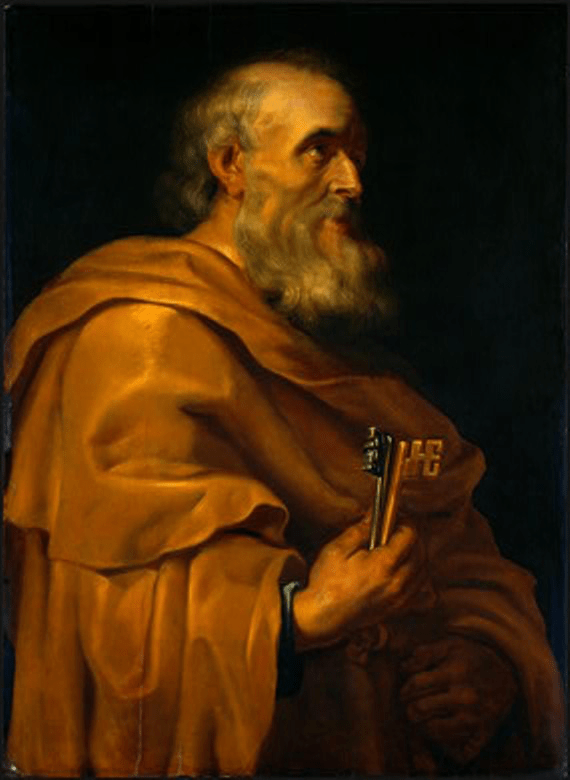
    • Peter was given the keys to the kingdom of heaven by Jesus in Matthew 16:19.
      • Peter opened the door to the Jews at Pentecost.
      • He now opened the doors to the Samaritans.
      • He would later open the doors to the Gentiles in Acts 10.
  • The first ten chapters in Acts show a transition from Jew to Samaritan to Gentile. 

Now let’s move on to the conclusion of the narrative addressing Simon’s prideful heart.

Just as in Simon’s following Philip around to see if he could discover the secret behind the power of Philip’s ministry, he now sees Peter and John lay hands on the people and wants the same ability. However, he views it as a commodity and thinks he can purchase it from the apostles. We can draw a few conclusions from the final section of this passage.

  • Simon was never truly converted.
    • May your silver be destroyed with you.
    • You have no share in this matter.
    • Your heart is not right before God.
    • Repent of your wickedness. This phrase is usually reserved for unbelievers.
    • He was poisoned by bitterness.
    • He was bound by iniquity.
    • All of these factors lead to an overwhelming conclusion that Simon was never saved.
  • Simon’s response is also telling.
    • He seems more concerned about avoiding the consequences that Peter pronounced.
    • Instead of offering a prayer of repentance, he asks Peter to pray for him.
      • We shouldn’t confuse this with asking others to pray for our needs.
      • However, only the individual can repent and pray for forgiveness.
      • Those who won’t pray a prayer of repentance for themselves won’t enter God’s kingdom.
  • This narrative shows how close a person can get to salvation and still not cross the threshold.
    • Simon heard the Gospel.
    • Simon saw the miracles. 
    • He made a verbal profession of faith.
    • He was baptized.
    • He was never born again.
    • He was a clever counterfeit. 
    • If he was not discovered, he could have caused untold damage from inside the church.
  • Peter and John then make their way back to Jerusalem.
    • As they passed through Samaria on the return journey, they shared the Gospel.
    • They didn’t waste an opportunity to reach the lost.
    • Through the efforts of Philip, Peter, and John, the Gospel was now spreading throughout Samaria.

Applications

  • Ministry must be done in the power of the Holy Spirit. Successful ministry is never done in our strength. It may appear to work for a time, but eventually, it will crumble, and nothing will be left.
  • We must always be on the lookout for counterfeit Christians who would undermine the church from within. These same people would also cause the church to look foolish to those on the outside who need to hear the Gospel and come to salvation. 
  • Don’t let pride and jealousy stand between you and salvation. Simon had an unhealthy desire for the power that he saw demonstrated, and instead of submitting to Christ and being used for kingdom work, he tried a shortcut. No matter where God places you, no matter your spiritual gifting, be joyful as you contribute to the kingdom. 
  • Always look for opportunities to share the Gospel, even when you aren’t planning on sharing. Peter and John didn’t waste the opportunities on the trip back to Jerusalem. We run into people every day who are on the path to hell. Don’t miss those chances to share.

Acts Lesson Seven

Acts 4:13-31 – The Sanhedrin’s Dilemma

13 When they observed the boldness of Peter and John and realized that they were uneducated and untrained men, they were amazed and recognized that they had been with Jesus. 14 And since they saw the man who had been healed standing with them, they had nothing to say in response. 15 After they had ordered them to leave the Sanhedrin, they conferred among themselves, 16 saying, “What should we do with these men? For an obvious sign, evident to all who live in Jerusalem, has been done through them, and we cannot deny it! 17 However, so this does not spread any further among the people, let’s threaten them against speaking to anyone in this name again.” 18 So they called for them and ordered them not to preach or teach at all in the name of Jesus. 

19 But Peter and John answered them, “Whether it’s right in the sight of God for us to listen to you rather than to God, you decide; 20 for we are unable to stop speaking about what we have seen and heard.” 

21 After threatening them further, they released them. They found no way to punish them, because the people were all giving glory to God over what had been done; 22 for this sign of healing had been performed on a man over 40 years old. 

23 After they were released, they went to their own people and reported everything the chief priests and the elders had said to them. 24 When they heard this, they all raised their voices to God and said, “Master, You are the One who made the heaven, the earth, and the sea, and everything in them. 25 You said through the Holy Spirit, by the mouth of our father David Your servant: 

Why did the Gentiles rage 

and the peoples plot futile things? 

26 The kings of the earth took their stand 

and the rulers assembled together 

against the Lord and against His Messiah.

27 “For, in fact, in this city both Herod and Pontius Pilate, with the Gentiles and the people of Israel, assembled together against Your holy Servant Jesus, whom You anointed, 28 to do whatever Your hand and Your plan had predestined to take place. 29 And now, Lord, consider their threats, and grant that Your slaves may speak Your message with complete boldness, 30 while You stretch out Your hand for healing, signs, and wonders to be performed through the name of Your holy Servant Jesus.” 31 When they had prayed, the place where they were assembled was shaken, and they were all filled with the Holy Spirit and began to speak God’s message with boldness. (HCSB)

In the previous lesson, we covered Peter’s defense to the charges and how the Sanhedrin’s case contained no foundation. Now, the ball is firmly back in the Sanhedrin’s court. What were they going to do in response to the healing of the lame man and Peter’s defense of the situation?

Verses 13-14

The Sanhedrin faced a serious dilemma. Since they had publicly arrested Peter and John and placed them in jail the previous day, they now had to figure out how to proceed. However, the “trial” had not gone according to their plans. They probably expected these “uneducated” men to crumble after being brought before the council. Instead, Peter and John challenged the religious leaders. Here are some facts that the council needed to consider as they continued with this charade.

  • They couldn’t deny that a miracle had occurred. The man who had been lame since birth, a man who was easily recognized by many, possibly even some on the religious council, was standing before them with no physical disability.
  • How could uneducated and untrained men perform this miracle? They were ordinary fishermen, not scribes or authorized priests in the Jewish religious circle.
  • Peter and John were disciples of Jesus, but Jesus was dead.
  • The council was likely surprised by the courage and confidence that Peter and John displayed before them.
  • Miracles, by themself, are not proof of Jesus’ resurrection or the truth of Peter’s message.
  • Satan can perform miracles – 2 Thessalonians 2:9-10 The coming of the lawless one is based on Satan’s working, with all kinds of false miracles, signs, and wonders, 10 and with every unrighteous deception among those who are perishing. They perish because they did not accept the love of the truth in order to be saved.
  • False prophets can do wonders – Deuteronomy 13:1-5 If a prophet or someone who has dreams  arises among you and proclaims a sign or wonder to you, and that sign or wonder he has promised you comes about, but he says, ‘Let us follow other gods,’ which you have not known, ‘and let us worship them,’ do not listen to that prophet’s words or to that dreamer. For the Lord your God is testing you to know whether you love the Lord your God with all your heart and all your soul. You must follow the Lord your God and fear Him. You must keep His commands and listen to His voice; you must worship Him and remain faithful to Him. That prophet or dreamer must be put to death, because he has urged rebellion against the Lord your God who brought you out of the land of Egypt and redeemed you from the place of slavery, to turn you from the way the Lord your God has commanded you to walk. You must purge the evil from you.
  • The miracle, the message, and the events that had occurred since Pentecost were all supporting evidence that Jesus was alive and the church was powered by the Holy Spirit.
  • Peter used the Old Testament in both sermons to support his claims. This is evidence of a true prophet, as shown above in Deuteronomy 13:1-5.
  • The Sanhedrin was left speechless after Peter’s defense and the healed man standing before them.

Verses 15-18

Asking Peter and John to leave the council was a standard procedure once all the evidence and arguments were finished. This allowed the council to have an open discussion among itself, with no outside distractions or interruptions. From the short narrative in these verses, we see the following facts.

  • With the statement “what should we do with these men,” it was clear that they were indecisive about how to proceed.
  • They acknowledged that a miracle had occurred.
  • The miracle was widely known. There was no way the council could cover it up or deny that it happened.
  • Jesus’ disciples were popular with the people, as witnessed by the explosive growth of the church and that people came to hear their message.
  • There was no charge the council could pin on Peter and John.
  • The only thing the council could do was use their position and power to threaten this new religious movement. They would forbid any teaching that referred to Jesus.

There is one other significant point to consider in this section. It’s contained in verse 17, and depending on your translation, it appears as “this” (HCSB), “it” (ESV), or “thing” (NIV). What is “this” referring to? Does the Sanhedrin want to stop the further spread of the knowledge of the miracle that occurred? That is not possible; that “cat was out of the bag.” What the council was concerned about was the Gospel, the preaching of Jesus, and His resurrection. The focus of their attention was stopping this fledgling movement in its infancy. 

Verses 19-22

Peter and John continue down the courageous road they started on when they presented the defense of their actions. They refused to accept the decision of the council. Their response made it clear that they would follow God and not what the council was telling them. There was no way that they would stop preaching about Jesus. We can all learn from the boldness of the Apostles in rejecting instruction from man that conflicted with what God or Scripture proclaimed. At the same time, we need to make sure that civil disobedience or our personal crusades are actions that don’t tarnish Jesus’ Kingdom. At this point, let’s take a short history lesson from Scripture on civil disobedience.

  • The Jewish midwives were disobeying the pharaoh and not killing the babies in Exodus 1.
  • Moses’ parents in Hebrews 11:23.
  • Daniel in chapters one and six.
  • Shadrach, Meshach, and Abednego in Daniel 3.
  • In each of these cases, there was clear direction from God.
    • The midwives and Moses’ parents knew it was wrong to kill children.
    • Daniel and his friends knew it was wrong to eat food offered to idols or bow down to idols.
    • Peter and John knew that they were under orders to preach the Gospel to the ends of the earth.
    • In each case, the people were following instructions from God and not a personal agenda.
  • In each case, they also acted with courtesy and respect even as they defied the instructions of man. It is possible to both respect and disobey authority when authority runs contrary to God’s instruction.
    • Romans 13.
    • Titus 3:1-2.
    • 1 Peter 2:13-25.

 The greatest example of unjust suffering is Jesus. In His suffering, Jesus taught us three things.

  • Righteous protest against injustice always involves suffering.
  • Righteous protest against injustice always requires sacrifice.
  • Righteous protest must be motivated by love.

As followers of Jesus, we need to be careful not to wrap our prejudice as righteous indignation and make ourselves look like courageous soldiers. We must always examine our hearts to ensure we are not starting a “holy war” to satisfy our inner frustrations.

Another way to look at this problem is to examine four possible courses of action that Christians can take. Only one of these is biblical.

  • Monastic – views the world and all governments as corrupt, and the only solution is to retreat from the world. 
  • Secular – the world is the only source of authority, and God is denied. This option is foolish as there is no counterbalance to an evil or tyrannical government.
  • Cowardly – authority rests in both the world and in God, but the world has the predominant position. Pilate chose this option when he handed Jesus over to be crucified.
  • Biblical – authority rests in the world and God, with God in the predominant position. The government has authority but is not independent from God. When the two conflict, we must follow God.

Christians with courage should be law-abiding citizens until that law contradicts the clearly written law of God, at which point the higher authority (God) takes over.

Verses 23-31

Peter and John go back to the rest of the disciples and report the details on what happened. After this, they all joined together in praise and prayer to God. They were united in prayer. There’s a lesson here on the early church that the modern church all too often forgets, the importance of prayer. The early church understood that prayer was necessary to defeat the plans of the enemy. Prayer meetings in modern churches, if they even have prayer meetings, often resemble a party or concert. The meeting contains little sense of urgency or the danger we face because most of us live a “comfortable” Christian walk. If followers of Jesus were more intentional about following the Great Commission and being bold, there would be more urgency and need for prayer.

As we examine their prayer, we notice that they didn’t ask for their circumstances to be changed or for the religious rulers who were hostile to the Gospel to be removed from their positions. Instead, they asked for power to make the best of their circumstances and accomplish what He had already predestined. They desired to glorify Jesus, not themselves.

Their prayer was based on Scripture; they used the beginning of Psalm 2 for their prayer. Through Scripture, God speaks to us and tells us what He wants us to do. In prayer, we talk to God and make ourselves available to do His will. Prayer is not telling God what to do or what we want; it is asking God to do His will through our lives. 

1 John 5:14-15 Now this is the confidence we have before Him: Whenever we ask anything according to His will, He hears us. 15 And if we know that He hears whatever we ask, we know that we have what we have asked Him for.

The contextual setting of Psalm 2 describes the revolt of the nations against Yahweh and the Messiah, but it originated in the crowning of an Israelite king and the subsequent refusal of some of the vassal leaders to pay homage and submit to the king. Now, the early church is applying this psalm to their situation with Herod, Pilate, the Romans, and some of the Jews as the disobedient vassal rulers.

In response, God shook the place where they had gathered, and they were all filled with the Holy Spirit, enabling them to boldly preach the Gospel. We mustn’t misunderstand the concept of them being filled again with the Holy Spirit. This was not another Pentecost. This demonstrates that believers must be continually filled with the Holy Spirit to accomplish God’s work, and it is possible for our “tank to run dry” if we are not in right fellowship with God. If we are living in sin, if we are not reading Scripture, if we are not praying to God, if we are not using our gifts in service can all lead to our spiritual tank running dry. However, we see in this example the opposite. The believers were in a healthy and faithful relationship with God, and they were continually being filled with God’s power, the Holy Spirit.

Christian courage depends upon biblical praying grounded in the sovereignty of God.

A summary of this passage reveals several key points.

  • Strength to face suffering.
    • They were united in fellowship. This is a recurring theme in Acts, the united fellowship of believers. For those of us who live in individualistic countries, this theme often runs counter to our culture.
    • The sovereignty of God. Because God is in control of all things, we have nothing to fear if we walk in obedience.
    • Their united prayer was saturated with Scripture. We must spend time daily in God’s Word and let it soak into our innermost being. Psalm 119:11 I have treasured Your word in my heart so that I may not sin against you.
  • Fellowship helps in times of crisis.
    • When we gather with like-minded believers, we gain strength and encouragement, knowing we are not alone. 
    • When we share our situation with our support group, we unburden ourselves. We can receive wise counsel and not act on our emotions.
    • When we gather with our support group, we can spend time in prayer together. Being together helps us to focus on God and His sovereignty instead of being overwhelmed by our problems.
  • Acknowledging God’s sovereignty helps in times of crisis.
    • When we are experiencing a crisis, the enemy seems powerful and seem weak in comparison.
    • We may experience suffering, and some could be quite severe. But in the end, God will turn it into good.
    • Evil is a reality, but God is a deeper and more powerful reality.

Applications.

  • Don’t let a lack of formal seminary training prevent you from being a bold witness for Christ. Instead, submit and let the Holy Spirit fill and guide you each day. For those who do have formal seminary training, don’t let the education make you arrogant and forget that without the Holy Spirit, your words will ring hollow.
  • Be bold in the face of persecution. We serve the highest power in the universe, the living God, and we have nothing to fear when we walk in accordance with His will.
  • Gather together with other believers in unity. We desperately need each other for support, encouragement, and correction. Lone-ranger Christians are ineffective Christians. 
  • Pray. Pray together, pray alone, pray without ceasing. It is our most effective weapon in spiritual warfare. Nothing else stops the efforts of the enemy as much as prayer. 

Acts Lesson Five

Acts Lesson Five – Acts 3:1-26 Miraculous Healing, Powerful Preaching

Now Peter and John were going up together to the temple complex at the hour of prayer at three in the afternoon. And a man who was lame from birth was carried there and placed every day at the temple gate called Beautiful, so he could beg from those entering the temple complex. When he saw Peter and John about to enter the temple complex, he asked for help. Peter, along with John, looked at him intently and said, “Look at us.” So he turned to them, expecting to get something from them. But Peter said, “I don’t have silver or gold, but what I have, I give you: In the name of Jesus Christ the Nazarene, get up and walk!” Then, taking him by the right hand he raised him up, and at once his feet and ankles became strong. So he jumped up, stood, and started to walk, and he entered the temple complex with them—walking, leaping, and praising God. All the people saw him walking and praising God, 10 and they recognized that he was the one who used to sit and beg at the Beautiful Gate of the temple complex. So they were filled with awe and astonishment at what had happened to him. 

11 While he was holding on to Peter and John, all the people, greatly amazed, ran toward them in what is called Solomon’s Colonnade. 12 When Peter saw this, he addressed the people: “Men of Israel, why are you amazed at this? Or why do you stare at us, as though we had made him walk by our own power or godliness? 13 The God of Abraham, Isaac, and Jacob, the God of our fathers, has glorified His Servant Jesus, whom you handed over and denied in the presence of Pilate, when he had decided to release Him. 14 But you denied the Holy and Righteous One and asked to have a murderer given to you. 15 You killed the source of life, whom God raised from the dead; we are witnesses of this. 16 By faith in His name, His name has made this man strong, whom you see and know. So the faith that comes through Him has given him this perfect health in front of all of you. 

17 “And now, brothers, I know that you did it in ignorance, just as your leaders also did. 18 But what God predicted through the mouth of all the prophets—that His Messiah would suffer—He has fulfilled  in this way. 19 Therefore repent and turn back, so that your sins may be wiped out, that seasons of refreshing may come from the presence of the Lord, 20 and that He may send Jesus, who has been appointed for you as the Messiah. 21 Heaven must welcome Him until the times of the restoration of all things, which God spoke about by the mouth of His holy prophets from the beginning. 22 Moses said: 

The Lord your God will raise up for you a Prophet like me from among your brothers. You must listen to Him in everything He will say to you. 23 And everyone who will not listen to that Prophet will be completely cut off from the people.

24 “In addition, all the prophets who have spoken, from Samuel and those after him, have also announced these days. 25 You are the sons of the prophets and of the covenant that God made with your ancestors, saying to Abraham, And all the families of the earth will be blessed through your offspring. 26 God raised up His Servant and sent Him first to you to bless you by turning each of you from your evil ways.” (HCSB)

As we look at this passage, it can be divided into two main parts:

  • Verses 1-11 centered around the power of Jesus.
  • Verses 12-26 centered around Peter’s message to the crowd.

Also, keep in mind the following ideas as we dig into this passage:

  • Verses 1-5: As we are involved in ministry, it may require us to see the opportunities and to determine the real needs of the people we minister to, and identify any resources we may have to help them.
  • Verses 6-11: As we serve, our service can’t be conducted in our own strength. It is only through divine power according to God’s will that will count in the end.
  • Verses 12-16: Our service for Jesus begins first with self-denial, centers on Him, and proclaims faith in His name.
  • Verses 17-26: By God’s grace, repentance brings forgiveness through Jesus, and that forgiveness is available to all who would call on His mighty name.

Verses 1-5

We’ll look at these verses in light of two key ideas. One idea is correctly understanding the needs around us. The second idea is a correct understanding of the rabbinical view on charity.

  • Correctly understanding the needs around us.
    • The lame man.
      • The man was born lame; all of us are born sinners.
      • The man couldn’t walk; no sinner can walk in a way that pleases God.
      • The man was outside the temple; sinners are outside God’s temple, the church.
      • The man was begging; sinners are beggars; they are searching for the fix that will satisfy their wants.
    • The need wasn’t money.
      • The man needed healing.
      • The man needed restoration to corporate worship. According to Old Testament Law, those who were crippled were not allowed inside the temple. Leviticus 21:18 No man who has any defect is to come near: no man who is blind, lame, facially disfigured, or deformed.
    • Peter and John were presented with an opportunity for ministry.
      • Peter didn’t perform the miracle to remove the man’s handicap.
      • Peter did it for two reasons.
        • To save the man’s soul.
        • To demonstrate the power of the Holy Spirit.
    • The man illustrates the state of each of us who has not submitted to the Lordship of Jesus.
  • Correctly understanding the rabbinical view on charity.
    • There were three pillars in the Jewish faith; the Torah, worship, and charity.
      • Charity was one of the main ways of kindness.
      • Charity was considered a major expression of a person’s devotion to God.
      • Worshippers entering the temple would be drawn to giving charity to a lame beggar, thus demonstrating their piety.
    • Charity was not just a characteristic of the Jewish faith; it was an expected part of their worship life.

These first five verses illustrate how we, as believers, can practice charity in a lost world.

  • We can share the greatest gift possible, the Gospel message.
  • The lame man represents those who are in disobedience to God, sinners.
  • Each of us has opportunities, maybe daily, to be a “Peter” to a lame man.

Verses 6-11

The first section set the stage; a lame man in need of healing. However, from the study of the first section, we understand that he only looked at the surface need, money, so that he could eat. He didn’t understand his deeper need. If he were healed of his disability, he would be able to work and no longer have to beg.

You can almost feel the anticipation-the man begging for alms. Peter and John were staring intently at him and telling him to look at them. No doubt in his mind he was going to receive a gift, maybe even a large one since they engaged him in that manner. However, the gift he received was not what he was expecting, yet it went far beyond his grandest imagination. He was instantly and completely healed of his disability. 

Peter, in the name of Jesus, commanded the lame man to walk! In a biblical context, a name is more than a label. It is a representation of the person and is an extension of the person’s being and personality. To call in to use the name of Jesus is a call upon the authority and power of Jesus. Jesus, through Peter, was continuing the healing ministry He conducted while walking the earth. The healing power spread from his feet to his ankles. He jumped up and began to walk. Not only that, he entered the temple with Peter and John. Previously, as a lame beggar, he sat outside the temple begging for alms. Now, not only was he healed of his physical impairment, he was given spiritual acceptance as well. For the first time in his life, he was considered worthy to enter the house of worship.

There is little wonder that the man was not only walking, but he was leaping and praising God in God’s house. The word for “leap” used here is a rare one. It is the same word used in Isaiah 35:6a, “Then the lame will leap like a deer.” The people inside the temple recognized the man; doubtless, they had seen him hundreds of times, yet here he was inside the temple, and he was not only walking, but he was also leaping for joy and praising God. At the sight, they were filled with awe and astonishment, which prepared them for the message that Peter would now speak.

Verses 12-26

Peter now uses the opportunity presented to share the Gospel and for the members of the crowd to receive forgiveness for their sins. Just as in verses 2:14, 22, Peter addresses them as “Men of Israel.” Peter had preached Jesus to them and accused them of denying their Messiah. Just a few weeks earlier, Peter had denied Jesus three times. However, Peter has confessed his sin and was restored to Jesus; he was able to forget and move on from his failure.

In Peter’s sermon at Pentecost, he needed to refute the accusation that Jesus’ followers were drunk. Here, Peter needed to refute the idea that Peter and John had healed the man by their own power. Jesus was the true source of the power that healed the lame man. Not only that, Jesus was glorified by the God of their fathers; Abraham, Isaac, and Jacob. 

Before a sinner can be lead to repentance, there must be conviction. Imagine a sick patient. Before they will accept treatment, they must believe that they are sick. Only then will they take treatment from the doctor. Peter now turns the temple into a courtroom, laying out the evidence that Jesus is God. How could two ordinary fishermen perform a healing miracle unless God was working through them? Nobody could deny the fact of the miracle. They had seen the lame man countless times at the entrance to the temple. Yet, here he was leaping and praising God in the temple. To deny the miracle was not an option. This left only one choice. Accept the miracle as genuine, and since the miracle was done in the name of Jesus to admit that Jesus is the living Son of God and that His name has power.

This section also deals with the Jewish responsibility in the death of Jesus. There are four points regarding this topic contained in this section of the passage.

  • They did it in ignorance. In the Old Testament, there was a difference between unintentional and deliberate sins; Leviticus 4-5, Numbers 15:22-31.
    • Those who sin deliberately were a rebel against God and were to be cut off from their people.
    • Those who sinned unintentionally were given an opportunity to repent and seek God’s forgiveness. Ignorance doesn’t remove the guilt, but it does alter the circumstances.
  • Nowhere in Acts is there a blanket condemnation of the Jews for the death of Jesus. Only the Jews in Jerusalem are given that responsibility.
  • Gentiles shared in the blame; lawless men 2:23, Pilate 3:13.
  • The suffering of Jesus was part of God’s plan of salvation for mankind, 3:18.

Peter now draws on the Old Testament, and the greatest prophet found there, Moses. Any Jew who had even a slight understanding and knowledge of Scripture would see the link Peter was making. Belief in Moses should produce belief in Jesus. At the same time, belief in Jesus does not nullify the belief in Moses. Peter demonstrates that Moses pointed to Jesus in Deuteronomy 18:15-19.

Peter closes the sermon by reminding them that they are the natural heirs of the promises that date back to Genesis 22:18, “And all the nations of the earth will be blessed by your offspring because you have obeyed My command.” Every prophet of Yahweh looked forward to the coming of the Messiah, from Moses all the way to John the Baptist.

The “offspring” referred to in verse 25 is singular. The Abrahamic covenant points to Jesus. Jesus is the sole offspring through which the blessing would come. He was Israel’s Messiah.

As we look back on this passage, there are two points we would do well to remember.

  • Ministry is meant to be done in teams. Lone rangers often do not last long in ministry.
    • Throughout Acts, we see ministry done in teams.
    • When Jesus sent out the twelve along with the seventy, they were sent out in pairs; Mark 6:7 and Luke 10:1.
    • When Peter addressed the crows at Pentecost, he stood up with the eleven; Acts 2:14.
    • When Peter went to the home of Cornelius, he took six brothers with him; Acts 10:23 and 11:12.
    • Biblical context dictates that ministry is done with teams.
    • Each believer has one or more spiritual gifts to equip the team to function as a whole.
    • Ecclesiastes 4:9-12 gives four benefits of teams:
      • Greater fruitfulness – Two are better than one because they have a good reward for their efforts.
      • Help in times of personal failure – For if either falls, his companion can lift him up, but pity the one who falls without another to lift him up.
      • Warmth of affirmation in times of need – Also, if two lie down together, they can keep warm; but how can one person alone keep warm?
      • Strength to face attacks – And if someone overpowers one person, two can resist him. A cord of three strands is not easily broken.
  • Ministry is meant to be done in power, the power of the Holy Spirit.
    • Throughout Acts and much of the New Testament, we see the power of the Holy Spirit evident in the life of the church.
    • In the example in this passage of the lame man, we see that spiritual poverty is a greater curse than economic poverty. An economically poor church that is filled with the power of the Holy Spirit is, in reality, a rich church.
    • With the increase in affluence within much of the church community in the West, the dependence on God has declined. The church is identified with its ornate building, its famous pastor, a worship team that could perform in any major theater, or any other worldly measure of richness. But it may not have any spiritual richness.

Applications

  • As we engage with individuals in the world around us, pray for wisdom and discernment for their actual needs, not their surface needs. Just as the example in this passage, there may be a distinct difference between the two.
  • As we are involved in ministry, do we try and do it in our own power, or do we submit to the leading of the Holy Spirit and work through His power?
  • Do we glorify Jesus in our work? We may never perform a miraculous healing, but whatever ministry work we are engaged in, we should always give glory where it is due, Jesus.
  • Do we try and engage in ministry by ourselves, or are we part of a team? Being a lone ranger is dangerous on a couple of points. First, it is easier to take the credit for success instead of glorifying Jesus with success. Second, it is much easier to succumb to sinful temptations when we go it alone. 

Acts Lesson Four

Acts Lesson Four – Acts 2:14-47 The Sermon, the Response, the Church

14 But Peter stood up with the Eleven, raised his voice, and proclaimed to them: “Men of Judah and all you residents of Jerusalem, let me explain this to you and pay attention to my words. 15 For these people are not drunk, as you suppose, since it’s only nine in the morning. 16 On the contrary, this is what was spoken through the prophet Joel: 

17 And it will be in the last days, says God, 

that I will pour out My Spirit on all humanity; 

then your sons and your daughters will prophesy, 

your young men will see visions, 

and your old men will dream dreams. 

18 I will even pour out My Spirit 

on My male and female slaves in those days, 

and they will prophesy. 

19 I will display wonders in the heaven above 

and signs on the earth below: 

blood and fire and a cloud of smoke. 

20 The sun will be turned to darkness 

and the moon to blood 

before the great and remarkable Day of the Lord comes. 

21 Then everyone who calls 

on the name of the Lord will be saved. 

22 “Men of Israel, listen to these words: This Jesus the Nazarene was a man pointed out to you by God with miracles, wonders, and signs that God did among you through Him, just as you yourselves know. 23 Though He was delivered up according to God’s determined plan and foreknowledge, you used lawless people to nail Him to a cross and kill Him. 24 God raised Him up, ending the pains of death, because it was not possible for Him to be held by it. 25 For David says of Him: 

I saw the Lord ever before me; 

because He is at my right hand, 

I will not be shaken. 

26 Therefore my heart was glad, 

and my tongue rejoiced. 

Moreover, my flesh will rest in hope, 

27 because You will not leave me in Hades 

or allow Your Holy One to see decay. 

28 You have revealed the paths of life to me; 

You will fill me with gladness 

in Your presence. 

29 “Brothers, I can confidently speak to you about the patriarch David: He is both dead and buried, and his tomb is with us to this day. 30 Since he was a prophet, he knew that God had sworn an oath to him to seat one of his descendants on his throne. 31 Seeing this in advance, he spoke concerning the resurrection of the Messiah: 

He was not left in Hades, 

and His flesh did not experience decay.

32 “God has resurrected this Jesus. We are all witnesses of this. 33 Therefore, since He has been exalted to the right hand of God and has received from the Father the promised Holy Spirit, He has poured out what you both see and hear. 34 For it was not David who ascended into the heavens, but he himself says: 

The Lord declared to my Lord, 

‘Sit at My right hand 

35 until I make Your enemies Your footstool.’

36 “Therefore let all the house of Israel know with certainty that God has made this Jesus, whom you crucified, both Lord and Messiah!” 

37 When they heard this, they came under deep conviction and said to Peter and the rest of the apostles: “Brothers, what must we do?” 

38 “Repent,” Peter said to them, “and be baptized, each of you, in the name of Jesus Christ for the forgiveness of your sins, and you will receive the gift of the Holy Spirit. 39 For the promise is for you and for your children, and for all who are far off, as many as the Lord our God will call.” 40 And with many other words he testified and strongly urged them, saying, “Be saved from this corrupt generation!”

41 So those who accepted his message were baptized, and that day about 3,000 people were added to them. 42 And they devoted themselves to the apostles’ teaching, to the fellowship, to the breaking of bread, and to the prayers. 

43 Then fear came over everyone, and many wonders and signs were being performed through the apostles. 44 Now all the believers were together and held all things in common.  45 They sold their possessions and property and distributed the proceeds to all, as anyone had a need.  46 Every day they devoted themselves to meeting together in the temple complex, and broke bread from house to house. They ate their food with a joyful and humble attitude, 47 praising God and having favor with all the people. And every day the Lord added to them those who were being saved. (HCSB)

The passage we will study today can be split into three sections. The first is verses 14-21, and the second is verses 22-41, and the final one in verses 42-47.

The Introduction: verses 14-21.

Peter refutes the claim of the scoffers that they were drunk. A Jew wouldn’t eat or drink anything before 9 AM on a Sabbath or feast day. Therefore, what the pilgrims were witnessing was not caused by drunken behavior. Another point to note is that throughout this passage, Peter only addresses the Jews (resident or pilgrim) who witnessed the event. Peter is addressing the Jewish nation and proving to them that the Messiah has been raised from the dead. He quotes Joel 2:28-32 in verses 17-21, not to say that the entire prophecy had been fulfilled, but that the first part, verses 2:17-18, had just occurred and that verses 19-21 would occur when Jesus returns. Between those two events is the age of the Church.

Here are some points to note in this section.

  • Raised his voice – a common Semitic expression when beginning to speak.
  • Proclaimed to them – means to speak seriously and with gravity. It was often used for prophetic or inspired speeches.
  • “Men of Judah” and “residents of Jerusalem” – refer to the same group. This is a typical Semitic style of speech or writing.
  • Peter directs them away from the faulty thinking that the pilgrims were witnessing drunken behavior to the correct understanding that they were witnessing the fulfillment of prophecy before their eyes.

In verses 17-21, Peter quotes from Joel 2:28-32. Some points to note about the setting when Joel uttered this prophecy.

  • It was given after a locust plague had devastated the land, creating a severe famine.
  • Joel called the people to repentance.
  • Repentance would lead to the restoration of their prosperity.
  • In turn, this would lead to the event that happened here, at Pentecost.

Peter now applies this passage to the current situation.

  • Peter is convinced that the Messianic Age began with the resurrection of Jesus.
  • They were now living in the last days.
  • The rabbinic consensus was that the Spirit would return as a universal gift at the end times.
  • The pouring out of the Spirit on the believers at Pentecost was evidence that the end times had begun.
  • Support for all 120 of the believers, male and female, receiving the Spirit was Joel’s statement that sons and daughters would prophesy.
  • The Spirit was not just for the Jews. God will pour out His Spirit on all humanity. The Gentiles could now be included in God’s family.

Verse 21 must be viewed as the most crucial verse in this section of the passage.

  • “Then everyone who calls on the name of the Lord will be saved.”
  • In the sermon that Peter gives, the “Lord” was Jesus.
    • It tells of His death.
    • It tells of His resurrection.
    • It tells of His exaltation.
  • Whoever calls on His name or whoever confesses Jesus as Lord will be saved.

The Sermon: verses 22-41. 

Many scholars and theologians believe that this section of the passage reflects the most basic form of the Christian kerygma, the death of Jesus linked to His resurrection. It is found throughout the book of Acts and follows the basic formula, “Jesus of Nazareth whom you killed…but God raised.” Peter includes a prelude here to reflect on Jesus’ earthly ministry.

  • Miracles – the mighty acts of Jesus.
  • Wonders – points to a deeper reality and in Acts is only found in conjunction with “signs.”
  • Signs.

Peter is stressing to the audience that they should have understood that the miracles, wonders, and signs that Jesus performed should have led them to recognize that Jesus was the appointed Messiah. Verses 22-23 establishes the guilt of the Jewish crowd and puts them under conviction. This would lead to a large number repenting and professing faith in Jesus.

Now that Peter has stated the basic Christian confession that Jesus is God’s appointed Messiah, Peter sets out to support this claim with scriptural proof from Psalm 16:8-11. Let’s look at some points behind Peter’s usage of the passage from Psalms.

  • This psalm is written by David, which is important as its application to Jesus is based on the Davidic descent of the Messiah.
  • It may appear that the psalm was a plea to God for vindication and avoidance of death and Hades.
  • However, Peter applies this psalm messianically as it’s a prophecy that David can’t apply to himself.
  • Verse 27 is the key. 
    • David expresses confidence that he would not be abandoned to the grave. Yet, he did die and was buried.
    • The “Holy One” refers to Jesus as He was resurrected, and His body suffered no decay.
  • Verse 28 doesn’t add to the argument about the resurrection, but it does refer to Jesus as the “source of life” (Acts 3:15) and the path to a new life through His resurrection.

In verses 29-31, Peter explains his application of this psalm to Jesus.

  • David died, so the psalm can’t apply to him.
  • It is a prophecy David intended for a descendant who would sit on the Davidic throne.
  • It applies to Jesus, who has risen and is, therefore, the messianic descendant David spoke about.
  • The psalm is used to prove the messianic status of Jesus, not His resurrection.
  • The proof of the resurrection is the eyewitness account of the disciples.
  • It depicts David’s vision that the Messiah would not be bound by death.
  • Since Jesus burst the shackles of death by His resurrection, He is the Messiah that David saw.

Another point to remember about the crowd in general. Many would have been familiar with what had transpired two months earlier at Passover, Jesus’ crucifixion. Peter reminds them that they were witnesses to the entire process; crucifixion, death, burial, and resurrection.

In verses 32-35, Peter gives an exaltation to Jesus.

  • God resurrected Jesus from the dead.
  • The resurrection fulfilled the prophecy of David.
  • The Apostle’s eyewitness accounts are proof of Jesus’ resurrection.
  • God has exalted Jesus to sit at His right hand.
  • God has given the gift of the Holy Spirit to Jesus.
  • Jesus has poured out the Holy Spirit on mankind.
  • The Apostles were witnesses to Jesus’ resurrection. The crowds were witnesses to the outpouring of the Holy Spirit at Pentecost.
  • Only Jesus, exalted at God’s right hand, has the authority to dispense the Spirit.
  • Peter uses Psalm 110:1 as scriptural proof.
    • David spoke of someone ascending to heaven and sitting at God’s right hand. David didn’t ascend to heaven, so he couldn’t have been talking about himself.
    • David must have been speaking of a future descendent, the Messiah. 
    • The outpouring of the Spirit affirms that the Messiah ascended to heaven.
    • David predicted this ascent.
    • Therefore, Jesus is the Messiah.

Verse 36

The conclusion of Peter’s sermon comes full circle to the beginning point, Jesus is Lord. Peter’s use of the psalms was designed to resonate with the Jewish audience and their understanding of the Messiah. There was no doubt that Jesus was the prophesied living Lord, Master, and Messiah.

Verses 37-40

The Jewish crowd heard Peter’s point loud and clear. They were guilty of rejecting Jesus, and in some cases, implicitly or explicitly involved in Jesus’ crucifixion. The phrase “cut to the heart” is uncommon, in the original Greek, but an extremely strong term. Peter’s sermon had clearly impacted the audience, and now they desired to know what they could do in response. Peter’s response contains four elements:

  • Repent – turn from disobedience to God.
  • Be baptized – signifying dying to your old self and being raised a new creation.
  • Forgiveness – the person’s sins are forgiven.
  • Receive the Holy Spirit – all believers receive the Holy Spirit after submitting to Jesus.

Peter concludes with a promise; all who call on the name of the Lord will be saved! This promise is universal. It is not exclusive to any people group or country. The poorest believer is equal to the richest. God’s plan of salvation is for all to enjoy.

We can also surmise from the context that Peter’s sermon was longer than what is recorded here using the phrase “and with many other words.” We don’t know what those words were, but the essential portion is recorded for us. Additionally, his use of the phrase “corrupt generation” harkens back to the Old Testament that was used to depict stubborn, rebellious, and faithless people. The crowd was part of that generation. They had witnessed the Messiah and had rejected Him. 

Verse 41

Peter’s sermon and appeal to leave a corrupt generation resulted in around 3,000 new believers who were baptized and added to the original 120 believers. That is miraculous multiplication within the church.

First Characteristics of the New Testament Church: verses 42-47.

This section could be further subdivided; verse 42 and verses 43-47.

Verse 42

Not only does this show how the new converts were brought into the new church, but it also is an indication of the bare minimum but still essential components of any church and is still applicable today.

  • Teaching – the faithful teaching of Scripture is a foundational aspect of any church. It is also a key component of discipleship. If we don’t know what’s in Scripture, how are we supposed to follow Jesus?
  • Fellowship – the basic meaning of the Greek word used here is “association, communion, fellowship, and close relationship.” In secular Greek, it could also denote the sharing of goods. From the context within this passage, it is clear this was intended for the early believers.
  • Breaking of bread – the primary meaning is participating in communion. It could also mean sharing a normal meal together, reminiscent of a pot-luck dinner. Everybody contributed as they could, and everybody enjoyed it together.
  • Prayers – there is no doubt that prayer was a key component of the early church. This could have involved keeping the formal prayer hours of Judaism, but most likely was an indicator of a vibrant personal and corporate prayer life among the believers.

Verses 43-47

Points to note from this section.

  • The Apostles were performing miracles (signs and wonders).
    • The people displayed reverent fear because of the miracles that they witnessed.
    • The word “everyone” indicates that even non-believers were impacted by what they witnessed.
  • The church enjoyed fellowship.
    • The Greek indicates a gathered community.
    • There was a strong sense of unity.
    • They shared with and took care of each other.
    • Shared resources were in keeping with the Old Testament ideal of community equality…no poor among them found in Deuteronomy 15:4.
  • They remained faithful to their Jewish heritage.
    • They devoted themselves to worshipping together.
    • They worshipped with a unity of purpose guided by the Holy Spirit.
    • By worshipping in the temple, they were able to present a recurring witness to the lost around them.
  • The temple may have been the place of worship, but the home was the place of fellowship.
    • Sharing a meal together.
    • A shared time of rejoicing.
    • A time of sharing burdens.
  • God responds to faithfulness.
    • The early church was blessed.
    • Their numbers grew exponentially.
    • They found favor with God and with their community.

This was a time of perfect innocence for the early church. They existed in unity, trusting each other and being truthful in their actions. They also had not yet experienced the dishonesty that would appear within the young church. Finally, opposition and persecution had not arisen.

Peter’s sermon, the first evangelistic sermon of the New Testament church, contains the following points. Each of the points is vital as we share the Gospel and should be included in our message.

  • Jesus’ life and ministry made it possible for Him to be our Savior (verse 22). It demonstrated that He was not a mere man; He was God’s answer to the issue of sin.
  • His death on the cross achieved salvation (verse 23).
  • His resurrection confirmed the success of over sin and death and validated His work (verses 24-25).
  • His exaltation enabled Him to send the Holy Spirit, who makes our salvation a reality in our daily lives.
  • His present exalted state confirms His Lordship and Messianic title representing His reign. During this period, He will defeat all rebellion to God (verses 34-36).
  • His second coming will complete His work (implied in verse 35).
  • In light of who Jesus is and what He has done, our salvation depends entirely on Him (verses 36, 38). Our receiving salvation requires us to admit our need through repentance and submitting to Jesus as Savior and Lord. This results in us receiving the Holy Spirit and being baptized in His name (verse 38).

Applications

  • Do we let the Holy Spirit lead and direct us, or do we work blindly in our flesh?
  • When we share the Gospel, do we include the elements that Peter used? Look back at the section covering this and craft your witness around this structure. 
  • When possible, let Scripture speak for Scripture. God’s Word is powerful, much more powerful than any message we could ever craft. 
  • Do our churches and small groups incorporate the elements listed in Acts 2:42? If they don’t, they should. If they won’t, find new ones.
  • We should be generous when fellow brothers and sisters have genuine needs. If we trust God, He will take care of us when our needs arise.

1 Peter Lesson Eleven

1 Peter 5:1-14 – Elders

Therefore, as a fellow elder and witness to the sufferings of the Messiah and also a participant in the glory about to be revealed, I exhort the elders among you: Shepherd God’s flock among you, not overseeing out of compulsion but freely, according to God’s will; not for the money but eagerly; not lording it over those entrusted to you, but being examples to the flock. And when the chief Shepherd appears, you will receive the unfading crown of glory. In the same way, you younger men, be subject to the elders. And all of you clothe yourselves with humility toward one another, because 

God resists the proud 

but gives grace to the humble.

Humble yourselves, therefore, under the mighty hand of God, so that He may exalt you at the proper time, casting all your care on Him, because He cares about you. 

Be serious! Be alert! Your adversary the Devil is prowling around like a roaring lion, looking for anyone he can devour. Resist him and be firm in the faith, knowing that the same sufferings are being experienced by your fellow believers throughout the world. 

10 Now the God of all grace, who called you to His eternal glory in Christ Jesus, will personally restore, establish, strengthen, and support you after you have suffered a little.  11 The dominion belongs to Him forever. Amen. 

12 I have written you this brief letter through Silvanus (I know him to be a faithful brother) to encourage you and to testify that this is the true grace of God. Take your stand in it! 13 The church in Babylon, also chosen, sends you greetings, as does Mark, my son. 14 Greet one another with a kiss of love. Peace to all of you who are in Christ. (HCSB)

As we conclude our study of 1 Peter, the focus is on leadership within the church. There are three possible reasons for Peter to address the elders specifically at the close of the letter.

  • Leaders may face the majority of the persecution, at least at the beginning.
  • It may be a reference to Ezekiel 9:6, where the judgment in God’s temple begins with the elders.
  • It may be because elders are the leaders of God’s people.

All are reasonable possibilities, and it may be that all three are a correct understanding of the passage.

Now, let’s define what a biblical elder is, as the understanding has changed in the minds of many since the church was first established. The term “pastor,” which is often used for the leadership of a church, is not a biblical term. What we today understand as a pastor is the same as the “elder” that Peter is talking about here. The Greek term is presbyteroi and was used to denote leadership positions in churches found in the New Testament.

  • Acts 11:30 They did this, sending it to the elders by means of Barnabas and Saul.
  • Acts 15:2 But after Paul and Barnabas had engaged them in serious argument and debate, the church arranged for Paul and Barnabas and some others of them to go up to the apostles and elders in Jerusalem concerning this controversy.
  • Acts 15:4 When they arrived at Jerusalem, they were welcomed by the church, the apostles, and the elders, and they reported all that God had done with them.
  • Acts 15:6 Then the apostles and the elders assembled to consider this matter.
  • Acts 21:18 The following day Paul went in with us to James, and all the elders were present.
  • Acts 14:23When they had appointed elders  in every church and prayed with fasting, they committed them to the Lord in whom they had believed.
  • 1 Timothy 5:17 The elders who are good leaders should be considered worthy of an ample honorarium,  especially those who work hard  at preaching and teaching.

Another thing to note about New Testament churches is that the term elder is always used in the plural. There was never one person in charge of a local congregation. I’m not suggesting you should leave your church if there is one pastor who is the sole authority figure. There are many other factors to consider in that decision. However, I am saying that a church modeled after the example in the Bible is led by a plurality of men who function like the term “elder” that Peter is using in this letter. 

Verse 2

Now that we’ve defined what an elder is let’s look at the responsibilities of an elder.

  • Elders are to shepherd God’s flock. This is a reminder that the congregation is not theirs, they belong to God, and God has placed the shepherd in a leading role. 
    • A primary task of shepherding is faithfully preaching the Word. 
    • Another task is raising new leaders within the congregation to carry on the work or plant a new church.
    • To ensure the flock is discipled in accordance with Matthew 28:19-20.
  • The term “overseeing” in Greek is the word episkopountes, signifying another role. 
    • From the context in this passage, the position of elder and overseer were the same in the New Testament church.
    • This is not necessarily true for the modern church. An overseer could be in an official position or as a lay helper in an area of the church.
  • They should never serve out of compulsion. If their heart is not in serving, they shouldn’t do it. Serving should be in response to the leading of the Holy Spirit and in line with God’s will. 
  • Serving should be a selfless act and not to try and become wealthy. There is always the danger that they could be tempted by the prospects of becoming wealthy through their ministry or even steal funds from the church. There are examples of the first in some megachurches and/or prosperity gospel churches. The New Testament has examples of false teachers driven by a love of money.
    • 2 Corinthians 2:17 For we are not like the many  who market God’s message  for profit. On the contrary, we speak with sincerity in Christ, as from God and before God.
    • 2 Cor 11:7-15 Or did I commit a sin by humbling myself so that you might be exalted,  because I preached the gospel of God to you free of charge? I robbed other churches by taking pay from them to minister to you. When I was present with you and in need, I did not burden anyone, for the brothers who came from Macedonia  supplied my needs. I have kept myself, and will keep myself, from burdening you in any way. 10 As the truth of Christ is in me, this boasting of mine will not be stopped in the regions of Achaia. 11 Why? Because I don’t love you? God knows I do! 12 But I will continue to do what I am doing, in order to deny the opportunity of those who want an opportunity to be regarded just as our equals in what they boast about. 13 For such people are false apostles, deceitful workers, disguising themselves as apostles of Christ. 14 And no wonder! For Satan disguises himself as an angel of light. 15 So it is no great thing if his servants also disguise themselves as servants of righteousness. Their destiny will be according to their works.
    • 1 Timothy 6:5-10 and constant disagreement among people whose minds are depraved and deprived of the truth, who imagine that godliness  is a way to material gain. But godliness with contentment is a great gain.For we brought nothing into the world, and we can take nothing out. But if we have food and clothing, we will be content with these. But those who want to be rich fall into temptation, a trap, and many foolish and harmful desires, which plunge people into ruin and destruction. 10 For the love of money is a root of all kinds of evil, and by craving it, some have wandered away from the faith and pierced themselves with many pains. 

Throughout the Bible, the relationship of leaders to those under them is often described as a shepherd-like relationship.

  • Psalm 23 – Yahweh’s relationship to David.
  • Isaiah 40:11 – Yahweh to Israel.
  • Jeremiah 23:1-4 – Israel’s corrupt shepherds will be replaced by faithful shepherds.
  • Ezekiel 34:1-10 – Yahweh will rescue His people from selfish shepherds.
  • Zechariah 11:4-17 – A caring shepherd is replaced by a worthless and uncaring shepherd.
  • Matthew 9:35-38 – Jesus appoints new shepherds for His people.
  • John 10:1-18 – Jesus is the good shepherd.
  • John 21:15-17 – Peter is to be a shepherd.

Verse 3

Elders are to act as examples and not as heavy-handed rulers. 

  • Matthew 20:25 But Jesus called them over and said, “You know that the rulers of the Gentiles dominate them, and the men of high position exercise power over them.
  • Mark 10:42 Jesus called them over and said to them, “You know that those who are regarded as rulers of the Gentiles dominate  them, and their men of high positions exercise power over them. 

Followers of Jesus are to be servants and not heavy-handed rulers.

  • Matthew 20:28just as the Son of Man did not come to be served, but to serve,  and to give His life—a ransom for many.
  • Mark 10:45 For even the Son of Man  did not come to be served, but to serve,  and to give His life —a ransom  for many.

Verse 4

This verse ties back into verse one with the idea of suffering followed by glory. The implication is that those who serve faithfully will receive a great reward later. Peter calls Jesus “the chief Shepherd,” a term not used anywhere else in the New Testament or the Septuagint. By using this title, Peter reminds all ministry leaders that they are servants under Jesus. The “crown” could be an extra reward for being a faithful servant, or it could be eternal life. The other New Testament references of “crown” or in Greek stephanos talk about entrance into heaven, so we should interpret the term as signifying eternal life.

Verse 5

Although there are various interpretations of what Peter means by the term “younger,” in this case, the literal interpretation is the correct one. Younger people, in general, are more prone to act in a disobedient manner. At the same time, Peter is not condoning lemming-like obedience if the elders are not acting in a manner prescribed for them. However, Peter is saying that those who are under leadership should follow and submit to leaders without complaining or resisting the guidance of the leaders. This is critical to create a spirit of unity and harmony within each local church body. A vital component of this is by acting with humility. When each of us remembers that we are created beings and sinners, it is more difficult to complain about others. Pride, the opposite of humility, often gets in the way when we try and accomplish things in a group.

Verse 6

Peter uses terminology here, “mighty hand,” that is connected with God delivering Israel out of Egypt.

  • Exodus 3:19 However, I know that the king of Egypt will not allow you to go, unless he is forced by a strong hand.
  • Exodus 32:11 But Moses interceded with the Lord his God: “Lord, why does Your anger burn against Your people You brought out of the land of Egypt with great power and a strong hand?
  • Deuteronomy 4:34 Or has a god attempted to go and take a nation as his own out of another nation, by trials, signs, wonders, and war, by a strong hand and an outstretched arm, by great terrors, as the Lord your God did for you in Egypt before your eyes?

Just as Yahweh delivered His people from bondage in Egypt, He will also deliver the recipients of Peter’s letter. The image of God’s mighty hand emphasizes the power of God.

Verse 7

Depending on the translation you use, it may read “cast” or “casting” all your care(s) on Him. The second option is a better understanding of the original Greek as it explains how we humble ourselves under God’s strong hand. There is a double implication in the text. Believers humble themselves by casting their worries on God, while those who are prideful will continue to worry. Worry is a form of pride in that when believers are filled with anxiety; they believe they must solve their problems in their own strength. They only trust a little “g” god, themselves. When we cast our anxiety on God, we demonstrate trust in Yahweh.

Verse 8

As Peter draws to a close in the letter, he continues to encourage his readers. In addition, Peter tells them to always be on guard.

  • Be serious.
  • Be alert.

Peter also uses a lion as symbology for Satan.

  • Roaring lion – used to strike fear into the hearts of God’s people. The roar is a metaphor for persecution to intimidate believers and cause them to abandon their faith. 
  • Devour – if Satan can cause believers to abandon their faith, then he has devoured them.

Consider the contrast between God and Satan.

  • God cares for His children. Asks them to bring their worries to Him. Promises to protect them.
  • Satan aims to bring terror to believers and tries to pile worry and fear on them.

Peter warns us that even though Satan is defeated, he is still a crazed enemy. However, if we don’t fear his bark (roar), we will never be devoured by his bite.

Verse 9

Peter continues his warning against Satan. In the previous verse, Peter warns us to be on our guard. In this verse, he encourages us to be proactive in resisting Satan. The Greek word for resist, antistete, is also used in an active tense in:

  • Acts 13:8  But Elymas the sorcerer (this is the meaning of his name) opposed  them and tried to turn the proconsul away from the faith.
  • Galatians 2:11  But when Cephas  came to Antioch, I opposed him to his face because he stood condemned.
  • 2 Timothy 3:8 Just as Jannes and Jambres  resisted Moses,  so these also resist the truth, men who are corrupt in mind,  worthless  in regard to the faith.
  • 2 Timothy 4:14-15 Alexander  the coppersmith did great harm to me. The Lord will repay him according to his works. 15 Watch out  for him yourself because he strongly opposed our words.

This verse also adds weight to the argument that the persecution that the readers were facing was not governed officially by the Roman government or the emperor. Instead, this was widespread discrimination and abuse suffered in the Greco-Roman world by Christians because of their allegiance to Jesus and refusal to participate in many of the normal societal activities. 

Verse 10-11

These two verses conclude the body of the letter and summarize the main points of the letter.

Verse 10

Peter focuses on God’s strength as the means by which believers can persevere and obtain salvation. God’s grace impacts believers in the following ways:

  • Restoration
  • Establishing
  • Strengthening
  • Supporting

All this occurs regardless of the believer’s circumstances, but they are especially beneficial during times of suffering.

Peter is also saying that before we attain glory, each of us will go through periods of trials and suffering. The phrase “suffered a little” should not be interpreted as a short period of our earthly existence, although it may. Instead, it should be compared to our eternal glory and residence in heaven. When viewed in that light, our earthly suffering, no matter how intense or long, is short in comparison.

2 Corinthians 4:16-18 Therefore we do not give up. Even though our outer person is being destroyed, our inner person is being renewed day by day. 17 For our momentary light affliction is producing for us an absolutely incomparable eternal weight of glory. 18 So we do not focus on what is seen, but on what is unseen. For what is seen is temporary, but what is unseen is eternal.

Verse 11

God is the sovereign ruler over all of creation for all of time.

Verse 12

Silvanus is Silas who is mentioned often in the book of Acts as Paul’s partner in ministry and missionary journeys. Silvanus would deliver the letter and act as an interpreter if the recipients had questions as to the meaning of what was written. The phrase “to be a faithful brother” indicates that Peter had absolute trust in Silvanus’ ability to interpret and answer questions on his behalf.

Peter then gives one last encouragement for them to take their stand in the grace of God. Peter is also implying that failing to stand would indicate apostasy and judgment on the last day.

Verse 13

There are various interpretations of the church in Babylon. The one that makes the most sense from a contextual standpoint in Peter’s letter is that Babylon represents the church at large. All of us are foreigners/exiles while we are living in our physical body here on earth. Our true home is heaven, and once we die, or Jesus returns, our exile will end, and we will live in our true home.

The “Mark” referenced here is John Mark, who went with Paul on his first missionary journey. Peter is not Mark’s literal father. Peter is likely older, maybe much older, and feels affection towards Mark as a father would towards a son.

Verse 14

Although it would seem strange to many cultures today, in the Greco-Roman and Mediterranean world, greeting others with a kiss was common practice. This practice indicated respect and brotherly love for others and was devoid of any sexual overtones.

Finally, closing with a wish of peace was significant to the recipients of the letter. They were being tossed by persecution and discrimination. They were in need of the peace that only Jesus could provide.

Applications

  • If you are in any type of leadership position within the church, make sure you are doing it for the right reason – according to God’s will? 
  • If you are in any type of leadership position, make sure you are doing it with the correct attitude? 
    • Not for any type of financial benefit.
    • With a spirit of humility and not heavy-handedness.
    • Setting a Christ-like example by serving as a leader.
  • Regardless of whether you are in a leadership position or not, do you support those over you? We may not always agree with them, but as long as they are not in disagreement with Scripture, we have no biblical grounds to complain about their leadership. It is easy to get discouraged when the congregation is always complaining and nitpicking about leaders, and it is little wonder that the average life-span of an elder (pastor) in the Western church is just over three years due to burn-out.
  • Do you approach spiritual warfare with a serious attitude? Western culture can picture Satan as a little red guy with a pitchfork or some similar picture. However, a proper understanding of him should drive us to consider his evil intent and desire to see us fail as a Christian. We should immerse ourselves in reading Scripture, prayer, an accountability partner, and Christian fellowship.
  • Do we rest in God’s grace and the assurance that no matter what we go through, an amazing and indescribable eternity awaits us?

1 Peter Lesson Eight

1 Peter 3:13-22 – Undeserved Suffering

13 And who will harm you if you are deeply committed to what is good? 14 But even if you should suffer for righteousness, you are blessed. Do not fear what they fear or be disturbed, 15 but honor the Messiah  as Lord in your hearts. Always be ready to give a defense to anyone who asks you for a reason for the hope that is in you. 16 However, do this with gentleness and respect, keeping your conscience clear, so that when you are accused,  those who denounce your Christian life will be put to shame. 17 For it is better to suffer for doing good, if that should be God’s will, than for doing evil. 

18 For Christ also suffered for sins once for all, 

the righteous for the unrighteous, 

that He might bring you to God, 

after being put to death in the fleshly realm

but made alive in the spiritual realm. 

19 In that state He also went and made a proclamation to the spirits  in prison 20 who in the past were disobedient, when God patiently waited in the days of Noah while an ark was being prepared. In it a few—that is, eight people—were saved through water. 21 Baptism, which corresponds to this, now saves you (not the removal of the filth of the flesh, but the pledge of a good conscience toward God) through the resurrection of Jesus Christ. 22 Now that He has gone into heaven, He is at God’s right hand with angels, authorities, and powers subject to Him.

This passage breaks down into two parts. The first is verses 13-17, and the second is 18-22. The first is relatively straightforward to interpret, while the second part is quite challenging, with theologians having dozens of interpretations of the meaning. 

Before we break down the individual verses, let’s summarize the first section. The promise of eternal fellowship with God overrides the trials and distress of the present life. When contrasted against eternity, the span of our lives is a mere blip on the timeline. That doesn’t mean that our struggles are easy, but when viewed through the lens of comparison, we should weigh future glory as priceless compared to the short-termed pleasure of ease of life.

Verse 13

Peter is presenting a rhetorical question. No one is able to harm believers on the day of judgment as God will reward them for their faithfulness. Yahweh will look favorably on the righteous but is against those who practice evil. A believer should never fear what the world can do to them for being obedient to God. Romans 8:31 What then are we to say about these things? If God is for us, who is against us?

God will vindicate believers on the day of judgment.

Verse 14

The word “but” at the beginning of the verse provides further clarification and could be understood to mean “indeed.” Peter’s underlying point here is that regardless of what happens to our physical bodies or the trials we suffer through in this life, we are still blessed because of our future destination. There are two implications to Peter’s point.

  • Since believers are blessed (eternal implication) by God, they shouldn’t fear what unbelievers can do to them.
  • They should fear (respect) God and be obedient. True fear of Yahweh removes the fear of anything else.

Verse 15

A reminder from 1 Peter 1:22 and 3:4 is that the heart is the origin of our human behavior, and character and everything we do flows from our heart. Because of this, if Jesus occupies our heart, our behavior will reflect His character as we live out our faith regardless of our circumstances. Every believer should be able to explain why they have joy and hope regardless of their trials or struggles. We should be able to explain the basics of our faith. Our response to difficulties will be noticeable to unbelievers and demonstrate that our hope is in God and not anything of this world.

Verse 16

Will the previous verse explained what we should; this verse explains how to do it, why you do it, and the result of right behavior.

  • Always interact with others in a spirit of gentleness and respect.
    • We should never be arrogant.
    • We should never argue.
    • We aren’t prosecuting attorneys or a judge. There is only one judge, and none of us are qualified to sit on that throne.
    • The point isn’t to win an argument; it is to bring the lost to Jesus.
  • Believers do this because the Spirit of God lives within us, and we are to reflect the character of God in our lives.
  • When believers live in a righteous, not self-righteous, manner, those who abuse them will be ashamed. 
  • There are two viewpoints on what “shame” means in this verse.
    • It could be the shame of realizing that believers are acting in a righteous manner and the unbeliever is not.
    • It could be the shame and humiliation that unbelievers will experience on the day of judgment.

Verse 17

The correct understanding of this verse is that it is better to suffer in this life for doing good than to suffer on the day of judgment, and for all eternity, for doing evil.

Verse 18

Peter’s intention here is not that believers should focus on imitating Christ in their suffering, although we may suffer for being a follower of Jesus. Instead, Peter is calling on the reader to focus on Christ’s victory over suffering and death. 

  • We can never suffer to the extent that Jesus did as He bore the sins of the world.
  • Suffering is a prelude to future glory for each believer.
  • Emphasizing Jesus’ victory reminds us that our troubles are of a temporary nature, but our future glory is permanent.
  • Though Jesus suffered death, the Spirit raised Him. In the same manner, we will suffer a physical death but will share in Jesus’ resurrection.

Verse 19-22 The second portion of the passage is quite challenging, with many different interpretations. 

Verse 19 – The three main views are:

  • Descent into hell.
  • Preexistent Christ.
  • Triumphal proclamation over the spirit-world.

The third view is the most widely accepted, and a proper understanding of the text would lead one to agree. It also fits the overall context of vindication presented in the passage. 

In the New Testament, the word “spirit” is used to describe angels or demons, not humans. Peter also used the term “people” in verse 20, so to use a different term to refer to humans in both cases doesn’t make sense.

The point of verse 19 is that Jesus proclaimed His victory over evil.

Verse 20

The reason the spirits were imprisoned is that they were disobedient. The act of disobedience is not crystal clear, but some explanation is provided in Jude 6-7 and He has kept, with eternal chains in darkness for the judgment of the great day, the angels who did not keep their own position but deserted their proper dwelling. In the same way, Sodom and Gomorrah and the cities around them committed sexual immorality and practiced perversions, just as angels did, and serve as an example by undergoing the punishment of eternal fire. 

It also ties into Genesis 6:1-4, indicating that angels had sexual relations with women. In this context, it is possible to view what occurred in Genesis 6 as the climax of sin, prompting Yahweh to release His judgment on the world. In the same way that the water killed almost everything on the earth, the water saved Noah and his family by separating them from the evil in the world. Once the waters receded, they entered a new life.

Verse 21

An important to bring up at the very beginning of the discussion on this verse is that baptism by itself does not lead to eternal life. Peter is using an illustration here. The flood serves as an illustration of baptism in the New Covenant and for the church. New Testament baptism should be understood and being immersed in water. Anyone who goes completely underwater will eventually die. The illustration is that baptism represents death to the old life, and once lifted from the water, the new life begins. Baptism doesn’t remove our sin (filth of the flesh), but it is an outward expression of an inward change (good conscience toward God). Placing our faith in Jesus and repenting of our sin is the only way to eternal life. Although baptism is something that every believer should do after placing their faith in Jesus, it is not a requirement for eternal life. The narrative in Luke 23 with the two thieves is proof of that. Jesus told the one that he would be with Jesus in paradise, but there was no chance for the thief to receive baptism.

Verse 22

The culmination of this passage, Jesus’ victory over His enemies. There is a reference to Psalm 110:1 This is the declaration of the LORD to my Lord: “Sit at My right hand until I make Your enemies Your footstool.” The conclusion to draw is that even in the suffering that believers experience, Jesus reigns and rules. By His death and resurrection, Jesus has triumphed over all the forces of evil, and His followers will reign with Him together for all eternity. The theme here is vindication. Jesus occupies a position of royal dignity and authority beside God the Father. Jesus has broken the power of evil. He has authority over good and bad spirits (good and bad angels), as well as authorities and powers in the spiritual realm. All of creation is subject to the lordship of Jesus.

A summary of the passage includes the following principles:

  • Jesus, as Messiah, has fulfilled the hope of Israel by defeating all the evil spiritual powers of the world.
  • All the wickedness and corruption from the beginning of time are overthrown.
  • Regardless of our struggles or persecution, we should never lose sight of the victory we share with Jesus. 
  • We need to be a witness of our hope and the truth of the Gospel regardless of our circumstances.

Applications

  • Are you committed to pursuing goodness and righteousness regardless of the cost or consequences? If you falter in this area, you may have a faith problem. Pray for your faith to be strengthened.
  • Are you bold in sharing your faith? Are you proactive in finding those opportunities, or are you reactive, only sharing when confronted or asked? We are called to be proactive in our witness and do it with a humble spirit and gentleness.
  • Do you have complete confidence and trust in the victory of Jesus? If not, pray that you would completely trust in Him. 
  • Your behavior should demonstrate a spirit of joy, victory, and humility to the world around you. Jesus doesn’t need arrogant or self-righteous victors. He wants victors who bask and are filled with love and joy at the victory He secured by going to the cross, paying our debt, and redeeming us from all unrighteousness.