
1 Peter Lesson Eight

1 Peter 3:13-22 – Undeserved Suffering

13 And who will harm you if you are deeply committed to what is good? 14 But even if you should suffer for righteousness, you are blessed. Do not fear what they fear or be disturbed, 15 but honor the Messiah  as Lord in your hearts. Always be ready to give a defense to anyone who asks you for a reason for the hope that is in you. 16 However, do this with gentleness and respect, keeping your conscience clear, so that when you are accused,  those who denounce your Christian life will be put to shame. 17 For it is better to suffer for doing good, if that should be God’s will, than for doing evil. 

18 For Christ also suffered for sins once for all, 

the righteous for the unrighteous, 

that He might bring you to God, 

after being put to death in the fleshly realm

but made alive in the spiritual realm. 

19 In that state He also went and made a proclamation to the spirits  in prison 20 who in the past were disobedient, when God patiently waited in the days of Noah while an ark was being prepared. In it a few—that is, eight people—were saved through water. 21 Baptism, which corresponds to this, now saves you (not the removal of the filth of the flesh, but the pledge of a good conscience toward God) through the resurrection of Jesus Christ. 22 Now that He has gone into heaven, He is at God’s right hand with angels, authorities, and powers subject to Him.

This passage breaks down into two parts. The first is verses 13-17, and the second is 18-22. The first is relatively straightforward to interpret, while the second part is quite challenging, with theologians having dozens of interpretations of the meaning. 

Before we break down the individual verses, let’s summarize the first section. The promise of eternal fellowship with God overrides the trials and distress of the present life. When contrasted against eternity, the span of our lives is a mere blip on the timeline. That doesn’t mean that our struggles are easy, but when viewed through the lens of comparison, we should weigh future glory as priceless compared to the short-termed pleasure of ease of life.

Verse 13

Peter is presenting a rhetorical question. No one is able to harm believers on the day of judgment as God will reward them for their faithfulness. Yahweh will look favorably on the righteous but is against those who practice evil. A believer should never fear what the world can do to them for being obedient to God. Romans 8:31 What then are we to say about these things? If God is for us, who is against us?

God will vindicate believers on the day of judgment.

Verse 14

The word “but” at the beginning of the verse provides further clarification and could be understood to mean “indeed.” Peter’s underlying point here is that regardless of what happens to our physical bodies or the trials we suffer through in this life, we are still blessed because of our future destination. There are two implications to Peter’s point.

  • Since believers are blessed (eternal implication) by God, they shouldn’t fear what unbelievers can do to them.
  • They should fear (respect) God and be obedient. True fear of Yahweh removes the fear of anything else.

Verse 15

A reminder from 1 Peter 1:22 and 3:4 is that the heart is the origin of our human behavior, and character and everything we do flows from our heart. Because of this, if Jesus occupies our heart, our behavior will reflect His character as we live out our faith regardless of our circumstances. Every believer should be able to explain why they have joy and hope regardless of their trials or struggles. We should be able to explain the basics of our faith. Our response to difficulties will be noticeable to unbelievers and demonstrate that our hope is in God and not anything of this world.

Verse 16

Will the previous verse explained what we should; this verse explains how to do it, why you do it, and the result of right behavior.

  • Always interact with others in a spirit of gentleness and respect.
    • We should never be arrogant.
    • We should never argue.
    • We aren’t prosecuting attorneys or a judge. There is only one judge, and none of us are qualified to sit on that throne.
    • The point isn’t to win an argument; it is to bring the lost to Jesus.
  • Believers do this because the Spirit of God lives within us, and we are to reflect the character of God in our lives.
  • When believers live in a righteous, not self-righteous, manner, those who abuse them will be ashamed. 
  • There are two viewpoints on what “shame” means in this verse.
    • It could be the shame of realizing that believers are acting in a righteous manner and the unbeliever is not.
    • It could be the shame and humiliation that unbelievers will experience on the day of judgment.

Verse 17

The correct understanding of this verse is that it is better to suffer in this life for doing good than to suffer on the day of judgment, and for all eternity, for doing evil.

Verse 18

Peter’s intention here is not that believers should focus on imitating Christ in their suffering, although we may suffer for being a follower of Jesus. Instead, Peter is calling on the reader to focus on Christ’s victory over suffering and death. 

  • We can never suffer to the extent that Jesus did as He bore the sins of the world.
  • Suffering is a prelude to future glory for each believer.
  • Emphasizing Jesus’ victory reminds us that our troubles are of a temporary nature, but our future glory is permanent.
  • Though Jesus suffered death, the Spirit raised Him. In the same manner, we will suffer a physical death but will share in Jesus’ resurrection.

Verse 19-22 The second portion of the passage is quite challenging, with many different interpretations. 

Verse 19 – The three main views are:

  • Descent into hell.
  • Preexistent Christ.
  • Triumphal proclamation over the spirit-world.

The third view is the most widely accepted, and a proper understanding of the text would lead one to agree. It also fits the overall context of vindication presented in the passage. 

In the New Testament, the word “spirit” is used to describe angels or demons, not humans. Peter also used the term “people” in verse 20, so to use a different term to refer to humans in both cases doesn’t make sense.

The point of verse 19 is that Jesus proclaimed His victory over evil.

Verse 20

The reason the spirits were imprisoned is that they were disobedient. The act of disobedience is not crystal clear, but some explanation is provided in Jude 6-7 and He has kept, with eternal chains in darkness for the judgment of the great day, the angels who did not keep their own position but deserted their proper dwelling. In the same way, Sodom and Gomorrah and the cities around them committed sexual immorality and practiced perversions, just as angels did, and serve as an example by undergoing the punishment of eternal fire. 

It also ties into Genesis 6:1-4, indicating that angels had sexual relations with women. In this context, it is possible to view what occurred in Genesis 6 as the climax of sin, prompting Yahweh to release His judgment on the world. In the same way that the water killed almost everything on the earth, the water saved Noah and his family by separating them from the evil in the world. Once the waters receded, they entered a new life.

Verse 21

An important to bring up at the very beginning of the discussion on this verse is that baptism by itself does not lead to eternal life. Peter is using an illustration here. The flood serves as an illustration of baptism in the New Covenant and for the church. New Testament baptism should be understood and being immersed in water. Anyone who goes completely underwater will eventually die. The illustration is that baptism represents death to the old life, and once lifted from the water, the new life begins. Baptism doesn’t remove our sin (filth of the flesh), but it is an outward expression of an inward change (good conscience toward God). Placing our faith in Jesus and repenting of our sin is the only way to eternal life. Although baptism is something that every believer should do after placing their faith in Jesus, it is not a requirement for eternal life. The narrative in Luke 23 with the two thieves is proof of that. Jesus told the one that he would be with Jesus in paradise, but there was no chance for the thief to receive baptism.

Verse 22

The culmination of this passage, Jesus’ victory over His enemies. There is a reference to Psalm 110:1 This is the declaration of the LORD to my Lord: “Sit at My right hand until I make Your enemies Your footstool.” The conclusion to draw is that even in the suffering that believers experience, Jesus reigns and rules. By His death and resurrection, Jesus has triumphed over all the forces of evil, and His followers will reign with Him together for all eternity. The theme here is vindication. Jesus occupies a position of royal dignity and authority beside God the Father. Jesus has broken the power of evil. He has authority over good and bad spirits (good and bad angels), as well as authorities and powers in the spiritual realm. All of creation is subject to the lordship of Jesus.

A summary of the passage includes the following principles:

  • Jesus, as Messiah, has fulfilled the hope of Israel by defeating all the evil spiritual powers of the world.
  • All the wickedness and corruption from the beginning of time are overthrown.
  • Regardless of our struggles or persecution, we should never lose sight of the victory we share with Jesus. 
  • We need to be a witness of our hope and the truth of the Gospel regardless of our circumstances.

Applications

  • Are you committed to pursuing goodness and righteousness regardless of the cost or consequences? If you falter in this area, you may have a faith problem. Pray for your faith to be strengthened.
  • Are you bold in sharing your faith? Are you proactive in finding those opportunities, or are you reactive, only sharing when confronted or asked? We are called to be proactive in our witness and do it with a humble spirit and gentleness.
  • Do you have complete confidence and trust in the victory of Jesus? If not, pray that you would completely trust in Him. 
  • Your behavior should demonstrate a spirit of joy, victory, and humility to the world around you. Jesus doesn’t need arrogant or self-righteous victors. He wants victors who bask and are filled with love and joy at the victory He secured by going to the cross, paying our debt, and redeeming us from all unrighteousness.
1 Peter Lesson Six

1 Peter 3:1-7 Husbands and Wives

In the same way, wives, submit yourselves to your own husbands so that, even if some disobey the Christian message, they may be won over without a message by the way their wives live when they observe your pure, reverent lives. Your beauty should not consist of outward things like elaborate hairstyles and the wearing of gold ornaments or fine clothes. Instead, it should consist of what is inside the heart with the imperishable quality of a gentle and quiet spirit, which is very valuable in God’s eyes. For in the past, the holy women who put their hope in God also beautified themselves in this way, submitting to their own husbands, just as Sarah obeyed Abraham, calling him lord. You have become her children when you do what is good and are not frightened by anything alarming.

Husbands, in the same way, live with your wives with an understanding of their weaker nature yet showing them honor as coheirs of the grace of life, so that your prayers will not be hindered. (HCSB)

Let me start by saying this passage challenges us and rubs some people the wrong way. However, a correct interpretation and understanding should eliminate any concerns the reader may have. This passage is split into two parts. The first, covering verses 1–6, pertaining to the wife. The second part, verse 7, relates to the husband.

Verses 1-6

Verse 1

Let’s note some key points in the first verse.

  • By starting with, “In the same way,” does not mean that Peter is comparing the husband/wife relationship in identical terms with the master/slave relationship. Not only is that a wrong interpretation, but it also perverts the idea of a man and woman becoming “one flesh” in the marriage covenant. Wives submitting to their husbands doesn’t mean inequality before God.
    • Galatians 3:28 There is no longer Jew or Greek; there is no longer slave or free; there is no ‘male and female’; you are all one in the Messiah, Jesus. I must make one note regarding this passage as it’s been hijacked by the LGBTQ community to justify same-sex marriage and to include anything that is not male/female. This passage doesn’t support more than two sexes or more than two sexualities.
      • Genesis 5:2a  He created them male and female.
      • God never changes, and His Word never changes. There are men and women…period.
    • Ephesians 5:22-33.
    • Colossians 3:18  Wives, be submissive to your husbands, as is fitting in the Lord.
    • Titus 2:4-5 so they may encourage the young women to love their husbands and to love their children, to be self-controlled, pure, homemakers, kind, and submissive to their husbands, so that God’s message will not be slandered.
    • Just as wives submit to their husbands, Christ submitted to the Father 1 Corinthians 15:28 And when everything is subject to Christ, then the Son  Himself will also be subject to the One who subjected everything to Him, so that God may be all in all.
  • The word “submit” does not mean that wives blindly follow their husbands. If their husband wants them to do anything contrary to Scripture, the wife has an obligation not to obey in those circumstances. Each Christian has an obligation first to God’s commands and then to earthly commands. If those two sets of commands don’t agree, follow Scripture.
  • Not all of the wives being addressed here have Christian husbands. Regardless of whether their husband was a believer or not, wives are expected to submit to their husband, except in the circumstances listed above.

Verse 2

This verse explains how unbelieving husbands are won to the faith. This is a short verse, but there are a couple of essential points.

  • The old adage “actions speak louder than words” applies here. Unbelieving husbands may tune out or ignore wives who witness with words. However, they may be drawn by the Christ-like lives of the wives.
  • The word “reverent” is understood in Greek to be “in fear.” But the fear is not towards the husband; it is towards God. The actions of the wives should be in reverent fear (respect) towards God. Wives submit to their husbands because of their relationship with and trust in God.
  • As in verse 1, this submission should never include doing anything against Scripture.

Verse 3

A few points about this verse.

  • A woman’s inward beauty should always outshine outward beauty. It is the character and love of God that are most important.
  • Peter is not prohibiting styling hair, nice clothes, or wearing jewelry. He is directing them not to spend too much on their outward appearance.
  • In today’s society, clothing can easily be an issue that conflicts with Peter’s instructions.
    • The need for expensive or name-brand clothing, when less expensive clothing, would suffice.
    • The wear of immodest or revealing clothing. I have personally seen some outfits at church that cause me to shake my head in disbelief, wonder what the wife was thinking (or not thinking), and how the husband could allow his wife to wear that particular outfit to church.

Verse 4

As noted in the discussion on verse 3, it is the inner beauty that is most important. Wives should focus on their relationship with God and their identity in Jesus, the inner self. Gentleness and a quiet spirit are characteristics of godly behavior that will draw husbands to faith in Jesus.

1 Samuel 16:7 But the Lord said to Samuel, “Do not look at his appearance or his stature, because I have rejected him. Man does not see what the Lord sees,  for man sees what is visible,  but the Lord sees the heart.”

Verses 5-6

These two verses provide historical examples of women who submitted to their husbands.

  • Sarah
  • Just as Isaac and Jacob were considered patriarchs because of the tie to Abraham, the following women could also be considered matriarchs because of the connection to Sarah.
    • Rebecca
    • Rachel
    • Leah

Verse 5 also explains why they submitted to their husbands.

  • Not because they were inferior intellectually or spiritually.
  • Because they were confident that God would reward those who placed their trust in Him.
  • These women adorned themselves with the virtues of a gentle and quiet spirit and not focusing on the external.

Verse 6 gets more specific, and we should note the following implied characteristics.

  • Wives should submit to the leadership of their husbands. As always, being faithful and obedient to Scripture takes priority over obeying a wayward husband.
    • This could result in persecution from the unbelieving husband towards the believing wife.
    • Peter is encouraging them, in these circumstances, to place their trust and faith in God.
  • Paul also addresses issues of marital responsibility and care between the husband and the wife.
    • 1 Corinthians 7:3-5 A husband should fulfill his marital responsibility to his wife, and likewise a wife to her husband. A wife does not have the right over her own body, but her husband does. In the same way, a husband does not have the right over his own body, but his wife does. Do not deprive one another sexually—except when you agree for a time, to devote yourselves to prayer. Then come together again; otherwise, Satan may tempt you because of your lack of self-control.
    • We must be careful not to distort or twist this passage. In no way should marital sexual relations be forced on one of the partners or for them to be encouraged to do anything they aren’t comfortable with. God created sexual relations to be a beautiful and mutually satisfying act between a husband and wife. Anything that would make one of the partners uncomfortable stains the experience.

Verse 7

Husbands are to treat their wives with understanding, according to God’s will.

  • Wives are physically weaker (in most cases).
  • Both are heirs of the grace of eternal life.
  • Both will reside in heaven together.
  • Failure to follow these instructions will result in prayers that are hindered or not answered. God does not bless those in a position of authority who abuse those under them.
  • A husband who lives according to God’s requirement shows respect to his wife.

Before starting the applications, let’s summarize some key points and thoughts regarding this passage.

  • As Christian couples, where do we get our examples and guidance from?
    • From the world.
      • Hollywood examples.
      • Secular advice books.
      • Non-Christian counseling.
    • From the Bible and Jesus.
      • Willing submission.
      • Willing obedience.
      • Desire to serve the other.
  • Historical/cultural setting.
    • The world of the original hearers of this message lived in a male-dominated society.
    • Abuse was not uncommon.
    • Because of this, good behavior would be more effective than engaging in dialogue from the wife to the husband.

Even though the passage is heavily weighted with more instructions towards the wife, the applications will be balanced.

Applications.

  • Are our clothing and accessories modest and respectful, or is it expensive and extravagant?
  • Do we let our actions speak for our convictions and beliefs, or do we sound like a clanging gong?
  • If you are married or engaged to be married, use the following questions as an evaluation tool.
    • Are you partners or competitors?
    • Are you helping each other become more Christ-like?
    • Do you depend on the externals or the internals, the artificial or the real?
    • Do you understand each other better through time?
    • Are you sensitive to each other’s feelings and ideas, or do you take each other for granted?
    • Are you seeing God answer your prayers?
    • Are you enriched because of your marriage or robbing each other of God’s blessings?
  • Periodically going through these questions will almost certainly enrich and strengthen your relationship.

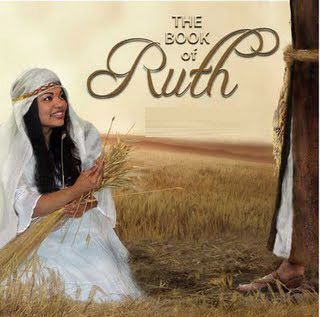
Ruth Lesson Four

The Redeemer Appears – Ruth 2:1-16

2 Now Naomi had a relative on her husband’s side named Boaz. He was a prominent man of noble character from Elimelech’s family.

Ruth the Moabitess asked Naomi, “Will you let me go into the fields and gather fallen grain behind someone who allows me to?”

Naomi answered her, “Go ahead, my daughter.” So Ruth left and entered the field to gather grain behind the harvesters. She happened to be in the portion of land belonging to Boaz, who was from Elimelech’s family.

Later, when Boaz arrived from Bethlehem, he said to the harvesters, “The Lord be with you.”

“The Lord bless you,” they replied.

Boaz asked his servant who was in charge of the harvesters, “Whose young woman is this?”

The servant answered, “She is the young Moabite woman who returned with Naomi from the land of Moab. She asked, ‘Will you let me gather fallen grain among the bundles behind the harvesters?’ She came and has remained from early morning until now, except that she rested a little in the shelter.”

Then Boaz said to Ruth, “Listen, my daughter. Don’t go and gather grain in another field, and don’t leave this one, but stay here close to my female servants. See which field they are harvesting, and follow them. Haven’t I ordered the young men not to touch you? When you are thirsty, go and drink from the jars the young men have filled.”

10 She bowed with her face to the ground and said to him, “Why are you so kind to notice me, although I am a foreigner?”

11 Boaz answered her, “Everything you have done for your mother-in-law since your husband’s death has been fully reported to me: how you left your father and mother and the land of your birth, and how you came to a people you didn’t previously know. 12 May the Lord reward you for what you have done, and may you receive a full reward from the Lord God of Israel, under whose wings you have come for refuge.”

13 “My lord,” she said, “you have been so kind to me, for you have comforted and encouraged your slave, although I am not like one of your female servants.”

14 At mealtime Boaz told her, “Come over here and have some bread and dip it in the vinegar sauce.” So she sat beside the harvesters, and he offered her roasted grain. She ate and was satisfied and had some left over.

15 When she got up to gather grain, Boaz ordered his young men, “Let her even gather grain among the bundles, and don’t humiliate her. 16 Pull out some stalks from the bundles for her and leave them for her to gather. Don’t rebuke her.” (HCSB)

Chapter 2 of Ruth begins the journey out of the emotional and spiritual valley that Naomi and Ruth were in after the multiple tragedies in Moab. This section of chapter two is broken down into two main sections, verses 1-3 and 4-16. Verses 4-16 are further broken down into three subsections. Let’s examine the passage.

Verses 1-3

2 Now Naomi had a relative on her husband’s side named Boaz. He was a prominent man of noble character from Elimelech’s family.

Ruth the Moabitess asked Naomi, “Will you let me go into the fields and gather fallen grain behind someone who allows me to?”

Naomi answered her, “Go ahead, my daughter.” So Ruth left and entered the field to gather grain behind the harvesters. She happened to be in the portion of land belonging to Boaz, who was from Elimelech’s family.

Whereas Naomi was the primary character in chapter one, Ruth takes on that role as the story unfolds. There are several key points to remember.

  • Once again, Ruth is referred to as “the Moabitess.”
    • She is an alien in a foreign land.
    • She is not going to wait for something good to happen to her; she will play an active role in making a better life for herself and Naomi.
    • However, she was at the lowest rung on the local social ladder.
  • Mosaic Law comes into effect here.
    • Leviticus 19:9-10  “When you reap the harvest of your land, you are not to reap to the very edge of your field or gather the gleanings of your harvest. 10 You must not strip your vineyard bare or gather its fallen grapes. Leave them for the poor and the foreign resident; I am Yahweh your God.
    • Leviticus 23:22 When you reap the harvest of your land, you are not to reap all the way to the edge of your field or gather the gleanings of your harvest. Leave them for the poor and the foreign resident; I am Yahweh your God.”
    • Deuteronomy 24:19 “When you reap the harvest in your field, and you forget a sheaf in the field, do not go back to get it. It is to be left for the foreigner, the fatherless, and the widow, so that the Lord your God may bless you in all the work of your hands.
  • Because Ruth was a Moabite and a widow, she qualified on two counts. But for the same reasons, their cooperation was not guaranteed, which is why she was hoping to glean behind someone who would allow her.
  • Ruth going to Boaz’s field by “accident,” God’s hand had been at work from the beginning.
    • Elimelech taking the family to Moab during the famine.
    • Removing the famine to bring them back.
    • Their arrival at precisely the beginning of the barley harvest.
    • Guiding Ruth to Boaz’s field and having them meet.
  • Ruth’s “chance” arrival at Boaz’s field is divine for two reasons.
    • Boaz was gracious, and Ruth would find favor in his eyes.
    • Boaz was from the same clan as Elimelech, allowing him to be her kinsman-redeemer.
  • The long-term Davidic royal line would have never happened except for this encounter.
    • It required someone from the same clan to be Ruth’s kinsman-redeemer.
    • It required a gracious man who would not chase away aliens or widows.
    • It required a man with the financial resources to redeem Ruth.
    • Boaz proves to be a humble God-fearing man who can redeem Ruth.

Verses 4-16

As I mentioned previously, this passage is broken down into three parts.

  • Boaz and the harvesters 4-7
  • Boaz and Ruth 8-14
  • Boaz and the harvesters 15-16

Verses 4-7

Later, when Boaz arrived from Bethlehem, he said to the harvesters, “The Lord be with you.”

“The Lord bless you,” they replied.

Boaz asked his servant who was in charge of the harvesters, “Whose young woman is this?”

The servant answered, “She is the young Moabite woman who returned with Naomi from the land of Moab. She asked, ‘Will you let me gather fallen grain among the bundles behind the harvesters?’ She came and has remained from early morning until now, except that she rested a little in the shelter.”

The narrative now switches from Ruth to Boaz. God’s hand is at work again.

  • Boaz arrives at the field on the first day that Ruth goes there.
  • Ruth arrived before Boaz made his visit. If she were late, they wouldn’t have met at this point.

But there’re several important points to note here regarding the interaction between Boaz and the workers.

  • The noble character mentioned in verse one is in full display.
    • He greets his workers in the name of Yahweh.
    • The workers reply by asking Yahweh to bless him. A sign that he is a respected boss.
  • He recognizes Ruth as being new and asks who she is.
  • The workers give two critical pieces of information.
    • She is Naomi’s daughter-in-law and a Moabite, mentioned twice.
    • She has been hard at work since early morning.

Verses 8-9

Then Boaz said to Ruth, “Listen, my daughter. Don’t go and gather grain in another field, and don’t leave this one, but stay here close to my female servants. See which field they are harvesting, and follow them. Haven’t I ordered the young men not to touch you? When you are thirsty, go and drink from the jars the young men have filled.”

As Boaz speaks to Ruth, there are several things to note.

  • Boaz addresses her as “my daughter,” much like Naomi in the first chapter.
    • Boaz breaks down any of the barriers that would naturally separate a Moabite woman and a Jewish man.
    • It likely reflects the age difference between the two.
    • Boaz feels a genuine sense of responsibility to protect and provide for Ruth.
  • Ruth is not to go to another field, so there is no need for her to leave.
  • Ruth is to stay close to his female servants.
  • Ruth doesn’t need to worry about the male servants harassing her as Boaz has told them not to bother her.
  • Ruth can drink freely from the water already collected for the workers.
    • Normally foreigners would draw water for Israelites.
    • Women would draw water for men.
    • The allowance to drink from the water already collected may seem simple, but from a historical and cultural context, it is remarkable.

Verse 10

She bowed with her face to the ground and said to him, “Why are you so kind to notice me, although I am a foreigner?”

Bowing with her face to the ground is the biblical understanding of worship, seen many times in the Old Testament. Ruth is astonished at the grace shown her by Boaz.

  • Ruth understands her social status as a Moabite woman and a widow.
  • Boaz has treated her as if she was the same social status as an Israelite field worker.
  • In Boaz’s eyes, she is a person to be treated with respect and dignity.

Verses 11-12

11 Boaz answered her, “Everything you have done for your mother-in-law since your husband’s death has been fully reported to me: how you left your father and mother and the land of your birth, and how you came to a people you didn’t previously know. 12 May the Lord reward you for what you have done, and may you receive a full reward from the Lord God of Israel, under whose wings you have come for refuge.”

Boaz continues the conversation with Ruth, essentially explaining part of the reason she has found such favor with Boaz.

  • Although the leader of the servants had not mentioned Ruth’s name, describing her as a Moabite woman had caused Boaz to realize her identity.
  • She resembles Abraham in her actions.
    • She left her family.
    • She left her homeland.
    • She committed to the unknown.
    • The one difference is that Yahweh didn’t command her to go; she did it out of loyalty to Naomi.

God’s providence is also revealed in Boaz’s speech. Ruth didn’t explicitly pray for Ruth in verse two, but she did in an implicit manner. Boaz is kind because Yahweh has prepared his heart.

Boaz now sends a prayer to Yahweh on behalf of Ruth. The prayer falls into three parts.

  • He prays that Yahweh would reward Ruth for her actions.
  • He prays that Ruth would receive a full reward, understood as full wages or payment.
  • He prays that Ruth would be sheltered under the full protection of Yahweh.

Verse 13

“My lord,” she said, “you have been so kind to me, for you have comforted and encouraged your slave, although I am not like one of your female servants.”

Ruth expresses heartfelt gratitude for Boaz’s actions.

  • Boaz has calmed her emotions by giving comfort.
  • Boaz has spoken compassionately and sympathetically to Ruth. He understands what the young woman has endured.

Verses 14-16

14 At mealtime Boaz told her, “Come over here and have some bread and dip it in the vinegar sauce.” So she sat beside the harvesters, and he offered her roasted grain. She ate and was satisfied and had some left over.

15 When she got up to gather grain, Boaz ordered his young men, “Let her even gather grain among the bundles, and don’t humiliate her. 16 Pull out some stalks from the bundles for her and leave them for her to gather. Don’t rebuke her.”

The extraordinary kindness that Boaz has been extending to Ruth continues. From the context of the passage, the meal in question must have been the mid-day meal as she continues to gather after the meal is finished. Looking at verse 14 of the passage, there are five points to consider.

  • Boaz invites Ruth, not part of the regular crew and a Moabite, to join them for a meal.
  • Not only is Ruth invited to join them, but she will also be enjoying the food prepared for the workers.
  • Ruth is invited to dip her bread in the condiment used to moisten and spice up dry bread.
  • Boaz serves Ruth roasted grain personally.
  • Ruth is given enough food to be satisfied with some leftovers.

Verse 14 is not about feeding a hungry person or one that had fallen on hard times. Instead, it’s about how Boaz took an ordinary event, lunch, and made it into a beautiful demonstration of compassion, generosity, and acceptance.

Verses 15-16 end the passage with Ruth once again participating in gathering grain. Outside of Ruth gathering grain, there are four parts to these two verses.

  • Ruth is to be allowed to gather even among the harvested bundles.
  • The workers are not to humiliate Ruth; she’s a widow, a Moabite, and in difficult circumstances.
  • The workers are to set aside some of the harvest for Ruth.
  • The workers are not to insult Ruth in any way.

As we work our way through the book of Ruth, and especially in the passage covered in this lesson, we see in Boaz a picture of Christ.

  • Verse 1
    • Boaz was a relative of Ruth and a man of considerable resources.
    • Jesus left heaven and became our relative, taking on human flesh. As the God-man, Jesus is a man of standing with access to all the resources at God’s disposal.
  • Verse 4
    • Boaz was a godly man. He knew that Yahweh was at the center of his thinking and actions.
    • Jesus, in human flesh, was the godliest man that ever lived. He was fully God and fully man.
  • Verses 6-7
    • Boaz was obedient to what was in Scripture, i.e., Deuteronomy 24:19.
    • Jesus was completely obedient to the Father, even to the point of death on a cross.
  • Verses 8 and 14
    • Boaz didn’t treat Ruth as a foreigner but as a family member.
    • Jesus welcomes all. Our background has no bearing on being accepted by Jesus.
  • Verses 8-9
    • Boaz was considerate to Ruth, telling her to stay with the servant girls.
    • Jesus was considerate in dealing with each fallen person He came in contact with; the widow, the prostitute, the troubled parent, the tax collector, and even His mother as He hung dying on the cross.
  • Verses 9-10
    • Boaz provided for Ruth both physical nourishment and protection by instructing his workers to treat her with respect.
    • Jesus provides for all who follow Him. Although that may not be fully realized in a fallen world, it is realized in our eternal fellowship with Him.
  • Verses 14-16
    • Boaz was generous to Ruth, to the point of overflowing generosity.
    • Jesus’ death on the cross provides overflowing generosity in protecting us from the judgment of sin and providing eternal life for all who place their faith in Him.

There is one overarching concept on display in this passage. Those who have abundant resources and are in a place of power or influence have the ability to choose two paths. They can choose to be selfish with what they have. Or they can choose to be generous and bless those around them, even those who would appear to be outsiders.

Applications.

  • Do we allow our prejudices, we all have them whether we are willing to admit it or not, affect how we interact with others? Or do we know them and refuse to allow them to act in a manner that would stain the image of Jesus?
  • Do we treat all people with dignity and respect, regardless of their background or circumstances?
  • Are we generous to those less fortunate and provide opportunities for those who have fallen on hard times to get back on their feet again?
  • If we are in a position of responsibility, do we treat our subordinates in a respectful and dignified manner and expect the same of them towards their subordinates?
  • There is also a picture here of the spiritual family of God. It doesn’t matter what our ethnicity, nationality, gender (male or female), skin color, or socioeconomic status; we are all equals in Christ. Do we treat our Christian brothers and sisters the same, even if they are different than us?