
1 Peter Lesson One

A Living Hope – 1 Peter 1:1-12

Today’s lesson begins a study on 1 Peter. Before digging into the first passage to discuss, let’s set the stage with some background information.

Destination and Situation of the Readers: Written to the churches in Asia Minor who were faced with suffering and persecution for their faith.

Date: Likely around A.D. 62-63 before Nero’s persecution begins.

Author: The author claims to be Peter, and there is no evidence in the writer’s letter to disagree with his authorship.

Theme: To encourage believers to hold fast while they endure the suffering and persecution of the present evil age, knowing that they will receive a great reward on the day of salvation.

Theology: The author presents three theological lessons in this book.

  • Hope in the midst of suffering.
  • Christians belong to the ancestral people of God.
  • The blessings that believers enjoy now or hope to enjoy in the future, Christ’s death and resurrection, and Christ’s victory over all evil spiritual beings.

Now, let’s look at today’s lesson.

1 Peter, an apostle of Jesus Christ:

To the temporary residents dispersed in Pontus, Galatia, Cappadocia, Asia, and Bithynia, chosen according to the foreknowledge of God the Father and set apart by the Spirit for obedience and for sprinkling with the blood of Jesus Christ.

May grace and peace be multiplied to you.

A Living Hope

Praise the God and Father of our Lord Jesus Christ. According to His great mercy,  He has given us a new birth into a living hope through the resurrection of Jesus Christ from the dead and into an inheritance that is imperishable, uncorrupted, and unfading, kept in heaven for you. You are being protected by God’s power through faith for a salvation that is ready to be revealed in the last time. You rejoice in this,  though now for a short time you have had to struggle in various trials so that the genuineness of your faith—more valuable than gold, which perishes though refined by fire—may result in praise, glory, and honor at the revelation of Jesus Christ. You love Him, though you have not seen Him. And though not seeing Him now, you believe in Him and rejoice with inexpressible and glorious joy, because you are receiving the goal of your faith, the salvation of your souls.

10 Concerning this salvation, the prophets who prophesied about the grace that would come to you searched and carefully investigated. 11 They inquired into what time or what circumstances the Spirit of Christ within them was indicating when He testified in advance to the messianic sufferings and the glories that would follow. 12 It was revealed to them that they were not serving themselves but you. These things have now been announced to you through those who preached the gospel to you by the Holy Spirit sent from heaven. Angels desire to look into these things. (HCSB)

Verses 1-2

Peter, an apostle of Jesus Christ: To the temporary residents dispersed in Pontus, Galatia, Cappadocia, Asia, and Bithynia, chosen according to the foreknowledge of God the Father and set apart by the Spirit for obedience and for sprinkling with the blood of Jesus Christ. May grace and peace be multiplied to you.

Some things to note about these first two verses.

  • The introduction is not in a standard format for letters of the period.
  • Peter introduces himself as an apostle of Jesus.
    • This should not be interpreted as being merely a messenger of Christ.
    • Jesus designated Peter as an authoritative messenger and interpreter of the Gospel.
    • This means that the letter is not just good advice; it is a binding apostolic word for the church.
  • The letter is addressed to “the temporary residents.” Other translations may say “pilgrims.”
    • Because they are “chosen” by God, they are residing temporarily on earth.
      • 1 Peter 2:11  Dear friends, I urge you as strangers and temporary residents to abstain from fleshly desires that war against you.
      • Hebrews 11:13  These all died in faith without having received the promises, but they saw them from a distance, greeted them, and confessed that they were foreigners and temporary residents on the earth.
    • Their true home is in heaven.
  • They are “chosen according to the foreknowledge of God.” This is a challenging concept to wrap our brains around, and there is much discussion and debate on the ideas of predestination and foreknowledge. The two main camps are the Calvinists and the Arminians, and what makes it even more challenging is that Scripture can support both of their positions. I won’t get into a lengthy and detailed discussion of the two camps, as that would be an entire lesson. The important point to reflect on here is that the recipients of the letter are believers of the Gospel.
    • Romans 8:29  For those He foreknew He also predestined to be conformed to the image of His Son, so that He would be the firstborn among many brothers.
    • 2 Thessalonians 2:13  But we must always thank God for you, brothers loved by the Lord, because from the beginning God has chosen you for salvation through sanctification by the Spirit and through belief in the truth.
  • This is a cyclical letter intended for each of the churches listed, located in modern-day Turkey.
  • The believers are being sanctified by the Holy Spirit.
    • Conversion is not just an intellectual understanding of the Gospel.
    • It involves obedience and submission to the Gospel.
  • They have been cleansed by the sacrificial blood of Jesus.
  • Entrance into the New Covenant has two parts.
    • Obedience to the Gospel.
    • Cleansing through the sacrificial blood of Jesus.
  • The Trinity is contained in the introduction, Father, Son, and Holy Spirit.
  • It closes with a prayer that grace and peace be multiplied in their lives.

Verses 3-5

Praise the God and Father of our Lord Jesus Christ. According to His great mercy,  He has given us a new birth into a living hope through the resurrection of Jesus Christ from the dead and into an inheritance that is imperishable, uncorrupted, and unfading, kept in heaven for you. You are being protected by God’s power through faith for a salvation that is ready to be revealed in the last time.

Peter begins this section with the theme for the entire passage, praise for God.

  • Because He has given us a new birth.
    • None of us can take credit for the new birth.
    • It is entirely through God’s grace and mercy.
  • He has given us a living hope.
    • The resurrection of Jesus.
    • Victory over death.
    • Everything they could suffer in this world is insignificant compared with the future blessings of resurrection and eternity with God.
  • He has given us an inheritance.
    • In the Old Testament, the land was the inheritance.
    • In the New Covenant, Peter understands that the inheritance is the end-time hope that all believers have.
    • Our eternal home is in heaven.
    • It is still a physical hope: a new heaven and a new earth.
      • 2 Peter 3:13  But based on His promise, we wait for the new heavens and a new earth, where righteousness will dwell.
      • Revelation 21:1  Then I saw a new heaven and a new earth, for the first heaven and the first earth has passed away, and the sea no longer existed.
  • However, the focus on salvation should be on our future glory.
    • Inheritance is another way of looking at our salvation. Our full and final inheritance will be received in the new heaven and new earth.
    • It will be revealed in the last time; our salvation is a future event.
    • Believers can rest in the assurance that God’s power will protect them through their trials here and bring them to salvation.
      • This doesn’t mean we won’t’ experience trials.
      • But God will preserve us so that we will receive our final inheritance.
      • This requires faith on our part.
      • God’s protection works in conjunction with our believing.
        • The root of sin is unbelief.
        • If we are faithful, God’s power protects us from unbelief and sin.

Verses 6-9

You rejoice in this,  though now for a short time you have had to struggle in various trials so that the genuineness of your faith—more valuable than gold, which perishes though refined by fire—may result in praise, glory, and honor at the revelation of Jesus Christ. You love Him, though you have not seen Him. And though not seeing Him now, you believe in Him and rejoice with inexpressible and glorious joy, because you are receiving the goal of your faith, the salvation of your souls.

In verses 3-5, the focus was on praise to God. Now, in verses 6-9, the focus shifts to joy and love, even as they face various trials.

  • There are two types of trials.
    • Those brought on by our own poor choices.
    • Those that God allows us to experience to shape and mold us for greater works and keep us on the narrow path.
      • Acts 14:22  Strengthening the disciples by encouraging them to continue in the faith and by telling them, “It is necessary to pass through many troubles on our way into the kingdom of God.”
      • Romans 5:3-4  And not only that, but we also rejoice in our afflictions, because we know that affliction produces endurance, endurance produces proven character, and proven character produces hope.
      • James 1:2-4  Consider it great joy, my brothers, whenever you experience various trials, knowing that the testing of your faith produces endurance. But endurance must do its complete work, so that you may be mature and complete, lacking nothing.
      • These trials are never enjoyable, but God is working out His plan through them.
  • The persecutions of Christians under the rule of Nero were starting at the time this letter was written.
    • Nero’s persecution was the first of nine conducted by the Roman Empire.
    • The persecutions lasted for about 250 years.
    • Peter’s death was likely during this first persecution.

Verse 7

Why does God allow us to suffer?

  • Suffering functions as the test for faith.
    • Those with genuine faith will persevere through the trials.
      • They will continue to trust God even in the deepest valleys of suffering.
      • Their faith will be strengthened and purified through the sufferings.
      • Their transformation into Christ-likeness includes the ability to undergo suffering to glorify God.
    • Those who have a shallow or false faith will not persevere through the sufferings. In the end, they will be seen as false Christians.
  • The trials of life test our faith to prove its sincerity. A faith that cannot be tested cannot be trusted. A person who abandons their faith when the going gets tough is only proving that they had no faith at all.
  • We also suffer because our “new life” values are in direct conflict with a fallen and sinful world. In our current world, this has led to secularism and pluralism negatively affecting the church-many hot topics in the world clash with the truth of Scripture.
    • Same-sex marriage.
    • All religions lead to the same God and heaven.
    • Relative truth, each of us has our own set of truth values, and we must accept and respect the truths of others.
    • The idea that some portions of Scripture are a fairy tale.
    • The lack of personal responsibility and accountability. I can do anything I want. I’m not at fault for my actions.
    • There are more, but in each case, the values of a follower of Jesus are in direct conflict with the world.

Verse 8

What is our hope based on?

  • The end of verse 7 answers that, the revelation of Jesus, and verse 8 expounds on it.
    • Our sufferings should not make us miserable.
    • Our lives should be filled with love for Jesus.
    • Jesus is precious to those who believe in Him.
    • The recipients of the letter, and us, have never seen Him, yet we believe in Him.
    • Believing is not based on seeing. John 20:29  Jesus said, “Because you have seen Me, you have believed. Those who believe without seeing are blessed.”
  • Peter’s main point here is that the hope of believers is not destroyed by the trials they undergo. Their lives are characterized by a hope that fills the present with love and joy while they wait for the eternal joy in anticipation. If we trust Jesus with our present salvation, we can also trust Him with our future salvation.

Verse 9

This expounds on the previous verse be defining the reward awaiting those who believe in Jesus.

  • The reason for the believer’s love and joy is the promise of future salvation.
  • We see from verse 5 that it will be completed “in the last time.”
    • This doesn’t mean that salvation isn’t a present-tense idea.
    • As in many places in the Bible, this is an “already, not yet” concept that will not reach its completion until Jesus returns.
    • Believers enjoy salvation now but will experience its fullness at a future date.

Verses 10-12

10 Concerning this salvation, the prophets who prophesied about the grace that would come to you searched and carefully investigated. 11 They inquired into what time or what circumstances the Spirit of Christ within them was indicating when He testified in advance to the messianic sufferings and the glories that would follow. 12 It was revealed to them that they were not serving themselves but you. These things have now been announced to you through those who preached the gospel to you by the Holy Spirit sent from heaven. Angels desire to look into these things.

Verse 10

This verse builds upon the previous verse in expanding upon the idea of salvation.

  • The salvation that was prophesied in the past, the recipients of the letter were now experiencing.
    • Believers in Jesus are the fulfillment of prophecy.
    • The prophecy was intended for Peter’s readers.
  • This salvation was not experienced in the same way by the Old Testament prophets.
    • God’s grace through the New Covenant.
    • The prophets carefully investigated the salvation they prophesied about.

Verse 11

  • The prophets didn’t live in the time of fulfillment.
  • Their prophecies were inspired by the Spirit of Christ, indicating authority and accuracy.
  • The prophets predicted these events but didn’t know when they would occur.
  • They hoped to experience the fulfillment of their prophecies.
  • The recipients of the letter do live in the time of fulfillment.
  • The prophets discovered that Jesus would first suffer and only after that would glory follow.
    • Often, this is a pattern in our lives.
    • Suffering is not a sign that Jesus has forsaken us.
    • Suffering is a sign of our fellowship with Jesus.
    • Suffering does not reduce the living hope given to us through the death and resurrection of Jesus.

Verse 12

  • Although the prophets desired to live in the time of fulfillment, God revealed to them that they would not experience it.
  • The Old Testament prophecies do not apply to the recipients but were intended for them.
  • The prophets were guided by the Spirit of Christ, but those who evangelize the Gospel message do so through the power of the Holy Spirit.
  • The Gospel fulfills what is contained in the Old Testament.
  • Believers are blessed to live in the time of prophetic fulfillment. Matthew 13:16-17  “But your eyes are blessed because they do see, and your ears because they do hear! For I assure you: Many prophets and righteous people longed to see the things you see yet didn’t see them; to hear the things you hear yet didn’t hear them.”
  • Angels don’t experience the Gospel in the same way that humans do since they are not the recipients of redemption.
    • Angels marvel at what God has done through the sacrifice of Jesus.
    • The recipients of the letter actually experience it.

Applications.

  • Do we consider ourselves “temporary residents” of the earth? As a follower of Christ, our identity is in Him and not our country, ethnicity, the school we attended, job, etc. This may be hard for some to come to grips with, but our true identity is not defined by anything on this earth.
  • As a follower of Christ, our future hope is secure. Do you really believe that, or do you struggle with the assurance of your salvation? If you believe in the infallible truth of Scripture, you should never doubt your salvation if you have placed your trust in Jesus. Doubting is the ploy of the enemy to hamper your work for God.
  • All of us will suffer trials as we go through life. Some of us will suffer more than others. Do you focus on the present trial, or do you focus on the future assurance?
  • Understand that biblical salvation is offensive to the culture we live in. As we share the Gospel message, we will face opposition. Some opposition may be minor, but some could be quite violent. Our task, both individually and corporately as the church, is to faithfully and boldly preach the true Gospel message whenever and wherever the opportunity presents itself.
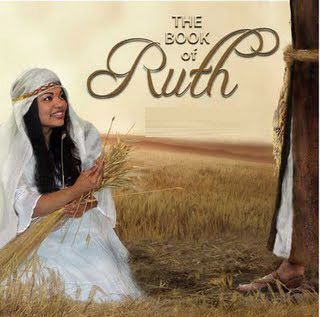
Ruth Lesson Three

Bitterness and Faith – Ruth 1:14-22

14 Again they wept loudly, and Orpah kissed her mother-in-law, but Ruth clung to her. 15 Naomi said, “Look, your sister-in-law has gone back to her people and to her god. Follow your sister-in-law.” 16 But Ruth replied: Do not persuade me to leave you or go back and not follow you. For wherever you go, I will go, and wherever you live, I will live; your people will be my people, and your God will be my God. 17 Where you die, I will die, and there I will be buried. May Yahweh punish me, and do so severely, if anything but death separates you and me. 18 When Naomi saw that Ruth was determined to go with her, she stopped trying to persuade her. 19 The two of them traveled until they came to Bethlehem. When they entered Bethlehem, the whole town was excited about their arrival and the local women exclaimed, “Can this be Naomi?” 20 “Don’t call me Naomi. Call me Mara,”  she answered, “for the Almighty has made me very bitter.  21 I went away full, but the Lord has brought me back empty. Why do you call me Naomi, since the Lord has pronounced judgment on me, and the Almighty has afflicted me?” 22 So Naomi came back from the land of Moab with her daughter-in-law Ruth the Moabitess. They arrived in Bethlehem at the beginning of the barley harvest. (HCSB)

The passages covered in this third lesson on Ruth contains two main parts. The first is the continuing exchange between Naomi and Ruth, and the second is their return to Bethlehem. Let’s take a closer look at the two sections.

Verses 14-18

14 Again they wept loudly, and Orpah kissed her mother-in-law, but Ruth clung to her. 15 Naomi said, “Look, your sister-in-law has gone back to her people and to her god. Follow your sister-in-law.” 16 But Ruth replied: Do not persuade me to leave you or go back and not follow you. For wherever you go, I will go, and wherever you live, I will live; your people will be my people, and your God will be my God. 17 Where you die, I will die, and there I will be buried. May Yahweh punish me, and do so severely, if anything but death separates you and me. 18 When Naomi saw that Ruth was determined to go with her, she stopped trying to persuade her.

As verse 14

As it begins, it leads the reader to believe that Naomi has been successful in persuading both of her daughters-in-law to return to Moab. Instead, it is a division point. Orpah listens to Naomi’s advice believing it is in her best interests to return to Moab. However, Ruth refuses to leave Naomi’s side.

The two women, Ruth and Orpah, who began the narrative as equals, are now distinguished as distinctively different. Orpah makes the logical choice for her future and exits the story. We never know if Naomi’s prayers for her were answered. It is interesting that Orpah is not criticized for her actions or as a figure of unbelief. The focus now shifts to Naomi and Ruth. In contrast, Ruth now shines as a beacon of fortitude and faith that comes out in this final decision point discussion between Naomi and Ruth.

Verse 15

Naomi makes one final plea, using Orpah as an example of the best decision for Ruth to make. However, Naomi has no support for her position outside of Orpah’s decision to return to Moab.

It should also be noted that Naomi tells Ruth to go back to her gods. It is easy to overlook this simple statement as Moab didn’t worship Yahweh; they worshipped several “gods,” with Chemosh being the predominant one. The statement identifies two problems/facts. First, in general, the deteriorated state of Israel’s understanding and commitment to Yahweh. Second, that Naomi would actually address idols as gods.  

One final point to consider is that since all the men had died, Ruth was technically under the guardianship of Naomi and culturally should have been obedient to her wishes. In Ruth’s decision to follow Naomi, we see God’s sovereign grace to save Ruth and bring her into the family of Yahweh.

Verses 16-17

These two verses are amazing, considering the cultural differences between the two women and the seriousness of the commitment that Ruth was making to Naomi. Ruth’s narrative in these two verses breaks down into five two-line couplets. There is an introductory command to Ruth, followed by three couplets ending with a challenge to the witness to the statement.

  • Do not persuade me to leave you or go back and not follow you.
  • For wherever you go, I will go and wherever you live, I will live.
  • Your people will be my people , and your God will be my God.
  • Where you die, I will die, and there I will be buried.
  • May Yahweh punish me, and do so severely, if anything but death separates us.

The second and fourth couplets represent a pair of opposites, life and death, bracketed by Ruth’s declaration that she will commit herself to not only Naomi but to Yahweh. The third couplet is the most amazing. Ruth is turning her back on everything that had been familiar to her and is now willing to place her entire trust and faith not only in Ruth and the Jewish people but on a grander scale she is ready to place her trust in Yahweh.

The oath that Ruth swears is in the name of Yahweh, Israel’s God, who Ruth now accepts as her own. The form that it takes is in the typical pattern of a Jewish oath where a curse is declared against the maker of the oath if they fail to fulfill the pledge.

Verse 18

When Naomi saw that Ruth was determined to go with her, she stopped trying to persuade her.

The forcefulness and oath at the conclusion of Ruth’s speech leave Naomi no other choice than to let Ruth stay with her.

Verses 19-21

19 The two of them traveled until they came to Bethlehem. When they entered Bethlehem, the whole town was excited about their arrival and the local women exclaimed, “Can this be Naomi?” 20 “Don’t call me Naomi. Call me Mara,” she answered, “for the Almighty has made me very bitter.  21 I went away full, but the Lord has brought me back empty. Why do you call me Naomi, since the Lord has pronounced judgment on me, and the Almighty has afflicted me?”

The first point to note is that two women traveling alone over a relatively long distance made it to Bethlehem without anything happening to them along the way is an indication of Yahweh’s protection.

The second point is the contrast between the excitement at their arrival and the questions they ask themselves.  

  • The excitement at Naomi’s return.
    • She had been gone for more than ten years.
    • Her family had heard of the grief she experienced.
  • The likely shock that a Moabite woman accompanied Naomi.
  • They question, “Can this be Naomi?”
    • There can be little doubt the years and grief had taken their toll on Naomi.
    • Her appearance was likely nowhere near what it was when she left.
    • Naomi, “the pleasant one,” was now a haggard and destitute woman.
  • Their reaction is not lost on Naomi.
    • Her bitterness reappears, and she asks for a new name.
    • Mara would be understood in Hebrew to mean “to be bitter.”
    • The depth of her bitterness comes out in verses 20b-21.
  • Naomi lays four accusations against God following an A B B A pattern, Shadday (Almighty), Yahweh (LORD), Yahweh, Shadday.
  • There is also a play on words and the accusations Naomi places against God.
    • She left as Naomi, the pleasant one, in a state of fullness.
    • She returns as Mara, to be bitter, in a state of emptiness.

The third point is also a contrast – the actions and behavior of Naomi and those of Ruth.

  • Naomi, one of God’s chosen people of the nation of Israel, does nothing but complain bitterly and blames God for her misfortune.
  • Ruth, the Moabite and a bitter enemy of Israel displays restraint and decorum in her actions.
  • The one who grew up in a nation of idol worshippers, Moab, displays more faith and a humble spirit than the one who allegedly knew the living God.

Verse 22

So Naomi came back from the land of Moab with her daughter-in-law Ruth the Moabitess. They arrived in Bethlehem at the beginning of the barley harvest.

The last verse of chapter one neatly summarizes what has occurred and sets the stage for what is to transpire next. As the book continues, the prominence of Naomi will decline, while the prominence of Ruth will rise. Considering the cultural barriers at work, this is amazing for three reasons.

  • Ruth is from Moab and could expect little acceptance from the residents of Bethlehem.
  • She is Naomi’s daughter-in-law, having no status of her own.
  • They just returned. They are the “new kids on the block,” even though Naomi had lived there previously.

However, the part of verse 22 is “at the beginning of the barley harvest.” This is a signal that their fortune was about to change.

  • The meaning of Bethlehem is “the house of bread.”
  • The barley harvest was the first harvest of the agricultural season, typically occurring in March-April.
  • This was followed by the wheat harvest in May.
  • The two women were returning to a period of plentiful food.
  • The timing of their return signals that Yahweh is about to prove His covenant faithfulness to these women.
    • Through food to eat.
    • Through a covenant redeemer, Boaz.

Applications

  • Chapter 1 of Ruth describes a journey, heartbreaking in places. We need to recognize and remember that even when the bitter times in our lives leave us feeling empty, God uses them to shape us, mold us, and if we’ve wandered from Him, to call us back.
  • Even though there are times we can’t control circumstances, we can control how we react to them. Meditate on 1 Thessalonians 5:18  Give thanks in everything, for this is God’s will for you in Christ Jesus.
  • The Scottish preacher George H. Morrison said, “Nine-tenths of our unhappiness is selfishness, and is an insult cast in the face of God.” If we are selfish in our grief, bitter, we direct our anger at God instead of trusting God and resting in His peace.
  • Just as Naomi had hit rock bottom, she returned to Bethlehem at a time of plenty to start over again. God is always waiting for us to return to Him if we’ve wandered away, to enjoy a life of plenty and refreshment in His presence.
  • The faith that Ruth displayed in her decision to return with Naomi is one of the greatest in the entire Bible. Is our faith like that of Ruth’s or like that of Orpah?

Ruth Lesson Two

Return From Moab – Ruth 1:6-13

She and her daughters-in-law prepared to leave the land of Moab, because she had heard in Moab that the Lord had paid attention to His people’s need by providing them food. She left the place where she had been living, accompanied by her two daughters-in-law, and traveled along the road leading back to the land of Judah.

She said to them, “Each of you go back to your mother’s home. May the Lord show faithful love to you as you have shown to the dead and to me. May the Lord enable each of you to find security in the house of your new husband.” She kissed them, and they wept loudly. 10 “No,” they said to her. “We will go with you to your people.”

11 But Naomi replied, “Return home, my daughters. Why do you want to go with me? Am I able to have any more sons who could become your husbands? 12 Return home, my daughters. Go on, for I am too old to have another husband. Even if I thought there was still hope for me to have a husband tonight and to bear sons, 13 would you be willing to wait for them to grow up? Would you restrain yourselves from remarrying? No, my daughters, my life is much too bitter for you to share, because the Lord’s hand has turned against me.” (HCSB)

Looking back at last week’s lesson, Naomi was left with her two daughters-in-law after the passing of her husband and both sons. She was in the very bottom of the valley of despair and grief, left with no viable source of income and no immediate family.

Verses 6-7

But now the grey clouds start to break, and a ray of sunshine touches Naomi’s heart, “because she had heard in Moab that the LORD had paid attention to His people’s need by providing them food.”

There are four features in this sentence that illustrate God’s divine grace.

  • It was a gift from God that, in the depths of Naomi’s despair and grief, she was able to hear good news.
  • Naomi heard that Yahweh intervened for the benefit of His people.
  • The object of the divine intervention is the nation of Israel, God’s people.
  • Yahweh provided bread to His people. This is actually a play on words as the name “Bethlehem”  means “the house of bread.”

Upon hearing the good news, Naomi’s actions were immediate and decisive.

  • She left.
  • She traveled.
  • She headed back to Judah.
  • Moab was never intended to be their home.
    • The Promised Land was their true home.
    • It was a mistake for Elimelech to take the family to Moab.
  • Naomi could expect to receive the treatment that Scripture afforded widows.
    • Deuteronomy 14:29  Then the Levite, who has no portion or inheritance among you, the foreigner, the fatherless, and the widow within your gates may come, eat, and be satisfied. And the Lord your God will bless you in all the work of your hands that you do.
    • Deuteronomy 16:11  Rejoice before Yahweh your God in the place where He chooses to have His name dwell—you, your son and daughter, your male and female slave, the Levite within your gates, as well as the foreigner, the fatherless, and the widow among you.

There is a message here for Christians who have wandered from the faith. The same God who showed kindness to Naomi in bringing home the “wanderer” is the same God who shows mercy and grace to us today.

Verses 8-9

She said to them, “Each of you go back to your mother’s home. May the Lord show faithful love to you as you have shown to the dead and to me. May the Lord enable each of you to find security in the house of your new husband.” She kissed them, and they wept loudly.

Naomi prays for two blessings on Orpah and Ruth.

  • The phrase mother’s home, in Hebrew bêt ʾēm, is found in the Old Testament in only three other places. Twice in Song of Solomon, 3:4 and 8:2, and Genesis 24:28. The context for each occurrence involves love and marriage. What Naomi is doing is releasing Orpah and Ruth to go back to their homeland and find new husbands. They no longer have any obligation to Naomi.
  • It is striking the devotion that the two Moabite women show towards Naomi, an Israelite, in beginning the journey back to Bethlehem together.
  • The firmness of the command to return home is matched by the compassion and gentleness she displays to the two women when she prays for a double blessing over them. The term “faithful” in verse 8 is chesed in Hebrew, a word that is not possible to translate into a one-word definition in English. It is a word that expresses a covenant relationship best understood as a combination of love, covenant faithfulness, mercy, grace, kindness, and loyalty.
  • At the same time, Orpah and Ruth have shown chesed to Naomi, her deceased husband, and two sons. The praise she bestows on the two Moabite women depicts them as models of grace and that acts of human kindness, as displayed by Orpah and Ruth, warrants grace and kindness from Yahweh.
  • Naomi also petitions Yahweh for security in the household of a new husband.
    • Naomi doesn’t want them to experience a life of wandering and restlessness as widows.
    • She desires that they find a new home with a new family.
    • Naomi understands the world in which they live is heavily dependent on a male providing physical and economic security.

Naomi then kisses them farewell, and they vent their emotions with loud weeping. However, the discussion is not over.

Verse 10

“No,” they said to her. “We will go with you to your people.”

Although a short verse, it is packed with meaning.

  • Considering all that they have been through, it would seem logical for Orpah and Ruth to want to start over in their own land.
    • The grief of watching their father-in-law die.
    • Each woman losing their husband.
    • Likely observing Naomi in despair and deep sadness over losing her husband and both sons.
  • Yet Orpah and Ruth have more attachment to Naomi than they do to their own people.

Verses 11-13

11 But Naomi replied, “Return home, my daughters. Why do you want to go with me? Am I able to have any more sons who could become your husbands? 12 Return home, my daughters. Go on, for I am too old to have another husband. Even if I thought there was still hope for me to have a husband tonight and to bear sons, 13 would you be willing to wait for them to grow up? Would you restrain yourselves from remarrying? No, my daughters, my life is much too bitter for you to share, because the Lord’s hand has turned against me.”

The first thing to note in Naomi’s exchange with Orpah and Ruth is that she acted in an unselfish manner towards them. It would have been easy for her to try and take them along, maybe even to hope that they could take care of her in the future. However, her first thought is towards their future welfare.

Verse 11

The rhetorical question “why do you want to go with me” appears, at first glance, to be a request for Orpah and Ruth to weigh the advantages of continuing the journey to Bethlehem. However, Naomi is actually scolding them. In essence, she is saying it is foolish to come with me; you’d be much better off returning to your home country and finding a husband there.

Verse 12-13a

Here, Naomi answers her own rhetorical question. She is telling Orpah and Ruth to be realistic. She is too old to remarry and have children, and even if she could, it is unrealistic to think they’d wait for the new sons, assuming she had sons if she was even able to get pregnant again, until they were grown enough to marry.

Verse 13b

Again, Naomi answers her question. And in her answer, we see the bitterness that she feels, as well as believing Yahweh is the source. This is an interesting twist on the narrative. Earlier, Naomi had pleaded with Yahweh to be gracious to Orpah and Ruth by providing them new husbands and a secure place to live. Now, Naomi is accusing Yahweh as the source of her bitterness. This feeling is based on an understanding of God’s previous judgments against the nation of Israel.

  • Exodus 9:3  then the Lord’s hand will bring a severe plague against your livestock in the field—the horses, donkeys, camels, herds, and flocks.
  • Deuteronomy 2:15  Indeed, the Lord’s hand was against them, to eliminate them from the camp until they had all perished.
  • Judges 2:15  Whenever the Israelites went out, the Lord was against them and brought disaster on them, just as He had promised and sworn to them. So they suffered greatly.

If we read this narrative casually and without a historical/cultural understanding, it is easy to miss the concepts in the first part of the book of Ruth.

  • The famine in Bethlehem.
  • The family’s self-imposed exile to Moab, not a logical choice for an Israelite.
  • The death of her husband and sons as a form of judgment.
  • The inability of Orpah and Ruth to have children is evidence of God’s disapproval of their marriage.

Applications.

  • The first one I mentioned earlier in this lesson. There is a message here for Christians who have wandered from the faith. The same God who showed kindness to Naomi in bringing home the “wanderer” is the same God who shows mercy and grace to us today.
  • Disobedience has consequences. The first part of Ruth has a litany of mistakes; moving to Moab, allowing the sons to marry local women, and Naomi not speaking out against the poor choices.
    • Do our choices in life reflect obedience to God’s Word and shine the light of Christ?
    • If we see others around us, family or friends, make choices contrary to a Christian lifestyle, do we say anything, or do we keep quiet?
    • If we have wandered down the wrong path, do we repent and return?
  • We should never blame God for our circumstances.
    • If we are disobedient, there are consequences. Repent.
    • If we are faithful followers of Jesus, there will be times of testing and persecution. We should view those experiences as God shaping us for future service. They may not be fun, but God knows what we need better than we do.

Ruth Lesson One

Disobedience Carries Consequences – Ruth 1:1-5

Today’s lesson begins a study on the book of Ruth, a fascinating and unique book in the Old Testament. Before digging into the first passage to discuss, let’s set the stage with some background information.

Title: Although the book is titled “Ruth,” she is not the main character and, when considering her background, it is amazing that the book is named after her. She was a Moabite and not an Israelite. This is the only book in the Old Testament named after a non-Israelite. Of the three main characters, Naomi, Boaz, and Ruth, Ruth speaks the least, and her narratives are the shortest.

Placement: Appearing right after Judges, which is a welcome relief after the continuous downward spiral in Israel’s disobedient behavior. In contrast to such individuals as Gideon, Jephthah, and Samson, all of the main characters in Ruth display authentic faith and covenant faithfulness. Ruth is also one of the five scrolls that are regularly read at Jewish festivals.

Author: The author is unknown, as well as the date of writing – scholarly views on the date range from the reign of David to the post-exilic period.

Theme: The book develops the theme of “from emptiness to fullness.” It is also possible that the author had a goal in this book, the exaltation of David by telling the incredible story of his roots.

Theology: The author presents five theological lessons in this book.

  • God will not let His promises to Israel, Judah, and David die.
  • God works in a mysterious way, His wonders to perform, and His goals to achieve.
  • In all things, God works for the good of those who love Him and are called according to His purpose.
  • Genuine piety is expressed primarily in devotion, sensitivity, grace, and kindness toward others, and openness to the working of God.
  • God’s grace knows no boundaries. Even a despised Moabitess is incorporated into the nation of Israel. In fact, the royal and Messianic line has Moabite blood in its veins.

Now, let’s look at today’s lesson.

1 During the time of the judges, there was a famine in the land. A man left Bethlehem in Judah with his wife and two sons to live in the land of Moab for a while. The man’s name was Elimelech, and his wife’s name was Naomi. The names of his two sons were Mahlon and Chilion. They were Ephrathites from Bethlehem in Judah. They entered the land of Moab and settled there. Naomi’s husband Elimelech died, and she was left with her two sons. Her sons took Moabite women as their wives: one was named Orpah and the second was named Ruth. After they lived in Moab about ten years, both Mahlon and Chilion also died, and Naomi was left without her two children and without her husband. (HCSB)

First, we’ll concentrate on verses 1-2 as that sets the foundation and contrast for the entire book.

1 During the time of the judges, there was a famine in the land. A man left Bethlehem in Judah with his wife and two sons to live in the land of Moab for a while. The man’s name was Elimelech, and his wife’s name was Naomi. The names of his two sons were Mahlon and Chilion. They were Ephrathites from Bethlehem in Judah. They entered the land of Moab and settled there.

The phrase “during the time of the judges” is understood as the period when the Lord’s people forsook the Lord, rebelled against His rule, suffered the consequences, and needed someone to rescue them.

  • Judges 2:10-13 10 That whole generation was also gathered to their ancestors. After them another generation rose up who did not know the Lord or the works He had done for Israel. 11 The Israelites did what was evil in the Lord’s sight. They worshiped the Baals 12 and abandoned the Lord, the God of their fathers, who had brought them out of Egypt. They went after other gods from the surrounding peoples and bowed down to them. They infuriated the Lord, 13 for they abandoned Him and worshiped Baal and the Ashtoreths.
    • This shows that the faithfulness of one generation can’t secure the faithfulness of the next.
    • This is true for a family, church, or nation. They may “play” the role for a while, but their true nature is revealed sooner or later.
  • Judges 2:14-15  14 The Lord’s anger burned against Israel, and He handed them over to marauders who raided them. He sold them to the enemies around them, and they could no longer resist their enemies. 15 Whenever the Israelites went out, the Lord was against them and brought disaster on them, just as He had promised and sworn to them. So they suffered greatly.
    • The consequences of disobedience are set.
    • God hands them over to their enemies.
    • The role of the judges is set in Judges 2:16.

The opening verses of Ruth illustrate and help to understand three significant truths about living in a world where the Lord and His rule are ignored.

  • The Lord’s warning of punishment is no idle threat. Reflect on verse 1, “there was a famine in the land.”
    • This was the land Yahweh promised to give to Abraham in Genesis 12:7 and 13:14-17.
    • It was the land Yahweh promised to give to His people when He rescued them from slavery in Egypt in Exodus 3:8.
    • It was the land “flowing with milk and honey.”
    • It was the promised land where food was abundant, and Yahweh’s people could enjoy the good life Yahweh had prepared for them.
  • Ignoring the Lord’s rule is something to be taken seriously.
    • Elimelech’s name means “God is my King.”
    • Naomi’s name means “pleasant.”
    • They had two sons.
    • They lived in a prosperous area, Bethlehem.
    • They belonged to the tribe of Judah.
    • Moab was the opposite of Bethlehem.
      • No God-fearing Israelite would choose to take their family there.
      • Moabites were the descendants of Lot.
      • The relationship between Moab and Israel was not good.
      • Balak, king of Moab, hired Balaam to curse Israel in Numbers 22-24.
      • Moabite women seduced Israelite men to sexual immorality and to worship their gods.
      • Before entering the promised land, they were commanded not to make a treaty with the Moabites in Deuteronomy 23:3-6.
    • The names of their children may also be significant.
      • Mahlon means “to be sick.”
      • Kilion means “failing or pining.”
      • Both may have been frail children.
    • Both children would never have married Moabite women unless Elimelech had taken the family there.
      • Decisions by parents can have repercussions for their children.
      • Scripture commanded the Israelites not to marry outside their own people.
  • Tasting the Lord’s bitter pill prepares the way for experiences of His kindness. But how do we understand that concept?
    • Naomi correctly understands that Yahweh was in control.
    • Often tasting the Lord’s bitter pill is the necessary step for an undeserving people to experience His kindness.
      • In the time of Joseph, Yahweh used the famine to bring salvation to the sons of Jacob.
      • In the time of Elijah, Yahweh uses a famine to turn His people back to Himself.
      • In the parable of the prodigal son, a severe famine was the vehicle that drove the son to humble himself and return to his father.
    • The Lord can and does use bitter experiences to drive us back to Him, where we can experience His undeserved kindness.

Verses 3-5

Naomi’s husband Elimelech died, and she was left with her two sons. Her sons took Moabite women as their wives: one was named Orpah and the second was named Ruth. After they lived in Moab about ten years, both Mahlon and Chilion also died, and Naomi was left without her two children and without her husband.

We don’t know how long they had lived in Moab before Elimelech dies. However, verse two sheds some light on it by using the phrase “for a while.” This left Naomi without her provider, a dangerous situation for a woman at that time. During this time, the two sons marry Moabite women. Let’s look at several factors surrounding these marriages.

  • The Hebrew term used means “to lift/carry a woman” instead of the typical phrase “to take a woman.” This difference creates a negative connotation surrounding the marriages.
    • The term is used only nine times in the Old Testament.
    • In Judges 21:23, it talks about marriage by abduction.
    • Most marriages by abduction were outside the clan and were considered illegitimate.
  • These marriages should be interpreted in light of Mosaic prohibitions against marriage with pagans.
    • Deuteronomy 7:3-4  Do not intermarry with them. Do not give your daughters to their sons or take their daughters for your sons, because they will turn your sons away from Me to worship other gods. Then the Lord’s anger will burn against you, and He will swiftly destroy you.
    • As the head of the household after Elimelech’s passing, Naomi should have prevented these marriages.
  • According to covenant curses, marriages to foreigners in the land of exile was considered the judgment of God.  Deuteronomy 28:32  Your sons and daughters will be given to another people, while your eyes grow weary looking for them every day. But you will be powerless to do anything.
  • Naomi’s sons lived in a married state for approximately ten years without either having any children.
    • The barrenness of both Ruth and Orpah must be interpreted as evidence of Yahweh’s hand against them.
    • Deuteronomy 28:18 Your descendants  will be cursed, and your land’s produce, the young of your herds, and the newborn of your flocks.
    • Later, in Ruth 4:13, it would take Yahweh’s intervention to allow Ruth to have a child.
  • Both sons die, leaving Naomi with no male family members.

Applications

  • Am I submitting to the rule of Christ, or do I act as I see fit?
  • When trials come, and I experience the consequences of living in a society which has forsaken God, what do I do? Do I try and come up with my own escape plan, or do I submit the will of God?
  • The decisions Elimelech made affected his entire family. When I make decisions that can affect those close to me, what principles do I follow? Do I act in fear, or do I act in faith?
  • Ignoring the Lord’s rule is something to be taken seriously. It can have bitter consequences for those who ignore His rule and those around us who are impacted by our godless choices.